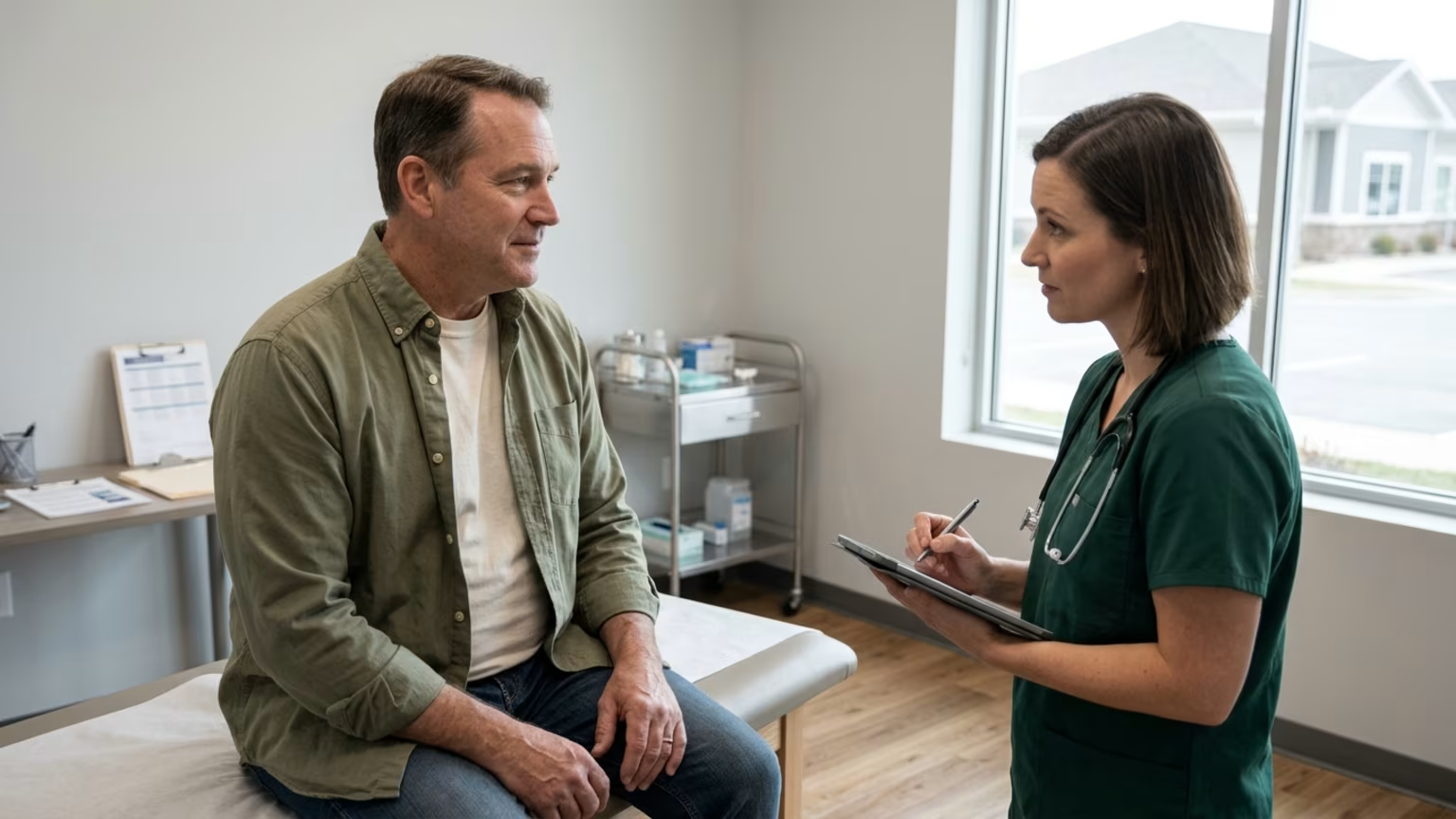

NYU Langone Health details an integrated preventive care model for veterans, connecting primary care, nutrition, and mental health support during transition.





If you or a veteran you know is in immediate danger, call 911. For immediate crisis support, the VA Veterans Crisis Line is available 24 hours a day, seven days a week. You can reach responders by calling 988 and pressing 1, texting 838255, or using the online chat. Veterans do not need to be enrolled in VA healthcare to use this service.
If you are developing a safety plan or arranging safe storage for medications and firearms, do this alongside a trusted friend, family member, or clinician.
In September 2026, NYU Langone Health detailed its approach to integrated preventive care for patients and transitioning service members. NYU Langone describes its preventive care model as a highly connected process. The system links primary care with specialty care, behavioral health, and shared medical records. It also incorporates nutrition, predictive analytics, and artificial intelligence.
Rather than treating each medical appointment as an isolated service, the health system aims to address risks before symptoms appear.
The shift from active duty to civilian life represents a massive health event. Mission Roll Call recently estimated that nearly 250,000 service members transition to civilian life each year. During this period, healthcare coverage often becomes fragmented. Many veterans only seek medical attention after a serious physical or mental problem develops.
Understanding how to manage proactive health decisions is critical for maintaining long term capability. In our experience, waiting for a breakdown is a flawed strategy. I remember waking up after a poor night of sleep and realizing my training recovery was taking much longer than it used to. I realized that readiness is more than just pushing through the fatigue, and that it requires a dedicated approach to sleep and hormonal health.
That realization completely shifted how I view long term capability. It moved my focus toward sustained maintenance rather than constant reaction. Transitioning out of uniform brings a sudden loss of routine, which can easily derail physical fitness and mental health. Establishing a strong relationship with a new primary care team builds a reliable foundation for those navigating civilian life and healthcare routines.
NYU Langone psychologist Victoria H. Jonas works directly with veterans navigating this transition at the NYU Langone Military Family Center. She focuses on processing changes in identity, rebuilding a sense of community, and developing solid coping strategies. By treating mental health as part of routine preventive care, the center is working to destigmatize behavioral treatment. This approach helps veterans address stress and social connection before a crisis point is reached.
The VA’s Home Based Primary Care model takes comprehensive, interdisciplinary primary care directly to veterans at home rather than requiring every patient to travel to a facility. This kind of flexibility is essential for veterans with mobility challenges or complex chronic conditions. Bringing care directly to the patient reduces the friction that often prevents individuals from maintaining their health routines. It represents a significant shift toward proactive veteran care.
The scale of veteran healthcare needs requires systems that can handle high patient volume while maintaining tight coordination. A recent report from Mission Roll Call estimates that 41 percent of veterans need mental health services annually. The same advocacy organization reports that more than 1.7 million veterans received mental health services through the Department of Veterans Affairs during the past year. This figure explicitly excludes veterans treated outside the VA and those with undiagnosed conditions, showing the heavy demand on existing networks.
To meet broad access demands, NYU Langone reports that its network includes 6,000 physicians across more than 330 locations. The organization states that its digital platforms currently support more than 2,000 virtual visits per day. Additionally, patients have scheduled more than 4 million appointments through the NYU Langone Health app. These operational figures illustrate how massive health systems are trying to reduce access barriers and coordinate care across large populations.
Connected care systems use shared data to catch problems early. The article uses a mammogram showing calcifications as an example of how connected care operates. This finding can identify a cardiovascular risk that might otherwise be missed during a standard cancer screening encounter. Standard cancer screening programs currently cover only four or five of the more than 200 known cancer types, making cross disciplinary communication incredibly valuable.
While NYU Langone discusses liquid biopsy technologies, the system notes that these are prospective and not yet standard clinical practice. The primary goal is finding health issues during an encounter scheduled for another purpose. This creates a safety net where specialists and primary care doctors share information to build a complete picture of a patient's health. Better communication directly supports longevity and capability.
The primary takeaway from both the NYU Langone model and current VA guidance is to establish care before you actually feel sick. Oren Cahlon, MD, serves as executive vice president and chief clinical officer for NYU Langone. He recommends asking a primary care physician what you can do to stay healthy early on. Cahlon emphasizes that without access, there is no care.
Nutrition also plays a central role in this modern preventive model. Cardiologist Louai Razzouk, MD, frames food choices as preventive medicine and recommends a balanced, plant forward diet. He advises choosing an eating pattern that is feasible for an individual's lifestyle and budget. This is highly preferable to adopting a restrictive short term diet that cannot be maintained over the long haul.
Razzouk notes that the United States is often too focused on quick fixes instead of sustainable nutrition and lifestyle changes. Veterans should focus on building a diet that supports their daily activity level and long term health goals. Proper fueling is a critical component of physical restoration and resilience. Incremental lifestyle adjustments are generally more effective than temporary restrictive diets.
Current VA guidance aligns closely with this integrated health approach. The VA encourages veterans to discuss preventive screenings, immunizations, nutrition, and physical activity with their care team. They also advise discussing tobacco cessation and weight management during routine visits. The VA says telehealth can complement in person care across primary care, mental health services, specialty care, and chronic disease management.
The VA has also expanded the use of telehealth to serve veterans who face transportation or scheduling barriers. Telehealth allows veterans to access critical health resources without having to travel long distances for every appointment. However, certain physical examinations and screenings still require an in person visit to be effective. Veterans should verify their eligibility, referral requirements, and appointment availability before assuming specific services are accessible.
Veterans moving between military and civilian providers should keep coordinated records of their visits and test results. Shared records can help prevent important findings from being lost during transition. It is also crucial to view the transition out of uniform as a dedicated health period that requires proactive planning. The loss of a structured military community and altered routines are serious issues that may warrant early professional support.
Taking ownership of your medical history is a fundamental part of the transition process. Veterans should request copies of their service treatment records and ensure those documents are uploaded to their new healthcare providers. Relying on different hospital systems to automatically share information can sometimes lead to gaps in a patient's history. A proactive patient is always their own best advocate.
The VA has highlighted veteran to veteran connection and resources for career challenges, grief, and life transitions. This reinforces the importance of social support during periods of major change. Veterans can seek help for depression, anxiety, post traumatic stress disorder, substance use concerns, and relationship difficulties through VA mental health services. Seeking support early is a sign of capability, not weakness.
Jonas emphasizes that mental health treatment should be made routine across the human experience. She specifically notes that this applies during life transitions and periods of high pressure. When veterans view behavioral health as standard maintenance rather than an emergency measure, they are more likely to seek out resources early. Building a robust support network is just as important as maintaining physical fitness.
As healthcare networks continue to integrate predictive analytics and artificial intelligence into primary care, the tools for maintaining physical readiness will likely become more precise. Integrated preventive care models demonstrate how connecting specialists, nutritionists, and psychologists can better support transitioning service members. Will other civilian and government health systems successfully adopt these connected models to keep veterans healthy before symptoms disrupt their lives?
Follow BattleVet for practical guidance on military and veteran health, strength, recovery, testosterone, sleep and healthy aging. Stay connected for new articles, research backed insights and clear information to help you stay capable for the years ahead.



A 2026 study found highly resilient WTC responders show stronger reward-circuit brain activity. Learn how positive anticipation impacts long-term trauma recovery.

A 14-year longitudinal analysis links physical decline and frailty to later cardiovascular events, providing veterans with a new timeline for tracking health.
A September 2026 clinical digest reviews the association between substance use and suicidality among women veterans, alongside new data on telehealth outcomes.
Build better habits around strength, recovery, sleep, hormones and healthy aging with practical guidance for active military personnel and veterans.
Explore BattleVet