

Learn why fatigue and physical pain require a coordinated medical approach covering PTSD, TBI, sleep and hormones instead of relying on a single lab test.





If you are in immediate danger, call 911. For 24/7 support, call or text 988 and press 1 for the Veterans Crisis Line, or text 838255.
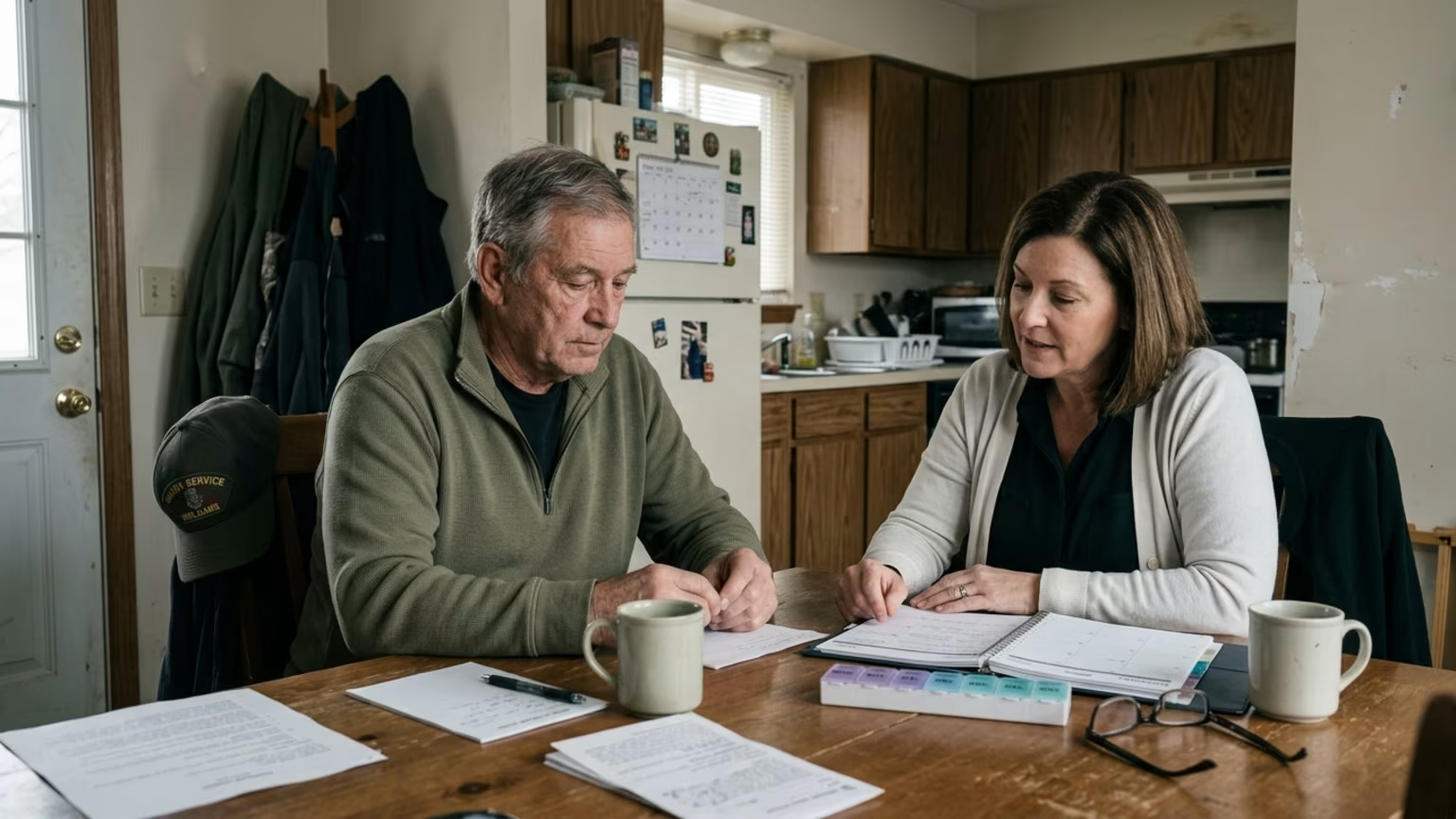
A veteran stares at a single lab result on a clinic clipboard. He wants one simple reason for his fatigue and poor sleep. That tension between simple answers and complex reality defines modern military health. Recently, reporting on the Pentagon's announcement said Defense Secretary Pete Hegseth framed testosterone screening as a way to keep troops "strong, resilient, and capable."
This news immediately drew questions from medical professionals. The Endocrine Society has said there is insufficient evidence to recommend population-level testosterone screening for asymptomatic men. Medical experts worry that fatigue and depressed mood are not specific to testosterone deficiency. These issues can also stem from traumatic brain injury, post-traumatic stress, chronic pain, or alcohol misuse.
We understand the appeal of a single biological fix for dropping energy levels. I remember waking up after a poor night of sleep and realizing that my training recovery was taking much longer than it used to. I realized that readiness is more than just pushing through the fatigue. It requires a dedicated approach to sleep and hormonal health, which completely shifted how I view long term capability.
Assigning all symptoms to one hormone measurement can unfortunately delay proper care. A person might feel better after starting treatment simply because they are paying more attention to their health. However, a single prescription will not resolve symptoms caused primarily by sleep apnea, medication effects, or trauma. True capability requires a wider clinical lens that accounts for every physical stressor.
It is critical to look at the entire health profile rather than isolating one symptom. VA researchers reported that Veterans with both chronic pain and PTSD had more physical-health conditions and poorer functioning than those with only one condition. Mental health and pain directly interact with physical recovery on a daily basis. Tracking these connections is central to Military Health & Veteran Wellness because physical capability relies on complete system recovery.
A recent large-scale evaluation analyzed these exact mental and physical health connections. In a 2026 survey of 1,991 Army National Guard members, depression symptom severity had the strongest association with suicidal thinking among the variables studied, followed by loneliness and alcohol-misuse severity. PTSD symptom severity was also examined in the models. These findings show why low mood and reduced physical drive require a comprehensive mental health assessment.
Medications prescribed for pain management can also introduce entirely new health variables. In a VA sample of more than 167,000 Veterans receiving long-term opioid therapy, alcohol-use disorder was the most common documented substance-use disorder, at 10%. This was followed by sedative use disorder at 8% and cannabis-use disorder at 7%. Managing physical discomfort with heavy medications clearly introduces complex secondary risks.
Those secondary risks require immediate clinical attention and coordinated support. VA research reported that roughly one in four Veterans receiving long-term opioid therapy met at least one of those substance-related risk criteria. This statistic highlights the intense connection between pain management and substance use. Treating a hormone number without addressing these underlying substance patterns will never produce actual health improvements.
The statistics around substance use and pain management show exactly why a single diagnosis is rarely sufficient. When chronic pain goes untreated, it often leads to a cascade of secondary behavioral health challenges. A veteran might use alcohol to fall asleep when physical discomfort becomes unmanageable. This creates a cycle of poor rest, increased daily fatigue, and lowered physical performance that directly mimics an endocrine problem.
Geography even plays a significant role in how pain medications are managed and prescribed. VA facilities have also reported that opioid prescribing to rural Veterans remained 45% higher than prescribing to urban Veterans in 2023. This difference was largely attributable to long-term opioid use. High opioid exposure requires careful evaluation because these medications can sometimes affect hormone signaling over time.
Veterans living far from specialty clinics often face greater challenges in getting coordinated care. This geographic divide makes it harder to properly assess the root causes of chronic fatigue and physical pain. A patient in a rural setting might receive an opioid prescription for pain without access to advanced physical rehabilitation. This isolation can lead to compounding health issues that mimic the exact symptoms of hormone deficiency.
Sleep disruption is another major physical factor that perfectly mimics hormone deficiency. VA researchers found sleep apnea in 21% of Veterans compared to just 9% of non-Veterans. Poor sleep can completely drain daily energy, mood, and mental concentration. When a patient reports feeling exhausted all day, clinicians must look at nighttime breathing before assuming the issue is entirely endocrine.
Fixing sleep-disordered breathing might restore physical drive without any need for synthetic hormones. Improving daily rest allows the body to regulate its own systems naturally. This natural recovery process is vital for active duty members and veterans who want to maintain their strength. Proper recovery and sleep strategies are often the most effective interventions for daytime fatigue.
Current clinical guidance shifts the medical focus away from universal testing toward targeted, symptom-based diagnosis. The AUA and Endocrine Society approaches require compatible symptoms together with consistently low testosterone confirmed by repeat morning testing. A single low result is never enough to diagnose a permanent biological disorder. Acute illness, poor sleep routines, and basic stress can all temporarily lower test results.
Evaluating these interconnected issues requires a deliberate and patient medical approach. Doctors must look at the timeline of when symptoms first appeared to understand the true underlying cause. If severe fatigue started immediately after a change in pain medication, the prescription is the most likely culprit. This kind of careful timeline analysis prevents patients from undergoing unnecessary endocrine treatments that carry their own distinct risks.
Brain health is an incredibly important part of this structured diagnostic process. Most military TBIs are classified as mild TBI, also known as concussion. While a severe brain injury can disrupt the pituitary system and lower hormones, a routine concussion does not guarantee pituitary failure. Clinicians should only evaluate pituitary function when the injury history and physical symptoms actually support that specific connection.
Traumatic brain injuries add another layer of complexity to the diagnostic timeline. The military health system continues to focus heavily on accurate TBI recognition and structured neurological recovery. Because a history of head impacts is incredibly common in military service, separating normal recovery from permanent hormonal changes takes specialized medical knowledge. Neurologists and endocrinologists must work together to determine if an injury has truly altered the body's natural hormone production.
Safety and ongoing physical monitoring must guide any long term treatment decisions. The FDA's class-wide labeling changes include warnings about increased blood pressure with testosterone products. A recent review explains that prolonged testosterone therapy can suppress the reproductive axis and impair sperm production. Patients need to discuss their cardiovascular risks and fertility goals before viewing these treatments as basic performance supplements.
Modern clinical models are finally learning to treat overlapping health conditions at the exact same time. You do not have to perfectly fix your sleep before addressing your mental health or daily pain. VA materials describe evidence-based PTSD treatment options that have been studied in patients with comorbid mood symptoms and substance-use disorders. Written Exposure Therapy is specifically recommended as a second-line PTSD treatment for these highly complex situations.
The most effective healthcare strategies rely on communication between different medical specialists. Primary care doctors must talk with sleep medicine experts to build a complete clinical picture. Treating a patient in isolated silos usually results in conflicting prescriptions and frustrated veterans. A coordinated model ensures that every aspect of veteran life is supported through unified medical guidance.
Veterans experiencing a combination of physical pain and low mood should document all their daily symptoms. Writing down exactly when fatigue hits or when pain is highest gives doctors an enormous diagnostic advantage. This detailed tracking helps separate a genuine endocrine issue from the side effects of daily stress or medication. Clear documentation empowers the patient to lead their own medical journey.
Medical systems must also adapt to the reality of modern post-service health challenges. Doctors cannot simply hand out synthetic hormones to mask the physical toll of military service. They must address the root causes of pain, trauma, and exhaustion through evidence based therapies. Real resilience comes from comprehensive health management rather than relying on a single lab test.
Treating modern post-service health requires building a complete clinical picture instead of hunting for a single biological answer. We must coordinate primary care, sleep medicine, endocrinology, and behavioral health to truly support long term capability. As military screening policies evolve, will the healthcare system expand its capacity to treat the complex root causes of fatigue rather than just the most visible symptoms?
Before your next medical appointment, write down a list of your sleep patterns and daily medications to give your doctor an accurate picture of your health.
Follow BattleVet for practical guidance on military and veteran health, strength, recovery, testosterone, sleep and healthy aging. Stay connected for new articles, research backed insights and clear information to help you stay capable for the years ahead.


Combat Stress’s workplace guidance emphasizes listening over diagnosis. Recent U.S. veteran insomnia research adds context for sleep and recovery concerns.


ErythroMer's reported storage design could matter for military care. An academic review still lists it as preclinical, with human evidence ahead.
A large veteran study links PTSD and documented social needs to later cognitive impairment, reinforcing the value of connected care planning.
Build better habits around strength, recovery, sleep, hormones and healthy aging with practical guidance for active military personnel and veterans.
Explore BattleVet