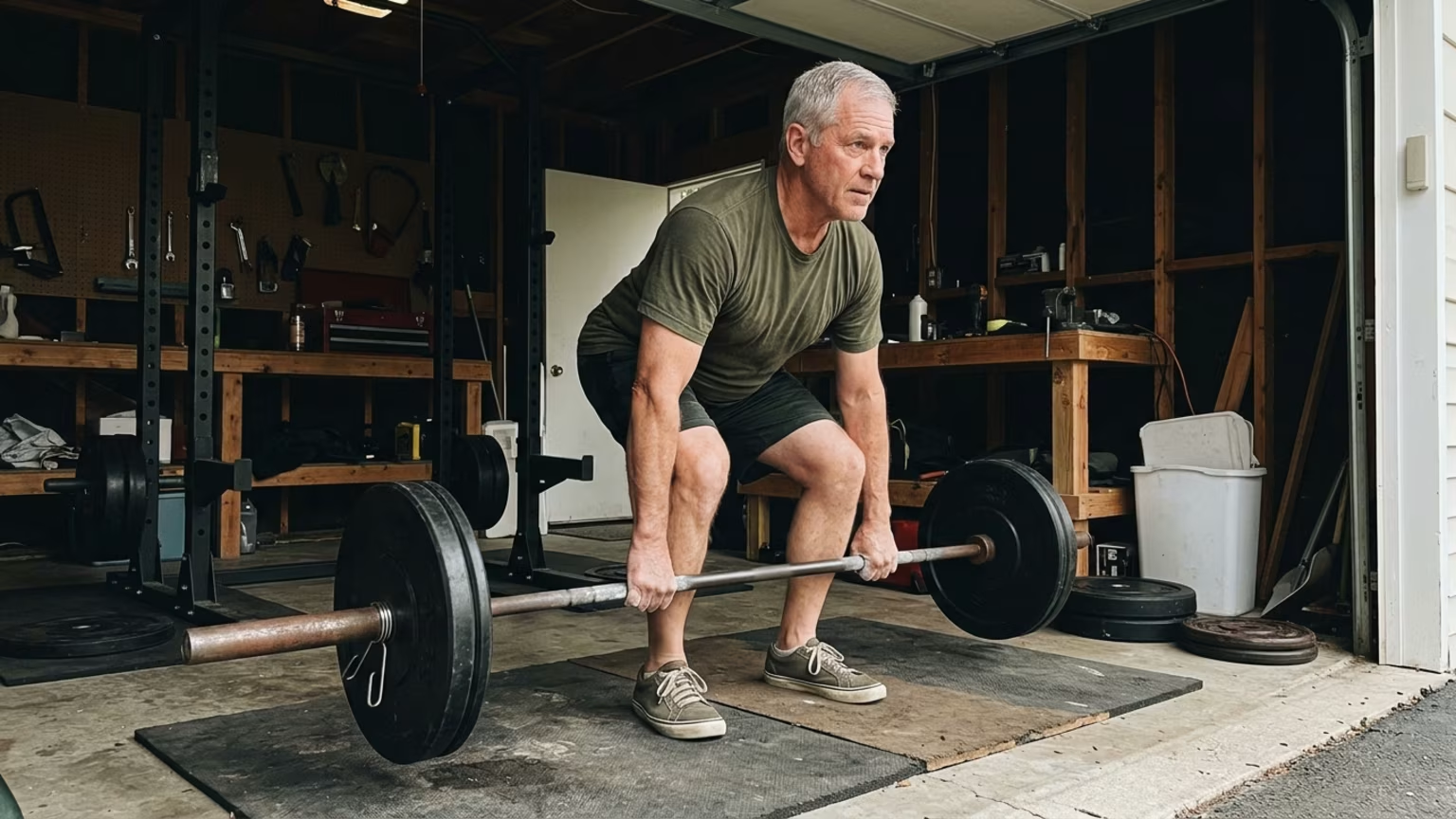

A recent 12 week trial reveals that high intensity lifting produces better lower body strength gains than blood flow restriction routines for older men.





On September 24, 2026, the European Journal of Applied Physiology published a new randomized trial evaluating muscle strength protocols in older men. The research directly compared a blood flow restriction training model against a high intensity resistance program. According to an October 6, 2026 report by Men's Journal, 63 participants completed the 12 week training program. The results demonstrated that heavier lifting produced superior lower body strength gains compared to the low load restriction method.
Maintaining physical capability is a practical priority for veterans as they age. Many former service members deal with ongoing joint pain after years of rigorous military duties. This physical wear often makes traditional heavy weightlifting uncomfortable, difficult to sustain, or practically impossible. To work around these physical limitations, some veterans turn to alternative low load routines. Blood flow restriction has become a popular option because it uses very light weights.
The theory behind this low load method is appealing to those with joint strain. By restricting venous blood return during an exercise, the muscle works harder without requiring heavy mechanical loading. However, veterans need accurate information to decide if these alternative methods actually deliver the promised results. This new research clarifies the concrete trade offs between a heavy barbell program and a restricted blood flow routine.
The findings matter for active personnel and veterans because they set realistic expectations for strength outcomes. Finding sustainable ways to stay capable is a central component of healthy aging. Veterans need to know if lighter weights can truly match the raw strength gains of traditional heavy lifting. The study clearly indicates that heavy weights still hold a significant advantage for pure strength development.
The research also highlights the harsh realities of perceived effort during exercise. Veterans looking for an easier workout might be caught off guard by the sheer physical demands of blood flow restriction. Understanding these practical nuances helps former service members make informed choices about their long term fitness plans. Good health decisions require looking past the trends and analyzing the actual outcomes of specific routines.
The Men's Journal account of the trial details a very specific comparison between two distinct training styles. The 63 men who completed the study were all between 60 and 78 years old. Researchers assigned these men to either a blood flow restriction group or a high intensity resistance group for the full 12 weeks.
The load parameters for each group were vastly different. The blood flow restriction group exercised at just 40 percent of their one repetition maximum. In stark contrast, the high intensity group completed the vast majority of their training at 80 percent of their maximum capacity.
The high intensity program was not just a standard heavy lifting routine. It also included periodic eccentric only sessions loaded at 120 percent of their one repetition maximum. Eccentric training involves focusing entirely on the lowering phase of a heavy lift. This requires muscles to control a weight that is technically heavier than the person can lift concentrically.
Both training approaches successfully improved leg strength over the course of the 12 weeks. However, the high intensity group gained significantly more strength in the leg press and the leg extension exercises. The heavier weights provided a clearly superior stimulus for these specific lower body movements.
To properly evaluate these two methods, veterans should understand how blood flow restriction alters the body. During a restricted session, a specialized cuff is placed around the top of the working limb. This cuff applies enough pressure to restrict blood returning to the heart, but it still allows arterial blood to enter the muscle. This creates a highly localized pooling of blood in the targeted area.
This trapped blood drastically changes the cellular environment within the leg muscles. Oxygen levels drop rapidly, and metabolic waste products like lactate quickly build up. The body is tricked into feeling like it is lifting a massive weight, even though the actual mechanical load is very light. This is why the 40 percent loads used in the study caused such high levels of perceived exertion.
The high intensity group relied on a completely different biological mechanism to build strength. Pushing against an 80 percent or 120 percent load physically forces the muscle fibers to contract against massive resistance. This heavy physical tension signals the body to reinforce the muscle tissue, resulting in greater structural strength. The study results show that this direct physical tension is superior for increasing raw power on the leg press.
Despite using much lighter weights, the blood flow restriction group found their workouts to be significantly harder. Men's Journal reports that the restriction group recorded higher ratings of perceived exertion across the board. They also exhibited greater lactate responses and took more of their sets to complete muscle failure.
This intense difficulty translated directly into a high rate of missed repetitions. The blood flow restriction participants failed to complete all four prescribed sets on 142 separate occasions. By comparison, the high intensity group only skipped a total of four sets throughout the entire 12 week trial. The low load program was fundamentally more difficult for the participants to finish.
The sheer volume of skipped sets in the restriction group is a telling detail. Failing to complete prescribed sets on 142 occasions indicates a massive dropout in training volume. When a program is too painful or exhausting to complete, consistency naturally suffers. For military health routines, consistency is often more important than any single training method.
The four skipped sets in the heavy group suggest that traditional lifting might be more manageable on a daily basis. Even with the extreme 120 percent eccentric loads, the older men were able to finish their workouts. This practical reliability is a key factor when choosing a program for the long haul.
The study data highlights how different training methods impact the recovery process. The eccentric sessions in the high intensity program created significant delayed onset muscle soreness. Eccentric training causes microscopic tears in the muscle fibers, which the body then has to repair. This repair process is what ultimately builds a stronger muscle, but it requires adequate recovery time.
The Men's Journal coverage notes that the high intensity group showed higher creatine kinase levels. Higher creatine kinase is a common marker of muscle damage following intense physical exertion. While this is a normal response to heavy lifting, it is a variable that older veterans must manage carefully. Proper recovery and sleep are mandatory when utilizing training loads that exceed 100 percent of your maximum capacity.
Conversely, the blood flow restriction group faced a different kind of recovery challenge. The immense metabolic stress and high lactate responses suggest central nervous system fatigue. Pushing so many sets to complete failure is incredibly draining on the body. The sheer volume of missed repetitions indicates that the participants were simply too exhausted to finish the prescribed work.
Veterans must balance these recovery demands against their daily life requirements. A heavy lifting program might leave your legs incredibly sore for a few days. A blood flow restriction program might leave you completely exhausted immediately after the session. Understanding these different forms of fatigue helps former service members structure their weekly training schedules effectively.
These findings help shape the way veterans approach their strength and fitness routines. The data strongly reinforces the value of mechanical load for maximizing lower body strength. If an older veteran can safely tolerate heavy weights, a traditional resistance program remains highly effective. Progressive overload with heavy mechanical tension is a proven path to raw power.
These physical side effects are important details for any veteran building a training plan. The high mechanical load caused more muscle damage, while the blood flow restriction caused higher perceptual discomfort. The authors described the blood flow restriction method as producing higher metabolic stress. At the same time, the heavier training produces higher mechanical load.
Veterans should absolutely not view blood flow restriction as a shortcut to easy strength. The high failure rate and high exertion scores show that light weights can be incredibly grueling under restricted conditions. This is a crucial factor for anyone evaluating their training and performance protocols. Expecting a comfortable workout from a restricted blood flow session is a mistake.
According to the study authors quoted by Men's Journal, blood flow restriction is a viable alternative for those unable to perform high load exercise. If severe joint pain prevents a veteran from loading up a heavy barbell, this restricted method is a genuinely useful tool. It will successfully improve leg strength, even if it falls slightly short of heavy lifting.
Military readers should also recognize the specific parameters of this trial. This research focused entirely on a specific group of older men over a 12 week period. The current sources do not establish how these exact routines apply to women, younger veterans, or active duty personnel.
Veterans should be cautious about replicating the high intensity protocol on their own. Training at 120 percent of a one repetition maximum for eccentric repetitions requires proper equipment and supervision. The delayed onset muscle soreness and higher creatine kinase indicate that this method causes significant physical damage. Former service members should consult a qualified exercise professional before attempting heavy eccentric overloads.
For those building a sustainable routine, the choice between these methods depends entirely on physical capability. If heavy lifting does not cause joint pain, it is the most efficient way to build leg strength. If heavy weights are no longer an option, blood flow restriction offers a proven and viable alternative.
Both methods have a place in a complete veteran fitness strategy. The goal is always to maintain capability and independence through consistent physical effort. Understanding the specific physiological costs of each method allows veterans to train smarter and avoid unnecessary injuries. This informed approach is the foundation of long term physical capability.
As researchers continue to evaluate low load training alternatives, it remains to be seen how these protocols will evolve for specific populations. Will future research determine if blood flow restriction can safely replace heavy lifting during injury rehabilitation for younger active duty service members?
Follow BattleVet for practical guidance on military and veteran health, strength, recovery, testosterone, sleep and healthy aging. Stay connected for new articles, research backed insights and clear information to help you stay capable for the years ahead.


The VA awarded $16 million to 91 organizations for veteran adaptive sports. Learn how these community programs support mobility, strength, and recovery.


Fort Leonard Wood Soldiers completed the Norwegian Swim Badge assessment. Read what this event reveals about aquatic endurance and military fitness standards.

The VA reports veteran trust remained above 80 percent for a fourth consecutive quarter. Learn how this data impacts health planning and community care.
Build better habits around strength, recovery, sleep, hormones and healthy aging with practical guidance for active military personnel and veterans.
Explore BattleVet