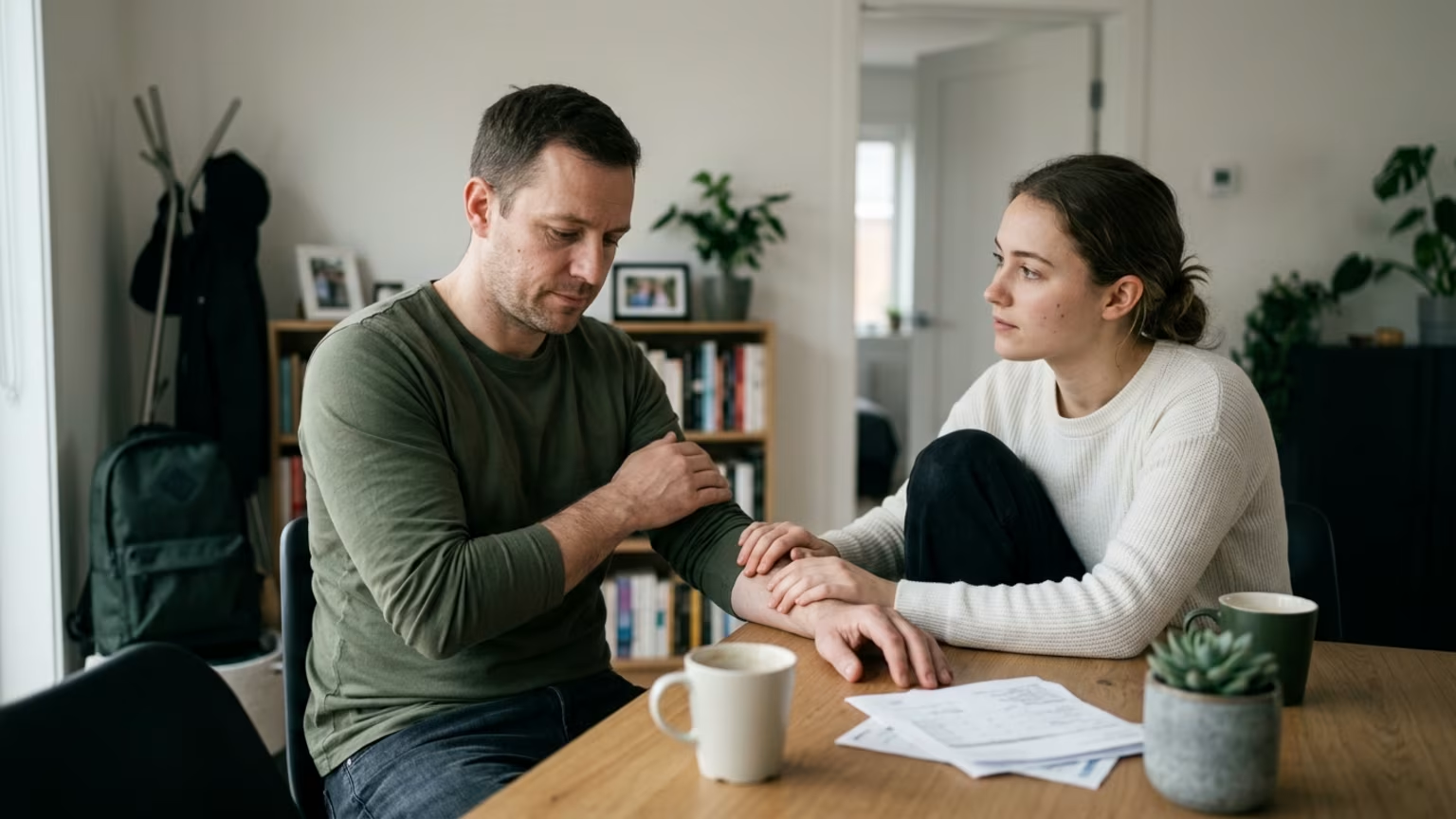

Learn how family-centered recovery programs and couples retreats support veteran health, resilience, and relationship building after military service.





If you are in immediate danger, call 911. For 24/7 support, call or text 988 and press 1 for the Veterans Crisis Line, or text 838255.
Family-centered recovery is a rehabilitative model that treats post-service health as a shared household experience rather than an isolated individual burden. Army veteran Chris Eaton and his wife April co-own Trinity Yoga Wellness Center in New Port Richey, Florida. They recently navigated this shared reality through Operation Warrior Resolution. This organization serves veterans, spouses, and children through specialized wellness programs and retreats.
An August 2026 Military Times profile outlines how the Eatons utilize these programs. Chris spent several years addressing the effects of combat, post-traumatic stress disorder, and loss. He worked with more than 40 mental-health providers over a two-year period. During this time he also practiced breathwork, yoga, and coaching.
The relationship between individual physical performance and long-term health directly affects the household environment. Chronic hyperarousal alters resting heart rates and cognitive recovery for the entire family. When a service member struggles with psychological injuries, their spouse often carries a parallel load. A 2026 study reported elevated PTSD symptoms, depression, anxiety, and stress among combatants and their partners.
In that specific study population, partners generally reported higher scores on those measures. This data demonstrates that a partner's nervous system also absorbs the physiological stress of the transition. Chronic stress physically alters how a household functions on a daily basis. The compounding effect of poor sleep and high anxiety rapidly deteriorates long-term health.
Research on partners of Australian combat veterans identified specific dimensions of partner distress. These dimensions include sleep problems, hypervigilance, and social isolation. Financial problems, intimacy problems, and exhaustion are also highly prevalent. Finally, researchers noted a significant increase in negative affect among these partners.
Recognizing these physical and psychological symptoms in a spouse is a critical step toward comprehensive household recovery. Too often, family members ignore their own health deterioration while focusing entirely on the veteran. Addressing partner distress early prevents the compounding health issues that arise from chronic sleep deprivation and sustained stress.
Chris Eaton brings a diverse background to his current wellness efforts. The Military Times article describes him as a former Army captain and an ordained minister. He also works as a life coach, a death doula, and a veterans advocate. Furthermore, he serves his community as a speaker and a breathwork facilitator.
His wife April shares this dedication to holistic practices. Together they manage their wellness facility to support their local community. They provide specialized services to veterans, first responders, couples, and families. Their facility utilizes yoga, breathwork, coaching, and other targeted wellness services.
Chris initially attended the Men’s Veteran Retreat hosted by Operation Warrior Resolution. He later returned with April for the organization’s Couples Retreat. The couple reported that this shared experience supplemented the significant work Chris had already completed. It provided an opportunity to strengthen both his personal growth and his marriage.
The Couples Retreat combined education, reflection, and relationship-building activities. Participants engaged in personality assessments, yoga, a sound bath, and equine experiences. April noted that the equine activity felt particularly welcoming because she could share the experience with Chris. The Eatons reported that the retreat produced practical skills they could actually use at home.
At the Couples Retreat, Eaton and his wife focused on mutual support. The Eatons noted that speaking with other veteran couples normalized their personal struggles. These conversations helped them recognize that they were not alone in their post-service experiences. Sharing these challenges created a strong sense of trust, acceptance, and support among the retreat participants.
Establishing this camaraderie is a vital step toward navigating post-service veteran life. Healthy relationships require ongoing intention, clear communication, and mutual growth. Incorporating shared activities can facilitate better communication and create healthier daily routines. When couples treat relationship support as part of recovery, they build greater household resilience.
Operation Warrior Resolution also extends its programming to younger family members. The organization reportedly utilizes a Brain-Based Healing program designed specifically for families. Following their own positive experiences, the Eatons enrolled three of their children in this specific program. Supporting children through independent wellness avenues provides a more complete family framework.
Children should receive age-appropriate support from qualified professionals to address their own unique needs. Providing this dedicated support ensures that children are not treated solely as extensions of a veteran's recovery. A local report notes that an organization specialist confirmed these family services are offered at no cost. However, families should always verify eligibility rules and funding structures before participating.
Establishing a clear baseline for family health helps veterans understand their own recovery capabilities. It is completely normal for a household to experience friction during the military transition process. A 2026 military-medicine report states that service members who screen positive for PTSD tend to have poorer family functioning. These individuals also consistently report lower life satisfaction than those who do not screen positive.
Normal recovery rarely involves a single, permanent fix for complex trauma. Effective management usually requires a combination of evidence-based clinical treatment and supportive lifestyle practices. You should view programs like yoga or equine activities as complementary additions to formal healthcare. They build a solid foundation for improving recovery and sleep, but they do not independently treat psychiatric disorders.
While holistic programs provide community support, formal clinical trials remain the standard for severe psychological injuries. For example, a separate multi-site trial is currently testing combinations of established therapies. It compares dialectical behavior therapy combined with prolonged exposure against prolonged exposure with suicide-risk management. This trial focuses on 125 veterans experiencing PTSD and related high-risk symptoms.
The U.S. Department of Veterans Affairs is also running a clinical trial examining psilocybin for treatment-resistant depression. This trial has a planned enrollment of at least 240 participants across five VA medical centers through June 2031. However, VA officials have specifically cautioned veterans not to self-medicate with psychedelics. They warn against replacing established mental-health treatment with unprescribed substances.
The Eatons shared their personal experience to highlight the potential benefits of community retreats. Their account serves as a valuable case study in family-inclusive veteran recovery. However, this profile does not provide independent clinical outcome data or formal comparisons with standard treatments. Families must recognize that personal testimonies do not replace randomized clinical evaluations.
When assessing a wellness retreat, families must ask whether licensed clinicians are actively involved. It is vital to request clear information about eligibility, safety procedures, and referral pathways. You should verify what protocols are in place if a participant requires more intensive care. Thoroughly evaluating these details is crucial for developing healthy aging strategies over the long term.
Navigating mental health recovery requires professional guidance and appropriate clinical supervision. Veterans and their families should always consult a qualified physician or VA provider before self-diagnosing any condition. Retreats, breathwork, and shared wellness practices can serve as excellent tools for relationship building. However, veterans with severe PTSD symptoms or major depression should never use wellness programming as a substitute for urgent clinical care.
The most effective strategies for long-term resilience account for the entire household ecosystem. Programs that include spouses and children recognize that the burden of military service affects everyone in the home. The single most important takeaway is that sustainable veteran recovery requires integrating families into the health strategy alongside formal clinical care. Staying informed builds lasting confidence, and BattleVet remains committed to providing you with clear, evidence-led military health guidance.
Follow BattleVet for practical guidance on military and veteran health, strength, recovery, testosterone, sleep and healthy aging. Stay connected for new articles, research backed insights and clear information to help you stay capable for the years ahead.


Combat Stress’s workplace guidance emphasizes listening over diagnosis. Recent U.S. veteran insomnia research adds context for sleep and recovery concerns.


ErythroMer's reported storage design could matter for military care. An academic review still lists it as preclinical, with human evidence ahead.
A large veteran study links PTSD and documented social needs to later cognitive impairment, reinforcing the value of connected care planning.
Build better habits around strength, recovery, sleep, hormones and healthy aging with practical guidance for active military personnel and veterans.
Explore BattleVet