
Learn how the stalled Take Care of America’s Veterans Act could change future VA disability ratings for sleep apnea and tinnitus, and what it means for you.





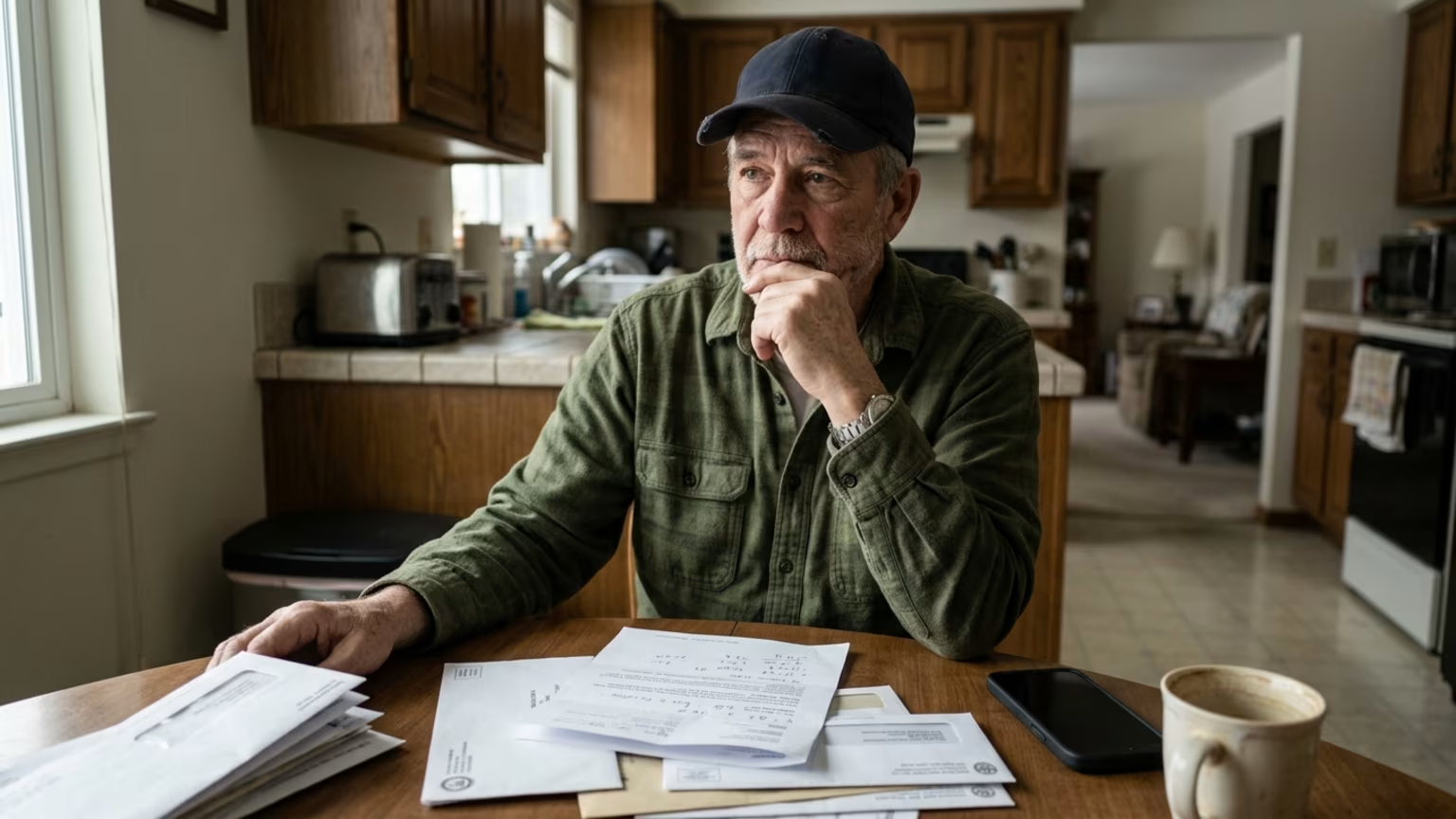
He sat at his kitchen table reading a headline about VA benefit cuts. His group chat was already full of rumors about CPAP machines losing their rating value. It is easy to assume the worst when medical benefits make the news. Navigating the VA system is hard enough without sudden policy shifts. The primary question you might be asking right now is simple. Are my VA disability ratings for sleep apnea and tinnitus about to change?
The Take Care of America’s Veterans Act is described as a package combining 62 separate pieces of veterans legislation. This legislative package attempts to address many different issues within a single framework. By grouping these measures together, lawmakers hope to pass a comprehensive update to veterans benefits. This approach makes the legislation attractive to supporters wanting a broad solution for military health concerns.
However, combining so many proposals also creates significant legislative risk. It allows a disagreement over one financing provision to delay the entire package. Lawmakers must navigate competing priorities from different advocacy groups. The bill is currently reported as stalled in Congress. Its funding provision remains a central obstacle.
The short answer is no. The San Antonio Report notes that the proposed changes would apply only to future claims. The bill does not automatically change ratings that the VA has already awarded. Veterans who already have an established rating should separate current rules from proposed rules.
A change in law for new claims is not the same as a review of an existing award. You do not need to worry about an immediate reduction to a rating you currently hold based on this stalled bill. The proposed legislation targets the administrative rules for incoming applications. Existing beneficiaries would maintain their current status under the framework discussed in the available reporting.
Under current rules described by the San Antonio Report, veterans requiring a CPAP machine receive a 50 percent disability rating. The proposed system would remove that automatic rating for future applicants. Instead, the VA would base future compensation on the severity of the condition.
Sleep apnea involves repeated pauses in breathing that can cause oxygen loss. The new rules would require medical evidence showing just how severe that oxygen loss is. Future claims would rely on detailed documentation of physical impairment rather than the simple presence of a CPAP prescription. The exact replacement rating schedule for sleep apnea has not been verified in the available reporting.
Tinnitus involves persistent ringing or buzzing when no external sound is present. The proposal would remove the existing 10 percent tinnitus rating in most cases for future claims. This change is part of a controversial financing provision designed to offset the costs of other benefits.
However, the available reporting does not explain every exception or qualifying circumstance. It is not an absolute ban on all future tinnitus compensation. New claimants would face a different standard than those who applied under the current rules. The specific exceptions to this proposed rule remain unclear without the final legislative text.
The legislation has created a split among major veterans service organizations. Groups like the Veterans of Foreign Wars and The American Legion reportedly support much of the bill. This includes a major provision allowing medically retired and combat injured veterans to receive their full military retirement pay and full VA disability compensation at the same time.
The disagreement centers exclusively on how the bill would pay for those benefits. The American Legion argues the broader package is worth accepting. They believe it is necessary to deliver long delayed benefits to severely disabled and combat injured veterans. Other organizations strongly disagree with funding these improvements by altering future claims.
The most important divide is not over whether medically retired and combat injured veterans should receive concurrent retirement and disability payments. The reporting indicates broad agreement with that provision across the veteran community. Supporters want to deliver these crucial benefits to severely disabled veterans as quickly as possible.
The dispute is strictly over whether Congress should finance that benefit by reducing future compensation pathways for other conditions. This specific funding mechanism is the central obstacle stalling the legislation. Lawmakers must find a way to fund the benefits without alienating major veterans groups. Until a funding agreement is reached, the bill is unlikely to advance.
The dispute illustrates a recurring policy tension in veterans benefits. Increasing compensation for a particularly vulnerable group may require Congress to identify an offset. That offset can create new disadvantages for veterans filing claims in the future. It is a challenging balance between fiscal responsibility and comprehensive care.
The VFW argues that the bill would take benefits from one group of veterans to provide benefits to another. Disabled American Veterans opposes the measure entirely. They argue that reducing compensation pathways for future claimants is an unfair way to fund improvements for others. This fundamental disagreement highlights the difficulty of passing large legislative packages.
DAV described tinnitus and sleep apnea as invisible disorders in a message to its members. The organization notes that these conditions affect the quality of life, ability to work, and overall health of veterans. Treating them as simple administrative line items ignores their real physical impact. These conditions can significantly impair a veteran's ability to function daily.
It is easy to get caught up in the legislative details and forget the medical reality. We know how confusing navigating health information can be. Finding the truth often requires sorting through conflicting reports. This is especially true when complex policy changes enter the mainstream news cycle.
Reviewing my blood work for the first time felt overwhelming. There was so much confusing information out there about testosterone and hormones. I wanted clear facts and evidence based guidance, not a sales pitch. That experience showed me how critical it is to separate established science from marketing hype. The same principle applies to understanding proposed VA legislation. You need clear facts, not internet rumors.
The San Antonio Report discusses concerns that the VA could independently move toward lower ratings for tinnitus and sleep apnea. Some fear the agency might pursue this as a cost saving measure outside of the legislative process. However, the available reporting does not establish that such a reduction has been adopted as current policy.
It describes the possibility and previous attempts as part of the political debate. Veterans should monitor official developments rather than relying on headlines. The final effect depends on actual policy implementation and formal regulatory updates. Until the VA issues official guidance, the current rating systems remain in place.
You should not treat proposed rating changes as current rules. The bill remains stalled in Congress. However, the proposed severity based approach for sleep apnea highlights a critical practice. You must accurately document your diagnosis and symptoms in your medical records.
The physical impact of your condition must be clear to your doctors. A sleep study that records oxygen loss provides solid evidence of severity. If the rules eventually shift toward a severity based model, your existing medical records will become incredibly valuable. Detailed documentation is always the best preparation for future claims.
Veterans who believe they have tinnitus or sleep apnea should seek medical evaluation. DAV advises that veterans with symptoms connected to military service might be eligible for disability payments. Bring your concerns to your primary care doctor.
Explain how the ringing in your ears or the pauses in your breathing affect your daily function. Tell your doctor if the symptoms interrupt your sleep or cause daytime fatigue. Consistent medical documentation protects your health and your potential claims. A proper evaluation sets the baseline for any future care.
The organizations involved in this dispute do not agree on the policy trade offs. Their disagreement means veterans should not assume all major service organizations interpret the bill the same way. You should consult an accredited representative or veterans service officer before filing a claim.
A qualified representative can help distinguish an original claim from a claim filed under any future statutory change. Rely on an expert to guide you through military health procedures. Getting proper assistance prevents minor paperwork errors from delaying your benefits. They can also explain exactly how current rules apply to your specific situation.
Navigating the VA system requires patience and accurate information. The rules might change in the future. Your priority today is making sure your medical records reflect your actual physical condition. You can learn more about managing your well being through our veteran life Articles. How accurately does your current medical record document the daily reality of your physical health? Schedule a checkup this week to ensure your file matches your symptoms.
Follow BattleVet for practical guidance on military and veteran health, strength, recovery, testosterone, sleep and healthy aging. Stay connected for new articles, research backed insights and clear information to help you stay capable for the years ahead.


Combat Stress’s workplace guidance emphasizes listening over diagnosis. Recent U.S. veteran insomnia research adds context for sleep and recovery concerns.


ErythroMer's reported storage design could matter for military care. An academic review still lists it as preclinical, with human evidence ahead.
A large veteran study links PTSD and documented social needs to later cognitive impairment, reinforcing the value of connected care planning.
Build better habits around strength, recovery, sleep, hormones and healthy aging with practical guidance for active military personnel and veterans.
Explore BattleVet