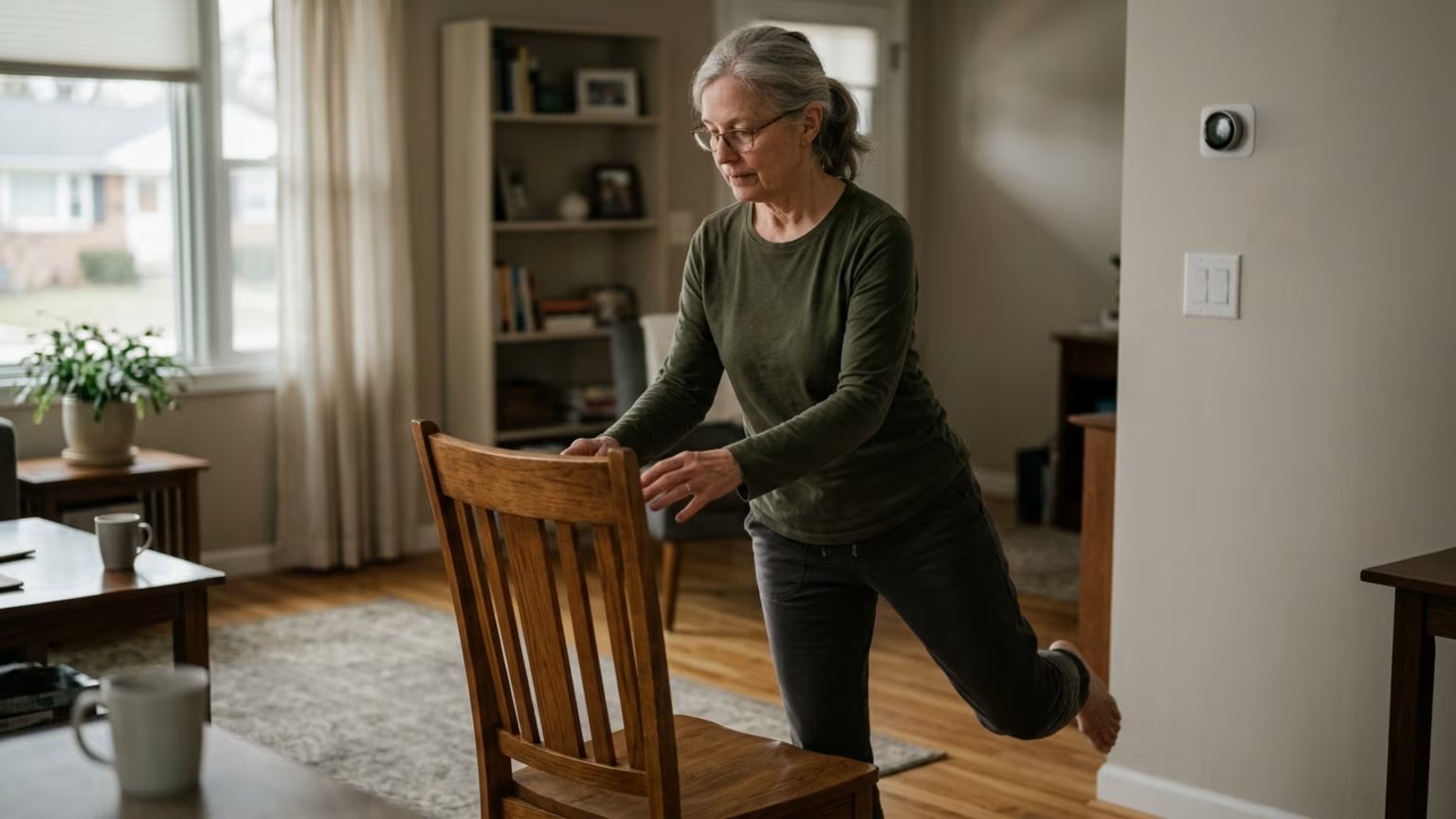

A four-minute daily strength routine can improve mobility and balance in adults over 65. Learn the exact step-by-step protocol for healthy aging.





In a recent trial of adults aged 65 and older, participants who performed a structured four-minute daily strength routine improved their single-leg standing balance time by 3.6 seconds over 12 weeks. Small improvements in stability often dictate whether a veteran maintains long term independence or faces severe mobility restrictions. To achieve this baseline functional strength, older adults can follow the exact execution steps of the FAST-2 protocol below.
Aging inevitably affects muscle tissue and neural drive. A 2026 review of 41 randomized controlled trials involving 3,141 participants found that resistance exercise significantly improved muscle-specific strength. The research team noted substantial variation among the analyzed studies. The Functional Activity Strength Training 2 program specifically targets the biomechanical movements required for everyday independence.
The routine contains only 60 seconds of lower-body resistance work through chair stands and stair stepping. Despite this brief duration, these specific movements force the nervous system to practice transitioning from sitting to standing. These adaptations are vital for healthy aging and longevity. Older veterans often face compounding physical limitations that make heavy gym routines impossible.
The chair stand directly mimics the physical effort required to exit a low vehicle or a deep couch. Older adults often lose the explosive power necessary for this vertical movement. By practicing the transition repeatedly, the body reinforces the neural pathways needed for rapid muscle recruitment. This translates directly to a lower risk of getting stuck in seated positions.
A separate 2026 review of 25 randomized trials involving 2,267 older adults examined these concepts further. That review found improvements in handgrip strength and lower-limb strength. Frail or sarcopenic older adults also saw better agility and walking speed. The analysis noted improved postural stability and functional performance as well.
Functional routines work because they train the whole kinetic chain rather than isolating single muscles. The U.S. Department of Veterans Affairs operates an evidence-based exercise and health-promotion clinic. This clinic is aimed at older veterans whose physical limitations may be modified through exercise. That existing VA focus provides a plausible setting for considering short functional-strength routines.
Programs like FAST-2 provide a physiological stimulus that prevents the rapid decay of motor skills. Recent research emphasizes the importance of multicomponent training. One 2026 review found that supervised perturbation training showed favorable effects for overall and static balance. The same review noted that agility stepping was relevant to proactive balance.
Applying the FAST-2 routine requires minimal equipment and strict adherence to timing. The original randomized trial was led by researchers at Penn State College of Medicine. It was published in PLOS One on March 12, 2026. The study evaluated 97 participants with an average age of 74.
Researchers randomly assigned 44 people to the exercise group and 53 people to a control group. The execution relies on 30 seconds of work followed immediately by 30 seconds of rest. The first step involves assisted push-ups against a wall or countertop to match individual strength levels. The second step requires chair stands using arm assistance if rising unassisted proves difficult.
The researchers designed the program using relatively simple equipment. Participants utilized standard resistance bands and an adjustable-height stepper for their sessions. Exercise difficulty was easily modified to match the exact physical abilities of each participant. This adaptability is crucial because older adults present with widely varying baselines of fitness.
The upper body receives targeted attention through two-arm resistance-band rows. Participants anchor a simple resistance band to a secure point and pull rhythmically for 30 seconds. This specific movement trains the upper back muscles responsible for maintaining an upright posture. Strong postural muscles help counteract the forward slump that often accompanies advanced age.
The stair stepping component challenges single-leg stability and proactive balance. Participants use an adjustable-height stepper to repeatedly step up and down at a controlled pace. Modifying the height of the step ensures the exercise remains challenging without becoming dangerous. The entire sequence takes approximately four minutes and requires no travel to a commercial facility.
After 12 weeks of this specific pacing, participants in the exercise group saw excellent results. They completed an average of 4.2 more repetitions in the 30-second chair-stand test than the comparison group. Furthermore, the time required for them to complete five sit-to-stands fell by 2.3 seconds. For readers exploring strength, fitness and body composition, this protocol offers a reliable starting point.
Evaluating health information requires patience and a critical eye. Reviewing my blood work for the first time felt overwhelming. There was so much confusing information out there about testosterone and hormones. I wanted clear facts and evidence based guidance, not a sales pitch.
That experience showed me how critical it is to separate established science from marketing hype. This is exactly why BattleVet prioritizes verified clinical protocols over fitness trends. Tracking function is often more valuable than simply tracking workout duration. Useful personal measures include counting controlled chair-stand repetitions over 30 seconds.
Veterans can also track the time needed to complete exactly five sit-to-stands safely. These practical tests correspond directly to the clinical outcomes reported in the trial. Focusing on these metrics ensures the veteran prioritizes daily movement capacity over aesthetic goals. Measurable progress on these functional tests builds long term confidence.
Monitoring these small changes prevents frustration and burnout. A single additional chair stand might feel insignificant during the workout. Over 12 weeks, however, those individual repetitions accumulate into a profound improvement in systemic power. This steady progression is exactly what builds the foundation for long term physical resilience.
The most frequent mistake older adults make with short protocols is failing to modify the movements. Single-leg balance and step-up exercises create an obvious safety issue for people with instability. Participants should always perform the routine near a stable support. Using an appropriate chair and a secure step prevents unnecessary accidents.
Older veterans often navigate service-connected musculoskeletal injuries or medication effects. Many also manage cardiopulmonary disease or complex amputation recovery. These specific veteran factors require individualized screening and careful adaptations that were not tested in this trial. Any veteran with a history of falls or dizziness must consult a clinician before starting.
Another common error involves treating a four-minute routine as a complete replacement for all physical activity. FAST-2 does not replace aerobic conditioning or walking. It also cannot substitute for range-of-motion work or load carriage preparation. Older adults still need a progressive resistance program to maintain optimal health and training and performance readiness.
Many individuals abandon programs because they attempt variations that are too difficult. A wall push-up and a floor push-up impose very different mechanical demands on the shoulders. Scaling the movements rather than abandoning the session is critical for success. If a specific exercise causes pain, adjusting the height of the step is the correct response.
Some older adults assume a four-minute routine must be completely effortless to be safe. The researchers explicitly described the FAST-2 intervention as strength training. Participants performed repeated functional movements with resistance or stepping to generate real fatigue. A four-minute routine serves as a starting dose, but it still requires genuine physical exertion.
Finally, older adults often expect a short routine to instantly cure every ailment. The 2026 review of frail older adults cautioned that such studies do not establish guaranteed prevention. These programs do not necessarily prevent future disability, hospitalization, or long-term-care placement. The realistic objective is to improve performance on daily tasks.
The ultimate success of any physical protocol comes down to raw consistency. The Penn State study reported an impressive adherence rate of 81% over the 12 weeks. That high rate suggests that the short format was feasible for many older participants. Brief, structured sessions serve as an excellent entry point for people avoiding conventional gyms.
Achieving results requires performing the movements most days of the week. Readers can integrate this protocol into their morning habits or use it as a standalone movement break. The simple equipment requirements mean the routine can travel anywhere. This completely removes the usual excuses related to gym access or bad weather.
The core commitment remains simple but mandatory. Older veterans must consistently practice the exact movements that support their autonomy. If they stop practicing these motions, they risk losing those mechanical capabilities entirely. Four minutes of focused work clearly yields tangible benefits when executed with discipline.
Those 3.6 seconds of extra balance time might seem minor on a clinical spreadsheet. In the reality of an aging body, those few seconds of stability matter immensely. That short window of balance is exactly what keeps a veteran upright and confidently independent. It is a small daily investment that pays enormous dividends in long term physical capability.
Follow BattleVet for practical guidance on military and veteran health, strength, recovery, testosterone, sleep and healthy aging. Stay connected for new articles, research backed insights and clear information to help you stay capable for the years ahead.


Combat Stress’s workplace guidance emphasizes listening over diagnosis. Recent U.S. veteran insomnia research adds context for sleep and recovery concerns.


ErythroMer's reported storage design could matter for military care. An academic review still lists it as preclinical, with human evidence ahead.
A large veteran study links PTSD and documented social needs to later cognitive impairment, reinforcing the value of connected care planning.
Build better habits around strength, recovery, sleep, hormones and healthy aging with practical guidance for active military personnel and veterans.
Explore BattleVet