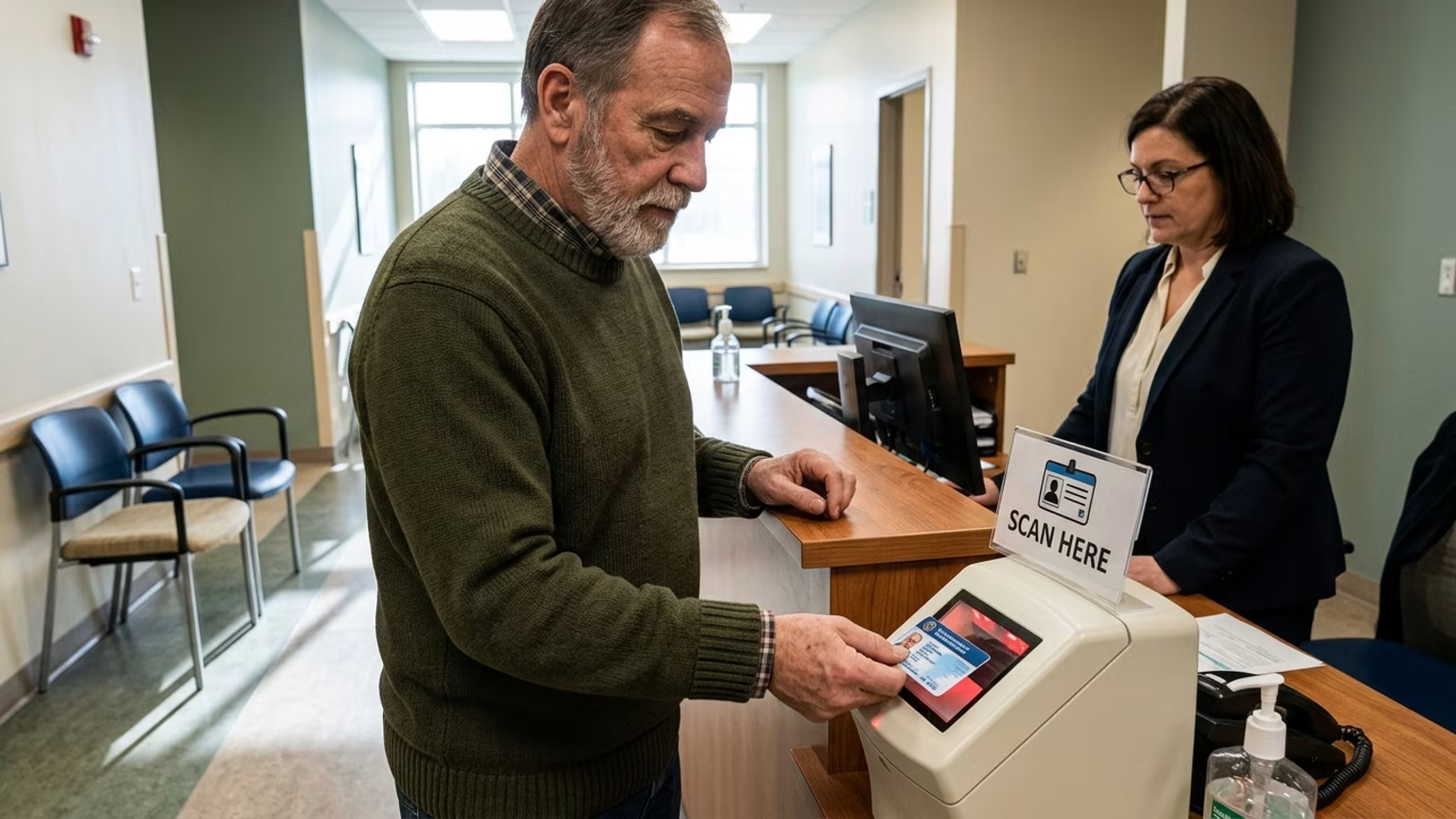

VA clinics using the Federal EHR now allow veterans to check in by scanning a VHIC instead of stating the last four digits of their Social Security number.





The line at the local outpatient clinic moves slowly on a typical weekday morning. Veterans stand with paperwork in hand, ready to state their name and the last four digits of their Social Security number. It is a familiar administrative routine for anyone who receives medical care through the government system. Now, that routine is changing for patients at specific facilities.
The Department of Veterans Affairs announced on August 19, 2026, that a major administrative shift is underway. The announcement, updated on August 20, confirmed a change for veterans checking in at facilities using the Federal Electronic Health Record (EHR). These patients will no longer routinely need to state the last four digits of their Social Security number. Instead, veterans can check in by scanning a Veteran Health Identification Card (VHIC). The VA frames this change as part of a continuing effort to reduce the routine use and exposure of Social Security numbers.
Understanding the mechanism behind this change requires looking at how healthcare data flows. For years, verbally confirming a partial Social Security number was the standard method to verify patient identity. This verbal data exchange required both the patient and the front desk staff to communicate clearly in crowded waiting rooms. Transitioning to a card scan replaces a manual, verbal process with a direct digital match. The policy driving this shift is guided by Office of Management and Budget Memorandum 07-16.
According to the VA, scanning the VHIC provides a quicker identification process at participating facilities. The department says this new digital handshake can reduce the risk of initially retrieving the wrong patient record. A direct scan ensures that the computer system brings up the exact file linked to that physical card. The VA asserts that this makes the start of the visit faster and more reliable. Managing veteran healthcare resources effectively depends on accurate identity verification.
The practical impact of this system is already visible at certain locations. The VA quotes Tracey Julius, a Red Coat Ambassador at the Cincinnati VA Medical Center. Julius stated that veterans were "relieved" to scan their identification card. Once the card was scanned, the veteran's information immediately appeared on the ambassador's screen. Julius noted that this visible information allows ambassadors to direct veterans to appointment locations quickly.
This shift represents a broader design principle in modern healthcare operations. Medical networks are moving toward using dedicated healthcare credentials at the point of service. Relying on specialized cards reduces the need for patients to disclose sensitive government identifiers verbally. It is a practical step that strengthens privacy without adding complicated hurdles for the patient. Reading about practical adjustments in veteran life helps clarify why these incremental system changes matter.
Healthcare systems across the country continually evaluate how to balance patient convenience with strict data security. The traditional method of stating identifying numbers aloud was efficient before the rise of modern digital threats. Today, reducing the verbal broadcast of personal information in public spaces is a standard security protocol. The VA is aligning its physical check-in procedures with these updated national security guidelines.
The first step in executing this new protocol is basic administrative preparation. You need to locate and bring your VHIC to your upcoming medical appointments. Treat this card as sensitive personal information at all times. Keep it secure in your wallet until you reach the reception desk. Having the card physically present is the key to bypassing the old verbal confirmation method.
The second step involves confirming the operational status of your local medical center. The change applies across VA sites using the Federal EHR. The Federal EHR is being introduced through a staged deployment schedule. This means the new check-in process is tied to the local system status rather than a single nationwide launch date. Do not assume every single clinic has adopted the scanning technology yet.
The third step is the actual check-in process at the facility. When you arrive at the front desk, hand over or scan your card. If you prefer not to use a VHIC, the VA provides an alternative method. Veterans can still check in by providing their last name and date of birth. This ensures that no one is denied check-in simply for leaving their card at home.
The fourth step covers the immediate follow-up to your identity verification. Depending on the type of care scheduled, you may receive a wristband after the VHIC is scanned. The VA specifies that this wristband step is conditional and tied to specific care requirements. Do not expect to receive a wristband for every single outpatient visit. The staff will provide one if your specific appointment requires it.
The goal of these procedural shifts is to create a seamless experience from the moment you walk through the clinic doors. You should review your appointment details carefully before leaving home to ensure you bring all required documentation. The new scanning option is simply one part of a broader effort to modernize how you interact with your medical providers. Staying organized is the easiest way to ensure you receive the care you need without unnecessary stress.
Following these steps consistently helps you establish a smooth routine for your medical care. The less time you spend sorting out administrative hurdles, the more time you can spend focusing on your actual health needs. Adapting to new systems early gives you a significant advantage in navigating large medical networks. Prepared patients always experience fewer delays during busy clinic hours.
One typical mistake is assuming that the check-in change is permanently active at every VA facility immediately. The rollout of the Federal EHR remains phased rather than universal. A veteran might visit one facility that scans cards and another facility that still requires verbal confirmation. If staff still request your last four digits, simply ask whether the site is using the Federal EHR. Patience is required as different clinics upgrade their systems at different times.
Another execution error involves misunderstanding the privacy benefits of the new protocol. The privacy benefit is a reduction in routine verbal exposure of your Social Security digits. It does not mean that your Social Security number is entirely removed from your medical file. It also does not mean the identification card eliminates all cybersecurity risks. Veterans must continue to practice good personal security habits regarding their medical data.
Leaving the identification card at home intentionally is a third common error. While the VA says you can use your last name and date of birth, bringing the card is recommended for convenience. Relying on verbal backups slows down the line and removes the efficiency benefits of the digital scan. The system is designed to work best when you have your credential ready. Make it a habit to check for your card before leaving the house.
Veterans sometimes mistake a request for their identification card as a guarantee that all systems are perfectly integrated. The presence of a VHIC does not by itself confirm that a particular facility is operating the Federal EHR. The announcement directs veterans to confirm when the Federal EHR will reach their nearest facility independently. Operating with accurate information prevents you from making incorrect assumptions about your local clinic's capabilities.
Another common error is directing frustration at the administrative staff when systems do not match your expectations. The personnel at the front desk are executing the protocols provided by the specific software available at their location. Demanding to use the card scan at a facility that has not yet received the Federal EHR only creates delays. Calm, clear communication remains the most effective tool for navigating healthcare bureaucracies.
The most critical error occurs when veterans experience technical problems and seek help improperly. When frustrated by administrative changes, some people post their personal details in public online forums. The VA article strictly warns against submitting personally identifiable or protected health information in public comments. Instead, use official support channels to resolve any issues. Veterans should use the Ask VA portal or call the VA telephone number 1-800-698-2411 for assistance.
The bottom line is that administrative readiness is a core component of managing your health. Bringing your correct identification and understanding the check-in protocol ensures you can access your care without unnecessary friction. The government is upgrading its data systems, but the responsibility for showing up prepared rests with you. Adapt to the new procedures and use them to protect your own privacy.
BattleVet encourages readers to treat these administrative updates as essential components of their overall healthcare strategy. You cannot optimize your physical performance if you cannot effectively navigate the systems designed to support your care. You can stay informed about similar operational changes by tracking military health updates regularly. A little preparation prevents significant headaches in the waiting room.
Stay informed, secure your personal information, and keep your focus on your health.
Follow BattleVet for practical guidance on military and veteran health, strength, recovery, testosterone, sleep and healthy aging. Stay connected for new articles, research backed insights and clear information to help you stay capable for the years ahead.


Combat Stress’s workplace guidance emphasizes listening over diagnosis. Recent U.S. veteran insomnia research adds context for sleep and recovery concerns.


ErythroMer's reported storage design could matter for military care. An academic review still lists it as preclinical, with human evidence ahead.
A large veteran study links PTSD and documented social needs to later cognitive impairment, reinforcing the value of connected care planning.
Build better habits around strength, recovery, sleep, hormones and healthy aging with practical guidance for active military personnel and veterans.
Explore BattleVet