
The FDA cleared a personalized brain-targeted PTSD therapy. Read how this non-medication alternative to SSRIs works and what veterans should ask their doctors.





A veteran sits in a quiet clinic waiting room. He holds a new prescription bottle in his rigid hands. He wonders if this specific medication will finally work. He worries about the side effects that derailed his sleep last year.
If you or a veteran you know is in immediate danger, call 911. For urgent support, dial 988 and press 1 for the Veterans Crisis Line. You can also text 838255.
Many veterans are asking if there are credible, non-medication alternatives to SSRIs for treating post-traumatic stress disorder. The Food and Drug Administration recently cleared a personalized neuromodulation system for PTSD. Wave Neuroscience developed this technology with researchers at the Texas A&M Health Institute of Biosciences and Technology. It offers a new clinical option for those who have not responded well to standard medications.
The development program for this technology received FDA Breakthrough Device designation in 2024. Rick Silva is the executive director of clinical trials at the Institute of Biosciences and Technology. He noted that medical device clinical trials often take about a decade to reach clearance. This specific project reached clearance in just over two years.
The fast timeline highlights a growing interest in technology-assisted mental health interventions. Wave Neuroscience supplied the underlying technology. Researchers led by Kenneth S. Ramos contributed clinical and scientific expertise to the project. Ramos noted that identifying interventions capable of improving quality of life could substantially help affected individuals.
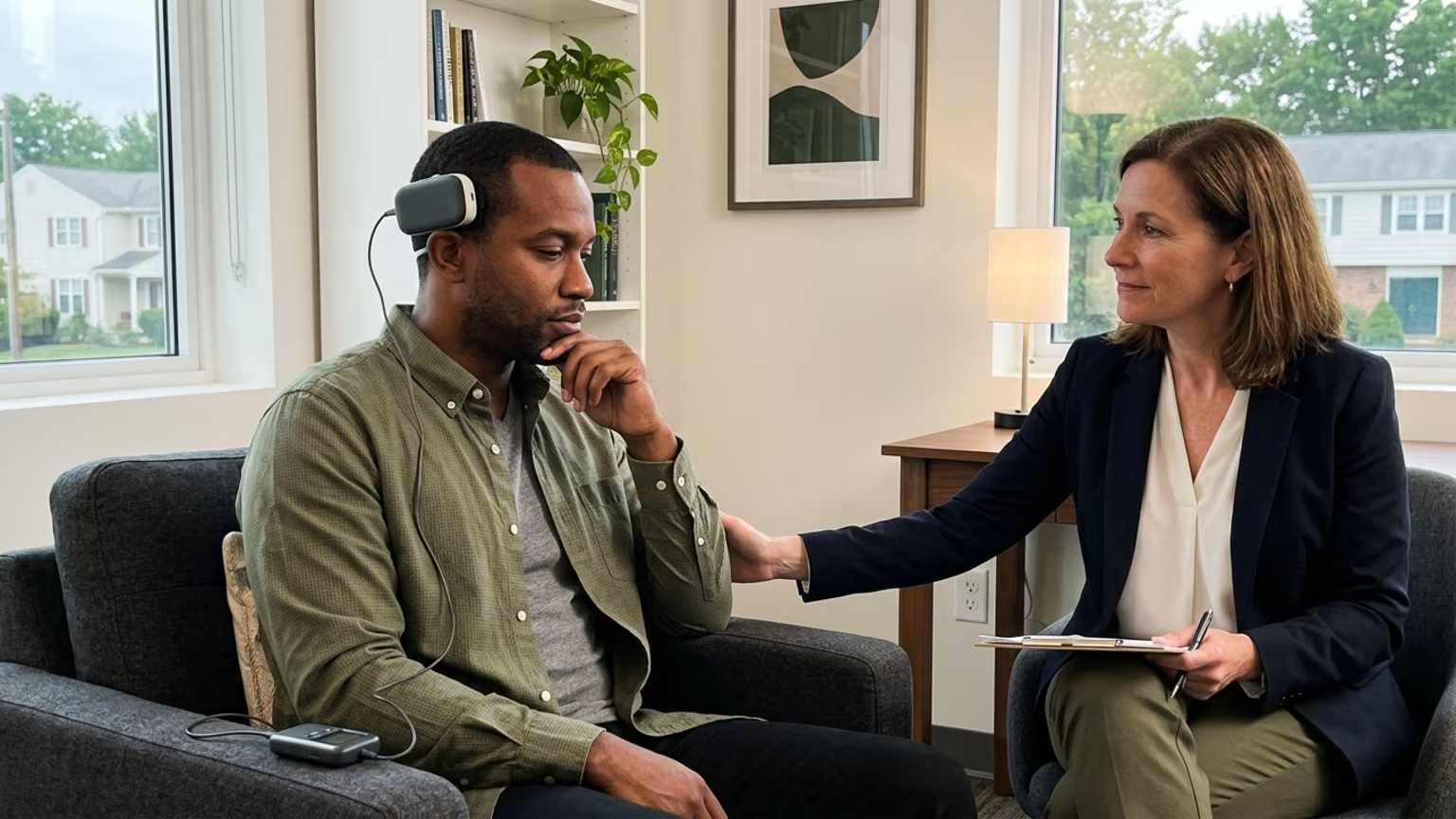
This newly cleared system is called Magnetic e-Resonance Therapy. The technology combines an electroencephalogram with transcranial magnetic stimulation. An electroencephalogram records electrical brain activity to create a personalized map. The system then delivers magnetic pulses through a scalp-mounted coil.
Standard transcranial magnetic stimulation previously received FDA clearance for treatment-resistant depression. This new clearance applies the technology in a personalized way for PTSD. The system uses an augmented AI-derived multivariate algorithm. This algorithm personalizes the stimulation protocols based on a patient's unique brain activity profile.
Leslie S. Prichep is the chief scientific officer at Wave Neuroscience. She noted that this clearance reflects decades of research using electrophysiological biomarkers to guide interventions. The technology relies on identifying abnormal brain activity profiles. Providers then use this objective data to tailor the treatment.
Israel Liberzon is a psychiatrist and PTSD expert involved in the study. He noted that psychotherapy requires substantial effort and can be anxiety-provoking for some patients. The VA National Center for PTSD lists sertraline, paroxetine, and venlafaxine as medications that can be effective for PTSD symptoms. However, not every patient tolerates or responds to these drugs.
Erik Won is the chief medical officer at Wave Neuroscience. He reported that the company's FDA trial produced a 52% reduction in PTSD symptoms. Won also stated the trial resulted in a 68% remission rate. The article cited a 2020 medication review for comparison.
That 2020 review reported self-rated symptom improvements of 6.8 to 10.1 points and remission rates of up to 10.9%. Won described the new system's symptom reduction as more than four times the efficacy reported in that medication review. This remains an attributed comparison rather than evidence from a direct randomized trial. It shows why clinicians are eager for more non-medication options.
This new system requires a significant time commitment from patients. The reported treatment schedule involves five sessions per week. Patients must maintain this frequency for five to six weeks. This daily schedule can create practical barriers for service members and working veterans.
Patients who live in rural areas might find daily travel difficult. The intense schedule means veterans must carefully consider transportation and work obligations before starting. Family support and duty status are also important factors. The published information currently provides no clinic capacity or reimbursement figures to clarify access.
Fred Walke serves as the chief executive of Wave Neuroscience. He stated that objective brain information could help reduce mental health stigma. Seeing physical data about brain activity helps patients understand their symptoms. Clear visual evidence can make the invisible struggles of PTSD feel more concrete.
Ramos noted that most clinical interventions for PTSD do not work very well. Approximately 7% of veterans are diagnosed with PTSD each year. Additionally, about 6% of people develop PTSD symptoms during their lifetimes. The company estimates this clearance could potentially expand access to treatment for approximately 13 million people.
This development project illustrates the growing role of academic and industry collaboration. The military and veteran mental health research sector relies heavily on these partnerships. Ramos connected the project directly to the military and veteran priorities of Texas A&M. He stated that the university's history in this area made its involvement a natural fit.
This collaboration brings together private technology and academic clinical expertise. Wave Neuroscience hopes to explore possible future applications of its platform in depression and anxiety. However, these future applications are prospective and are not established FDA-cleared uses. The current clearance focuses strictly on mapping and treating brain regions affected by PTSD.
FDA clearance does not mean this new therapy is universally superior to standard care. The reported 52% symptom reduction and 68% remission rate come directly from company-reported trial results. The exact definition of remission behind that 68% figure remains unverified in the public data. These figures should be treated as preliminary findings rather than independently confirmed comparative evidence.
The current public information lacks details on the study's sample size, control group, and participant demographics. The available data does not include statistical analysis or adverse event reports. The company stated that the detailed findings are still being processed for public dissemination. Patients must wait for peer-reviewed evidence before drawing firm conclusions about durability and safety.
The source material notes that beneficial effects appeared to last beyond treatment. However, it does not provide a specific follow-up period or quantified durability data. Understanding how to interpret early clinical data is a critical skill for navigating veteran life. You should always look for verified long-term studies before assuming a treatment is a permanent fix.
This new technology is a non-medication option rather than a complete replacement for psychotherapy or medication. The existence of a new treatment does not mean patients should stop their prescribed SSRIs. No one should discontinue current medications without direct medical supervision. Doing so can cause severe withdrawal symptoms and a dangerous return of PTSD markers.
The VA advises people experiencing persistent PTSD symptoms to speak with a healthcare provider. Medication remains an available and established treatment approach. Service members should treat this new system as an additional clinical option. It is not a self-directed substitute for trauma-focused psychotherapy or crisis care.
Veterans interested in this system must have a direct conversation with their provider. FDA clearance alone does not establish that the VA or private insurers cover the treatment. The company is reportedly working with stakeholders on affordability and insurance coverage. However, there are no named insurers or formal coverage decisions available yet.
Veterans should ask their civilian clinician if this FDA-cleared system is clinically appropriate for them. You must specifically ask if the provider offers the exact FDA-cleared PTSD indication. Do not confuse this with generic or investigational forms of transcranial magnetic stimulation. The specific personalization depends entirely on the company's algorithm and EEG-guided protocols.
Before committing to this treatment, ask your provider about the total cost. You need to know if Medicare, Medicaid, or TRICARE will cover the specific procedure. The demanding schedule requires strict planning and coordination with your employer. You should ask your doctor about the expected monitoring procedures and potential risks.
Request the full clinical evidence from your provider when it becomes publicly available. Ask about alternative options if your insurance denies coverage. You can find more information about military health care options through official resources. Discuss how this new therapy will integrate with your existing recovery and sleep routines.
Understanding your current symptoms is the first step toward finding the right treatment. You must evaluate how your sleep, stress levels, and daily routines are functioning today. Identifying your current baseline helps you measure whether a new intervention is actually working. Tracking your daily well-being gives your clinician better data to work with.
If you are struggling with a current medication regimen, you now have another specific option to research. Book an appointment with your care provider this week to review your current symptom management plan.
Follow BattleVet for practical guidance on military and veteran health, strength, recovery, testosterone, sleep and healthy aging. Stay connected for new articles, research backed insights and clear information to help you stay capable for the years ahead.


Combat Stress’s workplace guidance emphasizes listening over diagnosis. Recent U.S. veteran insomnia research adds context for sleep and recovery concerns.


ErythroMer's reported storage design could matter for military care. An academic review still lists it as preclinical, with human evidence ahead.

A large veteran study links PTSD and documented social needs to later cognitive impairment, reinforcing the value of connected care planning.
Build better habits around strength, recovery, sleep, hormones and healthy aging with practical guidance for active military personnel and veterans.
Explore BattleVet