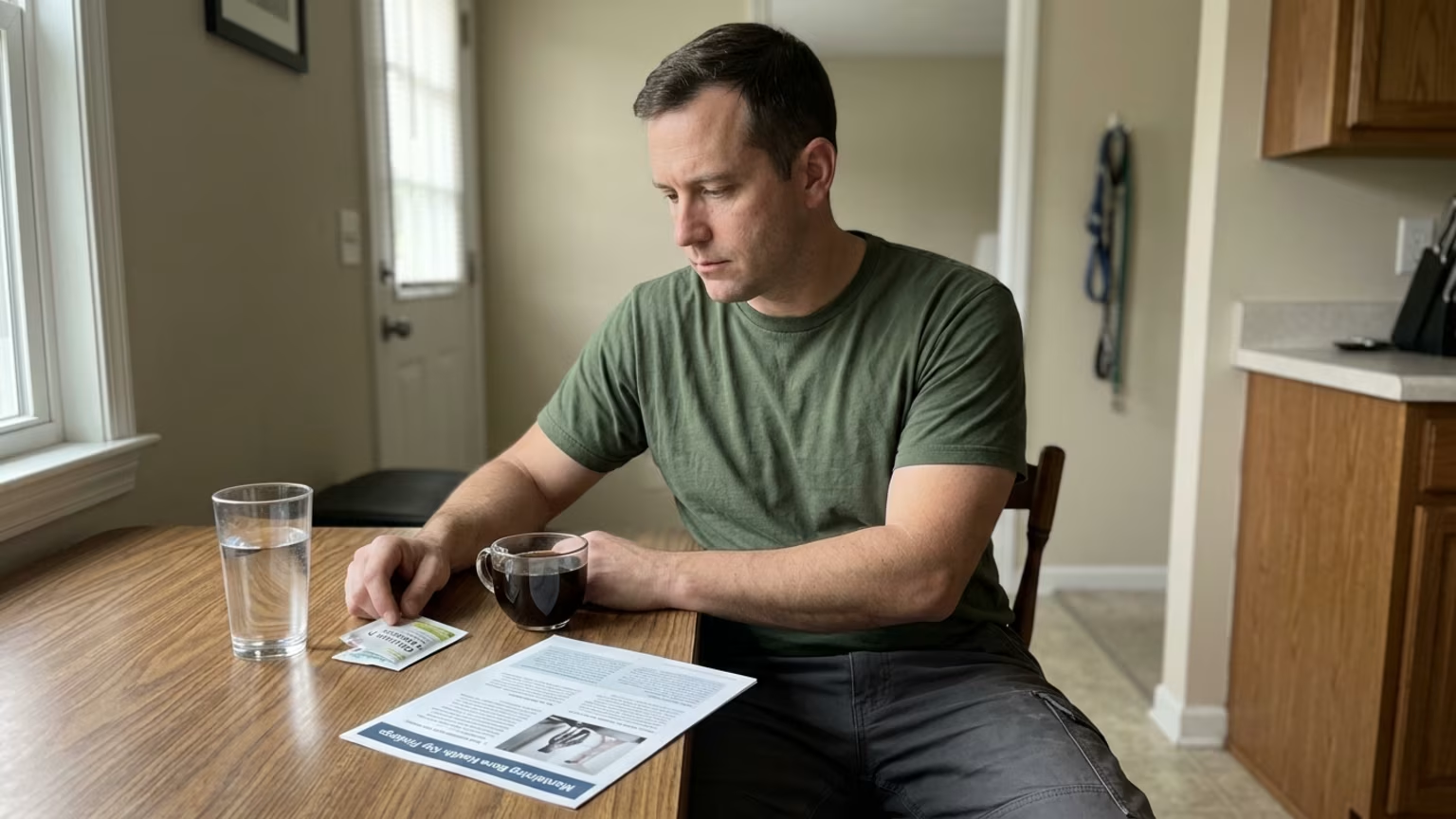

A 2026 review of 124 trials found brisk walking and jogging offer modest bone density benefits. Learn how veterans can adapt these findings for healthy aging.





In September 2026, a major study published in The BMJ evaluated 124 randomized trials to compare how different exercise approaches affect bone health. The researchers used a hierarchical network meta-analysis to assess data from 18,429 adults aged 40 and older. They examined bone-mineral density at the lumbar spine, the femoral neck, and the total hip. The review found that brisk walking and jogging were the most consistently beneficial exercise categories for improving bone density in these critical areas.
Bone health remains a highly practical occupational priority for military personnel and veterans. The Department of Defense explicitly identifies osteopenia, osteoporosis, and certain histories of atraumatic fracture as conditions relevant to military medical accession standards. Maintaining skeletal durability is necessary for carrying heavy loads, preventing stress injuries, and ensuring long-term physical readiness. This new research provides evidence on how structured physical activity can serve as an accessible complement to clinical treatments.
As service members transition out of active duty, priorities often shift from peak operational performance to sustainable physical longevity. The military and veteran health resources available today increasingly emphasize proactive joint and bone care. The BMJ review highlights that preserving bone mass does not require specialized clinical equipment or expensive facility memberships. Instead, consistent and structured physical activity offers targeted skeletal benefits alongside broader systemic advantages for older adults.
These findings carry significant weight for veterans transitioning into civilian life and managing a strategy for healthy aging. Preserving lower body strength and load tolerance directly supports independence and continued participation in daily activities. However, the available summaries do not show that these 124 trials were conducted specifically on military personnel or veterans. Increased bone-mineral density does not automatically translate to better ruck march performance or faster injury rehabilitation.
The researchers provided specific estimates for how walking and jogging influence skeletal strength. At the lumbar spine, brisk walking or jogging produced a favorable estimated benefit of approximately 0.013 g/cm². For the femoral neck, the estimated improvement was roughly 0.009 g/cm². Brisk walking and jogging were also the only exercise types reported in the summaries to improve total hip bone-mineral density, showing an estimated effect of 0.021 g/cm².
The study also offered a dose-response analysis to help quantify how much movement is necessary. Clinically meaningful benefits for the lumbar spine may begin at approximately 400 MET-minutes per week. For the femoral neck and total hip, that estimated threshold rises to approximately 600 MET-minutes per week. The researchers translated this 600 MET-minute figure into roughly two to three hours of brisk walking or jogging weekly.
In practical terms, that volume equals about 20 to 30 minutes of brisk walking or jogging on most days. The relationship between exercise volume and bone health is broadly nonlinear or inverse-U-shaped. This means that more exercise is not always better, and the physiological benefits tend to plateau at higher training volumes. The 600 MET-minute estimate should function as an approximate research target rather than a strict universal prescription for every individual.
Individual factors heavily influence how a person responds to this type of physical activity. Improvements appeared more noticeable among middle-aged adults and people with a normal body mass index. Conversely, the physiological effects were more muted among older adults and individuals carrying extra weight. The evidence for these bone-mineral density findings was rated as low to moderate certainty, meaning the results should guide training discussions rather than serve as absolute guarantees.
Service members should view these findings as a weekly training target rather than a strict pass or fail metric. The estimated 400 to 600 MET-minutes provide a useful baseline for programming aerobic activity throughout the week. Because the research grouped brisk walking and jogging together in key analyses, veterans do not necessarily need to run to pursue these benefits. Brisk walking offers a highly effective alternative for those who cannot tolerate the high-impact forces of running.
These findings should inform, rather than completely overhaul, a veteran's current physical conditioning routine. The favorable results for walking and jogging do not suggest that resistance training is unnecessary or ineffective. Combined aerobic and resistance exercise also produced favorable results for the lumbar spine. A balanced program addresses both aerobic capacity and muscular strength, supporting a comprehensive training and performance strategy.
The review emphasizes that a single exercise modality rarely addresses every aspect of physical aging. The favorable findings for combined aerobic and resistance exercise reinforce the need for comprehensive programming. Strength training provides the necessary stimulus to preserve lean muscle mass, which naturally declines alongside bone density as we age. Relying exclusively on walking or jogging neglects the upper body and core strength required for a durable physical foundation.
The study also investigated how mixed aerobic and mind-body exercises influence physical longevity. Researchers noted signals that these specific modalities might reduce fracture risk, though these findings were based on low-certainty evidence. The available summaries do not prove that yoga or Pilates independently prevent fractures across all populations. However, these activities still hold value for improving mobility, reducing stiffness, and supporting active recovery routines.
Service members must adjust these targets based on their individual medical histories and physical limitations. Running may be inappropriate for individuals with joint disease, recent fractures, severe osteoporosis, or a history of stress injuries. Veterans with persistent pain should seek individualized physical therapy guidance before abruptly adding high-impact exercise to their routines. The study found low-certainty evidence regarding fracture prevention, meaning walking alone does not guarantee safety from skeletal injuries.
For a military or veteran audience, useful fitness outcomes extend far beyond clinical bone density measurements. Useful metrics include manageable pain levels, overall walking tolerance, muscular strength, and physical balance. A veteran must retain the ability to perform occupational tasks and handle the physical demands of daily civilian life. The BMJ review specifically assessed bone-mineral density and fracture outcomes, which represent just one component of overall physical capability.
The VA continues to develop exercise-oriented services tailored to older veterans with varying mobility levels. One recent VA telehealth physical therapy study planned to recruit 126 veterans aged 60 and older. The program provided high-intensity rehabilitation, coaching, and social support through three video sessions per week for 12 weeks. This initiative also included four additional coaching sessions over the following 12 weeks, using Fitbit devices to track physical activity.
Local VA facilities provide multiple movement-oriented services designed around individual veteran abilities and goals. These programs include adaptive sports, recreation therapy, supervised walking groups, yoga, and tai chi. While these programs do not replicate the exact BMJ study dose, they illustrate how exercise can be adapted safely for veterans. Utilizing these resources can help former service members integrate structured movement into their daily routines.
Veterans facing barriers to exercise access or mobility can leverage dedicated VA programs to build consistency. Programs are often designed around individual medical limitations, ensuring that former service members can participate safely regardless of their baseline fitness. A physical therapist can help a veteran establish a safe starting point and map out a gradual progression plan. This clinical oversight is vital when modifying an exercise plan for a history of osteoporosis or prior musculoskeletal injuries.
As large-scale research continues to clarify the specific volumes and types of exercise that protect skeletal health, military medicine will need to adapt its long-term protocols. The current findings provide a solid baseline for middle-aged adults, but questions remain about how these exact exercise doses perform in populations with service-connected musculoskeletal injuries. Will future clinical guidelines establish customized, military-specific training thresholds to protect veteran bone density across decades of aging?
Follow BattleVet for practical guidance on military and veteran health, strength, recovery, testosterone, sleep and healthy aging. Stay connected for new articles, research backed insights and clear information to help you stay capable for the years ahead.


An ABC investigation highlighted concerns over DVA-funded medicinal cannabis and esketamine prescribing for veterans, leading to tightened rules and oversight.

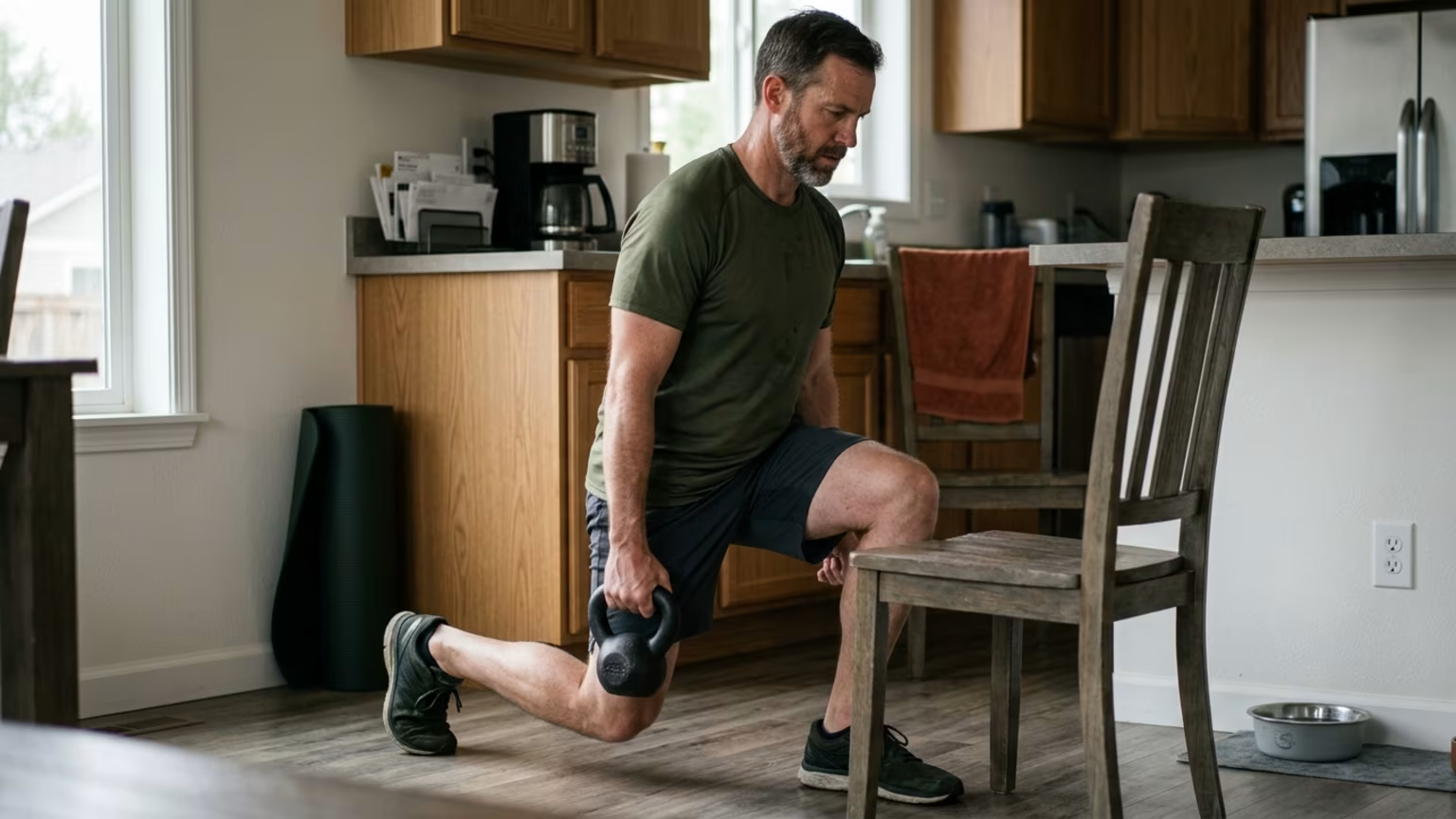
Recent reports highlight a 10-minute daily resistance habit for adults over 40. Learn how brief fitness routines compare to federal strength guidelines.

New European Association of Urology guidance outlines targeted early-morning testosterone, glucose, and lipid testing to properly evaluate men with symptoms.
Build better habits around strength, recovery, sleep, hormones and healthy aging with practical guidance for active military personnel and veterans.
Explore BattleVet