

A Neurology study of nearly 10 million VA records shows elevated ALS risk in Air Force, Navy, and Coast Guard veterans. Learn how to track and monitor symptoms.





A maintainer stands on a noisy flightline, wiping aviation fuel from their hands before checking a clipboard. While that specific environment is routine for many, a recent Neurology study of VHA records changes how we view service related neurological risks. The study found that male Air Force veterans face a 29% higher rate of ALS compared to their Army peers. This data point matters because it gives current and former service members exact information to navigate their long term medical care.
The primary response to this new data involves proactive clinical symptom monitoring. A recent study published in Neurology examined Veterans Health Administration records from January 2000 through October 2024. The research investigated whether ALS incidence varied by military branch, rank, and length of service. The massive analytic sample included 9,157,938 male veterans and 784,941 female veterans.
This massive scale provides a highly credible foundation for the reported percentages. Within this extensive group, researchers identified 13,935 incident ALS cases among men and 484 among women. This monitoring approach requires veterans to pay strict attention to early physical changes. ALS is a condition that affects nerve cells involved in voluntary movement.
A proactive evaluation protocol means looking for new or worsening muscle weakness, unexplained muscle wasting, or sudden loss of coordination. Any persistent changes in speaking, eating, walking, or breathing should prompt immediate discussion with a medical professional. Veterans who notice a loss of physical coordination should not attempt to self diagnose using internet research. A formal diagnosis requires thorough medical assessment, as symptoms can often mimic other less severe conditions.
The statistical evidence strongly supports targeted awareness for certain military demographics. Among male veterans, service in the Air Force was associated with a 29% higher ALS rate than service in the Army. Navy service was associated with a 15% higher rate, and Coast Guard service showed a 26% higher rate. The corresponding hazard ratios were 1.29 for the Air Force, 1.15 for the Navy, and 1.26 for the Coast Guard.
Interestingly, male Marine veterans had a lower ALS rate than male Army veterans. The data showed a hazard ratio of 0.78 for Marines. This is equivalent to a 22% lower rate in the study's comparison. The researchers controlled for age and adjusted for race and ethnicity, with analyses clearly stratified by sex.
This symptom monitoring method is highly relevant for younger personnel transitioning to civilian life. The study noted that branch related differences were greatest among the youngest male veterans, ages 17 to 61. In this specific age group, the hazard ratio range for Air Force, Navy, and Coast Guard veterans compared with Army veterans was 1.26 to 1.51. In contrast, the differences were smallest among men older than 75, where the ratio dropped to 0.99 to 1.12.
A secondary intervention involves rigorously documenting specific occupational environments. The Neurology study identified strong associations between military rank and disease incidence, making career details highly relevant. Male officers had a 64% higher rate than male enlisted personnel, while female officers showed a 72% higher rate. However, researchers noted that the female veteran results should be interpreted cautiously because cases were relatively uncommon in women.
This documentation method requires service members to record their exact duty environments and daily hazards. Marc Weisskopf, the study’s senior author, stated that military service is a known risk factor. He also noted that relatively little is known about which exact aspects contribute to that risk. Weisskopf suggested that officers and people who served in the Air Force, Navy, or Coast Guard may have encountered military environments associated with increased risk.
Business Insider reported Weisskopf’s explanation regarding the different environments experienced by officers and enlisted personnel. He explained that officers might experience psychosocial stress, high G-forces, and noise. They might also deal with vibration and circadian disruption. Meanwhile, enlisted personnel might more often encounter intense physical activity and heavy weapons.
Enlisted service members also frequently work around fuels and solvents. Building a comprehensive service record gives specialists critical context during future medical evaluations. The study did not establish that any particular occupation or aircraft caused the observed differences. It also did not link the disease to any specific vessel or weapon system.
Because it was an observational longitudinal cohort study, it identified associations rather than proving that a branch or job caused the disease. The researchers’ next stated priority is exposure research to determine whether work conditions, physical demands, or stress explain the patterns. Tracking your own individual exposure history bridges the gap between broad statistical trends and your specific clinical reality. Counterintuitively, the data showed that longer military service was actually associated with lower disease rates.
Researchers suggested this could reflect distinctive risks among people who served for shorter periods. It might also point to other unmeasured characteristics of those service groups. Documenting exact timelines, deployment lengths, and specific roles helps healthcare providers sort through these complex variables. Useful details can include branch, rank, and occupational specialty.
You should also note specific aircraft assignments and deployment locations. Service members should also log fuel handling, weapons exposure, noise, and vibration. Although the study did not prove that any of these specific exposures caused the disease, having the data ready is invaluable. The strongest immediate public health implication is to encourage targeted follow up research while avoiding unnecessary alarm.
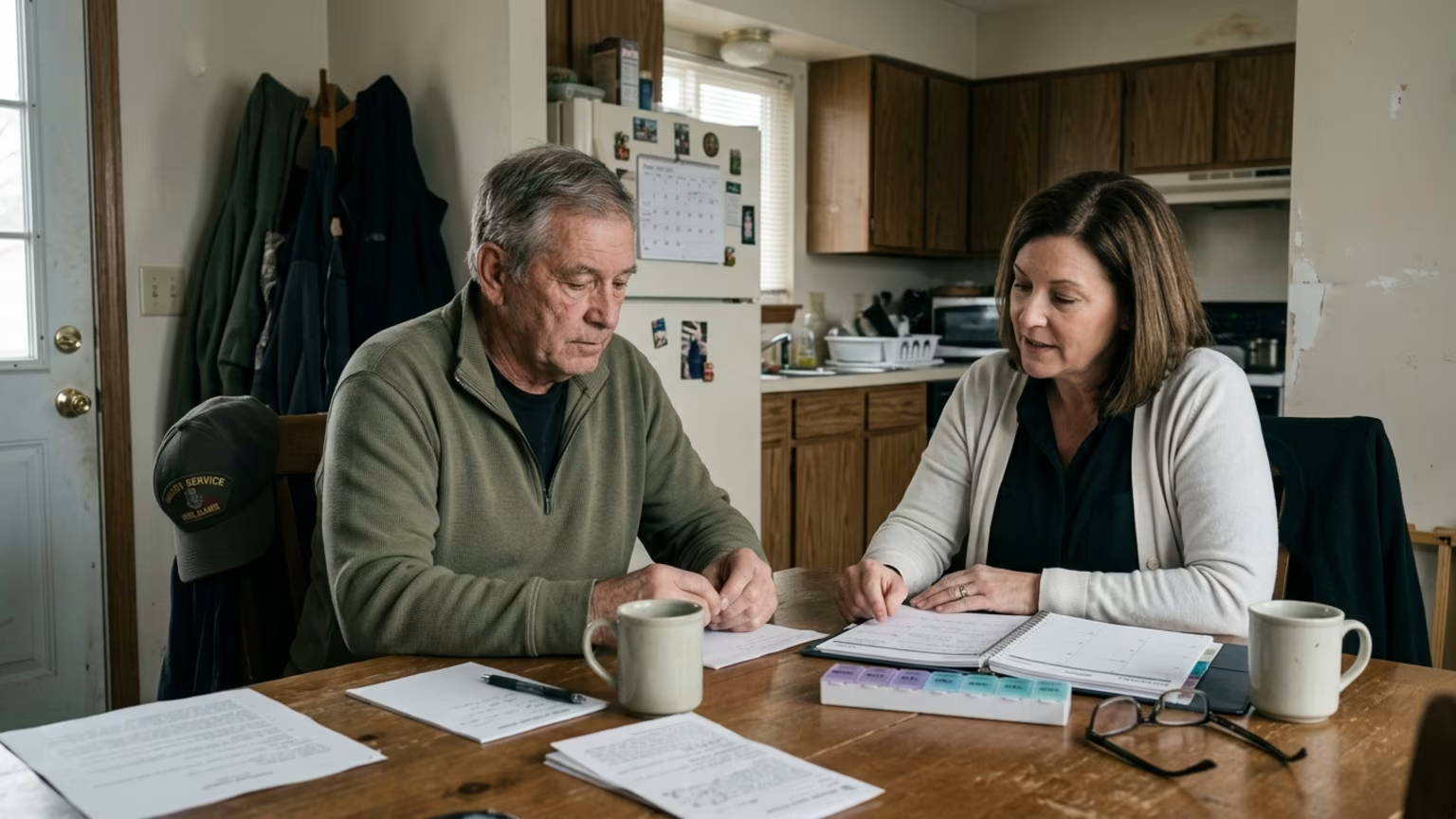
Veterans must decide how to apply this research to their personal healthcare planning. For individuals without any current physical symptoms, the focus should remain entirely on occupational documentation. You can safely record your past deployments, specific aircraft assignments, and chemical exposures for your personal records without panic. This ensures the information is ready if your health status ever changes in the future.
Those actively experiencing unexplained physical decline require a fundamentally different response. These individuals must immediately prioritize clinical evaluation over basic record keeping. You should request a thorough assessment through a VA primary care provider or a qualified civilian clinician. A complete veteran lifestyle and healthcare strategy means knowing when to shift from passive historical documentation to active medical intervention.
It is also vital to understand the mathematical limits of this specific data. The Army served strictly as the reference group, meaning the reported percentages describe relative comparisons rather than absolute probabilities. Weisskopf cautioned that the condition is rare and that the overall risk remains small. He emphasized that these statistically significant differences represent modest absolute increases in risk for individual service members.
A relative increase can sound much larger than its practical effect when the underlying disease is fundamentally rare. Because the researchers did not directly measure specific military jobs, the study cannot determine whether pilots or mechanics account for the patterns. It also cannot tell if shipboard personnel or weapons specialists drove the statistical differences. The findings might also reflect differences in age, race, ethnicity, or healthcare use that were not fully captured in the records.
Understanding these nuances helps veterans approach their health discussions with logic rather than anxiety. Veterans should treat the study as a reason to stay attentive to progressive neurological changes, not as a grim prediction. This data does not establish a recommendation for universal screening of asymptomatic veterans. Instead, it identifies groups that warrant additional research and justifies a lower threshold for discussing concerning symptoms with a doctor.
The most effective protocol for active personnel and veterans involves a balanced combination of physical awareness and historical documentation. While the data shows elevated risk profiles for certain branches, it does not prove that these branches inevitably cause the disease. The primary takeaway is that early symptom recognition and detailed occupational tracking offer the best defensive posture for long term wellbeing. Solid military health practices rely on objective evidence, measured responses, and clear communication with your medical team.
Maintaining this awareness aligns perfectly with broader healthy aging principles after military service. By proactively tracking your physical baseline, you ensure that any unexpected muscular or neurological changes are caught early. You can then provide your healthcare team with a complete picture of your military history, rank, and potential environmental exposures. This proactive approach ultimately speeds up the diagnostic process.
We return to that mechanic standing on the noisy flightline, wiping fuel from their hands. They do not need to view their daily environment with immediate fear or assume a dire medical outcome. Instead, they can use this massive set of VHA data to build a smarter, more informed approach to their long term capability and neurological health.
Follow BattleVet for practical guidance on military and veteran health, strength, recovery, testosterone, sleep and healthy aging. Stay connected for new articles, research backed insights and clear information to help you stay capable for the years ahead.


Combat Stress’s workplace guidance emphasizes listening over diagnosis. Recent U.S. veteran insomnia research adds context for sleep and recovery concerns.


ErythroMer's reported storage design could matter for military care. An academic review still lists it as preclinical, with human evidence ahead.
A large veteran study links PTSD and documented social needs to later cognitive impairment, reinforcing the value of connected care planning.
Build better habits around strength, recovery, sleep, hormones and healthy aging with practical guidance for active military personnel and veterans.
Explore BattleVet