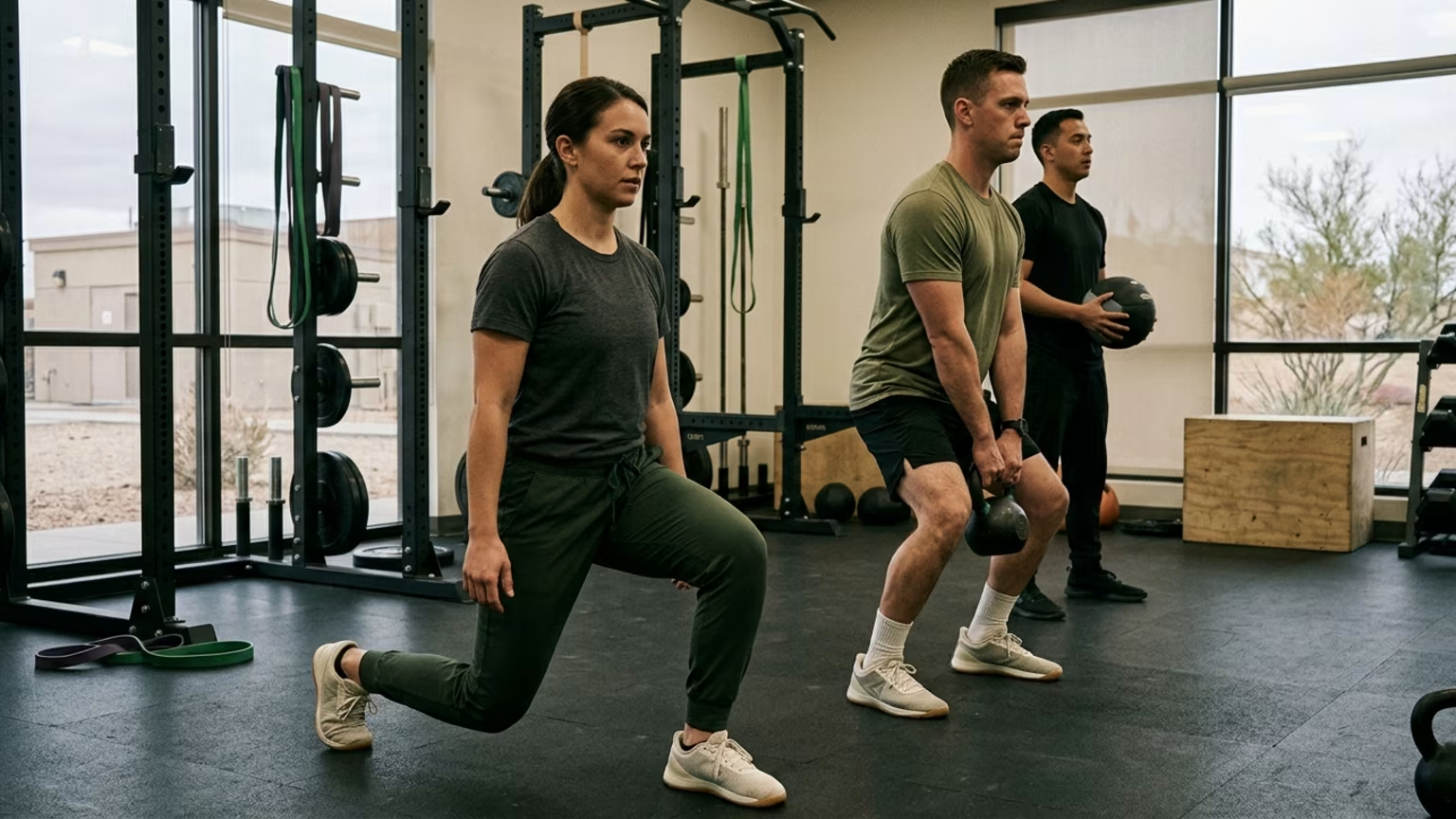

Department of War leaders visited the 6th CTS at Nellis Air Force Base to emphasize cardiovascular and strength conditioning for tactical military readiness.





How do I build physical readiness that actually translates to operational and long-term capability? Grinding yourself into the ground is not a valid measure of military readiness. True physical capability requires targeted adaptation instead of endless punishment. We hear this question often at BattleVet, and it is a valid concern for anyone managing the physical toll of military service.
The human body requires structured cardiovascular and strength conditioning to survive demanding environments. Leaders in the military are increasingly recognizing that tactical fitness must be structured, repeatable, and scalable. Integrating heavy lifting with cardiovascular stamina helps prepare service members for the actual requirements of their jobs. Understanding how to balance these competing demands is the key to maintaining health.
On Aug. 18, 2026, Department of War leaders completed a functional-fitness circuit with Airmen from the 6th Combat Training Squadron. Patrick Weaver and Philip Hegseth joined the unit at Nellis Air Force Base in Nevada. Weaver serves as the deputy chief of staff to the Secretary of War. Hegseth acts as the senior advisor to the secretary for the Department of Homeland Security and liaison officer to the Department of War.
The official account framed cardiovascular and strength conditioning as important preparation for the physical demands of combat environments. This leadership visit underscored command-level support for integrated physical preparation. The event highlighted the importance of moving beyond traditional aerobic tests alone. Command visibility on physical training standards reinforces the necessity of functional fitness.
Commanders and defense officials are taking an active interest in how troops prepare for physical combat. This leadership involvement signals a shift toward treating fitness as a professional capability rather than a simple administrative requirement. When leaders actively participate in the physical training of their units, it validates the effort required to maintain high standards. The visit to Nellis Air Force Base provided a visible endorsement of rigorous, well-designed physical conditioning.
The documented 6th CTS event combined cardiovascular conditioning, strength-oriented tasks, loaded movement, and agility stations. The article identifies a 135-pound sled used by Capt. Thomas Hilvers and Staff Sgt. Jaidah Terry. Hegseth performed a 40-meter farmers-carry during the workout. Participants also used treadmills, rowing machines, assault airbikes, and running stations for general physical training.
The workout involved tactical Airmen and several military leaders, including U.S. Army Maj. Justin Rapp and Capt. John Dabagian. Capt. Jacob Hodney, tactical-athlete coach Eric Czachor, and director of operations Lt. Col. Dustin Nedolast were also present. This structured approach to group physical training allows units to target multiple physical systems simultaneously. It provides a model that individual service members can adapt for their own weekly programming.
The specific exercises chosen for the circuit reflect a modern understanding of functional readiness. Pushing a heavy sled requires lower-body power, core stability, and significant cardiovascular effort. The 40-meter farmers-carry taxes grip strength, postural endurance, and the ability to stabilize a load while moving. These movements mimic the physical challenges of extracting a casualty or moving heavy equipment under fire.
Using assault airbikes and rowing machines allows service members to achieve high heart rates with lower joint impact. This balance between heavy lifting and low-impact cardiovascular work is essential for long-term joint preservation. Treadmill running and general physical training stations ensure that basic locomotion remains a priority. Integrating these different modalities into a single circuit challenges the body to recover quickly between varied tasks.
Military duties require moving heavy loads, resisting fatigue, and maintaining power under stress. A Military Medicine review reported that greater lean mass and favorable muscle distribution were generally associated with several measures of military physical performance. This includes better strength, power, load carriage, and cardiorespiratory capabilities. The same review reported that lower body-fat levels and lower central adiposity were generally associated with better performance.
Greater lean mass and fat-free mass were associated with strength, task-specific performance, and selection-related outcomes. Building these specific capacities helps personnel maintain function during long deployments. Aerobic endurance allows service members to recover faster between bouts of high-intensity work. Integrating these physical traits ensures a higher baseline of operational readiness across diverse environments.
Muscle mass provides a protective buffer against injury and metabolic decline. Service members with greater lean mass are generally better equipped to handle the rigorous physical demands of their occupations. This physiological advantage is especially apparent during tasks that require moving heavy external loads over uneven terrain. Combining this muscular strength with a strong aerobic base creates a highly resilient service member.
While body composition is not the only factor in readiness, it heavily influences overall physical capability. Favorable muscle distribution supports better posture, reduces the risk of spinal injuries, and improves load carriage efficiency. Personnel should focus on building functional muscle tissue rather than just trying to pass a minimum standard. Developing physical robustness provides a greater margin of safety when unexpected challenges arise during a mission.
The Army's Holistic Health and Fitness model treats physical conditioning as one part of a five-domain readiness framework. The program at Fort Rucker was fully launched in October 2025 and serves Soldiers from the 1st Aviation Brigade. The Fort Rucker program targets physical, nutritional, mental, sleep, and spiritual readiness. H2F Director Jeremy McGowan described the program as readiness-centric.
Fort Rucker’s H2F physical component combines physical therapy with strength and conditioning, with emphasis on rehabilitation, injury prevention, and functional power. The model uses a multidisciplinary staff that includes a physical therapist, a dietitian, strength coaches, and a cognitive-performance specialist. Addressing physical rehabilitation alongside performance training ensures that minor injuries do not become chronic conditions. This structural shift recognizes that preventing an injury is far more effective than trying to treat one later.
Physical training alone cannot overcome the negative effects of chronic stress, poor nutrition, or insufficient sleep. The Holistic Health and Fitness model recognizes that optimal performance requires addressing the entire lifestyle of the service member. By investing in physical therapy and injury prevention, the Army acknowledges that keeping personnel healthy is more efficient than replacing them. This multidisciplinary approach represents a significant evolution from older, attrition-based training models.
I remember waking up after a poor night of sleep and realizing that my training recovery was taking much longer than it used to. I realized that readiness is more than just pushing through the fatigue. It requires a dedicated approach to sleep and hormonal health, which completely shifted how I view long term capability. Prioritizing restorative rest periods is mandatory for tissue repair and neurological recovery.
A high-intensity circuit will only improve your baseline if your body has the raw materials and time to rebuild itself. Sleep deprivation significantly impairs cognitive function, muscular repair, and immune system regulation. Ignoring these biological requirements will eventually result in diminished performance and increased injury rates. True physiological adaptation happens when you are resting, not when you are actively training.
A high-intensity circuit is a training category rather than a mandatory daily prescription. You should organize a session around a warm-up, a loaded push, an aerobic interval, and a controlled strength movement. Progression must be based on repeatable execution and recovery. Trying to copy a 135-pound sled push without assessing your own joint health will compromise your longevity.
A useful weekly structure could include separate strength and aerobic sessions, with one mixed circuit day if recovery permits. Tracking practical outcomes like consistent completion, running pace, and movement quality provides better data than simply measuring exhaustion. You do not need to mimic every exercise performed by the 6th Combat Training Squadron to achieve excellent fitness. Focus on steady progression over time instead of maximal exertion every single workout.
Scaling a workout appropriately requires an honest assessment of your current physical condition. If you have not performed heavy loaded carries recently, you should start with lighter weights to condition your tendons. Jumping straight into a maximal effort circuit without adequate preparation dramatically increases the risk of acute injury. Proper progression builds the necessary tissue tolerance to handle heavier loads safely in the future.
Units can use the Nellis event as a prompt to track practical outcomes during their own physical training sessions. Measuring perceived exertion, running pace, and overall movement quality provides valuable feedback on training effectiveness. The goal is to complete the circuit with crisp, controlled movements rather than sloppy, exhausted repetitions. Quality of movement should always take precedence over simply finishing the workout as fast as possible.
Standard training circuits often fail to account for different training histories, injuries, or medical restrictions. Veterans returning to training after a long layoff should scale impact and load gradually. A high-intensity circuit can be difficult to scale safely across personnel with diverse occupational demands. Loaded carries, sled pushes, running, and airbike work impose different physiological demands and are not interchangeable.
What works for an active tactical Airman might cause joint degradation for a veteran managing chronic injuries. Maintaining healthy mobility standards requires modifying exercises to avoid pain while still challenging the muscular system. Older adults or those recovering from combat injuries must prioritize joint stability over raw speed. The goal is to stimulate muscle growth without creating excessive inflammation in vulnerable areas.
Service members recovering from concussions or musculoskeletal trauma often need specialized programming that avoids rapid changes in direction. High-intensity intervals can also provoke unwanted stress responses in individuals managing severe operational fatigue. In these situations, low-intensity steady-state cardio and controlled resistance training offer a safer path to recovery. Recognizing when to scale down intensity is a critical skill for long-term health maintenance.
Navigating healthcare systems requires clearly communicating your physical history to your physician. When meeting with a VA doctor, explain the specific demands of your past military training. Ask for objective assessments of your joint health before starting aggressive circuits. Share your goals for maintaining functional power and request a referral to a physical therapist if you have pain.
This approach helps medical professionals provide accurate guidance for your current biological realities. Open communication with providers ensures your military health care strategy aligns with your performance goals. Do not assume that your doctor knows exactly what a military fitness circuit entails. Bring specific examples of the movements you plan to perform to ensure they are safe for your joints.
If you are experiencing hormonal symptoms or excessive fatigue, request comprehensive blood work to check your baseline. Discuss how your sleep quality and recovery times have changed since leaving active duty. Providing this context allows specialists to look beyond basic symptom management and address the root causes of physical decline. Proactive medical care is essential for maintaining physical capability as you age.
Military readiness programs increasingly address sleep, mental health, injury prevention, and recovery alongside exercise. The integration of physical capability and deliberate rest determines how long you can remain active. True capability is measured by what your body can sustain over decades of consistent use. The true challenge is knowing when to push harder and when to step back.
Follow BattleVet for practical guidance on military and veteran health, strength, recovery, testosterone, sleep and healthy aging. Stay connected for new articles, research backed insights and clear information to help you stay capable for the years ahead.


Combat Stress’s workplace guidance emphasizes listening over diagnosis. Recent U.S. veteran insomnia research adds context for sleep and recovery concerns.


ErythroMer's reported storage design could matter for military care. An academic review still lists it as preclinical, with human evidence ahead.
A large veteran study links PTSD and documented social needs to later cognitive impairment, reinforcing the value of connected care planning.
Build better habits around strength, recovery, sleep, hormones and healthy aging with practical guidance for active military personnel and veterans.
Explore BattleVet