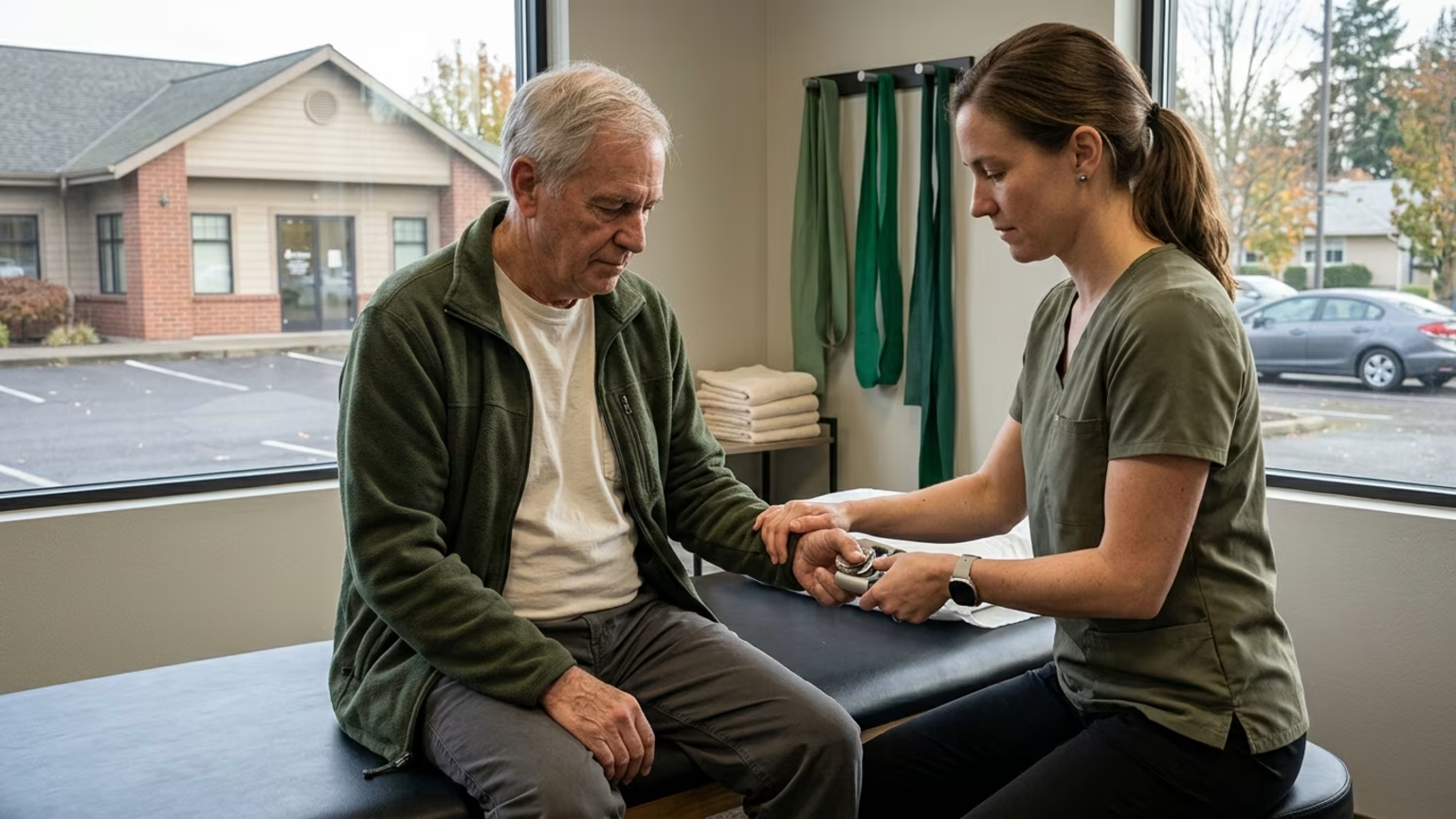

A Nature Aging study explains how aging muscle trades power for protection. Learn what this biological shift means for veteran health and strength training.





On September 29, 2026, the University of Copenhagen’s Novo Nordisk Foundation Center for Basic Metabolic Research announced significant findings regarding aging muscle. The research details a biological paradox where muscles become weaker while simultaneously shifting toward slow-twitch fibers. These slow-twitch fibers are typically more fatigue-resistant and rich in mitochondria. The study involved more than 20 institutions and appeared in the prominent journal Nature Aging.
The research paper is titled “Mitochondrial membrane lipid cardiolipin controls fiber-type adaptations in ageing muscle via ERRγ.” Scientists linked this age-related muscle shift to declining levels of cardiolipin, which is a vital lipid located in the inner mitochondrial membrane. The researchers reported age-related declines in cardiolipin alongside disrupted mitochondrial structure and function. They observed this specific decline in both human and mouse muscle samples.
Understanding how muscles degrade over time is critical for managing long-term physical health. The University of Copenhagen announcement provides new insight into the microscopic changes that dictate human movement. The study highlights the complex relationship between cellular energy systems and raw physical strength.
Physical capability is a central concern for active duty personnel, veterans, and former service members. As people age, a loss of explosive power can significantly impact daily functioning, mobility, and physical independence. This study provides a biological framework for why older adults lose physical capability despite their muscles attempting to adapt. BattleVet provides clear, research-backed guidance to help military personnel navigate these complex physiological changes.
The paradox identified in the study is particularly relevant for maintaining long-term physical readiness. Fast-twitch muscle fibers generate the raw power needed for lifting heavy objects, sprinting, or moving quickly. Slow-twitch fibers sustain prolonged, steady activity. Finding that aging muscles prioritize slow-twitch adaptations helps explain why an older veteran might maintain basic endurance but lose their maximum physical strength.
BattleVet views physical performance and long-term health as tightly interconnected priorities. Readers can review our healthy aging and longevity resources to better evaluate their training and physical restoration methods. This approach helps veterans avoid health fads that promise to reverse aging with unproven dietary supplements. Maintaining physical capability requires consistent, evidence-based effort rather than quick fixes.
Proper physical restoration plays a role in supporting overall cellular health during the aging process. Readers can review our recovery and sleep articles to understand how lifestyle factors influence physical longevity. Understanding the difference between a natural biological adaptation and an actionable medical treatment is crucial for informed health decisions. This research outlines a cellular trade-off rather than providing an immediate roadmap for human medical therapy.
The researchers relied on young mice and cultured cells to test their proposed biological mechanism. In the young mice, experimentally lowering cardiolipin produced a rapid fast-to-slow fiber shift. This directly mirrored the biological changes researchers had previously observed in aged mice and older human muscle samples. The experiment successfully demonstrated that cardiolipin loss alone could trigger the restructuring of muscle fibers.
The team then tested if replacing the lost lipid could alter the negative physical outcomes. In mice where cardiolipin was partially restored to roughly two-thirds of normal levels, muscle wasting began to reverse. This partial restoration was also directly associated with the prevention of early deaths in the affected animal models. While human muscle samples confirmed the age-related lipid decline, the intervention tests were strictly limited to these animal models.
The study identified a specific signaling pathway involving reactive oxygen species and the nuclear receptor ERRγ. Researchers tested this cellular pathway using cultured muscle cells in a controlled environment. Removing reactive oxygen species from the cells effectively blunted the fiber shift, while blocking ERRγ shut the shift down entirely. However, the exact physiological mechanism linking cardiolipin loss to ERRγ remains unresolved in the published announcement.
Study first and co-corresponding author Fabian Finger characterized this biological switch as a functional trade-off. He described the process as the muscle trading power for protection in response to internal mitochondrial stress. Senior author Zach Gerhart-Hines noted that the partial cardiolipin recovery observed in mice was an encouraging development. He stated that increasing cardiolipin or targeting ERRγ remain future therapeutic questions rather than established human treatments.
This research explains a potential mechanism behind muscle weakness, but it does not validate a new human exercise program. Active personnel and veterans should rely on established physical performance protocols to combat age-related muscle loss. Modifying your routine to maintain physical capability requires challenging the muscles through structured, progressive resistance exercise. Our training and performance resources consistently emphasize foundational movement patterns over untested biological theories.
A recent article from the Military Officers Association of America provides practical guidance for preserving muscle after military service. The publication strongly recommends engaging in two to three weekly training sessions to combat age-related muscle loss. These structured sessions should utilize fundamental pushing, pulling, squatting, and hinging movements to maintain full-body strength. The guidance explicitly states that the final repetitions in these exercises must be genuinely hard to force adaptation.
Clinical recommendations similarly highlight the absolute necessity of resistance training for aging populations. A scientific statement from the European Society of Cardiology addresses the prevention and management of sarcopenia in people with cardiovascular disease. The society advises implementing optimized exercise routines that include resistance training alongside standard endurance exercise. They also stress the importance of adequate nutritional intake to support muscle preservation and cardiovascular health.
Veterans who already face severe physical limitations should seek appropriately tailored clinical guidance from a medical professional. The U.S. Department of Veterans Affairs describes an evidence-based exercise and health-promotion clinic for older patients. This specialized program assists veterans at risk of institutionalization due to physical limitations that may be modifiable with exercise. Focusing on proven clinical care is much safer than extrapolating a new fitness protocol from early mouse research.
Understanding this research helps veterans separate emerging cellular science from current, practical medical application. The identification of a mitochondrial lipid pathway does not replace the immediate need for fundamental resistance training. Consistent physical effort remains the most effective, research-backed method for maintaining power and mobility as you age.
The University of Copenhagen research provides a fascinating glimpse into how muscles adapt to metabolic stress. Identifying the specific roles of cardiolipin and the ERRγ receptor opens new doors for investigating age-related physical decline. How long will it take medical researchers to determine if targeting these cellular mechanisms can safely preserve muscle power in older veterans?
Follow BattleVet for practical guidance on military and veteran health, strength, recovery, testosterone, sleep and healthy aging. Stay connected for new articles, research backed insights and clear information to help you stay capable for the years ahead.


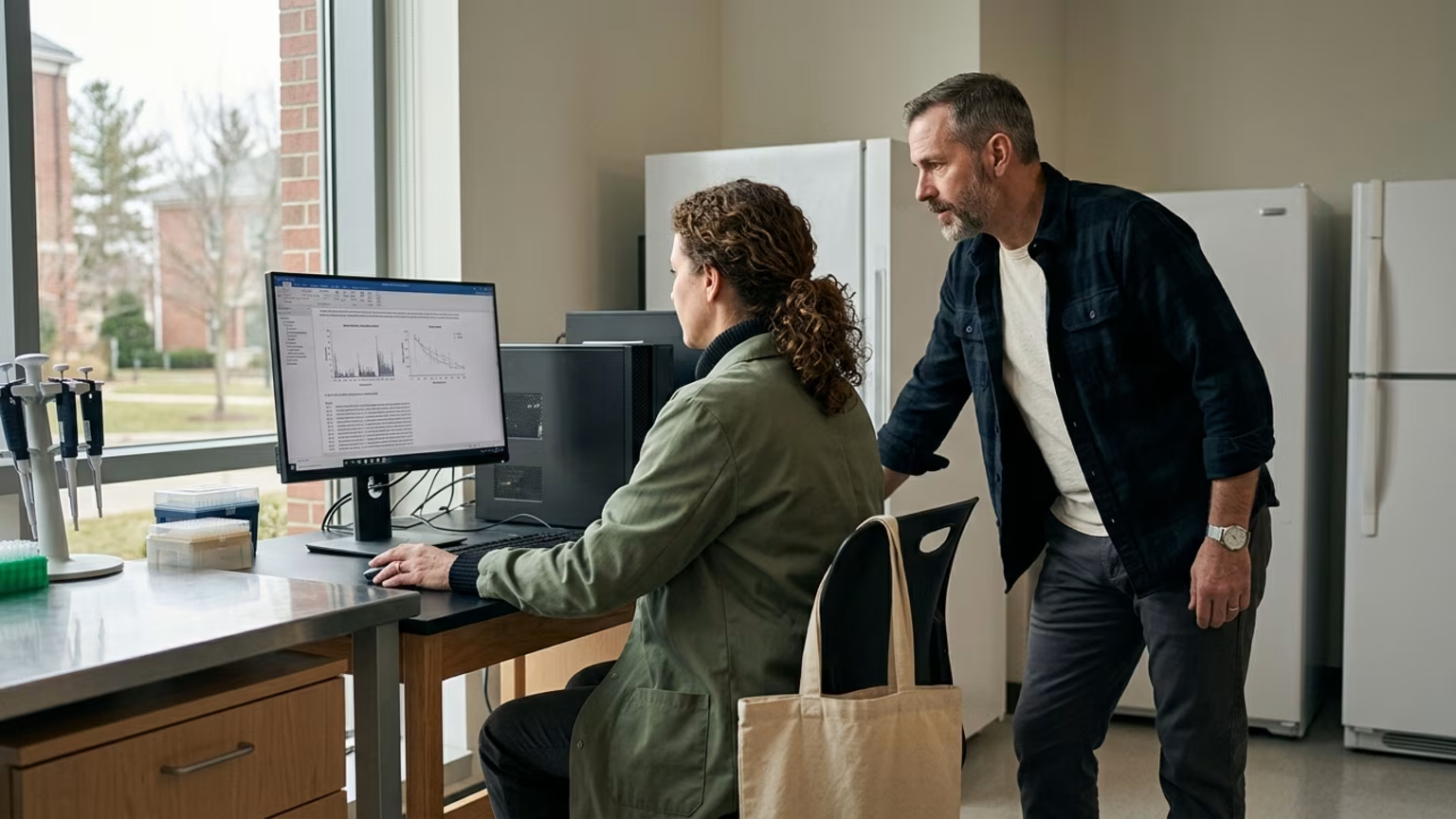
Sampled received a $27.1 million VA contract to expand the Million Veteran Program. Learn how this genetic data impacts veteran health research and care.

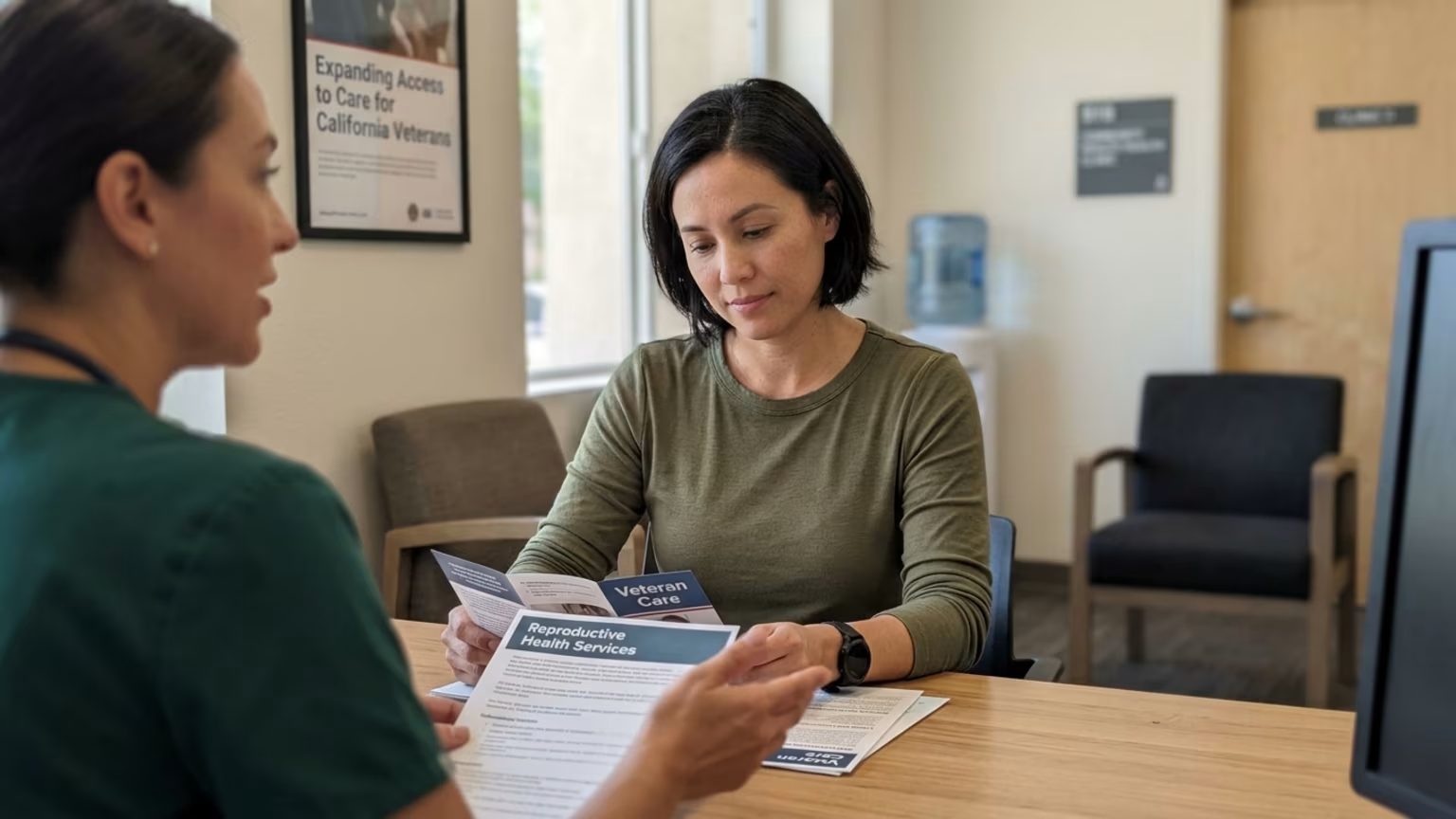
California signed new laws expanding reproductive healthcare access for veterans. Learn how to navigate these state changes alongside federal VA benefits.

Recent reviews show progressive muscle relaxation and biofeedback offer practical stress support but cannot replace clinical care for veteran PTSD or insomnia.
Build better habits around strength, recovery, sleep, hormones and healthy aging with practical guidance for active military personnel and veterans.
Explore BattleVet