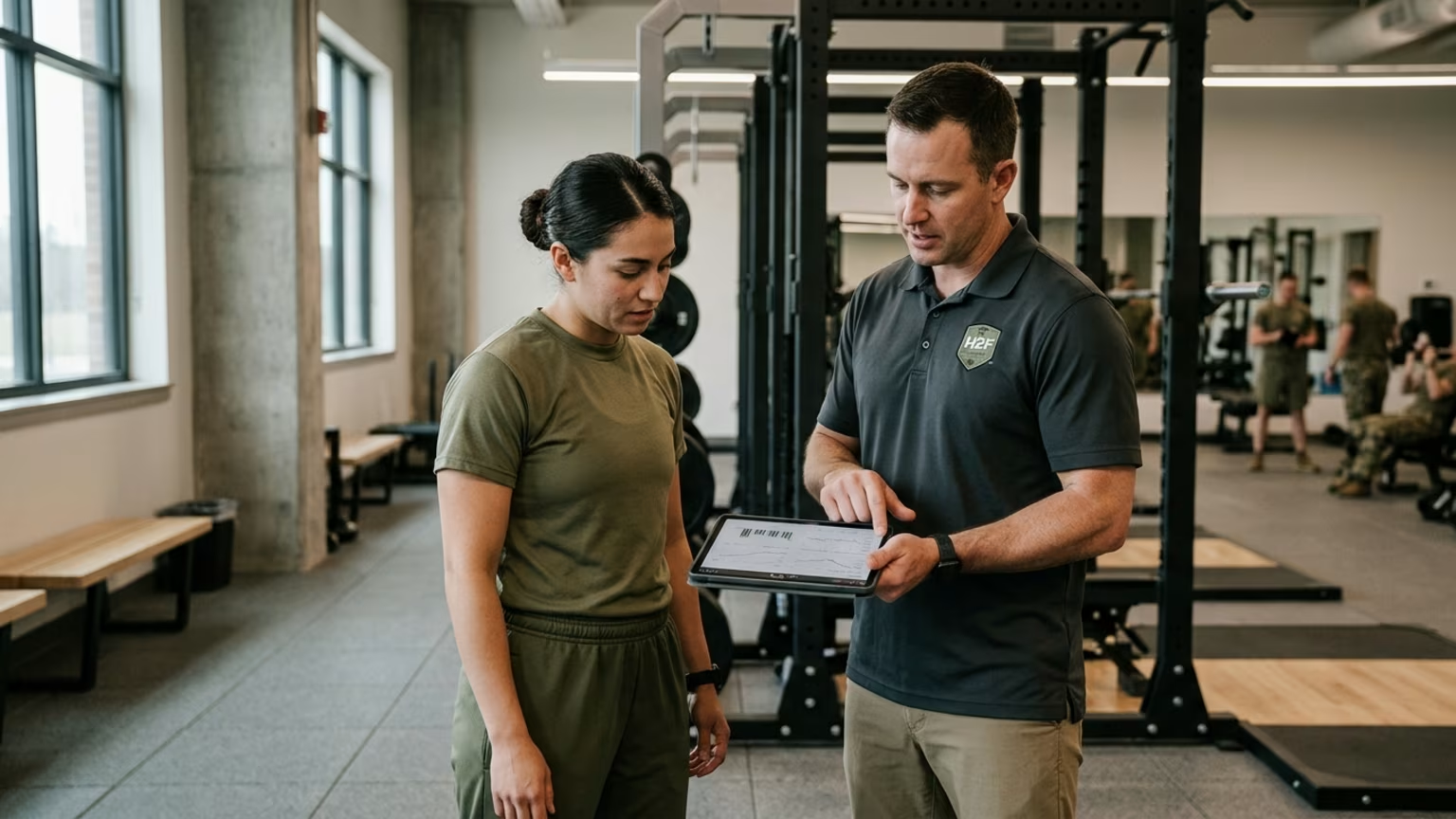

The Army's H2F update outlines dedicated funding for Soldier Performance Readiness Centers, shaping how soldiers train for endurance, mobility and health.





A Soldier Performance Readiness Center is a specialized military facility strictly designed for integrated physical and mental conditioning. Common military culture insists that operational fitness requires nothing more than individual grit and a standard base gym. The United States Army is directly challenging this outdated assumption through its latest Holistic Health and Fitness update. Dedicated infrastructure is now recognized as a nonnegotiable requirement for sustainable physical capability.
For years prior to this update, permanent performance centers relied heavily on unpredictable excess funds at the end of the year. The military states that Headquarters, Department of the Army provided dedicated, fenced funding in fiscal year 2026 for SPRC design and construction. This financial commitment represents a massive shift in how the military views human performance. Between fiscal years 2020 and 2025, only two permanent SPRCs and one partial SPRC were funded for the specified training command requirements.
This structured financial commitment is already driving measurable progress across multiple military commands. As of August 1, the H2F program had funded 18 facilities sustainment, restoration, and modernization design projects. These projects included nine Western Hemisphere Command requirements, one U.S. Army Europe-Africa requirement, one U.S. Army Pacific requirement, and seven Training and Doctrine Command requirements. Planners often refer to this last group as T2COM requirements.
Actual construction is also moving forward quickly under this new centralized funding model. The same August update reported five H2F-funded construction projects currently in progress. Three of these projects support Western Hemisphere Command, one supports U.S. Army Pacific, and one supports U.S. Army Space and Missile Defense Command. Ms. Singhas is identified in the military facilities update as the chief engineer for the H2F Directorate overseeing these developments.
To speed up the delivery of these centers, the military introduced the Soldier Performance Readiness Center Experiment. This specific initiative uses alternative building materials to construct permanent facilities under the funding threshold for minor military construction. The U.S. Army Corps of Engineers designated its Fort Worth District to centrally manage these minor military construction projects. Creative building strategies allow the force to expand physical support networks without waiting for massive congressional budget approvals.
Four pilot projects had awarded designs during the fiscal year, with construction planned for fiscal year 2027. The four named pilot locations are Joint Base Lewis-McChord in Washington, Fort Drum in New York, Fort Bragg in North Carolina, and Fort Benning in Georgia. Each H2F performance team and area support team is authorized a footprint of 43,189 square feet when fully realized.
Understanding how this entire system operates reveals the critical relationship between physical performance and long term health. The SPRC functions as the physical heart of the H2F system rather than a casual recreation center. Units rotate through the center during the duty day on a strict, predetermined schedule. Certified H2F personnel guide sessions that involve education, injury reconditioning, and focused athletic development.
The activities scheduled within these facilities reflect a comprehensive approach to human capability. A typical rotation might include specific programming for strength development, endurance conditioning, or movement quality. Leaders also use this time for physical performance education and establishing recovery habits. Injury reconditioning is seamlessly integrated into the schedule, ensuring that minor setbacks do not result in prolonged medical absences.
This structure forces a unit to integrate physical readiness directly into its daily operational calendar. Col. Julia Wilson argued that physical readiness must become part of a unit identity rather than being delegated entirely to a strength coach. Passive access to standard gym equipment rarely yields consistent physiological improvements across an entire military formation. A structured environment allows commanders to track fatigue, modify training loads, and address early signs of physical breakdown before injuries occur.
The SPRC model explicitly connects physical performance with healthy aging by managing training volume objectively. Instead of treating injuries after the fact, the center operates as an environment for proactive physical intervention. Soldiers learn how to manage their body composition safely under the guidance of certified professionals. This structured approach directly addresses the training and performance requirements needed for a sustainable military career.
Military leadership recognizes that early preparation sets the stage for a resilient force. Dr. Kevin Bigelman, identified as the H2F deputy director, noted that the seeds of military readiness are planted long before a young American raises their right hand. Former H2F clinical integration lead Sean Donohue similarly emphasized that the military teaches nutrition, physical training, recovery, and discipline. Donohue notes that the Army ultimately builds on the biological foundations recruits bring with them.
Access to purpose built facilities will look different depending on the specific component of the armed forces. While active duty installations can support fixed centers, Reserve and National Guard formations are geographically dispersed. The Army recognizes that distributed forces require adaptable structures rather than fixed hubs alone.
Implementing physical training programs across diverse environments requires flexibility from military leadership. A fixed facility works perfectly for a consolidated brigade, but isolated detachments face different operational realities. Physical readiness doctrine must account for these varying levels of access to specialized infrastructure. Leaders in distributed units must find creative ways to mimic the structured programming of a permanent center using whatever resources are available locally.
This distributed approach aims to provide expert support to personnel operating far from major military bases. Internal BattleVet resources emphasize that consistent military health support requires adaptable and scalable delivery systems. Equipment distribution will happen concurrently with the facility updates across the country. However, it remains clear that infrastructure and coaching must be matched carefully to the operational reality of each specific unit.
Establishing a baseline of normal physiological capability helps personnel understand their own health limits and potential. Normal readiness is not defined by achieving a maximum score on a single standardized fitness test. Army modernization documents identify recovery, sleep, nutrition, and training load as primary factors that affect both readiness and injury risk. Goodhart law states that when a measure becomes a target, it ceases to be a good measure.
Treating a single fitness assessment as the absolute definition of health often leads to poor long term training decisions. A normal healthy baseline involves consistent pain free movement, adequate daily recovery, and sustainable metabolic function. Soldiers must understand that their bodies require restorative rest to process the demands of tactical readiness training. Proper recovery and sleep are foundational elements of a normal functioning human system.
A healthy baseline is built on consistent daily habits rather than occasional bursts of intense effort. Soldiers who achieve normal physical readiness can handle operational demands without experiencing chronic joint pain or severe fatigue. This requires an intentional balance of strength conditioning, aerobic endurance, and dedicated mobility work. Without this structural balance, the physical stresses of military service quickly erode joint health and systemic resilience.
Experiencing the shift from active service to veteran life highlights why these baselines matter so much. Trying to maintain fitness years after leaving service required a completely new mindset. The goal changed from immediate tactical readiness to healthy aging and longevity. I learned that connecting short term performance with long term health, focusing on mobility and cardiovascular function, was the real key to staying capable.
The shift from structured military training to independent civilian life presents a known biological and behavioral challenge. Army commentary characterizes military discharge as a specific window of risk and opportunity for long term health. Without the mandated schedules of a performance center, many service members struggle to maintain their physical baseline. Research cited by the military reports that veterans gained approximately 1.0 to 1.3 kilograms per year during transition to civilian life.
This rate of physical change is notably higher than historical active duty service trends. The same research showed weight gain was approximately 0.6 to 0.7 kilograms per year while still serving. Former service members must proactively build independent routines that prioritize strength, fitness and body composition once their access to military infrastructure ends. The performance habits developed in an SPRC are only valuable if they survive the transition to civilian life.
As physical training environments become more intensive, proper medical oversight remains an absolute, nonnegotiable necessity. Veterans and active duty personnel must consult a qualified physician or VA provider before self diagnosing injuries. H2F performance support is highly valuable, but it is not a substitute for clinical evaluation when acute pain emerges. Professional medical guidance ensures that minor training issues do not escalate into permanent physical limitations.
The distinction between a performance center and a medical clinic is a critical operational boundary. A strength coach or fitness professional provides immense value for athletic development, but they do not replace formal clinical care. Ignoring acute symptoms in the pursuit of higher fitness scores directly contradicts the principles of holistic health. Sustainable capability requires knowing exactly when to step away from the training floor and seek professional medical treatment.
The transition from improvised gyms to centralized infrastructure gives military personnel the tools they need to train safely. Access to specialized equipment and expert coaching provides a powerful foundation for overall human performance. The most crucial takeaway is that lifelong physical capability depends entirely on turning temporary institutional support into permanent personal habits. The true measure of any training facility is simply the quiet competence it builds for the decades that follow.
Follow BattleVet for practical guidance on military and veteran health, strength, recovery, testosterone, sleep and healthy aging. Stay connected for new articles, research backed insights and clear information to help you stay capable for the years ahead.


Combat Stress’s workplace guidance emphasizes listening over diagnosis. Recent U.S. veteran insomnia research adds context for sleep and recovery concerns.


ErythroMer's reported storage design could matter for military care. An academic review still lists it as preclinical, with human evidence ahead.
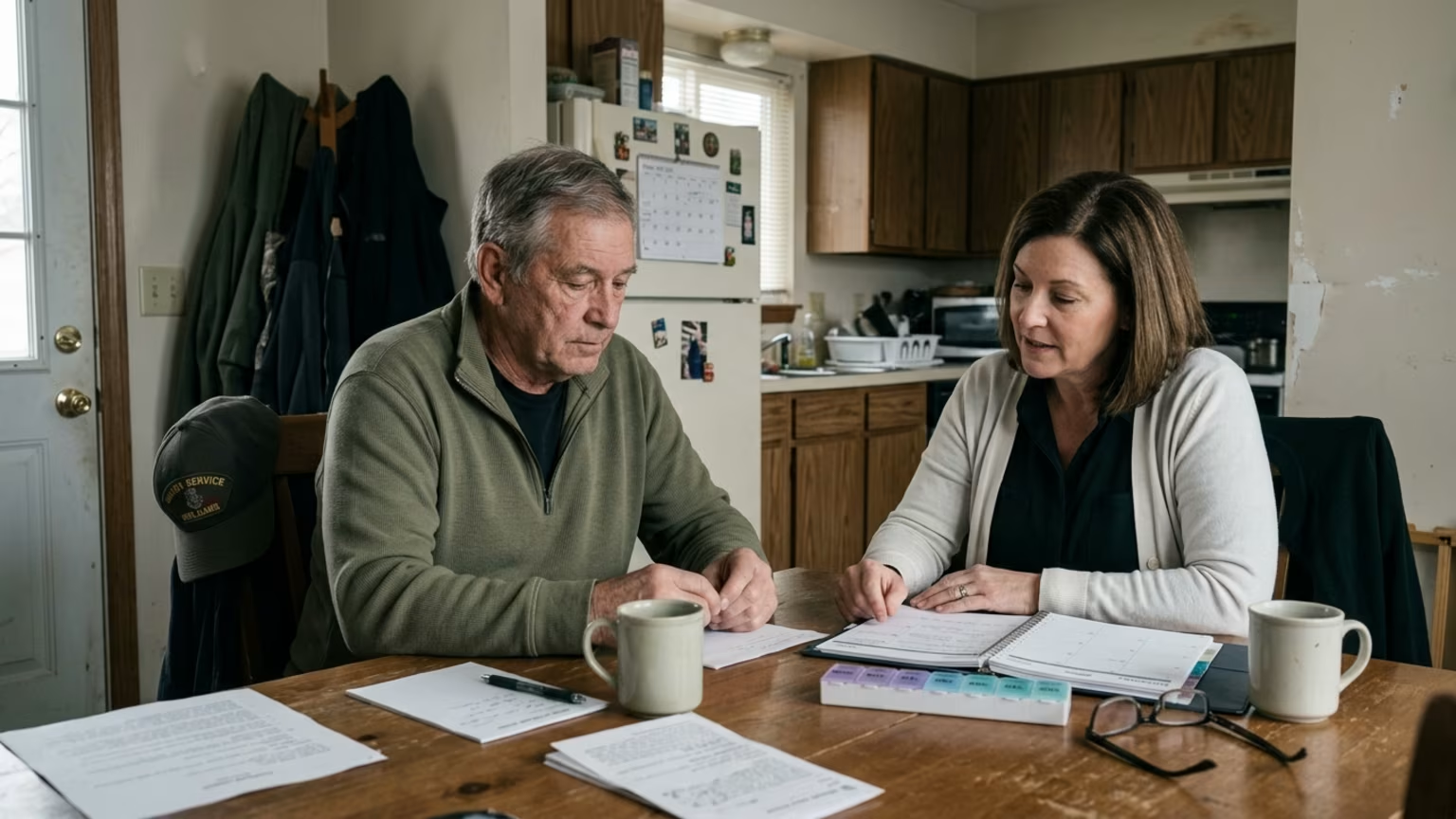
A large veteran study links PTSD and documented social needs to later cognitive impairment, reinforcing the value of connected care planning.
Build better habits around strength, recovery, sleep, hormones and healthy aging with practical guidance for active military personnel and veterans.
Explore BattleVet