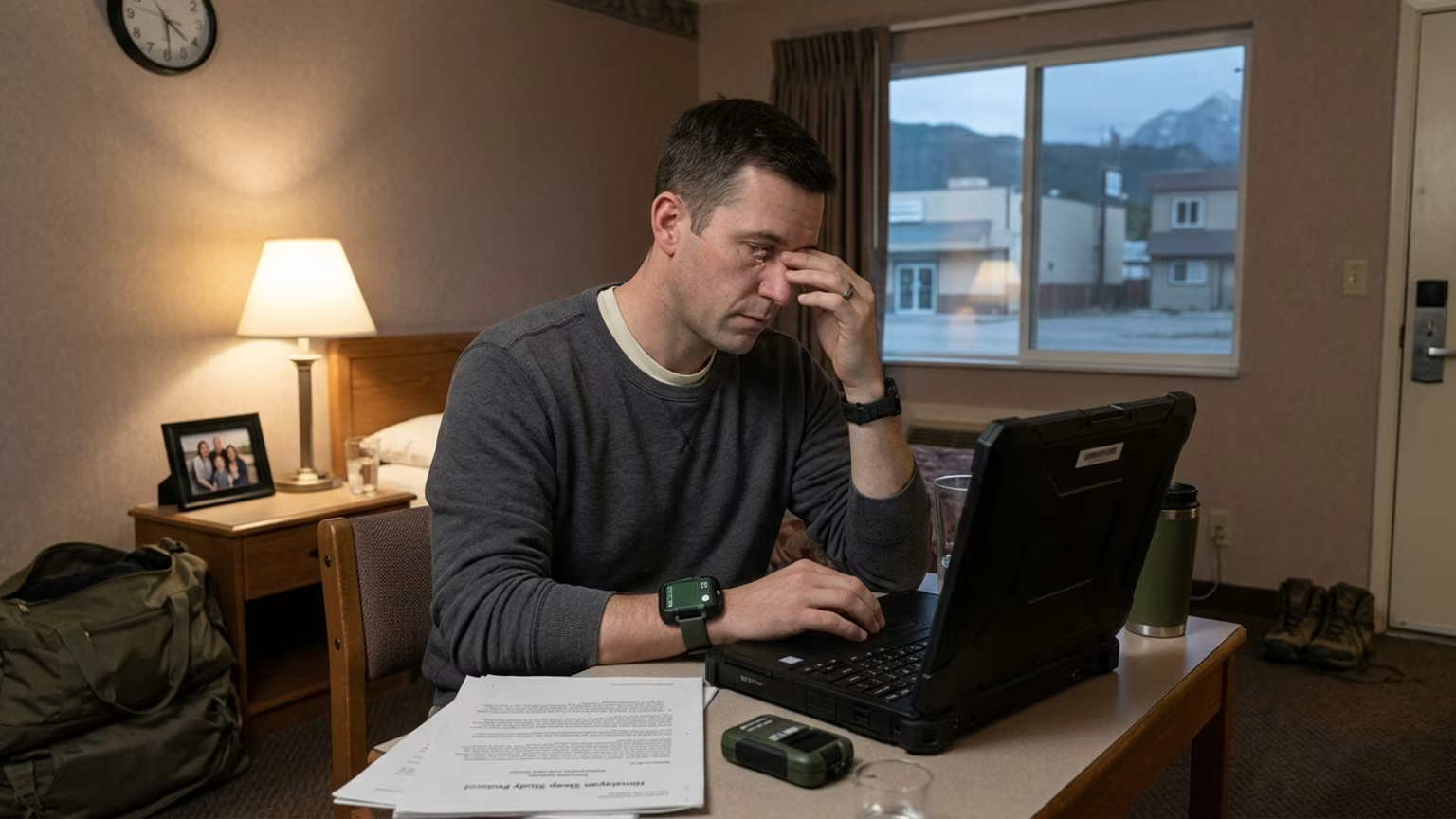

The Army deployed a sleep director to the Himalayas in 2026 to manage jet lag and altitude. Here is how formal sleep protocols support veteran recovery.





In September 2026, the U.S. Army deployed Capt. Molly Danner to support soldiers during Exercise Yudh Abhyas 2026 in India. Danner serves as an occupational therapist and a Holistic Health and Fitness mental readiness and sleep director. She deployed with the 1st Mobile Brigade Combat Team of the 11th Airborne Division. The Army tasked her team with helping soldiers manage sleep across extreme time zones and challenging altitudes.
Exercise Yudh Abhyas is a bilateral training event sponsored by U.S. Army Pacific and the Indian Army. This exercise has taken place since 2004 to improve interoperability and strengthen defense partnerships. Historically, sleep management during these exercises fell to the individual service member. Now, the military is treating rest as a critical logistical resource. By integrating sleep directly into the mission plan, commanders are acknowledging that physiological readiness dictates tactical success.
This shift in operational planning has significant implications for both active personnel and veterans. We know firsthand how physical restoration impacts daily function. I remember waking up after a poor night of sleep and realizing that my training recovery was taking much longer than it used to. I realized that readiness is more than just pushing through the fatigue. It requires a dedicated approach to sleep and hormonal health, which completely shifted how I view long term capability. Prioritizing rest transformed my approach to maintaining physical strength.
Sleep directly dictates how well the body manages physical stress and cognitive load. The Army sleep readiness guidance notes that a single night of compromised sleep can degrade reaction time. It also negatively affects judgment and emotional control. When service members prioritize their recovery and physical restoration, they maintain a higher level of performance over the course of a demanding mission.
The environmental conditions in India provided a rigorous test for military sleep science. The training took place in Auli, India. This location sits at approximately 9,000 feet above sea level. High altitude introduces severe physiological challenges for arriving troops.
Recent medical literature confirms that high-altitude hypoxia can disrupt normal sleep cycles. A lack of oxygen at elevation frequently contributes to insomnia. This disruption can severely affect how a soldier acclimatizes to the new environment. When the body struggles to secure enough oxygen during rest, it forces the nervous system to remain partially alert. This constant low level physiological stress prevents deep physical restoration.
The travel logistics compounded the high altitude challenges. Soldiers traveled to the training site from Alaska. This journey required crossing the International Date Line. Troops faced a 13-hour time difference before their high-altitude training even began.
Navigating a full day time inversion completely destabilizes the circadian rhythm. Managing a 13-hour time shift at 9,000 feet requires formal intervention to maintain unit capability. Without a structured plan, soldiers would likely experience prolonged jet lag and reduced operational effectiveness. The Army recognized these metrics as a risk to the mission.
The deployment of a sleep director marks a fundamental change in how the Army handles fatigue. Danner and her team distributed comprehensive pre-deployment guidance to the brigade. This guidance covered jet lag management, sleep scheduling, and mental readiness strategies. The goal was to prepare soldiers for mountain warfare training and complex field exercises.
The guidance provided by Danner was specifically intended to prepare soldiers for a variety of complex tasks. These included mountain warfare training, rigorous field exercises, and counter unmanned aircraft system operations. Navigating these specialized missions requires intense concentration and rapid decision making.
Danner summarized the Army operational logic by stating that a focused soldier is a lethal soldier. Her approach relies on setting clear expectations and providing structural support for rest. She treats sleep timing and recovery planning as mandatory preparation rather than individual choices.
The logistics of the trip actually served as the first intervention. Danner noted that a long flight followed by a lengthy bus ride forced the troops onto a synchronized schedule. This shared travel experience helped consolidate the group sleep pattern. It prevented jet lag from unfolding unpredictably over several days.
The military is changing how it views short-term rest during missions. The Army sleep readiness material officially supports taking available sleep opportunities whenever possible. It specifically describes a short nap of approximately 20 minutes as a tactical tool. This short rest period is highly effective for recovering cognitive function.
By limiting the nap to just 20 minutes, soldiers avoid entering the deeper stages of sleep. This prevents the heavy grogginess associated with sleep inertia while still providing a sharp reset for the brain. It allows personnel to wake up rapidly and return to demanding tasks with improved focus.
The deployment team also addressed practical adaptation issues on the ground. Danner and her staff helped soldiers establish personal routines and set realistic performance goals. They even made deliberate adjustments to physical training schedules to accommodate the high altitude environment. Recognizing the limits of acclimatization ensures troops do not overtrain while their bodies adapt to low oxygen levels.
When military personnel transition to civilian life, they often carry these sleep deficits with them. The operational context obviously changes after service, but the underlying biology remains exactly the same. Proper sleep continues to regulate stress tolerance, physical recovery, and cognitive performance. Veterans who treat chronic fatigue as a permanent part of their identity miss out on vital recovery.
The habits built during service often prioritize mission accomplishment over personal restoration. However, holding onto those sleep restrictive habits in civilian life simply accelerates physical breakdown. By treating sleep as a protected biological requirement, former service members can dramatically improve their resilience.
By applying military sleep leadership principles at home, veterans can systematically improve their daily lives. This means deliberately protecting sleep windows from avoidable disruptions like excessive light or late night caffeine. It also means viewing rest as a necessary foundation for performance rather than a luxury. This structured approach helps protect sleep, stress and resilience during high stress civilian transitions. When veterans maintain consistent routines, they directly support their training and performance goals.
While these operational strategies are highly effective, they do not replace formal clinical assessment. Addressing persistent sleep problems with a healthcare professional is a crucial step in maintaining healthy aging and longevity. These symptoms often point to underlying conditions that require targeted treatment. Sleep protocols optimize a healthy schedule, but they cannot cure clinical sleep disorders.
As the military continues to formalize sleep leadership in challenging environments, how will these operational protocols eventually reshape the standard of care for veteran health and civilian performance?
Follow BattleVet for practical guidance on military and veteran health, strength, recovery, testosterone, sleep and healthy aging. Stay connected for new articles, research backed insights and clear information to help you stay capable for the years ahead.


The VA is launching its new Electronic Health Record system in Anchorage amid congressional scrutiny over costs. Learn what this means for veteran care.


The Army's new Combat Field Test trial introduces a strict seven-event sequence. Learn how this assessment shifts military physical training and recovery.

Recent Pentagon policy updates and medical data highlight the growing debate over military testosterone screening, TRT risks, and active duty hormone health.
Build better habits around strength, recovery, sleep, hormones and healthy aging with practical guidance for active military personnel and veterans.
Explore BattleVet