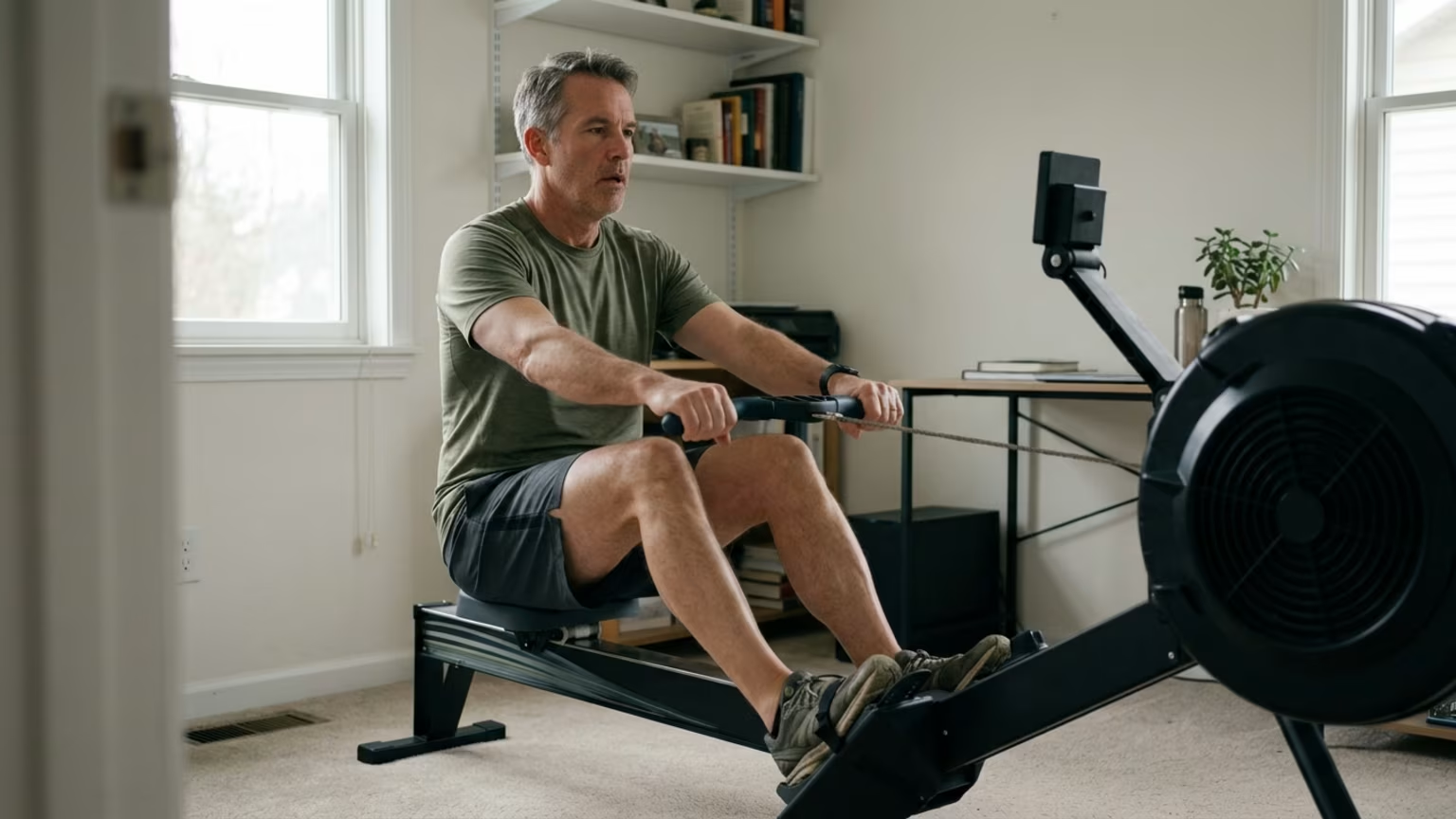

Andrew Huberman shared a weekly workout plan for staying capable after 50. Learn how veterans can adapt this fitness framework for long-term healthy aging.





On September 23, 2026, Men's Health published an article detailing a weekly workout framework designed by Andrew Huberman. The publication spoke with Huberman ahead of the release of his book, Protocols: An Operating Manual for the Human Body. He shared his personal training schedule for staying strong and muscular after the age of 50. This routine requires walking as much as possible each day.
The framework also includes three strength training sessions and three cardio workouts per week. It programs two to four short mobility or flexibility bouts each week. The article presents this detailed schedule strictly as his personal philosophy. It is not an official clinical guideline or a new military fitness standard.
This update matters for active personnel and veterans who want to maintain physical capability as they age. Huberman turned 51 in 2026 and focuses on preserving strength, muscle, and athletic function. He is currently pursuing a goal to run a mile in under seven minutes. He contrasted this modern target with his high school best of four minutes and 57 seconds.
His gym philosophy emphasizes progressive overload and adequate recovery. He focuses on training each muscle group directly once per week before repeating the cycle. Men's Health notes he has followed this general approach for more than 30 years. His quoted training philosophy is oriented toward maintaining strength and muscle while remaining athletic into his 50s.
He specifically prioritizes this approach over maximizing every individual workout. For military personnel navigating the transition to civilian life, finding a sustainable routine is often challenging. Veterans frequently manage old injuries, changing metabolisms, and shifting daily schedules. I remember waking up after a poor night of sleep and realizing that my training recovery was taking much longer than it used to.
I realized that readiness is more than just pushing through the fatigue. It requires a dedicated approach to sleep and hormonal health, which completely shifted how I view long term capability. Huberman states that maintaining strength does not require an endlessly complicated routine. His listed priorities include lifting weights and performing cardiovascular exercise.
He also prioritizes daily walking, mobility work, hydration, and sleep. We focus heavily on these foundational pillars at BattleVet to support stronger military and veteran health. Connecting physical performance with long-term health rather than treating them as separate subjects is critical. A balanced approach looks at physical strength, training recovery, and hormone optimization.
It also treats sleep and mobility as part of one unified system. Huberman's plan aligns with this holistic view by combining four distinct activity categories. These include resistance training for strength, cardio for conditioning, regular movement, and mobility work for range of motion.
Huberman provided a detailed breakdown of his exact seven-day training split for readers. The weekly structure begins with a long and slow run to build aerobic capacity. This is followed by a dedicated leg day for lower body strength. He then programs a full recovery day to allow for physical restoration before continuing the cycle.
Following the rest day, he completes a chest, back, and neck session which he calls a torso workout. The conditioning work then shifts to higher intensities later in the week. He includes 30 minutes of tempo cardio to push his cardiovascular threshold. This is followed by 30 minutes of high-intensity interval cardio using Tabatas on an AirDyne bike.
The week concludes with a focused arms and shoulders session. The plan's three cardio workouts do not correspond to a single standard training load. The example includes completely different forms and intensities of cardiovascular effort. A long and slow run taxes the aerobic system differently than a 30-minute tempo cardio session.
High-intensity Tabata intervals place an entirely different demand on the heart and lungs. This combination of volume and intensity provides a clear look at how he organizes his personal workload. However, the article does not provide detailed prescriptions for sets, repetitions, or specific loads. It also lacks progression rates, warm-ups, or exercise substitutions for those with different physical capabilities.
Huberman's personal framework offers one way to organize training, but it changes how we might view rigid weekly splits. His specific schedule reinforces the need for varied movement, but it should not be treated as a universal medical prescription. This volume is significant and may not fit everyone. A service member or veteran could view the plan as a weekly menu of capabilities rather than a rigid schedule.
Strength and cardiovascular conditioning receive necessary attention within this framework. Regular movement, mobility work, and recovery are also prioritized. The three-day strength structure may be useful for preserving lifting capacity and muscle tissue. However, exercises should be selected around your current training history, previous injuries, and daily duty demands.
The need for adaptation is crucial for long-term joint health and consistent physical progress. Daily walking provides a low-complexity way to increase general movement without forcing every day to be a hard workout. The article presents daily walking as a general activity goal without specifying a step count or distance. Veterans returning to fitness should start below this full workload and progress gradually.
Using easier versions of movements allows the body to adapt without unnecessary strain. Mobility and flexibility work is specified as two to four short bouts per week in the routine. The article does not define the specific exercises, the duration of the bouts, or the targeted body regions. It also does not clarify whether these mobility sessions are intended before, after, or separate from the main training blocks.
Modifying exercise variables is a core component of healthy aging and longevity. The article does not establish that training each muscle group directly once per week is superior to other methods. Full-body training, upper and lower splits, or other evidence-based approaches to training and performance remain highly effective for older adults. The plan may be most useful as a framework for organizing your training week.
It should not be used as a claim that every older adult must complete a long run, a tempo session, and a Tabata workout in the same week. At BattleVet, our flagship editorial articles cover military health and physical performance. We also provide extensive resources on training recovery, hormones, sleep, and healthy aging. We understand that finding clear explanations relevant to military and veteran populations is difficult.
Many readers struggle with understanding health information without sorting through hype or sales driven content. Separating credible evidence from trends and marketing claims is why we focus on plain language. We want readers to understand topics like healthy aging and longevity without assuming one specific routine is right for everyone. Our evidence-led approach clearly communicates the limits in applying one person's routine to an entire population.
What works for a public figure with decades of training experience may require modification for a veteran managing physical limitations. Evaluating military health information requires separating credible frameworks from the pressure to copy a demanding schedule. We encourage active personnel and veterans to use these templates as starting points for their own customized routines. Connecting physical output with long-term recovery and sleep is the foundation of lifelong fitness.
Understanding how health priorities may change during active service, transition, and veteran life is a core part of our mission. A routine that worked during active duty might need significant adjustment to support long-term joint health in civilian life. Maintaining strength, mobility, fitness, and healthy body composition with age requires consistent adjustments to training volume. This flexibility is what allows veterans to stay capable without accumulating unnecessary injuries over time.
The integration of strength, cardiovascular conditioning, and dedicated recovery is essential for maintaining capability. As more structured protocols emerge, the focus must remain on adapting these broad concepts to individual physical realities. How will future veteran healthcare initiatives continue to personalize exercise programming for those with unique physical limitations?
Follow BattleVet for practical guidance on military and veteran health, strength, recovery, testosterone, sleep and healthy aging. Stay connected for new articles, research backed insights and clear information to help you stay capable for the years ahead.


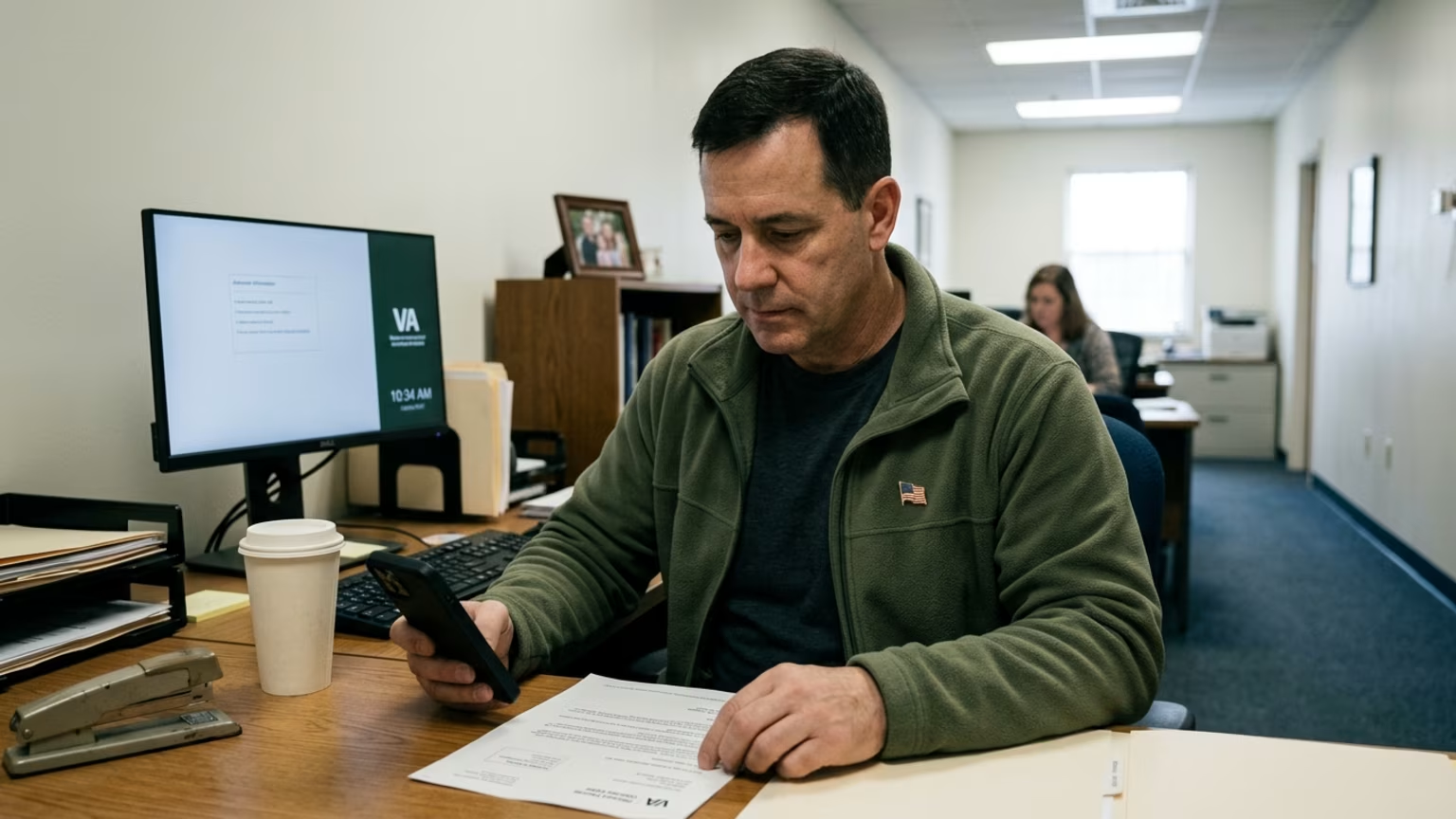
The VA processed over 3 million disability claims in fiscal year 2026. Read how updated decision timelines and evidence rules impact veteran healthcare access.

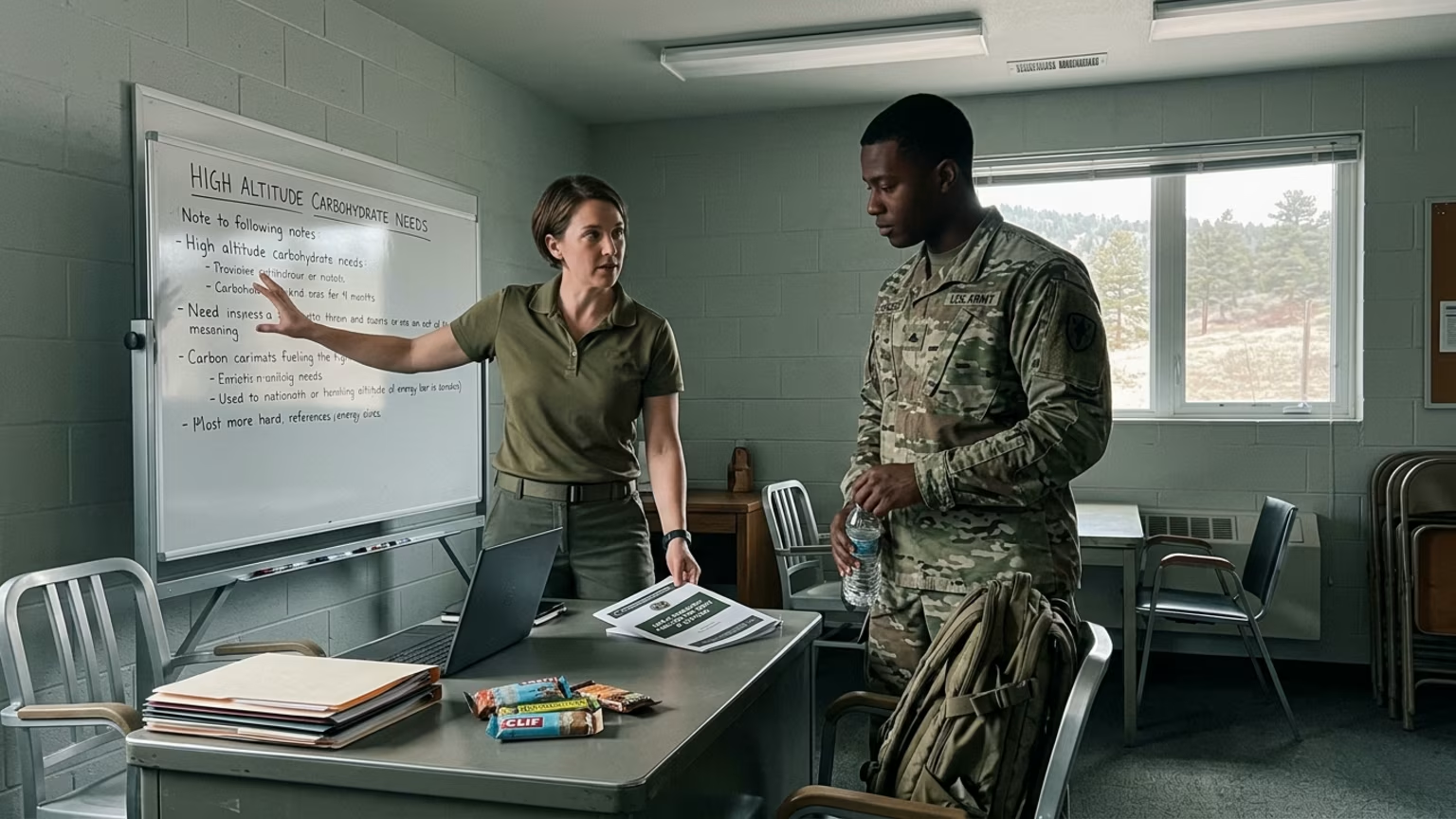
The U.S. Army highlights carbohydrates and adequate calories as practical field guidance for sustaining soldier performance during high altitude operations.
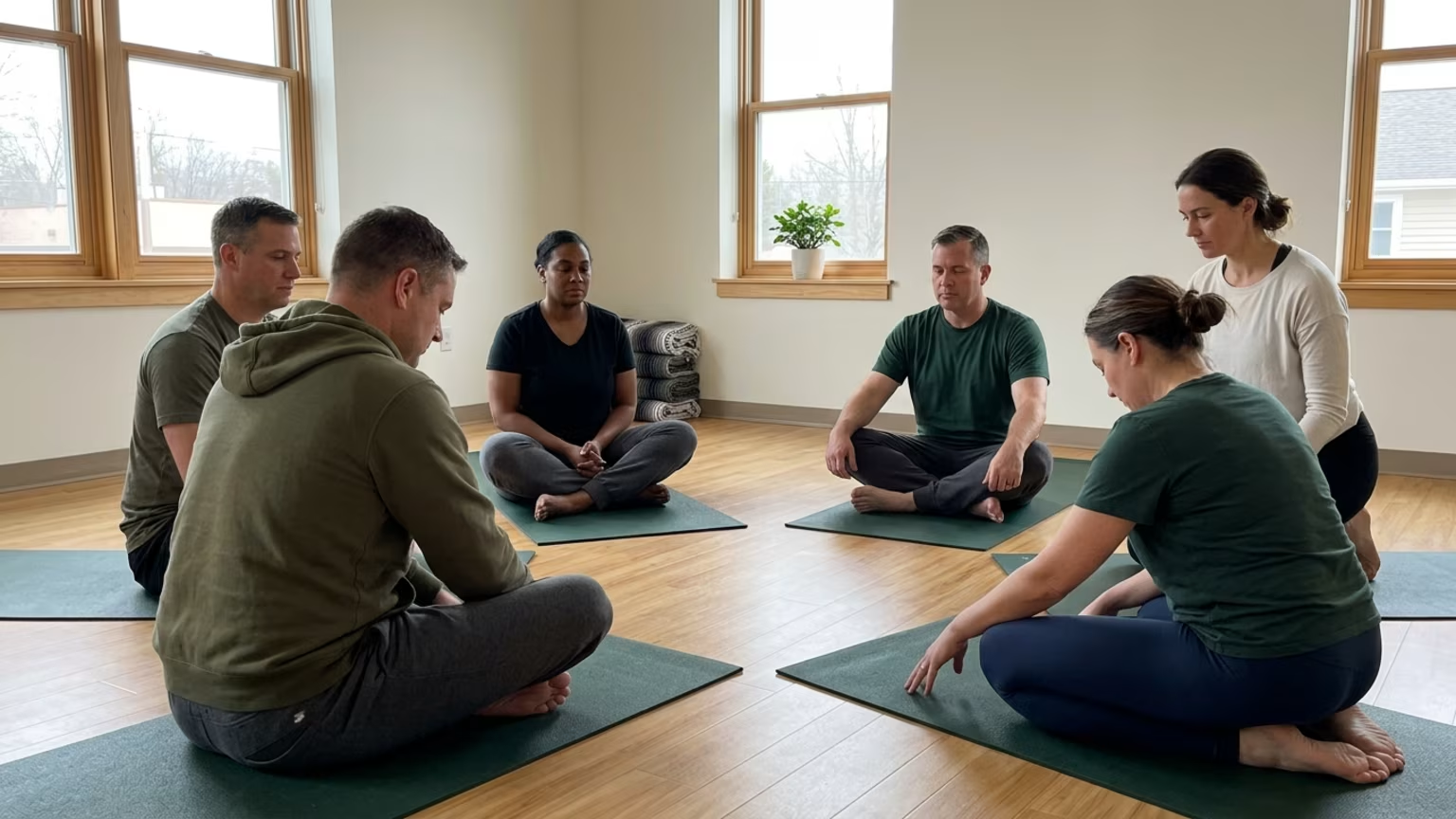
A recent KRDO feature and clinical research highlight trauma-sensitive yoga as a practical tool for veterans managing PTSD and stress recovery.
Build better habits around strength, recovery, sleep, hormones and healthy aging with practical guidance for active military personnel and veterans.
Explore BattleVet