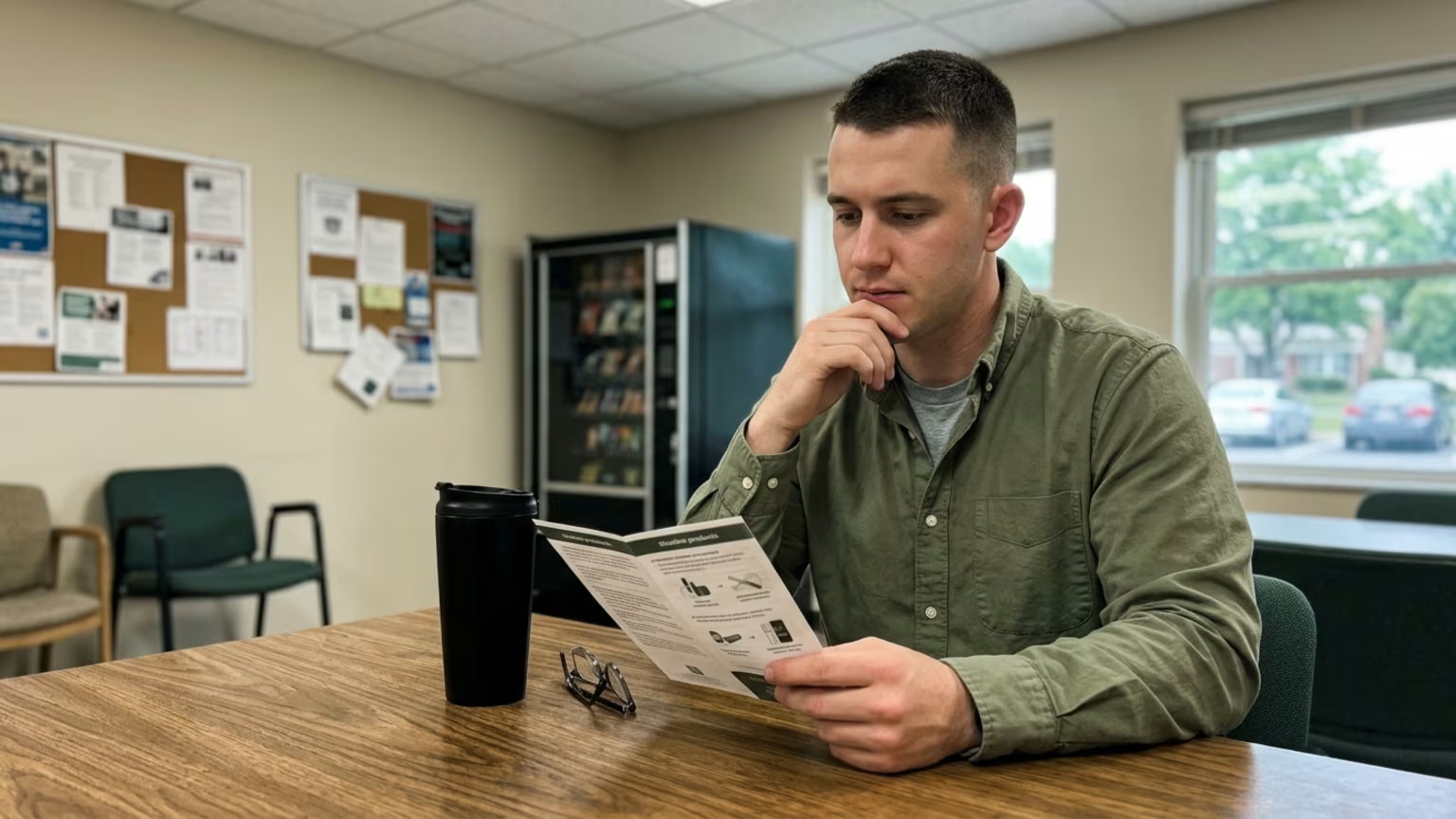

In 2026, the VA and DoD updated their joint tobacco-treatment clinical guidance. The 32 recommendations address patients not ready to quit, vaping, and relapse.





In 2026, the Department of Veterans Affairs and the Department of Defense updated their joint clinical practice guidance for tobacco treatment. A national workgroup developed the new recommendations to address modern nicotine use among military personnel. The guideline synopsis was reported in September 2026 in the Annals of Internal Medicine. The comprehensive update contains 32 recommendations across treatment medications, counseling, and strategies for adults.
The evidence review behind the update covered clinical research published from 2014 through 2024. Jessica Cook, a professor of medicine at the University of Wisconsin–Madison, contributed specific recommendations for people who are not ready to quit. Cook also serves as director of veterans research at the UW Center for Tobacco Research and Intervention.
The original tobacco guidance was created in the mid-2000s. The 2026 update addresses newer nicotine-delivery products that were absent from those early clinical protocols. The updated guidance broadens attention beyond combustible tobacco to include vaping and nicotine pouches. This shift is crucial for active personnel and veterans because product usage has evolved significantly over the last two decades.
Providing care for individuals not yet ready to quit represents a major clinical shift. Cook called the inclusion of motivation-phase treatment a paradigm shift. Historically, clinical settings often required a firm commitment to quit before treatment began. Now, people who are not yet ready can still receive targeted support.
Cook characterizes this motivation-phase treatment as a stepping stone. It can help people build confidence and necessary skills before they make an actual quit attempt. This approach acknowledges the reality of behavior change in veteran life. It allows clinicians to provide practical support much earlier in the process.
The UW report highlights specific data supporting this early intervention strategy. According to clinical trials conducted by Cook and her team, about 25 percent of participants who received motivation-phase treatment decided to make a quit attempt. After deciding to quit, these participants entered formal cessation treatment. While the UW report does not provide the exact sample sizes, this finding demonstrates the utility of engaging patients early.
The scale of patient hesitation highlights the need for this clinical approach. Cook noted that 70 percent to 90 percent of patients offered cessation treatment tell providers they are not ready to quit. This estimate illustrates a significant gap between traditional treatment requirements and actual patient readiness. By targeting individuals in this motivation phase, the VA and DoD guidelines aim to bridge that clinical gap.
The 10-year evidence review ensures these new strategies rest on a decade of observation. The resulting 32 recommendations offer tailored guidance based on the chosen product. They also account for the patient's current readiness level.
The 2026 update outlines specific medical and behavioral protocols. These recommendations vary in strength depending on the product used and the patient's unique situation.
For people who smoke combustible tobacco, the clinical path remains highly structured. MDSpire notes that the guideline synopsis reports strong recommendations for FDA-approved nicotine-replacement therapy. The synopsis also strongly recommends sustained-release bupropion or varenicline for combustible tobacco.
The VA and DoD guideline recommends motivational interviewing to improve treatment engagement. It also recommends varenicline or combination nicotine-replacement therapy to increase overall abstinence. These established pathways form the foundation of traditional cessation support.
The approach shifts for patients who are not ready to quit within the next 30 days. For this specific group, MDSpire reports weak recommendations for nicotine-replacement therapy or varenicline. Motivation-phase treatment focuses on achievable early steps rather than immediate cessation.
According to UW, this early phase can include behavioral counseling and smaller objectives. Patients might set goals such as reducing their smoking volume or avoiding tobacco in certain situations. This structured framework keeps patients engaged in care without forcing an immediate commitment.
To further explore options for this group, Cook and her colleagues launched a separate VA-funded trial in 2025. This trial compares nicotine lozenges with varenicline for veterans who are not ready to quit. During the 12-week motivation-phase treatment period, participants who become ready to stop transition directly into cessation treatment.
The updated guidance changes how clinical systems handle a return to tobacco use. The guideline calls for prompt treatment again after a relapse. UW describes this renewed approach as recycling.
Rather than viewing relapse as an endpoint, clinicians encourage a renewed quit attempt immediately. The UW report notes that its researchers’ findings on relapse were incorporated directly into the guidance. This ensures veterans receive continuous support during their recovery efforts.
The new recommendations integrate tobacco cessation with other forms of recovery. The guidance recommends concurrent tobacco treatment for patients receiving alcohol-use or substance-use-disorder care. The UW account states the rationale is evidence of improved outcomes in both areas.
Veterans navigating complex veteran lifestyle and healthcare challenges can address these issues simultaneously. Combining these treatments removes the need to delay tobacco cessation while managing other recovery goals.
The guidelines address modern electronic products, though the clinical evidence remains developing. MDSpire describes weak recommendations for varenicline or nicotine replacement to treat electronic nicotine-delivery-system use. The UW report notes that the vaping recommendation offers these same therapies, but broader coverage characterizes the evidence for e-cigarette abstinence as weak.
The guidance also covers newer items like nicotine pouches. However, the sources do not establish a pouch-specific treatment regimen. Because the evidence for vaping treatment is weak and pouch regimens lack detailed protocols, veterans must communicate clearly. Disclosing specific product use ensures the provider can tailor the available counseling and medication options effectively.
The VA is testing new ways to connect veterans with these updated treatments. UW highlights a VA proactive-outreach pilot operating across seven VA facilities. This program identifies veterans in outpatient mental-health care by reviewing electronic health records.
Staff members contact these veterans by telephone to offer clinical support. They provide mailed medication and telephone counseling to those who choose to participate. Cook stated this outreach connects more veterans with treatment without waiting for them to initiate contact.
Veterans can also access structured support through established clinical facilities. VA Maryland describes its tobacco-treatment clinic as a highly comprehensive program. The clinic combines individualized plans, education, counseling, and specialized medicines. Veterans interested in this structured care can ask their VA providers for a direct referral.
The updated guidelines offer distinct pathways for individuals seeking help. If you are not ready to quit entirely, you can still raise the topic with a VA clinician. You can ask whether a motivation-phase approach is appropriate for your situation.
This approach might involve setting small goals, receiving counseling, and possibly starting medication. The UW report confirms this strategy is part of the updated clinical guidance. This means you do not have to handle the preparation phase alone.
If you have tried to quit and returned to tobacco use, the guidance supports prompt re-engagement. The established recycling approach means you do not have to wait indefinitely to try again. The guidelines encourage immediate re-entry into treatment to maintain your momentum.
Veterans receiving care for alcohol or another substance-use disorder should ask about concurrent options. You can discuss whether tobacco treatment can be coordinated with your current recovery care. The updated guidance specifically recommends this combined approach to improve overall outcomes.
When discussing nicotine habits, clarity is vital. If vaping or nicotine-pouch use is part of your routine, disclose the specific product to your clinician. The update addresses these newer products directly.
However, the reported evidence for vaping treatment remains weak, and the sources do not establish a pouch-specific regimen. Clear communication helps your provider apply the 32 recommendations effectively. Ask about your specific options rather than assuming a single medication fits everyone.
Will the success of proactive outreach and motivation-phase care reshape how military health systems approach other long-term behavioral changes?
Follow BattleVet for practical guidance on military and veteran health, strength, recovery, testosterone, sleep and healthy aging. Stay connected for new articles, research backed insights and clear information to help you stay capable for the years ahead.



A review of the VA's 2026 suicide prevention data and updated mental health support options for veterans, focusing on community connection and emergency care.


A breakdown of the October 2026 Hearing Health Foundation update on veteran hearing loss, tinnitus data, and proactive steps for long-term auditory care.
The Navy is evaluating engineered foam mattresses aboard USS Paul Hamilton to study shipboard sleep quality, rest and operational fatigue.
Build better habits around strength, recovery, sleep, hormones and healthy aging with practical guidance for active military personnel and veterans.
Explore BattleVet