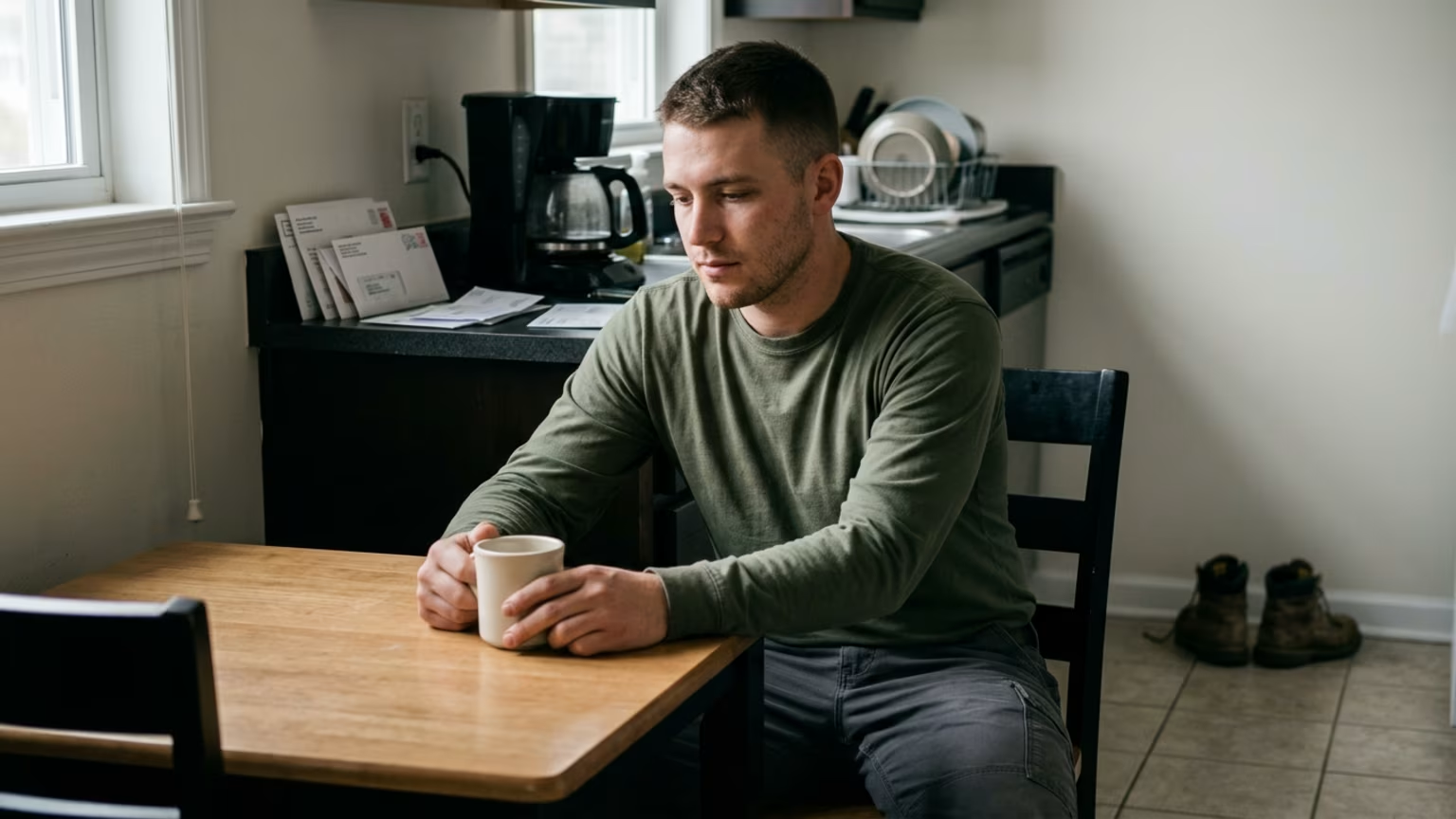

New 2025 to 2026 data shows an increase in past-month probable PTSD among U.S. veterans, highlighting the critical need for targeted sleep recovery protocols.





If you or someone you know is in immediate danger, call 911. If you are experiencing a crisis, call 988 and press 1 for the Veterans Crisis Line. You can also text 838255 for support.
The 2025 to 2026 National Health and Resilience in Veterans Study found that 7.3% of U.S. veterans screened positive for past-month probable PTSD. This represents an increase compared with 5.0% in the 2019 to 2020 survey wave. The newer estimate includes a reported 95% confidence interval of 6.0% to 8.9%, indicating sampling uncertainty around the headline figure. The findings reflect measured symptom prevalence rather than clinician-confirmed diagnoses for every respondent.
This update matters for active personnel and veterans because untreated symptoms directly impair physical restoration and daily capability. When reading military health articles, you often see performance separated from long term clinical needs. Our editorial focus at BattleVet connects physical performance directly with long term health decisions. Our resources covering sleep, stress and resilience emphasize that recovery must be proactive. We know that managing readiness requires a dedicated approach to sleep and hormonal health, rather than just pushing through fatigue. I remember waking up after a poor night of sleep and realizing that my training recovery was taking much longer than it used to. Recognizing that sleep health dictates long term capability completely shifted how I view physical readiness. This shift in perspective is crucial when navigating complex health data.
The primary PTSD statistics article does not provide a sleep-specific prevalence estimate alongside the new 7.3% figure. However, persistent sleep disruption is a major factor in how veterans experience and recover from traumatic stress. Separate VA research reporting establishes a strong connection between trauma and disrupted sleep. Veterans dealing with repeated awakenings face significant hurdles in maintaining strength, body composition, and mental focus. Addressing sleep as a primary symptom helps veterans maintain their physical capability and overall health.
The reported rise from 5.0% to 7.3% in past-month probable PTSD is a substantial change in the survey estimates. However, this should not be described as a definitive national incidence rate. The source identifies trauma exposure, demographic shifts, and reporting differences as factors that influence comparisons between survey waves. The 2019 to 2020 comparison survey was conducted from November 2019 through March 2020, with much of the baseline data collected before widespread pandemic disruption.
The same survey estimated lifetime probable PTSD at 14.4% in 2025 to 2026, compared with 9.4% in the previous wave. This lifetime figure should be kept conceptually separate from the past-month estimate. Lifetime prevalence captures people who may have experienced symptoms in the past, meaning it includes individuals who no longer require treatment. The past-month figure is more relevant to current symptom burden and near-term clinical needs.
Earlier combat-era estimates illustrate why veteran risk is not uniform across service generations. In the 2019 to 2020 survey, past-month probable PTSD was reported at 14.7% among Iraq and Afghanistan combat veterans, and 14.4% among Gulf War combat veterans. Vietnam combat veterans reported 5.0%, while World War II and Korean War combat veterans reported a rate of 1.6%. These symptom-screen estimates reflect differences in age, trauma history, and survival into older age.
Veterans using VA health care often show different symptom rates from nationally representative surveys. VA patients represent a selected clinical population and may be more likely to have conditions that require care. The primary article reports that, in fiscal year 2024, 14% of male VA patients and 24% of female VA patients were diagnosed with PTSD. Those figures reflect clinical diagnoses rather than symptom screens, but they should not be treated as national prevalence estimates for all veterans.
Treatment timing remains a significant challenge across different veteran populations. The primary article reports median times to first PTSD treatment for several distinct groups in the cited study. The data show a median time of 2.5 years for post-9/11 veterans and 16.0 years for pre-9/11 veterans. Civilians in the study showed a median time of 15.0 years before receiving their first treatment.
The distinction between a positive screen and a clinical diagnosis is critical for understanding these statistics. A positive screen indicates that a veteran reported enough symptoms on a survey to warrant further evaluation. It does not mean that every person in the 7.3% group has been formally diagnosed by a clinician. The comparison between the two survey waves is not a controlled longitudinal experiment. Because the surveys do not necessarily follow the same individuals over time, they cannot establish how many individual veterans developed PTSD between periods.
While the primary survey focused on broad PTSD symptoms, separate VA reporting provides specific figures on sleep challenges. A nationally representative sample of more than 4,000 veterans measured the prevalence of trauma-related sleep issues. Researchers found that 15% of veterans reported trauma-related nightmares at some point in their lives. Within that same sample, 6% reported experiencing these nightmares during the previous month.
The VA reported that trauma-related nightmares were associated with worse physical health and adverse mental health outcomes. A separate study of nearly 4,000 veterans found that 12% had trauma-associated sleep disorder. This condition is characterized by nightmares and disturbed sleep linked specifically to traumatic experiences. Veterans with this condition had nearly four times the prevalence of PTSD and major depressive disorder compared with those without the condition.
The VA also found a graded association between nightmare-related distress and suicidal ideation. Veterans reporting little distress were twice as likely to report suicidal thoughts as those reporting no nightmare-related distress. The corresponding associations were three times higher for moderate distress, five times higher for severe distress, and six times higher for extreme distress. These are statistical associations, meaning they do not prove that nightmares directly cause suicidal thoughts.
The evidence supports making sleep evaluation a priority rather than waiting for other symptoms to resolve. A VA summary of an 89-study review found that PTSD treatments generally improved sleep difficulties. However, interventions specifically targeting sleep produced better sleep outcomes than PTSD treatments that did not directly focus on sleep. This highlights the value of pursuing dedicated recovery and sleep articles and evidence-led care plans.
Veterans should treat recurring nightmares, repeated awakenings, and persistent nighttime alertness as symptoms worth reporting. The VA specifically identifies trauma-related nightmares and disturbed sleep as clinically important concerns. Trauma-associated sleep disorder can occur in trauma survivors who do not meet full PTSD criteria. Therefore, nightmares and disturbed sleep should not automatically be treated as proof of PTSD.
The VA research brief states that trauma-associated sleep disorder is not currently part of routine clinical practice. This gap highlights the need for proactive conversations with health care providers. Veterans should ask a primary-care, mental-health, or VA clinician for a structured assessment if sleep problems persist. A clear assessment helps separate ordinary insomnia from trauma-associated sleep disorder or sleep apnea.
VA Houston describes cognitive behavioral therapy for insomnia, known as CBT-I, as an effective, short-term, structured treatment. This program addresses insomnia through behavioral and cognitive changes rather than medication. The treatment is available virtually or in person through Whole Health. Veterans may also access this intervention through Primary Care Mental Health and sleep clinics.
The VA Houston guidance cautions that CBT-I is appropriate for veterans diagnosed with clinical insomnia. It is not automatically the right approach for every type of sleep problem. If symptoms suggest a breathing-related issue, veterans should discuss a possible referral for a sleep study. Treating every sleep complaint as ordinary insomnia could miss conditions that require different evaluation pathways.
Veterans should navigate these treatment options with a clear understanding of their specific symptoms. VA Houston specifically advises veterans concerned about their sleep to discuss possible sleep-study referrals with their primary-care clinician. A sleep study can identify underlying physical issues like sleep apnea that behavioral changes cannot fix. For more information on navigating these decisions, review our veteran lifestyle and healthcare resources. Matching the treatment to the specific sleep problem prevents wasted time and frustration.
Because severe nightmares and sleep distress are associated with adverse mental health outcomes, proactive safety planning is essential. Securing your home environment provides a critical buffer during periods of high stress or poor sleep. Safe storage of medications and keeping firearms unloaded and locked are proven preventive measures. Veterans should arrange these physical safeguards together with a trusted person or a primary-care clinician.
Including nightmares and sleep disruption in standard treatment discussions ensures these symptoms receive proper attention. Veterans should document their sleep patterns, noting when they wake up and how often they experience trauma-related nightmares. Presenting this information to a health care provider makes it easier to justify a specialized evaluation. Treating these issues early helps protect cardiovascular health, metabolic function, and daily physical capability.
Taking these steps ensures that your physical environment supports your long term recovery goals. Clear communication with providers about the specific nature of your sleep disruption ensures you receive the correct intervention. Whether that means CBT-I, a sleep study, or targeted mental health support, proper evaluation is the first step. Proper sleep management remains foundational for maintaining physical capability, hormonal health, and overall wellness.
Will ongoing research into trauma-associated sleep disorder eventually lead to universal sleep screening protocols across all veteran primary care settings?
Follow BattleVet for practical guidance on military and veteran health, strength, recovery, testosterone, sleep and healthy aging. Stay connected for new articles, research backed insights and clear information to help you stay capable for the years ahead.


An analysis of the risks tied to unnecessary testosterone therapy, covering clinical reference baselines, fertility impacts, and the dangers of unregulated use.

BattleVet provides a practical decision framework for veterans considering testosterone replacement therapy, covering diagnostic testing, formulations, and monitoring risks.

VA News highlights how the MOVE! Alumni Maintenance Group in Florida supports long-term veteran health through peer accountability and sustainable lifestyle habits.
Build better habits around strength, recovery, sleep, hormones and healthy aging with practical guidance for active military personnel and veterans.
Explore BattleVet