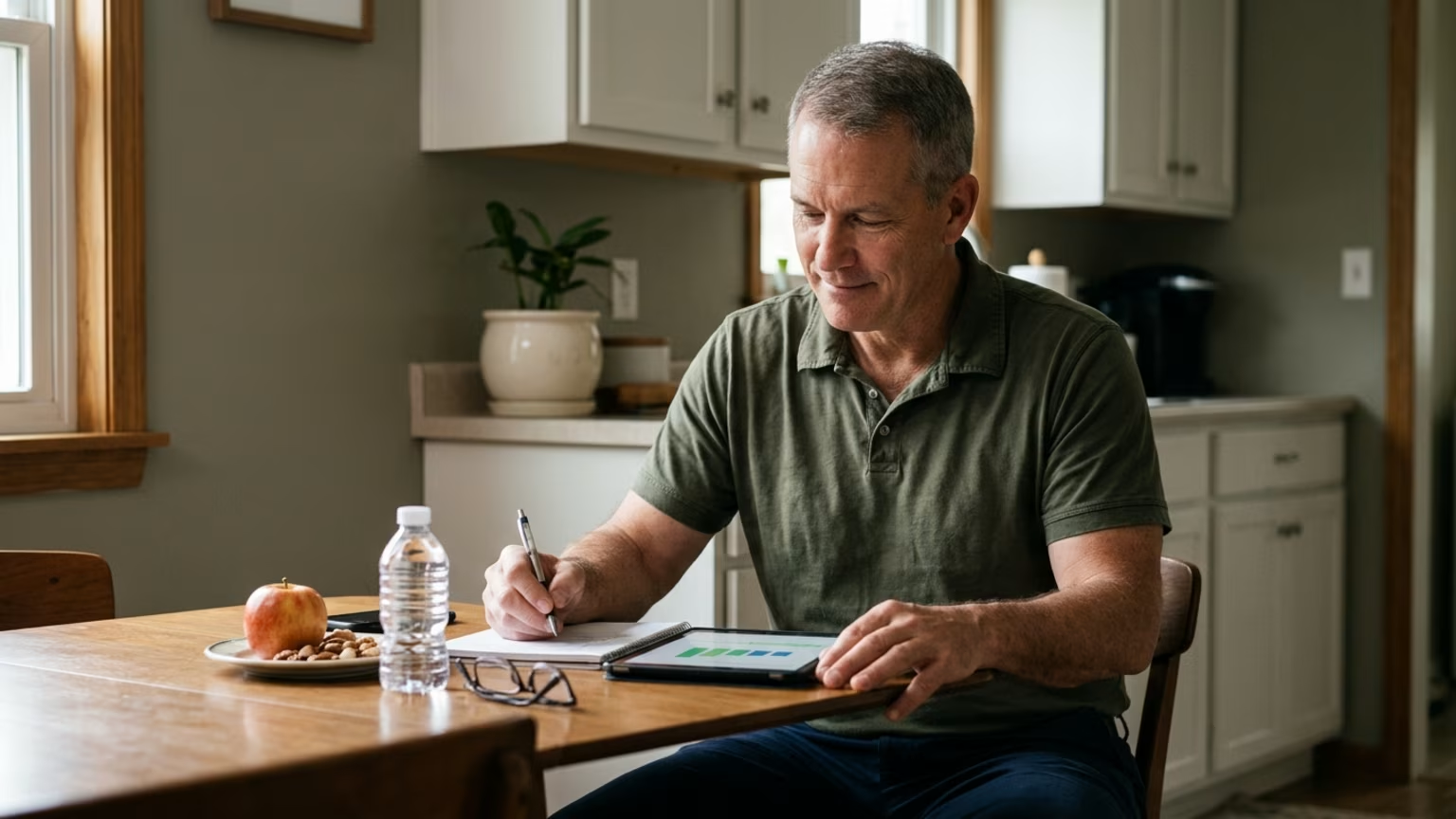

VA News highlights how the MOVE! Alumni Maintenance Group in Florida supports long-term veteran health through peer accountability and sustainable lifestyle habits.





VA News published a detailed feature titled “More than a program: MOVE! community is changing Veterans’ lives” on September 7, 2026. The report highlights the MOVE! Alumni Maintenance Group at the Viera Community-Based Outpatient Clinic in Florida. This specific clinic operates within the Orlando VA Healthcare System. The publication describes how veterans who completed the initial program continue meeting to share challenges and celebrate progress.
The alumni group brings together veterans who finished the initial MOVE! curriculum at various times. Some members joined the program many years ago. Other participants completed their initial sessions much more recently. They attend these regular meetings to maintain motivation through structured peer accountability.
This continued involvement illustrates a critical shift in how veterans approach long-term health management. Reaching a specific physical target is only the first step in a much longer process. Sustaining healthier habits requires ongoing support and structured community involvement. A short course of clinical classes rarely provides enough support for permanent lifestyle changes.
Many service members approach health interventions with a sprint mentality. They apply massive effort for a few months to hit a specific metric and then return to baseline behaviors. Real physical capability requires a reliable system that functions year after year. The Viera group proves that continuous peer support helps prevent that common regression.
The necessity of a long-term mindset often becomes apparent through daily physical feedback. I remember waking up after a poor night of sleep and realizing that my training recovery was taking much longer than it used to. I realized that readiness is more than just pushing through the fatigue. It requires a dedicated approach to sleep and hormonal health, which completely shifted how I view long term capability.
That same foundational principle applies directly to weight management and cardiovascular health. You cannot simply force your way through dietary changes or rely entirely on temporary motivation. Managing metabolic health requires a reliable system of education and steady reinforcement. The Viera alumni group provides exactly this type of durable framework for local veterans.
The recent VA News publication focuses on individual participant experiences rather than a controlled clinical trial. These reported outcomes demonstrate how individual veterans have applied the program tools. Veteran Margaret Evans reported losing an additional 20 pounds while keeping her A1C low. Another veteran quoted in the feature reported losing 17 percent of their starting body weight.
Metabolic markers also showed specific improvements for several participants highlighted in the feature. Alex Moreno reported that their A1C declined from 6.0 two years earlier to 5.4. The VA News article described this updated A1C reading as normal. Veteran Chip Hanson reported losing 35 pounds in six months after utilizing program tips.
Cardiovascular health and daily eating habits were also key focus areas for the group. Dave Riley stated his blood pressure numbers had improved significantly since joining the program. He noted that the group helped him become far more conscious of his daily food choices. The documented approach relies heavily on reviewing food labels and monitoring daily sodium intake.
Learning to read nutrition labels thoroughly is a foundational skill taught within the program. One participant noted that tracking sodium and sugar substantially improved their long-term A1C numbers. Understanding food composition allows veterans to make informed choices outside of a clinical setting. This education turns abstract nutritional advice into actionable daily habits.
VA describes MOVE! nationally as an initiative intended to help veterans lose weight and adopt healthier habits. The overarching goal is to reduce health risks and improve overall quality of life. The traditional format uses clinician-led sessions to provide a structured discussion environment. This structure allows veterans to learn from one another about practical strategies that actually work.
Different VA locations emphasize these same core principles to support their local populations. Health care information from VA Houston describes MOVE! as a program designed to support healthier eating and increased exercise. The broader objective is to reduce health risks and improve overall quality of life for participating veterans. This consistent national messaging highlights the importance of comprehensive lifestyle adjustments.
Veterans can access these resources through flexible delivery models tailored to their specific schedules. Facilities offer participation in person or remotely through VA Video Connect. This flexibility is crucial for veterans balancing work schedules, family obligations, or geographical distance from a major clinic. These flexible options remove common barriers to consistent participation and clinical guidance.
The psychological benefit of a shared environment cannot be overstated for former military personnel. Service members are accustomed to operating within teams where accountability is an inherent part of daily life. Transitioning to civilian life often removes that built-in support structure. Programs like MOVE! Maintenance recreate a constructive team dynamic focused directly on physical longevity.
The information in these reports reinforces how veterans should approach their own physical fitness goals. VA public program guidance states that losing 5 to 10 percent of body weight can improve health. This applies specifically to individuals with higher starting body weights. Veterans should view the individual successes in the news feature as examples rather than guaranteed targets.
The practical guidance from the MOVE! community emphasizes small and sustainable daily actions. Participants focus on learning portion control, reading nutrition labels, and tracking sugar intake. Veterans interested in these strategies can ask their local care team about available military health resources. They should specifically ask if their facility offers hybrid participation models or dedicated maintenance groups.
These practical habits are highly transferable regardless of where a veteran receives their primary medical care. The core principles of portion control and daily physical movement do not require specialized equipment or expensive memberships. Adapting these habits to fit a daily routine simply requires deliberate planning and consistent execution. The community support model proves that having reliable partners makes that execution far more sustainable.
Physical activity remains a central component of the overall lifestyle intervention. However, exercise choices must be adapted to individual health status, disabilities, and clinician advice. The Viera participants described engaging in walking, swimming, kayaking, and exercising with pets. Veterans with mobility limitations can also ask their providers about adaptive sports perspectives.
Mental health perspectives also play a critical role in sustaining these body composition changes. The accountability partners found in the group setting help participants navigate periods of low motivation. Treating maintenance as an ongoing process is more effective than stopping when an initial course ends. VA specifically designed MOVE! Maintenance to provide longer-term support at less frequent intervals.
Tracking personal progress requires more than just checking scale weight every single morning. Veterans should monitor personally relevant measures alongside their dedicated clinicians. These metrics might include activity levels, blood pressure, blood sugar, or A1C readings. Managing these variables systematically is a fundamental part of a healthy veteran life.
Regardless of the specific treatment path, building a foundation of healthy daily behaviors remains essential. The community accountability model provides a reliable framework for sustaining those critical habits over time. Veterans who prioritize maintenance often find that their long-term capabilities improve significantly.
As VA facilities continue integrating hybrid access options and community maintenance groups, will long-term peer accountability become the standard foundation for all future veteran metabolic health initiatives?
Follow BattleVet for practical guidance on military and veteran health, strength, recovery, testosterone, sleep and healthy aging. Stay connected for new articles, research backed insights and clear information to help you stay capable for the years ahead.



DARPA funded an $11.3M research project to develop engineered red blood cells. Here is why active service members should prioritize proven physical training.

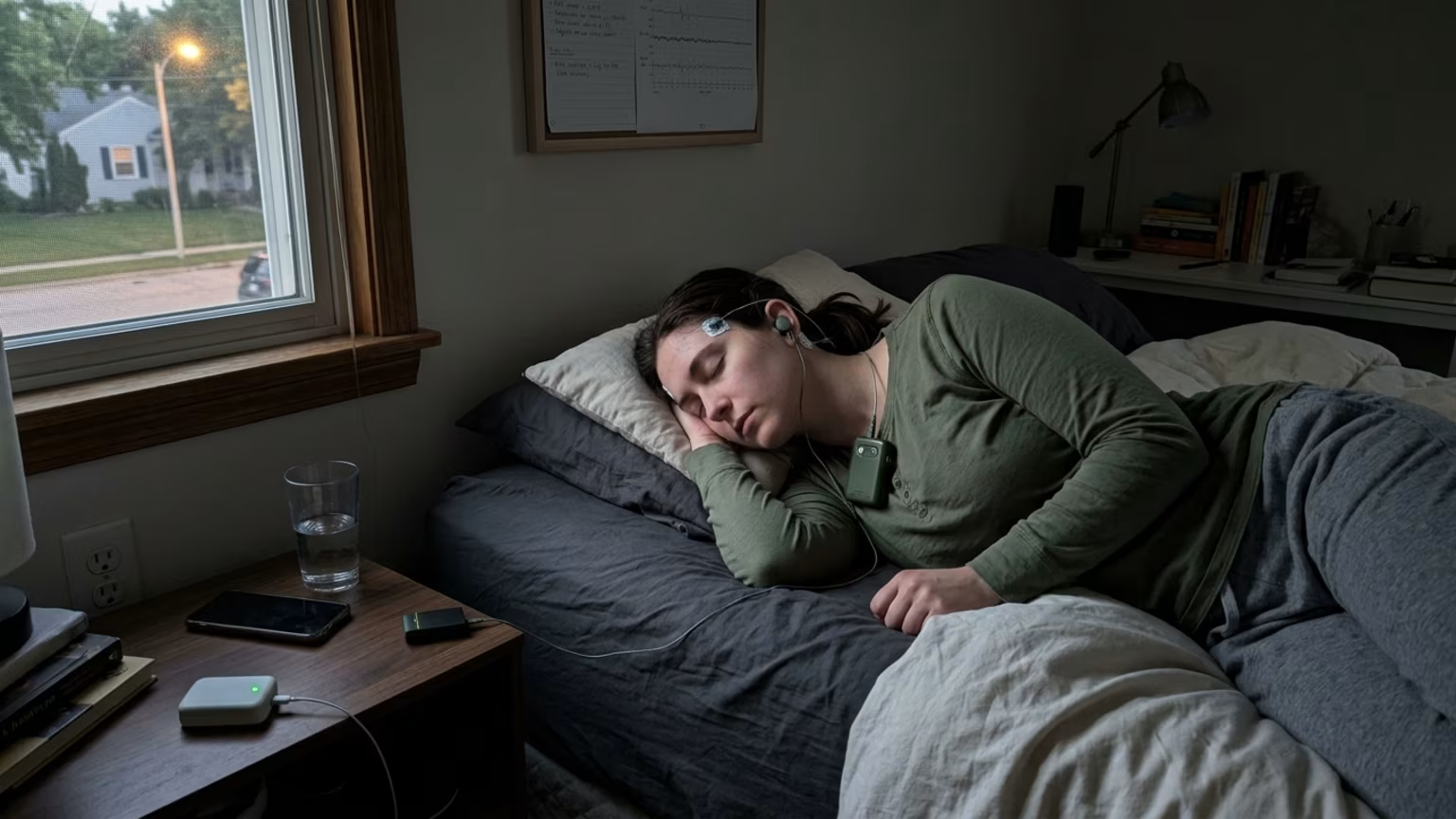
A 2026 study in Sleep evaluated acoustic stimulation for memory in young adults. Discover what the findings mean for veteran sleep health and cognitive recovery.

Australian veterans seek transparency on the 122 Royal Commission recommendations and prepare for a new $5,000 allied health threshold starting next July.
Build better habits around strength, recovery, sleep, hormones and healthy aging with practical guidance for active military personnel and veterans.
Explore BattleVet