

The Army's new Combat Field Test trial introduces a strict seven-event sequence. Learn how this assessment shifts military physical training and recovery.





On September 12, 2026, Utah National Guard soldiers assigned to the 1st Battalion, 204th Infantry Regiment conducted the Army’s new Combat Field Test. The training event took place at Camp W. G. Williams in Utah. According to a September 15 report from the Utah National Guard Public Affairs Office, the test is part of a year long trial period. This trial is intended to assess the physical demands of modern warfighting and improve military readiness.
The Combat Field Test is positioned as an annual assessment conducted alongside the standard Army Fitness Test. It specifically targets soldiers serving in 25 close-combat specialties. The Army initiated a trial period for this new standard on April 21, 2026. This evaluation phase is scheduled to continue through April 20, 2027.
This year long window gives Army leadership time to monitor the test and adjust training protocols. It also provides necessary support while soldiers and leaders adapt to the new physical requirements. The focus is on measuring how personnel handle sustained effort under cumulative fatigue. Active duty members must prepare for a multi-domain performance challenge rather than isolated fitness events.
The unit completing this recent test understands the need for broad physical preparation. The 1st Battalion, 204th Infantry Regiment was activated earlier this year on April 18, 2026. Their stated mission is to improve Utah’s ability to respond to overseas combat and domestic emergencies. Ensuring these soldiers can maintain their fitness is central to that objective.
Training for a demanding physical assessment requires a serious commitment to recovery. I remember waking up after a poor night of sleep and realizing that my training recovery was taking much longer than it used to. I realized that readiness is more than just pushing through the fatigue. It requires a dedicated approach to sleep and hormonal health, which completely shifted how I view long term capability.
The trial framework shows that the military is actively studying how soldiers manage complex physical tasks. Rather than implementing a permanent standard immediately, the Army is allowing time to identify practical training gaps. This approach helps units figure out pacing, equipment handling and movement technique before final adoption. Evaluating these variables now can help prevent unnecessary musculoskeletal strain later.
The Combat Field Test introduces a strict structure with specific performance metrics. Soldiers must complete a sequence of seven events within a rigid 30-minute time limit. They are also required to wear the Army Combat Uniform during the entire assessment. This format demands careful energy management to avoid early physical burnout.
The sequence begins with a 1-mile run to establish an initial aerobic baseline. Participants then immediately perform 30 dead-stop pushups. This specific pushup variation removes momentum and strictly tests upper-body pressing strength. Following the pushups, soldiers must complete a 100-meter sprint.
This rapid transition from pressing to sprinting challenges the body to clear metabolic waste quickly. The fourth event then requires 16 sandbag lifts to a 65-inch platform. Lifting sandbags requires grip strength, core stability and powerful hip extension. Executing these lifts after a sprint forces soldiers to manage their breathing under load.
Next, participants undertake a 50-meter carry using two 40-pound water cans. Weighted carries challenge the trapezius muscles, grip endurance and lateral core stability. The sixth event is a 50-meter movement drill that simulates ground mobility. This drill consists of a 25-meter high crawl followed by a 25-meter rush done in three to five second bursts.
Crawling and rushing demand high levels of mobility and joint control. The test concludes with a final 1-mile run under significant physical stress. Completing a second run after upper-body fatigue and heavy lifting requires immense cardiovascular resilience. The sequence is designed to simulate the varied physical requirements of a close-combat environment.
Sgt. Maj. Kevin L. Mayes of the 204th Maneuver Enhancement Brigade shared his perspective on the assessment. He described the event as a test of continuing to perform when conditions become uncomfortable. He noted that the evaluation measures more than just basic strength, endurance or speed. Spc. Victor Nguyen of the 1st Battalion expressed pride in being among the first group to complete the sequence.
Performing these movements consecutively creates a unique metabolic challenge for the human body. The first 1-mile run serves as a cardiovascular primer that elevates the heart rate immediately. If a soldier runs this first mile at maximum effort, they risk depleting their energy stores prematurely. Proper pacing is crucial to reserve enough energy for the heavy lifting tasks that follow.
The 30 dead-stop pushups force the chest, shoulders and triceps to contract from a dead position. This eliminates the stretch reflex that usually assists with continuous pushup repetitions. By requiring a full stop at the bottom, the test ensures true upper body pressing strength is measured. This localized muscular fatigue makes the subsequent 100-meter sprint significantly more difficult to execute with proper arm swing mechanics.
Moving heavy objects efficiently is a core component of military occupational readiness. The 16 sandbag lifts to a 65-inch platform test raw hip power and spinal stability. Lifting objects above chest height requires excellent shoulder mobility and core bracing. If the core fails to brace properly during these repetitions, the lower back absorbs unnecessary stress.
The 50-meter carry of two 40-pound water cans further taxes the body's structural integrity. Holding the weighted cans while walking quickly places immense tension on the upper back and forearms. This type of loaded carry mimics the practical demands of moving supplies or equipment across a battlefield. It requires a rigid torso to prevent the heavy load from pulling the body out of alignment.
Following the carry, the 50-meter movement drill introduces severe ground mobility challenges. The 25-meter high crawl forces soldiers to stay low while pulling their body weight forward. Transitioning from the crawl into a 25-meter rush in three to five second bursts creates massive oxygen debt. The final 1-mile run then tests a soldier's ability to maintain a steady pace while their muscles are heavily fatigued.
The implementation of this trial indicates a shift in how the military evaluates physical capability. Service members must train to handle repeated bouts of effort under load. The combination of lifting, carrying and crawling requires targeted mobility work. Relying solely on distance running will no longer prepare a soldier for these mixed demands.
Our team frequently reviews how personnel prepare for rigorous occupational standards. We recommend integrating resistance training with short intervals of cardiovascular conditioning. This approach aligns with modern methods for maintaining physical training and performance throughout a military career. Active personnel should focus on progressively building their tolerance to weighted carries and ground transitions.
Completing these seven events within 30 minutes requires intelligent pacing and careful recovery planning. Service members should always consult their unit’s official implementation guidance before attempting the full assessment. Veterans should recognize that military occupational tests are highly specific and may not serve as ideal civilian fitness benchmarks. Prioritizing healthy aging and longevity remains a better strategy for life after service.
The published event sequence intentionally generates high levels of cumulative fatigue. Attempting the full run, lift and carry protocol without proper conditioning increases injury risk. Service members should practice the individual components separately before combining them under a time constraint. Consistent attention to joint health and muscle recovery is essential for handling these occupational stressors.
Building the necessary base strength requires a phased training plan that respects individual recovery capacity. Active personnel should focus on mastering the movement patterns before adding speed or heavy loads. Practicing sandbag lifts and weighted carries consistently can build tissue resilience without overtraining. Integrating these specific tasks into routine conditioning sessions will yield better results than attempting the full test blindly.
Former service members often carry the physical toll of similar demanding assessments. Transitioning away from close-combat readiness requires a shift toward sustainable exercise habits. Reading through our veteran lifestyle and healthcare resources can help clarify these changing priorities. Fitness should eventually pivot from maximum operational output to protecting long term joint mobility.
To support the high training volume required for this standard, sleep hygiene must become a priority. Connecting physical exertion to proper sleep and stress management allows the central nervous system to recover. Without adequate rest, sprint speed and lifting power will quickly degrade. The 30-minute time cap leaves no room for sluggish muscle recruitment.
The trial period for this new physical standard will provide substantial data over the next year. As the military continues to evaluate the toll of heavy load carriage and rapid ground movement on the human body, how will these occupational fitness findings influence the future of veteran healthcare and joint preservation research?
Follow BattleVet for practical guidance on military and veteran health, strength, recovery, testosterone, sleep and healthy aging. Stay connected for new articles, research backed insights and clear information to help you stay capable for the years ahead.


Recent Pentagon policy updates and medical data highlight the growing debate over military testosterone screening, TRT risks, and active duty hormone health.

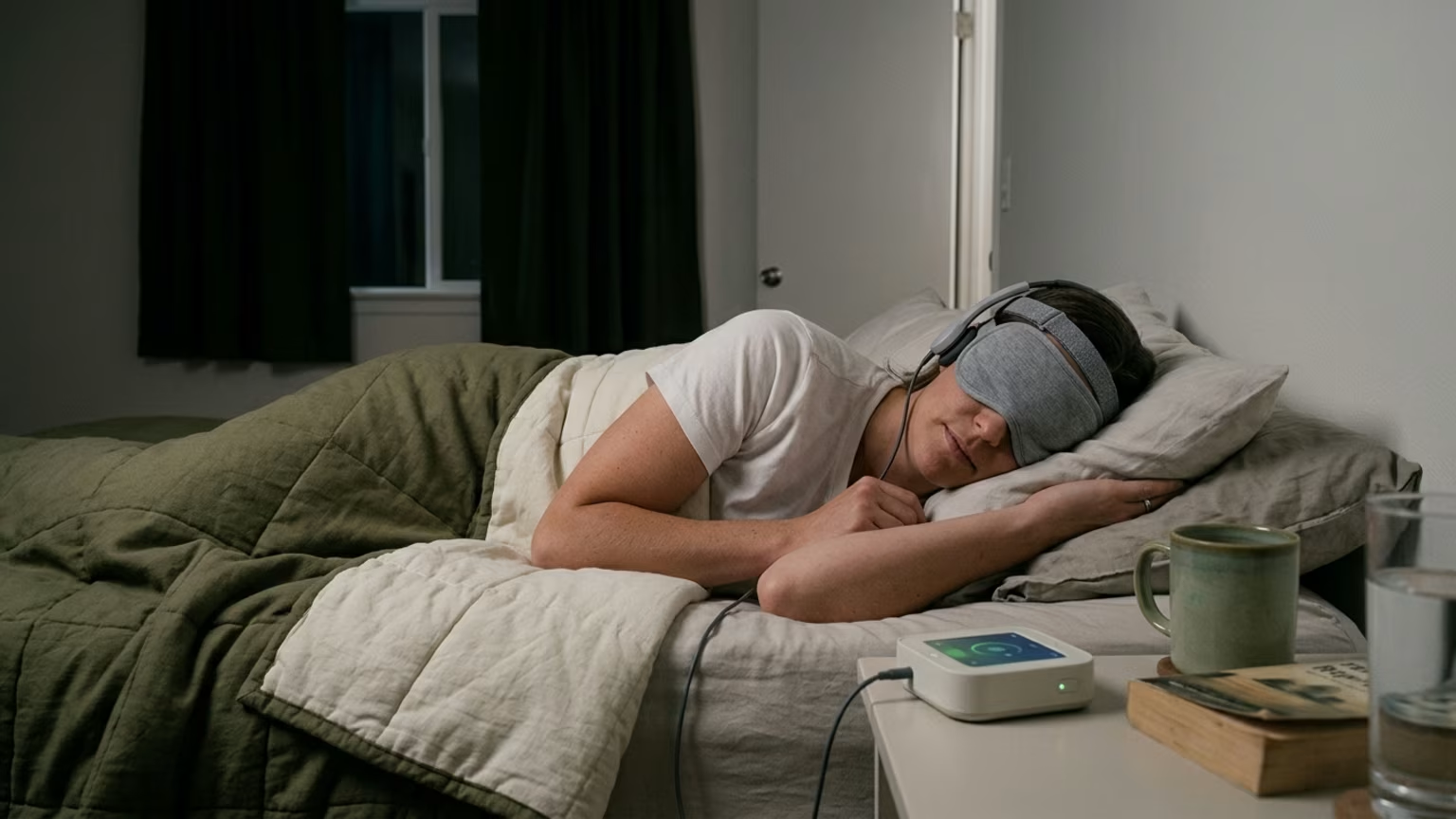
MIT researchers found that timed pink-noise bursts during sleep strengthen fluid waves tied to brain recovery. Here is what this means for veteran health.

A new study reveals how short, vigorous movement bursts and a faster walking pace can protect cardiovascular health and longevity for aging veterans.
Build better habits around strength, recovery, sleep, hormones and healthy aging with practical guidance for active military personnel and veterans.
Explore BattleVet