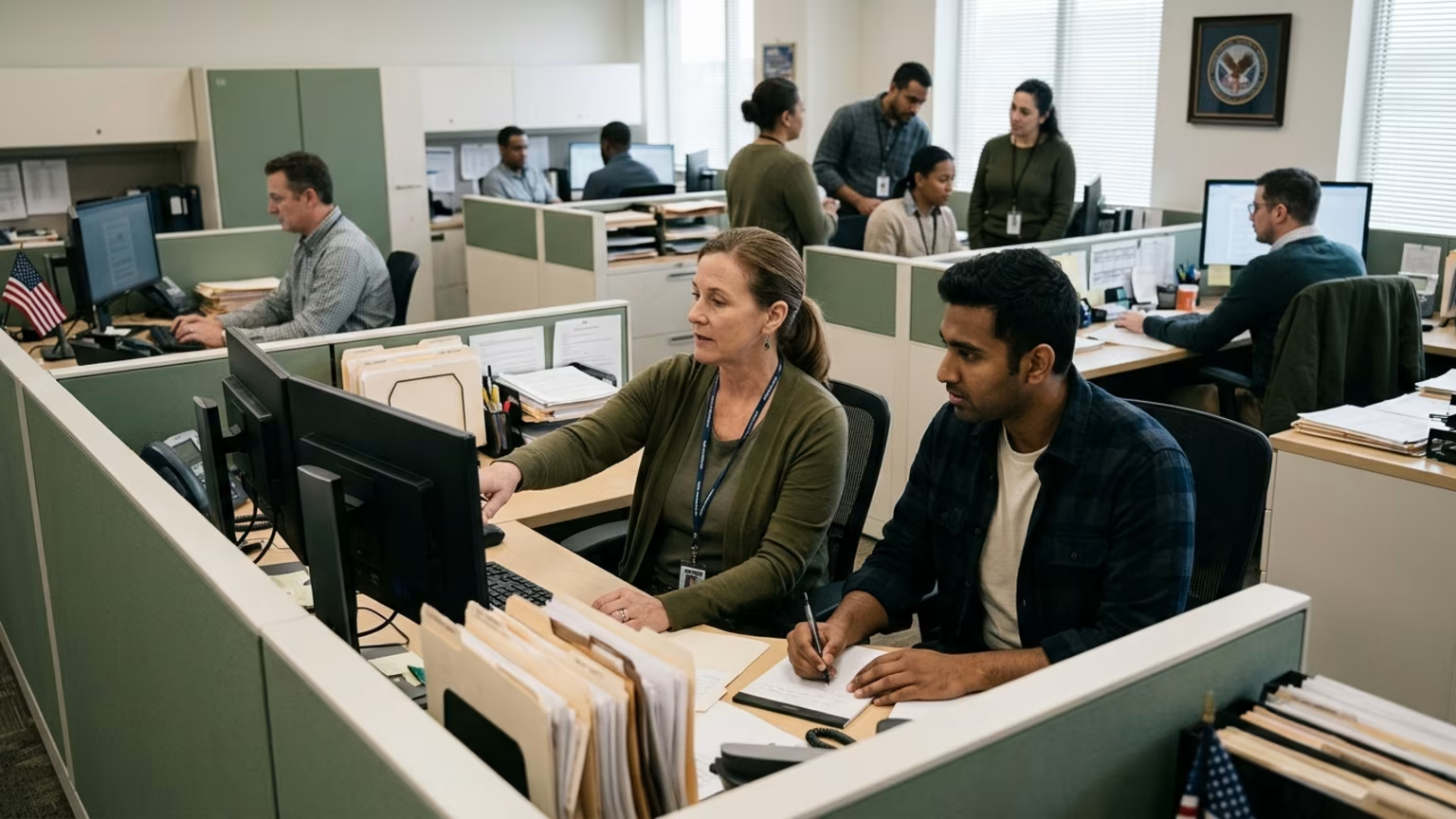

A clear look at the VA's FY2027 hiring plan, reported claims figures, and what the announcement means for veterans' benefits and health decisions.





On October 29, 2026, the U.S. Department of Veterans Affairs (VA) announced plans to hire more than 2,000 employees in fiscal year 2027. The department said the hires would help process the record number of benefits claims it expects veterans to file in coming years. Its hiring announcement describes a response to growing demand for claims processing.
As AL.com reported, the department already had more than 13,000 employees processing claims. The VA presented the hiring plan as an expansion of that workforce after reporting a record claims-processing workload in FY2026.
For veterans navigating benefits, the announcement concerns the administrative capacity behind claim decisions. The VA describes claims-processing work as interpreting and applying laws, regulations, and policies. Its hiring plan is intended to support that work as the department expects demand to continue growing.
The relevant distinction is between the agency's response and an individual veteran's next decision. The VA is announcing a staffing commitment. Veterans still need information about their own applications and questions through the department's established channels.
For active personnel approaching transition, the announcement also has an employment dimension. The VA is inviting veterans and others to apply for claims-processing jobs. It also identifies a training route for transitioning service members who are still on active duty.
These are related but separate implications. One concerns the capacity of the benefits system. The other concerns a possible civilian career working within that system. Neither should be confused with a change in health care eligibility or a new medical recommendation.
The announcement includes measures of incoming work, completed work, and reported decision quality. Keeping those categories separate is essential to understanding the update.
The VA reported that it processed 3.1 million compensation and pension claims in FY2026, which it described as a record high. It separately reported receiving more than 3.15 million claims submissions in FY2026.
According to the department, submissions were 80% above FY2022. That comparison helps explain why the VA is planning additional hiring rather than treating the most recent workload as an isolated event.
Claims processed and claims submitted are different measures. The processing figure describes work the department says it completed. The submission figure describes incoming claims. They should not be used interchangeably or treated as a direct measure of how long an individual veteran waited.
The department reported these FY2026 performance measures:
The VA described the accuracy rate as its highest in three years. VA Secretary Doug Collins also characterized the department's performance as improving in processing volume, speed, and accuracy. He said the planned hires would help continue that progress.
Those statements describe the department's assessment of its performance. For readers, the useful approach is to keep each measure attached to its stated purpose. A grant rate describes reported outcomes across claims. An accuracy rate addresses the department's assessment of decisions. An appeal rate describes reported use of the appeal process.
The VA attributed part of the rising claims volume to its efforts to contact and enroll veterans. It said its FY2026 outreach campaign included more than 11,000 live events.
The department also reported that more than 300,000 veterans had newly enrolled in VA health care so far in calendar year 2026. That is a health care enrollment measure, not a benefits-claims processing total.
The reporting periods also matter. The claims figures refer to FY2026. The enrollment figure refers to calendar year 2026 through the announcement. Keeping those labels intact avoids making unlike measures appear directly comparable.
The central staffing limitation is that this is a hiring plan. The announcement does not establish when the employees will begin work or how quickly staffing will increase. It also does not specify whether all planned hires are net additions, replacements for departing staff, or a combination.
Those gaps prevent a reliable forecast of the effect on individual claim wait times. The announcement does not promise a particular processing time or establish how much faster decisions might become.
The performance figures require a separate qualification. They are department-reported measures, and the announcement does not provide detailed definitions or methodology. The secretary's description is an official assessment rather than an independent evaluation. The reported grant rate should not be read as a personal probability that a particular claim will succeed.
Finally, the outreach figures do not establish how much of the growth came from specific events or enrollment efforts. The VA's explanation provides context. It does not isolate the contribution of each activity.
This distinction between a reported result and the conclusion it supports is central to BattleVet's approach to evaluating evidence and medical claims. The same reading discipline is useful when assessing benefits-system announcements.
The practical change is in the VA's stated plan for administrative capacity. This is not a clinical update. The announcement establishes no new diagnostic testing guidance, treatment recommendation, or physical-performance protocol.
Personal health decisions remain matters for qualified care. A workforce announcement is not a reason to reinterpret symptoms or revise a treatment plan. BattleVet's coverage of the broader clinical picture in military health addresses a different category of decision from the staffing update reported here.
For benefits administration, the VA identifies these information channels:
That is the concrete administrative guidance in the announcement. A hiring headline and an individual application question operate at different levels. The former describes the department's plans. The latter calls for information relevant to the veteran's own circumstances through an appropriate VA channel.
The same distinction applies when reading performance statistics. Department-wide results provide context for the system's workload and reported performance. An individual benefits question still needs an individual answer. The useful shift is to recognize the hiring plan while keeping current administrative decisions grounded in applicable VA information.
The VA says claims-processing work involves applying the laws and policies that govern disability claims. Its invitation to applicants therefore concerns a specific administrative role, not a general promise of employment across the department.
The announcement also highlights the Warrior Training Advancement Course (WARTAC). According to the VA, the program gives transitioning service members an opportunity to complete national-level training while still on active duty. Completion can lead to employment opportunities at one of the department's 56 Regional Benefits Offices.
The distinction between training and employment is important here. The VA describes a possible route to opportunities, not a guaranteed job after completion. The program's mention is relevant to service members considering what kind of work they want after transition.
BattleVet's discussion of purpose in civilian working life provides a separate perspective on that decision. In this announcement, the concrete option is a training pathway connected to claims-processing work. Its relevance depends on the person's employment goals rather than on the hiring headline alone.
The next useful update would connect the hiring announcement to actual staffing and service outcomes. That would mean explaining how many positions were filled and how the workforce changed. It would also mean reporting what happened to decision timeliness and quality as claims volume developed.
For veterans, the value of additional capacity will be clearest when staffing information is connected to the experience of navigating benefits. Will future VA reporting show how the planned hires affect timely and accurate decisions for veterans managing benefits alongside their health care?
Follow BattleVet for practical guidance on military and veteran health, strength, recovery, testosterone, sleep and healthy aging. Stay connected for new articles, research backed insights and clear information to help you stay capable for the years ahead.


The Pentagon's new human performance council includes sleep medicine. Here's how its advisory role relates to recovery programs and veteran health.


Fort Drum’s Oct. 23 H2F Day paired training with nutrition, sleep and recovery education. Here is what the event reinforces about readiness.

An HHS official links troop testosterone screening to readiness. Medical groups emphasize confirmed diagnosis, voluntary treatment, and fertility concerns.
Build better habits around strength, recovery, sleep, hormones and healthy aging with practical guidance for active military personnel and veterans.
Explore BattleVet