

Learn how one veteran navigated a VA healthcare denial and explore the VA's updated 2026 decision review process, eligibility rules, and benefit guidelines.





On October 3, 2026, VA News published a profile of Air Force veteran Lisa Ducharme in its Women Veterans Book Corner. The publication highlighted Ducharme and her book, Becoming A Veteran. Ducharme served in Air Force Personal Affairs and Personnel from 1986 to 2006. Her 20-year career included casualty-related work.
After retiring in 2006, Ducharme applied for care through her local VA medical center and was denied. The profile reports that she then went years without using VA benefits or resources. She later applied for the Post-9/11 GI Bill in 2008 and was among the first group of veterans to use the benefit in 2009. During a class, a VA representative reviewed her earlier healthcare denial, helped her enroll in VA healthcare, and connected her with her requested primary care doctor.
This sequence of events matters because it demonstrates that an initial denial does not always close the door on veteran support. Many former service members assume a single rejection applies permanently across all departments. Ducharme went several years without accessing resources before an educational setting provided a chance to revisit her status. Her experience shows the value of persisting through early administrative hurdles.
The VA profile summarizes Ducharme's central message by framing veteran identity as a strategy rather than a liability. Ducharme encourages veterans to recognize their military experience as a potential advantage. She advises against navigating post-service life alone when structured resources exist. She cautions women veterans to not let pride or one difficult experience stop them from seeking earned benefits.
Her journey also highlights the importance of asking for assistance when life circumstances change. After being laid off in 2012, Ducharme connected with Massachusetts Veteran representative Gary Howe. He introduced her to benefits and resources she had not known were available. She subsequently joined Veterans Outreach Into Community Engagement (VOICE) in 2013 to learn directly from VA outreach professionals and advocates.
Connecting with local organizations provides a practical way to learn from the experiences of others. Ducharme’s involvement with Veterans Outreach allowed her to interact with informed advocates. These advocates often understand the subtle differences in policy that a single veteran might overlook. Building a network of knowledgeable peers is a central part of taking control of post-service health decisions.
Furthermore, Ducharme navigated these systems as a caregiver for her family. She helped her father obtain VA disability compensation and healthcare in 2018. Her father eventually passed away in May 2024. This family-caregiving dimension illustrates that mastering the benefits system can support aging relatives alongside the individual veteran.
Navigating care for an older generation often exposes veterans to different eligibility rules. This hands-on experience dealing with claims for a relative can build valuable knowledge for managing one's own future needs. Understanding the system thoroughly ensures that critical healthcare benefits are not left unused. You can find more information about managing post-service life in our Veteran lifestyle and healthcare Resources.
While Ducharme’s account is encouraging, the profile presents her experience as a personal example rather than proof that every VA denial can be reversed. It does not establish that the same steps would produce an identical result for another veteran. The profile also does not specify the exact healthcare eligibility rule that applied to Ducharme at the time. Therefore, veterans should not view her story as a formal guide to appealing a healthcare enrollment decision.
Healthcare enrollment and education benefits operate under entirely separate frameworks. Ducharme’s GI Bill application placed her in a setting where a VA representative reviewed her earlier healthcare denial. However, the profile does not state that the education benefit itself created her healthcare eligibility. The dates in the article span multiple years and represent Ducharme’s specific chronology rather than current processing standards.
Current policy reinforces the necessity of checking specific eligibility rules for every individual situation. On October 1, 2026, the VA published its 2026 Veterans Benefits Guide. According to the VA, this new guide outlines eligibility requirements and qualification guidelines for different periods of service. It includes specific direction for veterans whose service spans both peacetime and wartime periods.
The 2026 Veterans Benefits Guide serves as a foundational resource for navigating these complex rules. Because it details qualification guidelines for distinct periods of service, it helps veterans identify which policies actually apply to their service dates. Using this guide ensures that applications align with the most current VA requirements. Staying informed through official documentation reduces the likelihood of procedural errors during the initial application process.
The release of the 2026 guide emphasizes that eligibility rules vary widely by benefit and service period. Veterans must verify the rules applicable to their individual cases rather than assuming one general standard covers everything. Treating a past decision as permanent can prevent veterans from utilizing newly updated guidelines. You can read more about maintaining capability after service in our Veteran life Articles.
When a veteran faces a denial, treating the decision as a reason to ask questions can uncover remaining options. If you are unsure about a benefit decision, ask what rule was applied to your case. The VA offers a structured decision-review system for covered claim decisions. The agency describes three distinct review options for these covered claims: a Higher-Level Review, a Supplemental Claim, or an appeal to the Board of Veterans' Appeals.
These structured paths allow veterans to formally contest decisions they believe are incorrect. For education benefits specifically, the VA states that a Certificate of Eligibility shows which VA education benefit a person is eligible to receive. If an applicant disagrees with that determination, they may request a formal decision review to challenge the outcome. Knowing these options exist allows veterans to move forward deliberately rather than accepting a confusing rejection.
Ducharme recommends asking questions, working with a Veterans Service Officer, and continuing until available options are understood. This practical advice aligns with the VA's recommendation to seek qualified help. The VA states that accredited representatives can assist veterans in filing a claim or requesting a decision review. The agency identifies Veterans Service Organizations, attorneys, and claims agents among the types of accredited representatives available.
While Ducharme specifically names a Veterans Service Officer in her advice, veterans should verify accreditation status before sharing their information. Not every person using a similar title holds official VA accreditation. Working with an accredited professional ensures that the advice provided is accurate and accountable to the VA system. An accredited representative can help interpret the 2026 Veterans Benefits Guide and determine the best approach for a formal review.
As the VA continues to clarify its eligibility rules through resources like the 2026 Veterans Benefits Guide, will more former service members find the clarity they need to successfully overturn past benefit denials?
Follow BattleVet for practical guidance on military and veteran health, strength, recovery, testosterone, sleep and healthy aging. Stay connected for new articles, research backed insights and clear information to help you stay capable for the years ahead.



A September 2026 study found AI chatbots often drop sleep apnea referral advice when users minimize symptoms. Veterans must rely on clinical medical screening.


An ABC investigation highlighted concerns over DVA-funded medicinal cannabis and esketamine prescribing for veterans, leading to tightened rules and oversight.
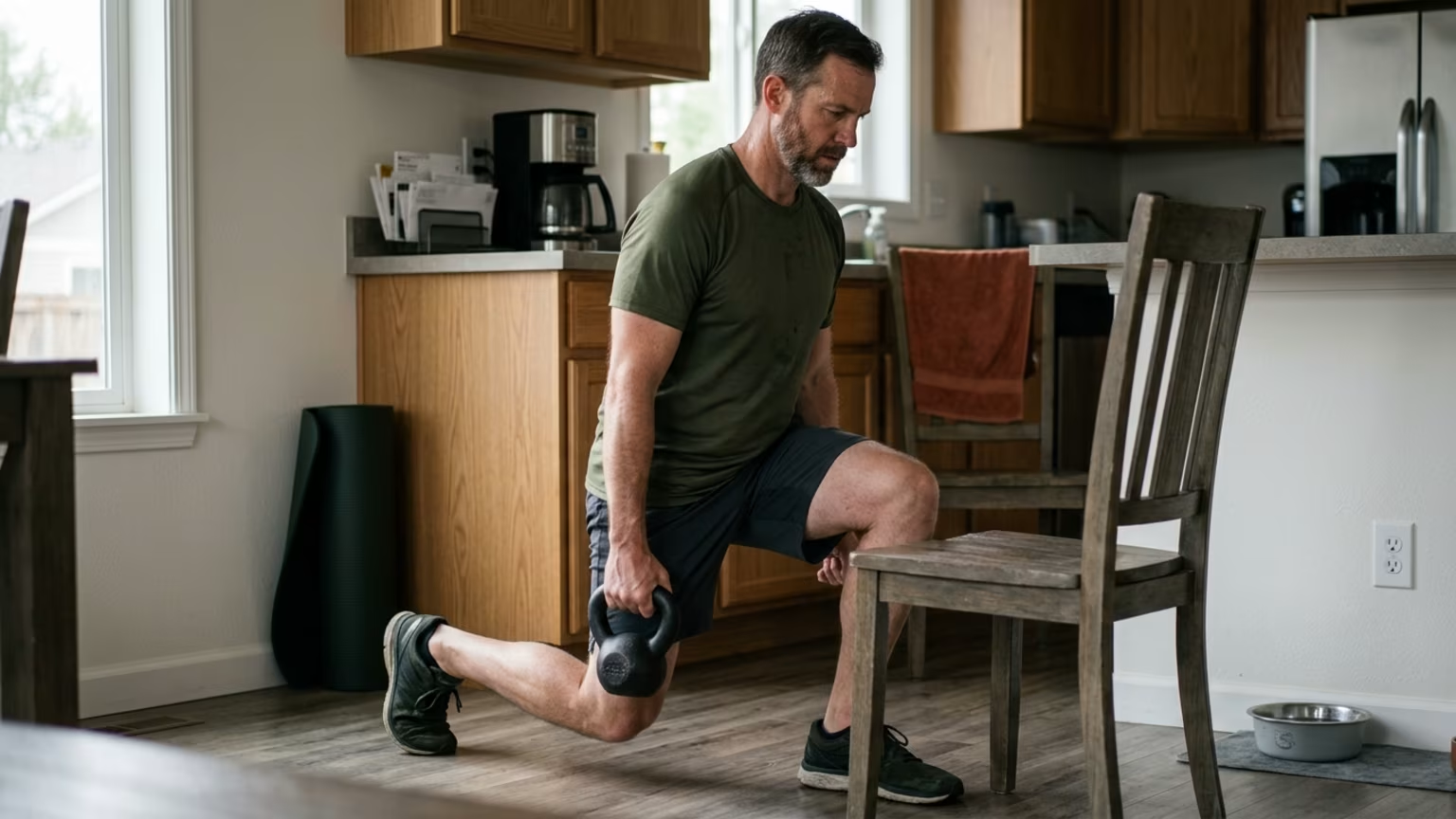
Recent reports highlight a 10-minute daily resistance habit for adults over 40. Learn how brief fitness routines compare to federal strength guidelines.
Build better habits around strength, recovery, sleep, hormones and healthy aging with practical guidance for active military personnel and veterans.
Explore BattleVet