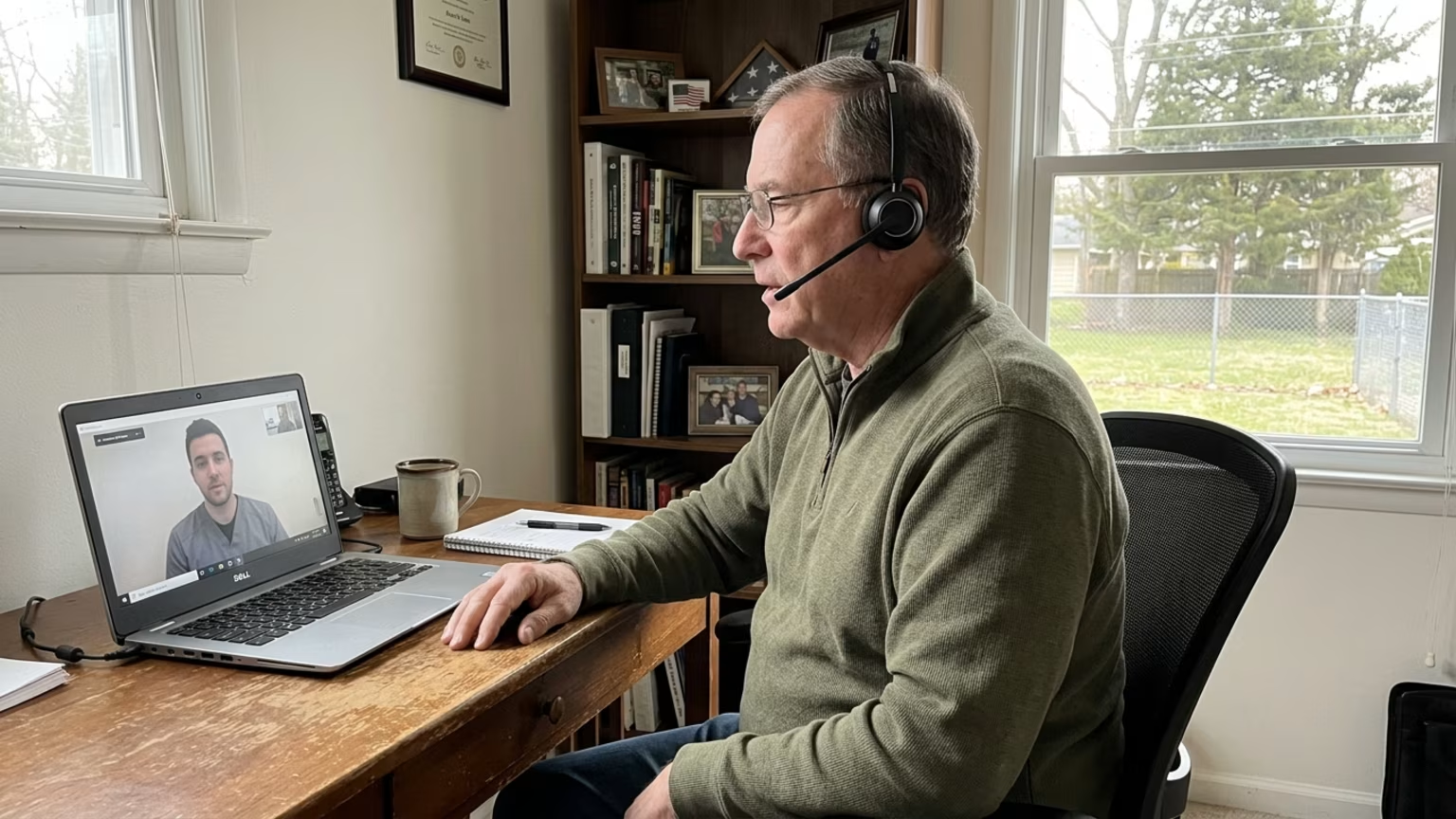

A 2025 study details the VA's fully virtual suicide prevention telehealth program, which reached 139 health systems to deliver evidence-based therapy.





If you or someone else may be in immediate danger, call 911 or go to the nearest emergency department. Veterans and their loved ones can also access immediate support by calling 988 and pressing 1. You can also text 838255 or use the Veterans Crisis Line chat online. Enrollment in VA health care or benefits is not required to connect with these crisis responders.
In 2025, a paper published in Frontiers in Psychiatry detailed the U.S. Department of Veterans Affairs’ expansion of a fully virtual care system. The study reviewed the Suicide Prevention 2.0 Clinical Telehealth initiative. This initiative was designed to deliver evidence-based treatment to veterans with a recent history of suicidal self-directed violence. The program aligns with the 2018 National Strategy for Preventing Veteran Suicide to make clinical interventions widely available.
By April 2023, these virtual services were available through all 18 VA regional Clinical Resource Hubs. They also reached all 139 VA health care systems in the United States. The researchers described it as the first enterprise-wide, fully virtual, evidence-based treatment program of its kind. The primary goal was bringing structured care to veterans regardless of their geographic location.
Geographic distance often prevents veterans from accessing specialized healthcare. This is a significant barrier for rural veterans who need structured, recurring treatment rather than a single wellness check. The VA built this national telehealth infrastructure to close that geographic gap. It ensures that veterans do not have to rely solely on local facility staffing to receive specialized interventions.
The program targets elevated clinical risk rather than general mental health maintenance. The authors of the study used specific frameworks to evaluate how a large health system can train clinicians and distribute services. They looked beyond controlled settings to assess whether the VA could maintain delivery at scale. This matters for Military health because a therapy is only useful if patients can actually access it.
The study authors used the Exploration, Preparation, Implementation, and Sustainment framework to guide their operational rollout. They also applied the RE-AIM framework to carefully evaluate the overall reach of the program. This indicates that the paper actively tests whether a massive health system can build teams and maintain complex delivery. Building a national standard of care requires massive logistical coordination.
Building a nationwide telehealth network required significant staffing and training. By the end of September 2024, the program had hired 137 therapists to manage the remote workload. All of these therapists received training in at least two evidence-based interventions. The program retained 78.10% of those clinicians in their roles at that point.
The demand for these virtual services scaled quickly across the country. The initiative received 23,628 referrals nationwide by the end of September 2024. These referrals represent individuals directed to the program, though they are not the same as completed treatment episodes. The study authors interpret the year-over-year increase in referrals as evidence of sustained reach across the veteran population.
Separate data highlights how veterans engage with these virtual therapy sessions over time. A VA research brief reports that more than 2,700 veterans received approximately nine Cognitive Behavioral Therapy for Suicide Prevention sessions through telehealth. These remote therapy sessions occurred over roughly three months. The brief characterizes the findings as evidence that telehealth-delivered CBT-SP is feasible and practical for reaching more veterans.
That same VA brief details specific clinical outcomes for the veterans who participated. It reports improvements in coping, depression, and self-efficacy among those veterans. The findings also noted reductions in suicidal thoughts and hopelessness for veterans receiving the telehealth treatment. This data shows that virtual delivery can support a multi-session, evidence-based psychotherapy course.
While the expansion of this program is notable, the system has operational boundaries. The implementation study focuses heavily on rollout mechanics, staffing levels, and geographic reach. It does not establish that the program reduced suicide deaths or suicidal behavior across the entire VA population. The data highlights systemic capacity rather than universal efficacy across all demographics.
Furthermore, national availability on paper does not always mean immediate access in practice. The implementation paper does not provide independent utilization rates or wait times for rural and medically underserved veterans. Telehealth heavily relies on a veteran having reliable internet connectivity, adequate privacy at home, and functional devices. These practical barriers can complicate treatment, meaning virtual care is not a perfect solution for every individual.
Fully virtual care must never be presented as a total replacement for emergency evaluations. When a veteran faces imminent danger, in-person crisis resources remain the absolute priority. The VA explicitly directs veterans and their loved ones to use dedicated crisis lines for immediate connection. Telehealth handles the structured therapeutic work, while emergency services handle acute danger.
This research shifts how veterans and their families should view virtual care. Telehealth is no longer just for basic screenings or initial consultations. Veterans can now specifically ask VA clinicians for evidence-based interventions by name. The SP 2.0 Clinical Telehealth program delivers four specific therapies remotely to address complex clinical needs.
These interventions include Safety Planning Intervention, Problem-Solving Therapy for Suicide Prevention, Cognitive Behavioral Therapy for Suicide Prevention, and Dialectical Behavior Therapy. CBT-SP is intended to address suicide-related thoughts, coping patterns, and behaviors through a structured therapeutic process. Dialectical Behavior Therapy commonly emphasizes skills related to distress tolerance, emotion regulation, and crisis management. Providing these specific models through telehealth means veterans can receive targeted care without driving to a major medical center.
Safety planning is another concrete tool used within this structured care model. It helps a veteran identify internal coping strategies, supportive people, and professional contacts. It also includes identifying steps to make access to lethal means safer. This specific step is a clinical priority that is best arranged alongside a clinician, relative, or trusted support person.
Veterans should treat telehealth as one component of a broader safety network. Virtual therapy improves access, but it should be combined with an individualized plan and emergency escalation protocols. If a veteran needs higher-level care, they should ask their care team what happens between virtual sessions. Understanding how a clinical team responds during a crisis remains a critical part of navigating veteran lifestyle and healthcare.
The VA emphasizes a whole-of-community approach to veteran well-being. This approach involves relatives, friends, caregivers, community members, and professional healthcare providers. A virtual care program provides the clinical anchor, but local support networks reinforce the daily safety of the veteran. Relying on multiple points of contact creates a much more resilient safety net.
Veterans do not need to assume that living far from a VA facility completely rules out structured care. The implementation of this program shows that remote delivery can be highly capable. However, it is important to clearly understand the limits of remote treatment. Connectivity issues, the need for disability accommodations, and the occasional necessity of in-person services must be factored into care decisions.
Patients and their families can proactively ask about emergency contacts and between-session coping plans. Because the program offers structured psychotherapy rather than a single contact, understanding the treatment schedule is important. Knowing exactly who to call if risk increases provides a necessary safety net between scheduled virtual appointments.
The ability to hire, train, and deploy specialized therapists across a national network proves that large-scale virtual care is possible. The VA initiative reached every healthcare system in the country and processed thousands of referrals by the end of September 2024. As this program matures, how will other large healthcare networks adapt this model to improve specialized care access for veterans living far from physical clinics?
BattleVet provides research-backed guidance to help you navigate your healthcare decisions with clarity.
Follow BattleVet for practical guidance on military and veteran health, strength, recovery, testosterone, sleep and healthy aging. Stay connected for new articles, research backed insights and clear information to help you stay capable for the years ahead.


The Army’s HVAC task force targets hot barracks. Here is what its project figures mean and how to assess future housing and sleep-related claims.


The BRIDGE Act proposes a whole-family military transition pilot. Read who it would serve, what support it includes, and what remains unresolved.

Combat Stress’s workplace guidance emphasizes listening over diagnosis. Recent U.S. veteran insomnia research adds context for sleep and recovery concerns.
Build better habits around strength, recovery, sleep, hormones and healthy aging with practical guidance for active military personnel and veterans.
Explore BattleVet