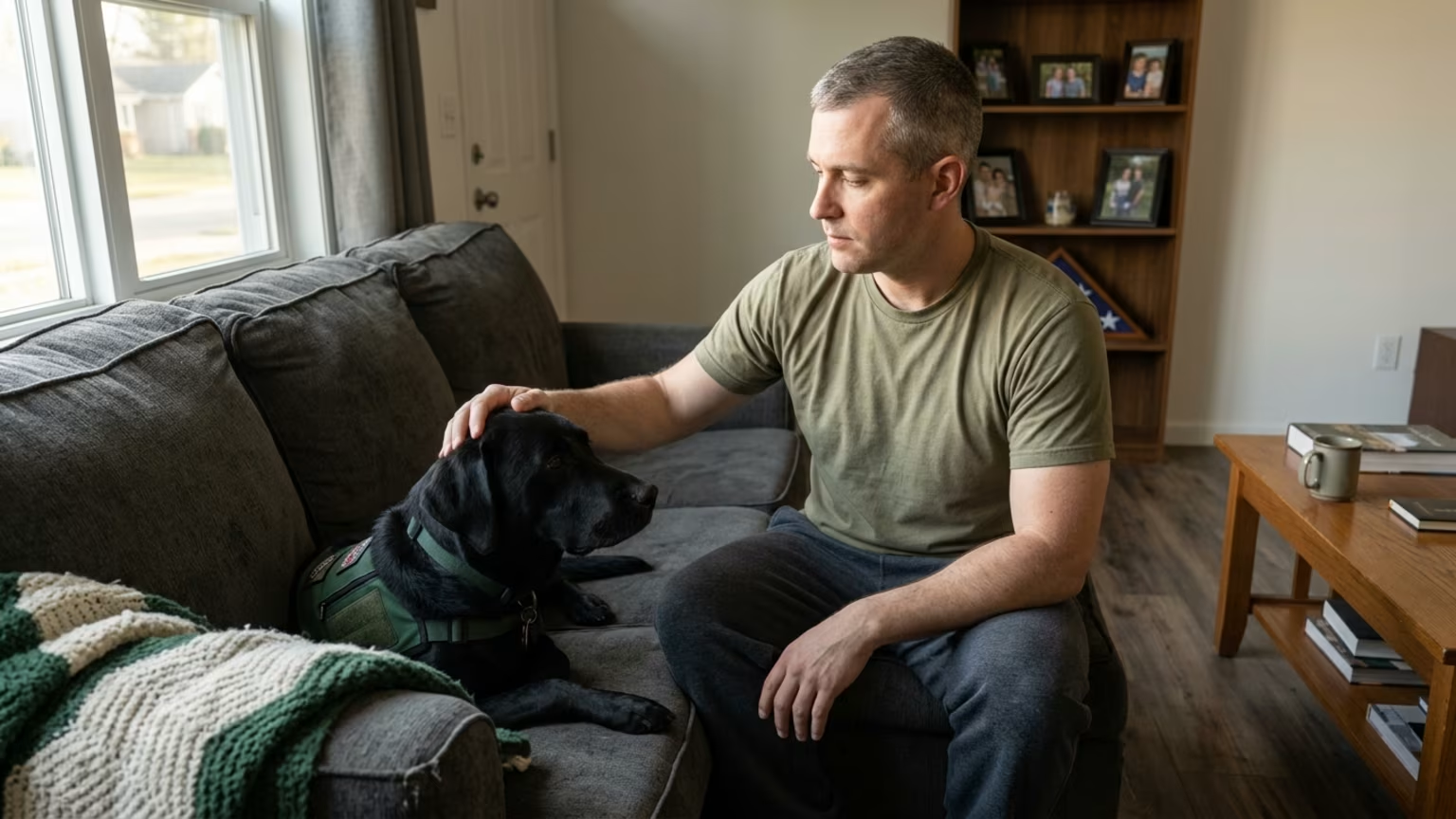

Learn how VA service dog programs and Mission-Based Trauma Recovery offer veterans structured routines, physical activity benefits, and purposeful rehabilitation.





If you are in immediate danger, call 911. For 24/7 support, call or text 988 and press 1 for the Veterans Crisis Line, or text 838255.
A service dog is a highly trained working animal designated to assist a person with a qualifying disability. A veteran sits in a quiet waiting room, unsure of the next step in their recovery journey. A provider mentions a new approach involving structured animal training. In that moment, a vague treatment plan suddenly gains a clear, practical focus.
On Aug. 26, 2026, six six-week-old puppies from Warrior Canine Connection visited the Department of Veterans Affairs Central Office in Washington, D.C. The visit provided an opportunity to expose the dogs to new people and sounds during an important socialization period. VA Central Office hosted these puppies to highlight the role of service dogs in veterans' lives. VA updated its published information on this initiative the following day.
VA says Warrior Canine Connection works with VA and state veterans agencies to expand access to trained service dogs. This expansion specifically targets veterans living with post-traumatic stress disorder, traumatic brain injury, and other service-related injuries. VA describes the group as one of only two nonprofit organizations working directly with the department to help provide trained service dogs to veterans. The organization is also a partner in the VetResources Community Network.
The VetResources Community Network serves as a point of entry for outreach and community engagement. By integrating nonprofits into formal healthcare structures, the department is standardizing how animals fit into medical care. Trained service dogs may assist with specific tasks related to daily living and symptom management. They also help veterans build steady routines and regain confidence in public settings.
Understanding the role of service dogs requires looking at the broader scope of veteran recovery programs. Health systems are constantly evaluating new methods to treat complex, service-related injuries effectively. The integration of community networks into medical care represents a significant shift in treatment philosophy. This approach recognizes that clinical care must extend into a veteran's daily civilian environment.
The Puppies Assisting Wounded Servicemembers (PAWS) for Veterans Therapy Act established five VA pilot programs. These pilot sites incorporate structured service-dog training directly into PTSD treatment protocols. VA says Warrior Canine Connection operates as the nonprofit provider at two of the five sites. These two specific pilot programs are located at VA facilities in North Carolina and California.
Rather than simply receiving a fully trained animal, some veterans participate in the training process itself. Warrior Canine Connection utilizes a model called Mission-Based Trauma Recovery. VA and the organization describe this as a structured program where veterans help train future service dogs. The goal is to help participants practice communication, confidence, and emotional regulation through purposeful activity.
This active involvement has measurable effects on physical performance and daily habits. A VA research brief reports that researchers observed 45 veterans enrolled in a residential PTSD treatment program. The veterans in this study showed approximately 20% higher peak physical activity when their dogs-in-training were present. Researchers also noted a slightly lower heart rate in the presence of the animals.
These physical changes connect directly to long-term health and functional capability. Higher peak physical activity supports better cardiovascular health, muscular endurance, and metabolic function over time. Increased daily movement is a core component of healthy aging for active military personnel and veterans. Maintaining physical activity often requires a strong external motivator like animal care.
The 20% increase in peak physical activity represents a meaningful shift in functional capacity. When veterans increase their daily movement, they support critical cardiovascular and musculoskeletal systems. Consistent physical exertion is a cornerstone of proper recovery and metabolic regulation. A working animal introduces a mandatory schedule of walking, feeding, and physical interaction that forces handlers to prioritize movement.
Maintaining physical fitness often becomes difficult after military service ends. The shift from a highly structured military environment to civilian life can disrupt healthy habits. Training a working animal provides an external framework that mimics military operational consistency. This steady routine aids in recovery and promotes sustainable strength and fitness.
Veterans often confuse the strict legal definition of a working animal with other supportive pets. Department materials clarify that trained service dogs provide specialized assistance for PTSD-related challenges. They do not have the same training or access rights as basic emotional-support animals. Readers should always distinguish among a fully trained service dog, a service dog in training, and a therapy animal.
A service dog is not automatically appropriate for every veteran with a service-related condition. Bringing a working animal into a home involves significant practical demands and structured daily routines. Veterans must manage public access protocols, secure reliable housing, arrange transportation, and provide routine veterinary care. This requires a stable baseline of personal capability and a commitment to strict training consistency.
The recent puppy socialization visit illustrates two distinct pathways for veterans. The first pathway is the eventual placement of a fully trained dog with an eligible veteran. The second pathway involves participation in structured dog-training activities as part of a trauma recovery program. Both pathways demand high levels of personal responsibility and steady daily management.
Evaluating what normal looks like means understanding the daily baseline of working dog ownership. Proper handler training requires immense patience and a high tolerance for repetitive daily tasks. Handlers must reinforce behavioral commands continuously throughout the day in varied environments. A dog in training will make mistakes, requiring the veteran to maintain a calm, regulated response.
This requirement for calm correction is where emotional regulation is actively practiced in real time. Mission-Based Trauma Recovery utilizes these exact moments as therapeutic tools for the handler. By focusing on the animal's progress, the handler shifts attention away from internal stress. This external focus builds confidence and reinforces constructive communication patterns over time.
Many people assume that acquiring a working animal is a rapid, straightforward administrative process. The reality involves thorough clinical evaluations, extensive waiting periods, and mandatory handler education courses. Nonprofits working with federal agencies must ensure both the animal and the handler are adequately prepared. Successful placement depends entirely on the long-term compatibility between the veteran and the dog.
A fully placed working dog must perform specific physical tasks tailored to the veteran. These tasks might include creating a physical barrier in crowds or retrieving dropped items. They are not merely present for comfort, which is the primary function of an emotional-support animal. Recognizing this baseline distinction helps veterans align their expectations with clinical reality.
Veterans enrolled in VA health care should begin by discussing possible support with their clinical provider. VA says the provider can guide evaluation, referral, and ongoing support. A diagnosis alone does not guarantee automatic eligibility for animal placement or program enrollment. The assessment involves a comprehensive look at the individual's living situation and physical capacity.
When speaking with a provider, veterans should describe concrete, actionable treatment goals. Goals might include leaving the house more consistently or practicing specific emotional regulation skills. You can also discuss goals related to managing specific disability-related tasks in public environments. Clear objectives help the clinical team determine if animal-assisted therapy is a realistic option.
Veterans considering a nonprofit program outside the federal system must verify specific operational details. They should check whether the organization requires a formal service-connected disability for participation. They also need to verify local availability, expected wait times, and long-term follow-up support. Programs serving active-duty members nearing separation may operate under entirely different eligibility rules.
The PAWS for Veterans Therapy Act represents a formal legislative commitment to studying animal-assisted therapies. By establishing specific pilot sites, officials can monitor outcomes in controlled, clinical environments. Testing these programs within a formal treatment framework provides essential data for future expansion. It moves canine training from an external charitable service to a monitored medical intervention.
Operating pilot programs in designated locations allows researchers to gather standardized operational data. These facilities maintain the clinical oversight necessary to evaluate complex medical interventions safely. Veterans participating at these sites receive ongoing clinical support while working with the animals. This dual structure ensures that physical and psychological safety remains the highest priority for everyone involved.
Veterans should continue working with their clinical team on their broader treatment plan. Available coverage does not present animal training as a substitute for evidence-based medical care. You must consult a qualified physician or VA provider before altering your current health routines. Self-diagnosing or abandoning prescribed rehabilitation for alternative programs carries significant health risks.
If you are experiencing a mental health crisis, you must prioritize immediate professional support. Call 911 for immediate danger, dial 988 and press 1 for the Veterans Crisis Line, or text 838255. Always store firearms and medications securely, and arrange safe storage plans alongside a trusted clinician. These steps ensure your physical safety while you work with professionals to find effective, evidence-based treatments.
If you want to maintain your physical fitness and healthy aging goals, purposeful routines matter. Incorporating structured activity into veteran life often requires coordination with specialized healthcare professionals. Ultimately, the most crucial step is scheduling an appointment with your VA provider today to evaluate whether structured animal-assisted therapy aligns safely with your specific rehabilitation goals.
Follow BattleVet for practical guidance on military and veteran health, strength, recovery, testosterone, sleep and healthy aging. Stay connected for new articles, research backed insights and clear information to help you stay capable for the years ahead.


The BRIDGE Act proposes a whole-family military transition pilot. Read who it would serve, what support it includes, and what remains unresolved.


Combat Stress’s workplace guidance emphasizes listening over diagnosis. Recent U.S. veteran insomnia research adds context for sleep and recovery concerns.

ErythroMer's reported storage design could matter for military care. An academic review still lists it as preclinical, with human evidence ahead.
Build better habits around strength, recovery, sleep, hormones and healthy aging with practical guidance for active military personnel and veterans.
Explore BattleVet