

The U.S. Army updated its Holistic Health and Fitness doctrine to standardize training and shift from reactive clinics to proactive unit performance teams.





A squad leader watches a young soldier tape a swollen knee before morning formation. The tension is obvious between pushing through pain and preserving a long career. A persistent myth says that military physical training remains a rigid routine of running and calisthenics until a joint finally breaks. The correction is that the U.S. Army published an updated Holistic Health and Fitness (H2F) doctrine package on September 3, 2026, officially shifting from a reactive healthcare model toward proactive human-performance management.
Many former service members remember a time when physical readiness meant preparing for a single standardized test. Training plans were basic. Recovery was rarely discussed unless a serious injury forced a soldier into a centralized medical clinic. This created the misconception that the military only fixes personnel after they are already broken.
The U.S. Army updated its doctrine announcement on September 4. This update clearly outlines a departure from that older, clinic-based mindset. Instead of waiting for injuries to occur, the new framework integrates specialized health professionals directly into units. Historically, training manuals lacked this integrated approach.
People often assume the military still relies entirely on a traditional mentality of just working through the pain. This outdated perception stems from decades of centralized medical care. If a soldier was hurt, they went to a distant clinic to seek treatment. The new doctrine fundamentally changes this by placing resources directly where soldiers train and work.
Shedding the myth of reactive healthcare changes how active personnel must structure their weekly routines. The Army now directs commanders to use five specific documents to guide their performance programs. The package links the H2F Operating Concept and Field Manual 7-22 with the H2F Center for Army Lessons Learned Handbook. It also includes two additional publications, ATP 7-22.01 and ATP 7-22.02.
Together, these five documents provide a unified standard. These publications establish a common operating language across the force. They ensure that leaders plan physical training alongside mental conditioning. This shifts the focus from merely passing an annual test to sustaining long-term capability.
Commanders are now expected to use multidisciplinary expertise to build physical training plans. H2F Performance Teams are intended to be embedded directly within brigades. These teams can include physical therapists and strength coaches alongside cognitive-performance specialists. Formations may also integrate occupational therapists, registered dietitians, and athletic trainers.
When a physical therapist evaluates an issue, the embedded strength coach can modify the weekly lifting plan immediately. This keeps the soldier engaged in modified physical training rather than resting completely. It is a proactive method designed to prevent minor aches from becoming career-ending injuries.
Active personnel should no longer view training as just physical conditioning. The Army characterizes this doctrine as an operational blueprint connecting health, wellness, and tactical lethality. Service members planning a weekly physical effort must now factor in structured recovery alongside traditional workouts. You can find strategies for balancing these elements in our Training and performance section.
The rollout of these teams is an ongoing process that requires significant staffing. Between fiscal years 2021 and 2024, the Army fielded 49 H2F Performance Teams and one H2F Area Support Team. According to the Army, a civilian hiring freeze prevented additional fielding during fiscal year 2025. Planned fielding for that year was subsequently moved to fiscal year 2026.
For the combined period of fiscal years 2025 and 2026, the Army reported it was fielding 41 additional teams and one Area Support Team. The Army stated that 90 HPTs and two ASTs were either fielded or in process. Furthermore, all 11 Army divisions had received personnel and equipment to begin fielding H2F capabilities within their formations. Area Support Teams are specifically intended to extend capabilities to smaller brigades and geographically dispersed units.
The implementation looks different outside of the active duty component. The Army Reserve is using a distributed hub-and-spoke model intended to serve geographically dispersed units. This model specifically addresses the unique challenges of the part-time training environment. Under this approach, centrally governed teams support mobile interdisciplinary groups that can visit concentrated areas of troops.
Geographically dispersed units face unique challenges because their soldiers train independently for the majority of the month. A centralized clinic at a major installation provides little benefit to a reservist living three states away. The hub-and-spoke approach attempts to solve this by making specialists mobile. By sending interdisciplinary teams to concentrated areas during specific training windows, the Army aims to provide part-time soldiers with vital doctrinal knowledge.
Reserve H2F integration teams may include Unit Ministry Teams, H2F advisers, and members of commanders’ readiness councils. This structure reflects a serious effort to connect physical training with behavioral and spiritual readiness resources. For part-time personnel, maintaining consistent recovery and sleep outside of standard drill periods is critical. The hub-and-spoke design aims to bridge the gap between civilian life and military readiness requirements.
To support this doctrinal shift, the H2F Academy has transferred from the Army Training Center at Fort Jackson, South Carolina, to the Maneuver Center of Excellence at Fort Benning, Georgia. The Academy is responsible for developing courses for noncommissioned officers and officers. These leaders must understand how to integrate H2F principles into unit operations if the system is to succeed.
The H2F Integrator course is available to Active Duty, Army Reserve, and Army National Guard officers and NCOs. The course consists of 40 hours of distributed learning followed by 80 hours of resident instruction. Graduates receive an additional skill identifier. They are trained to advise commanders, support unit training alongside specialists, and develop individual programs.
The Academy’s training portfolio also includes the Pregnancy and Postpartum Performance Training Program Leader course. That course covers program implementation and exercise-session leadership. It also addresses leader training and mandatory safety procedures. Finally, it mandates specific data collection to track the effectiveness of physical programs for pregnant and postpartum soldiers.
Veterans and former service members should treat this update as a military readiness development rather than a civilian medical guideline. However, the core principles of the Army's new framework are highly relevant to life after service. Trying to maintain fitness years after leaving service required a completely new mindset. The goal changed from immediate tactical readiness to healthy aging and longevity.
I learned that connecting short term performance with long term health was the real key to staying capable. Focusing on mobility and cardiovascular function proved essential. Independent training requires pairing progressive physical work with dedicated recovery and injury-risk management. The Army’s integrated approach mirrors the proactive strategies we discuss in our healthy aging content.
Many veterans leave the military with chronic aches because they trained under the old reactive model. They often carry that same rigid mentality into civilian life, assuming that running through pain is the only way to stay fit. Breaking that cycle requires adopting a framework similar to the new H2F doctrine. You have to build your own interdisciplinary approach by prioritizing sleep, managing joint stress, and focusing on sustainable nutrition.
The doctrine provides an official framework, but full implementation will require sustained observation. Researchers and leaders will be tracking how effectively these concepts translate to actual readiness over the coming years. The Tactical Mobility, Active Recovery, and Mindfulness facilitator course specifically warrants close attention. The Army reported that this course was in its final pilot phase and being delivered through mobile training teams during fiscal years 2026 and 2027.
Its stated curriculum combines distributed learning with four days of resident instruction focused on mental-performance and reconditioning efforts at the unit level. As these courses expand, it will be important to monitor how embedded specialists influence local training cultures. The shift from centralized clinics to proactive unit support could significantly alter long-term military health outcomes. Continued research will clarify how well this model bridges the gap between peak physical exertion and sustainable recovery.
If you are an active service member, ask your chain of command or local H2F personnel which readiness resources are available to your formation today.
Follow BattleVet for practical guidance on military and veteran health, strength, recovery, testosterone, sleep and healthy aging. Stay connected for new articles, research backed insights and clear information to help you stay capable for the years ahead.


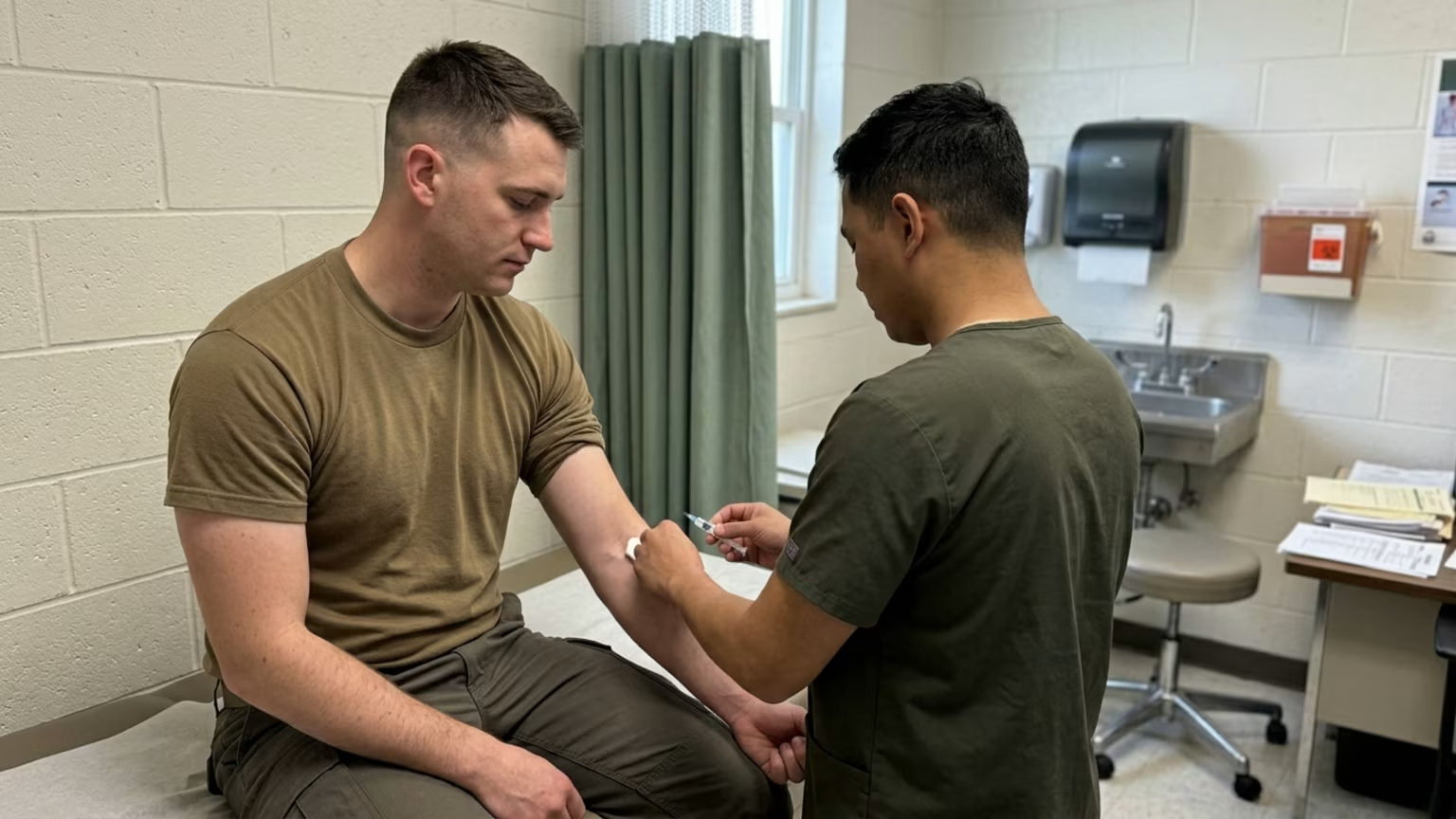
JAMA estimates low testosterone readings in active-duty Army men. See the threshold data, study limits, and implications for clinical follow-up.

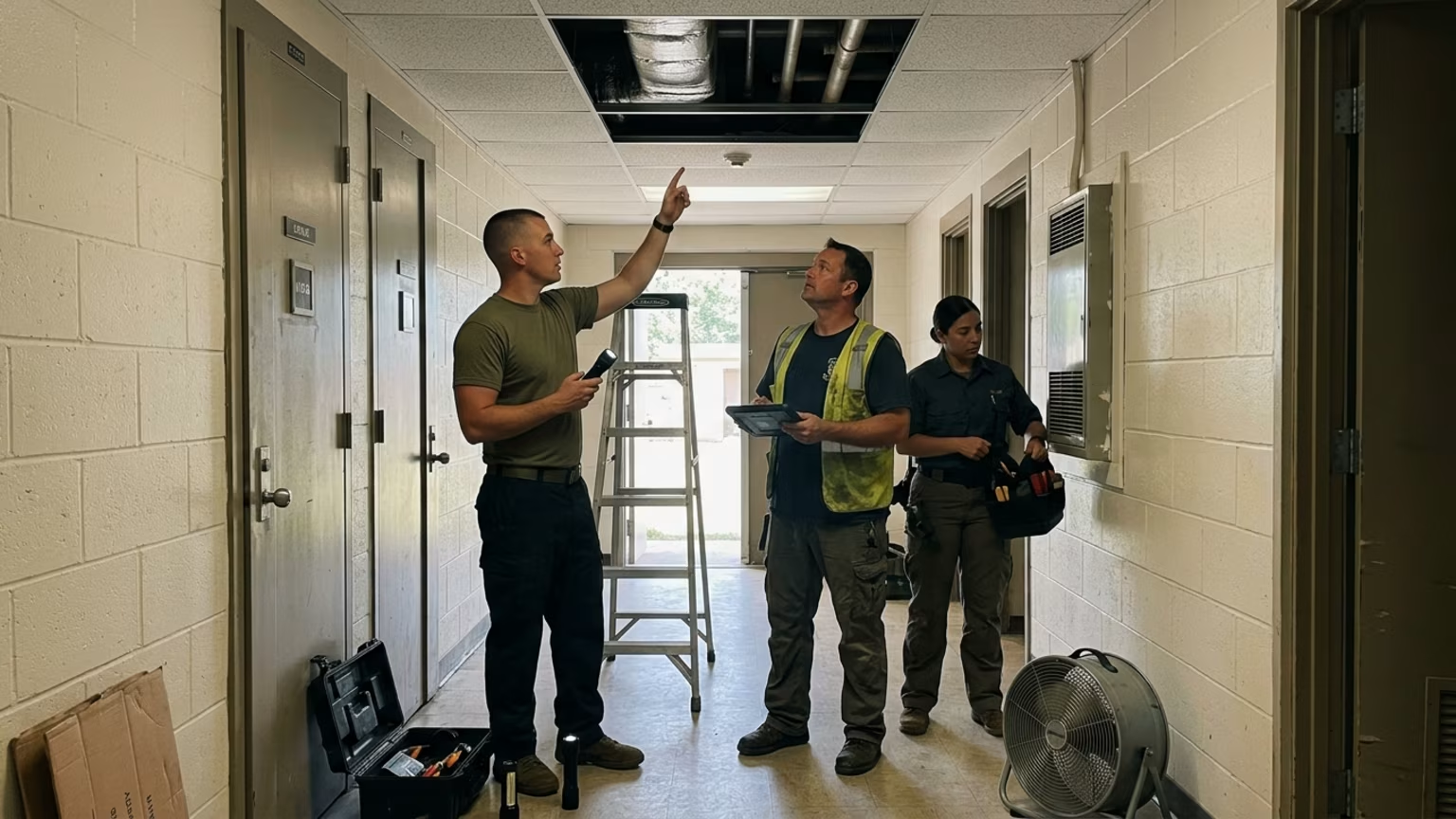
The Army’s HVAC task force targets hot barracks. Here is what its project figures mean and how to assess future housing and sleep-related claims.

The BRIDGE Act proposes a whole-family military transition pilot. Read who it would serve, what support it includes, and what remains unresolved.
Build better habits around strength, recovery, sleep, hormones and healthy aging with practical guidance for active military personnel and veterans.
Explore BattleVet