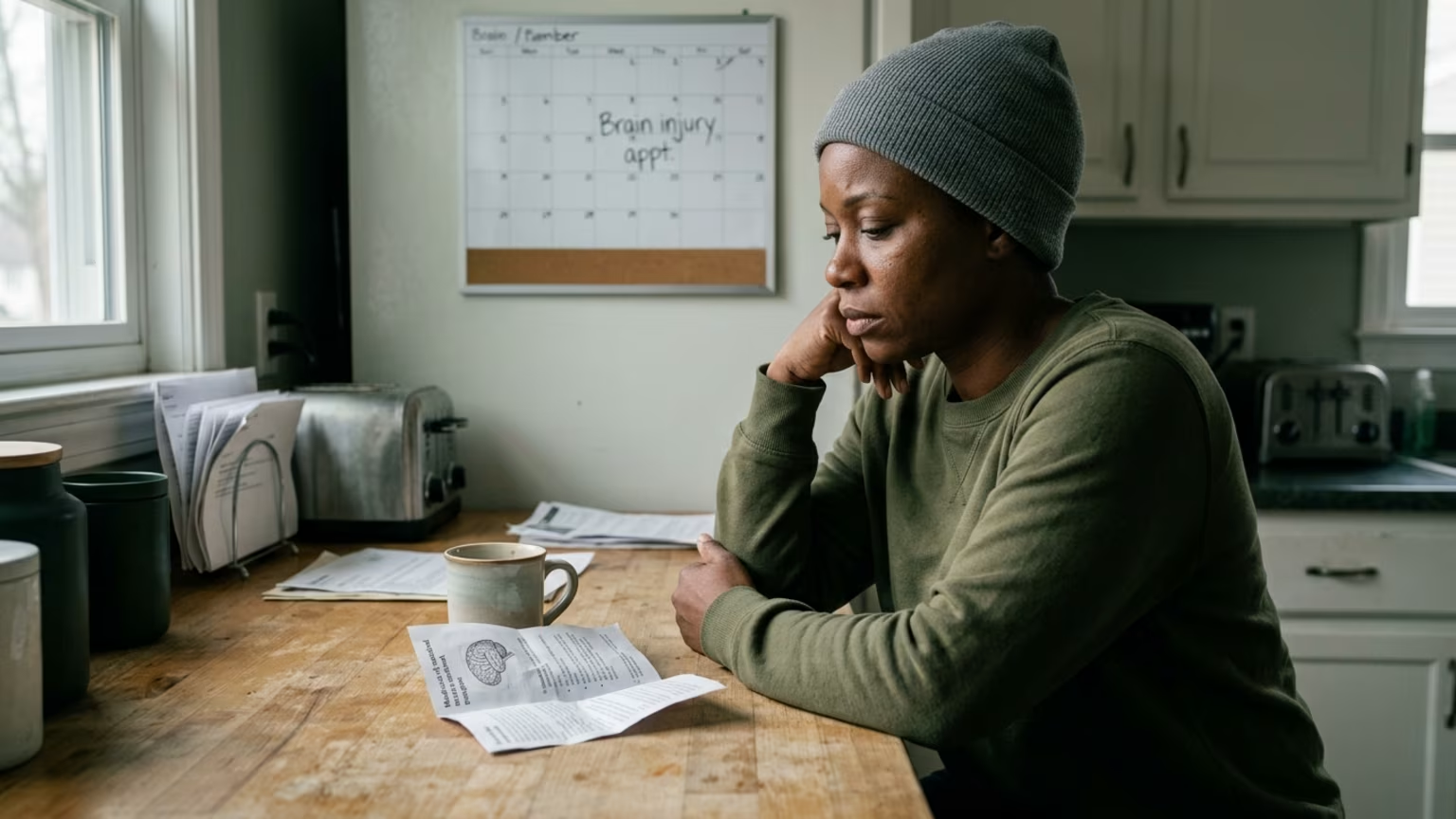

Stanford neurosurgeon Odette Harris discusses treating concussion as a brain injury and addresses the overlooked effects of TBI in women veterans.





On September 28, 2026, Stanford Medicine published a detailed conversation with Dr. Odette Harris. Harris is a Stanford professor of neurosurgery and the Paralyzed Veterans of America Professor of Spinal Cord Medicine. The discussion was recorded in front of a live Medicine Grand Rounds audience. It covered critical updates on concussion terminology, sports safety protocols, and traumatic brain injury among women veterans.
For active military personnel and veterans, dismissing a head impact as a minor bump can delay essential care. Harris argues that a concussion should be explicitly understood and labeled as a brain injury. This shift in terminology fundamentally changes how patients and providers approach post-injury care. Acknowledging a traumatic brain injury requires a focused strategy for healing rather than simply waiting for symptoms to pass. Proper clinical definitions help veterans secure the medical resources they need to maintain their physical capability.
I remember waking up after a poor night of sleep and realizing that my training recovery was taking much longer than it used to. I realized that physical readiness is more than just pushing through the fatigue. It requires a dedicated approach to sleep and hormonal health, which completely shifted how I view long term capability. The same principle applies to brain health and recovery. Ignoring ongoing symptoms after an impact compromises your fitness, your mobility, and your overall wellbeing.
Calling an injury a concussion often leads people to treat it as less serious than it truly is. Harris favors making the connection to brain injury completely explicit in medical and public spaces. She says she worked with the National Academies of Sciences, Engineering, and Medicine on how these injuries are labeled and treated. Her work sought to introduce specific "concussion/TBI" language to clinical settings. Harris notes that her collaborative efforts also contributed to changes in CDC guideline terminology.
Understanding the full scope of a head injury is central to maintaining lifelong health and resilience. Veterans dealing with lingering symptoms need clear information to make informed healthcare choices during their transition to civilian life. Proper labeling ensures that medical professionals take these impacts seriously from the first appointment. You can find more comprehensive guidance on navigating healthcare decisions on the BattleVet military health portal.
Historically, military brain injury studies featured very small cohorts of women. Harris explains that women’s experiences were significantly underrepresented in past research as a direct result. Their unique experiences were often lost in the broader data sets used by medical institutions. This meant that resulting algorithms, treatments, and clinical recommendations were largely shaped around the larger male portions of study cohorts.
To correct this clinical gap, Harris describes using cohort and matched analyses to examine women veterans directly. The Stanford account of her findings outlines significant challenges for this population following a military TBI. The research showed that women experienced high rates of depression and balance-related problems. Harris states that depression affected women at a rate of "90% plus" in the specific research she discusses. The Stanford interview does not provide the study’s exact sample size, publication citation, or a detailed breakdown of that percentage calculation.
The findings also highlighted unexpected challenges with returning to daily life after military service. The article notes that the women veterans in the research were actually better educated than their male counterparts. Despite this educational advantage, the women had worse reintegration indices and more difficulty returning to work. Harris points out that lower educational attainment cannot explain their poorer reintegration outcomes, pointing to a need for targeted healthcare strategies. A failure to recognize the ongoing effects of brain injuries likely contributes to these daily struggles.
These findings highlight a specific, urgent need for better representation in medical research. However, Harris clearly cautions against using these outcomes to argue against women serving in combat roles. She emphasizes that men also face serious experiences and that the military paths simply differed between the groups. The goal of studying these cohorts directly is to provide better, more accurate medical care for everyone who serves.
This updated perspective on brain injury changes how veterans should handle symptoms after military service. Service members reporting issues after a head impact or blast exposure should take the possibility of brain injury seriously. It is no longer acceptable to dismiss these events as simple concussions that require no follow up care. Women veterans in particular may need to raise specific concerns about mood, balance, or work performance with their clinicians.
These terminology shifts also affect how military families evaluate risk in youth athletics and community sports. During the Stanford discussion, Harris noted that her clinic’s child patients often participate in sports other than football. She specifically listed soccer, diving, volleyball, and cheerleading as frequent activities among her young patients. Harris says that all sports carry some risk and argues that parents need better comparative data to make informed choices. Assuming that avoiding football automatically eliminates injury risk is an outdated and incomplete approach to family health. Parents must look closely at the physical demands of every activity to ensure young athletes stay active and safe.
Interestingly, research conducted in football environments is currently helping inform safety protocols across other athletic fields. Harris says that some current high school safety protocols arose directly from NFL research. The Stanford article states that this professional football research offers a pathway for improving general sports safety. However, the publication does not quantify the specific effect of these protocols on injury rates across other sports.
When reviewing health guidance, veterans should always consider how clinical recommendations are formed. Harris's work demonstrates that aggregate findings do not always capture the specific needs of smaller patient groups. For a deeper understanding of how physical restoration supports long term capability, veterans can review our sleep, stress and resilience resources. Staying informed ensures that your healthcare decisions are based on accurate, relevant, and comprehensive evidence.
BattleVet provides clear, research backed guidance on military and veteran health, connecting physical performance with long term wellbeing. Managing a traumatic brain injury requires a comprehensive look at how the body rests, recovers, and maintains strength. When a concussion is properly identified as a brain injury, veterans can adjust their physical routines to support actual healing. Proper diagnosis prevents individuals from rushing back into high intensity environments before their systems are ready.
Understanding the severity of an impact also influences how veterans manage other aspects of their health. Restoring physical capability after a brain injury often requires careful attention to sleep quality and stress management. It forces a necessary shift from treating physical performance and long term health as separate subjects. Veterans can no longer view a head injury as an isolated event that only affects a single weekend.
The push for accurate labels directly aligns with the need for clear medical communication. Veterans deserve health information that is free from hype, fear, or minimized language. When a doctor uses the term "traumatic brain injury," it clarifies the reality of the situation for the patient. This clarity helps veterans make better choices regarding their fitness routines, career demands, and daily responsibilities.
This evidence led approach clearly communicates the limits of current research while providing practical steps forward. It highlights the importance of asking direct questions during medical appointments and seeking out precise diagnoses. As veterans navigate their transition to civilian life, understanding these medical nuances becomes incredibly important. Taking ownership of your health vocabulary is a powerful tool for maintaining your independence and physical capability.
The core issue highlighted by the Stanford interview is the design of medical research itself. If specific groups are missing from injury studies, the resulting care guidelines might miss the mark entirely. Acknowledging this limitation is the essential first step toward improving veteran healthcare systems. Future studies must actively include diverse service populations to generate truly effective, actionable medical guidance.
Applying the correct labels to head injuries sets the foundation for proper, effective treatment. The shift from "concussion" to "traumatic brain injury" removes the temptation to ignore lingering symptoms. This serious approach directly supports better physical capability and mental outcomes over time. Veterans interested in maintaining their strength and mobility as they age should consult our healthy aging and longevity materials.
Expanding our understanding of how injuries affect different groups builds a stronger, more capable healthcare system. Harris’s work shows that directly studying underrepresented veterans yields vital clinical insights for long term health. This research ensures that no service member is left relying on incomplete medical data when making vital decisions about their physical future.
As medical science continues to refine how we classify and treat traumatic brain injuries, a critical question remains. How will future veteran health initiatives ensure that the unique experiences of all service members are fully integrated into standard clinical care?
Follow BattleVet for practical guidance on military and veteran health, strength, recovery, testosterone, sleep and healthy aging. Stay connected for new articles, research backed insights and clear information to help you stay capable for the years ahead.


The VA announced new informed-consent steps for psychotropic medications starting in 2027. Learn how this policy updates patient education and consent rules.

Army leaders are evaluating the new H2F Management System while raising concerns over data fatigue. Learn how this software aims to track military readiness.

A federal jury convicted a Texas clinic owner in a $26 million TRICARE fraud scheme. Learn how to verify medical providers and protect your veteran benefits.
Build better habits around strength, recovery, sleep, hormones and healthy aging with practical guidance for active military personnel and veterans.
Explore BattleVet