

New research published in Frontiers in Neuroergonomics shows mental workload and sleepiness are distinct states. Learn why feeling alert does not mean recovered.





In September 2026, a News-Medical summary reported on a study published in Frontiers in Neuroergonomics. The underlying study is titled “Differentiating Linked Cognitive States Under Task Demand and Sleep Restriction: Toward an Experimental Framework for Operational Monitoring.” This research examines whether task difficulty and partial sleep restriction affect mental workload, fatigue, drowsiness, and mind-wandering differently. The results suggest that feeling alert during demanding work does not reliably indicate adequate recovery.
Service members and veterans routinely manage highly demanding operational shifts. During intense tasks, individuals often feel fully alert because the work requires constant focus. This new research challenges the assumption that feeling switched on means a person is fully recovered. Hard work and restricted sleep create different patterns of physical and mental exhaustion.
Understanding this distinction is a practical necessity for active personnel. The U.S. Army’s Holistic Health and Fitness system actively addresses this reality. The system publicly describes sleep readiness as one of five foundational readiness domains. It stands alongside the physical, mental, spiritual, and nutritional domains.
BattleVet connects physical performance with long-term health rather than treating them as separate subjects. We provide an evidence-led approach that clearly communicates uncertainty and limits in research. Navigating healthcare information requires separating credible evidence from trends or marketing claims. When service members prioritize sleep readiness, they support their body composition, mobility, and healthy aging.
Relying purely on perceived alertness can mask significant underlying sleep deficits. A demanding task may raise mental fatigue while sleep restriction raises mind-wandering and physical drowsiness. Operational readiness requires a broader view of human performance. Recognizing the limits of perceived alertness supports better long-term capability and healthy aging.
Service members transitioning into veteran life must understand how past routines impact current health. Reviewing physical recovery and sleep habits can help service members systematically evaluate their daily routines.
The Frontiers study included two distinct experiments to measure these cognitive states. The first experiment involved 40 participants. The second experiment involved 27 participants. These individuals performed MATB-II, N-Back, and SART tasks to measure their responses.
These specific tools allow researchers to isolate different types of mental strain. The main reported distinction involved how participants responded to different types of stressors. Harder tasks increased perceived workload and fatigue while actively degrading performance. Conversely, partial sleep restriction primarily increased subjective drowsiness and mind-wandering.
The sleep restriction showed smaller, task-dependent effects on actual performance. The findings do not mean that sleep restriction is harmless when performance appears intact. In this study, sleep restriction affected participants’ reported cognitive states even where performance effects were smaller or inconsistent.
The Frontiers results come from two experiments with 40 and 27 participants. The available report does not provide detailed numerical effect sizes, condition-by-condition results, or a specific military-trainee sample. The findings therefore support distinguishing cognitive workload and sleepiness as separate signals. They do not establish a validated monitoring tool for immediate field use.
A separate study published in Sleep offers highly relevant military context. This research focused on a cohort of 83 British Army infantry trainees. The trainees took part in a two-arm intervention over a structured timeline. The study ran from a three-week baseline phase into a nine-week intervention period.
The researchers split the cohort into two groups. There were 43 individuals in the intervention group and 40 in the control group. Across all trainee groups, sleep duration fell from about seven hours before training to about five and a half hours during training. Researchers identified earlier wake times as the primary driver for this reduction.
The intervention itself combined several structural changes. It included sleep education and sleep-hygiene optimization. It also introduced pre-bedtime routines and provided more opportunity for sleep. During the intervention, the experimental group moved their bedtime about 40 minutes earlier.
As a result, they obtained about 30 minutes more sleep than the control group. This added sleep opportunity produced measurable, self-reported changes. During the intervention, reported daytime sleepiness was lower in the experimental group than in controls.
The experimental group reported scores of 6.2 ± 4.3. The control group reported scores of 13.0 ± 6.2. The reported difference between the two groups was statistically significant. The study noted that no women were enrolled in basic training during this specific period.
These findings suggest a necessary shift in how units evaluate readiness, fatigue, and recovery. The Frontiers study indicates that perceiving yourself as switched on and being adequately recovered should not be treated as interchangeable judgments. Operational monitoring might need to separate cognitive workload from physical sleepiness.
In safety-critical settings, tracking sleepiness separately from perceived task workload offers a clearer picture of capability. The Frontiers study provides a strong research rationale for this separation. However, it does not establish a validated monitoring tool or a diagnostic test. It also does not dictate a proven operational policy for military units.
Practical sleep guidance is already taking shape in active field environments. The Army reported that its sleep director’s team provided soldiers with guidance on jet lag, sleep scheduling, and mental readiness before Exercise Yudh Abhyas 2026.
The British Army trainee intervention provides another practical example of structured recovery. For recovery planning, the trainee study offers a relevant example of a structured intervention. This included earlier bedtime routines and greater sleep opportunity. However, its results should be presented as findings from that specific trainee study rather than a universal prescription.
The source does not establish that the intervention improved combat effectiveness or operational performance. For veterans managing life after service, this research highlights the complexity of ongoing fatigue. Service members often transition out with established habits that may mask true exhaustion. Health priorities often change during active service, the transition phase, and veteran life.
Understanding the difference between mental workload and physical sleepiness is central to making ongoing military health decisions. Finding clear explanations of healthy aging relevant to military populations requires careful review of evidence. Accessing stress and resilience resources provides a solid baseline for adjusting daily civilian routines.
Veterans and former service members must not use this research to self-diagnose sleep conditions. Persistent sleepiness, sleep disruption, or fatigue always warrants discussion with a qualified health professional. The summarized studies do not test veteran-specific treatment or provide clinical guidance. They simply clarify how the human brain processes different types of demand and deprivation.
Research continues to untangle the physical and cognitive layers of operational exhaustion. The distinction between mental fatigue and sleep debt provides a clearer picture of human performance under sustained pressure. As military organizations begin to recognize sleepiness and cognitive workload as separate variables, how will future readiness frameworks adapt to monitor both states independently in safety-critical environments?
Follow BattleVet for practical guidance on military and veteran health, strength, recovery, testosterone, sleep and healthy aging. Stay connected for new articles, research backed insights and clear information to help you stay capable for the years ahead.


A 14-year observational study links two hours of weekly resistance training to lower cardiovascular disease and heart attack risks in women aged 48 to 66.

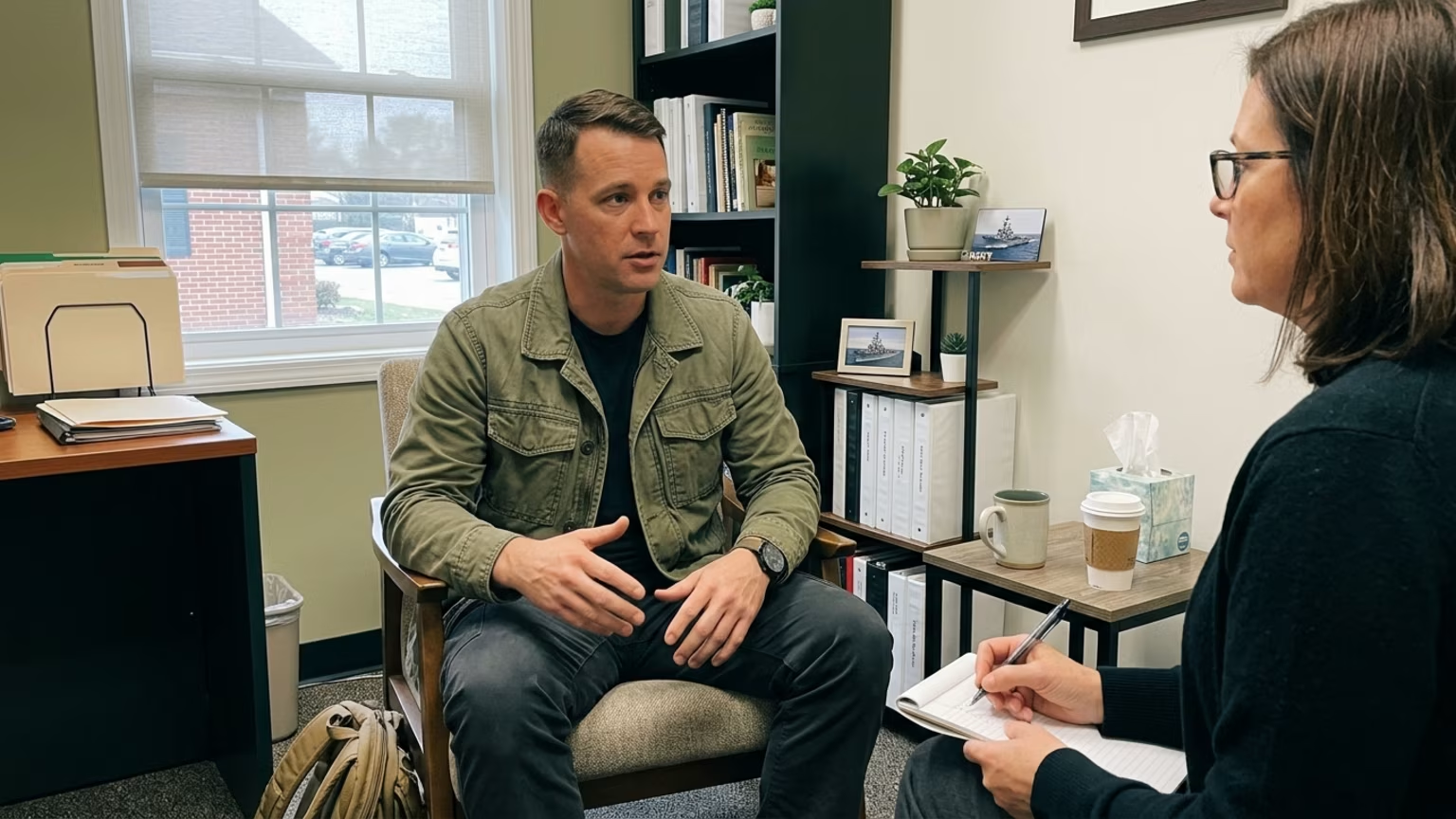
A Navy veteran details how Cognitive Processing Therapy, medication management, and structured writing exercises help manage PTSD and support long-term recovery.
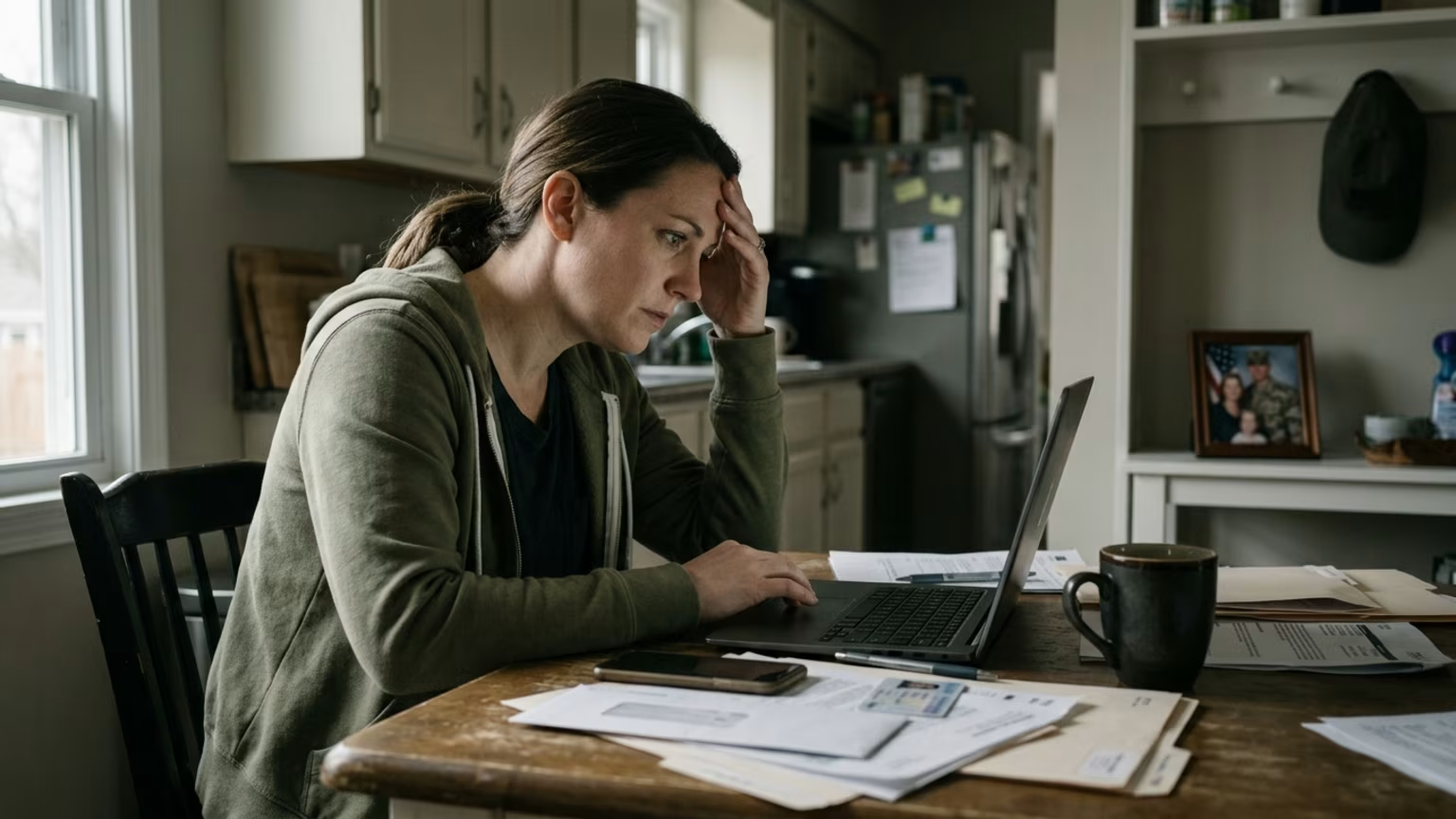
The Defense Health Agency's transition from DS Logon to myAuth disrupted MHS GENESIS record access. Learn how to navigate these patient portal login changes.
Build better habits around strength, recovery, sleep, hormones and healthy aging with practical guidance for active military personnel and veterans.
Explore BattleVet