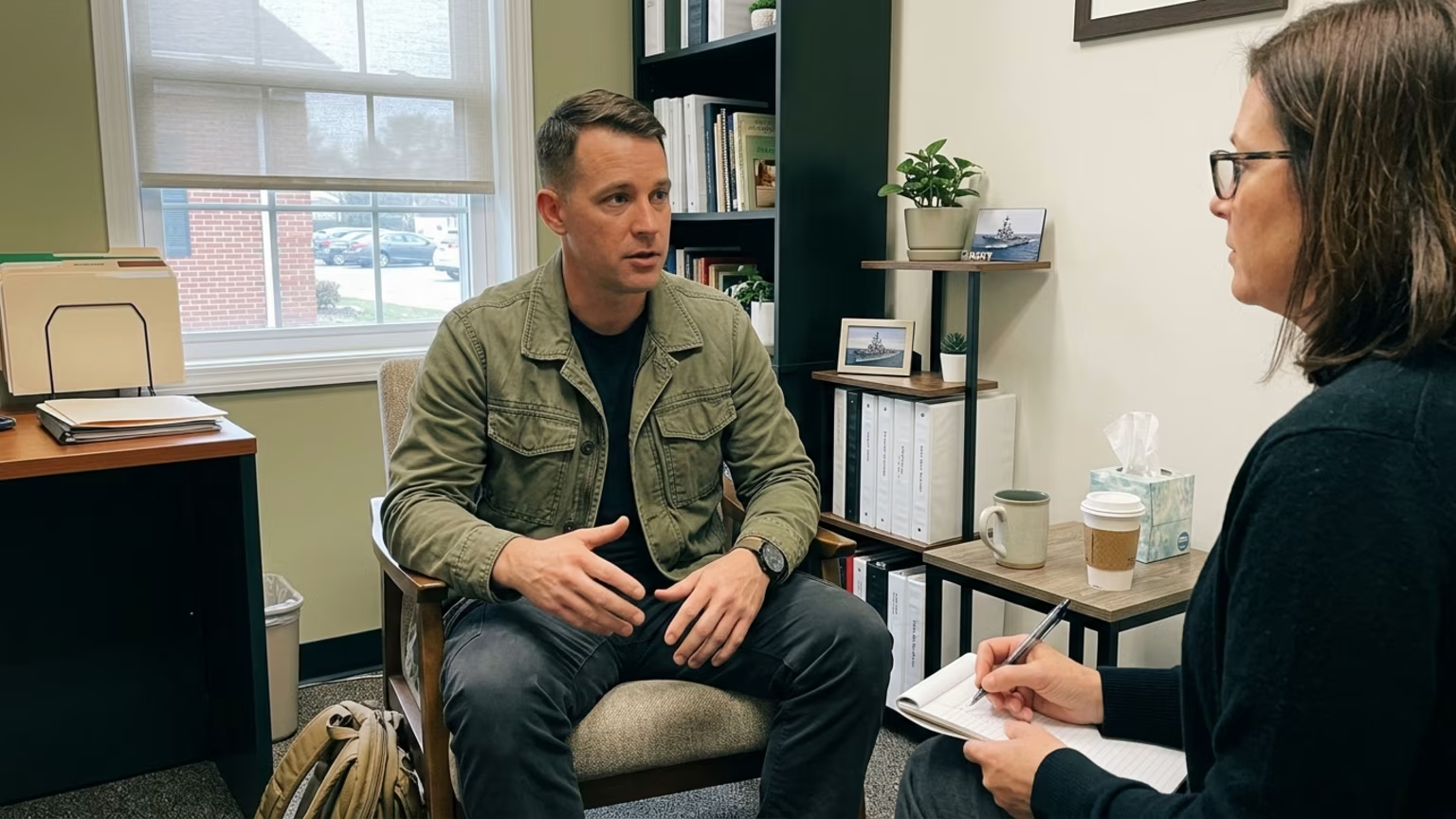

A Navy veteran details how Cognitive Processing Therapy, medication management, and structured writing exercises help manage PTSD and support long-term recovery.





If you or someone you know is in immediate danger, call 911. For support during a crisis, dial 988 and press 1 to reach the Veterans Crisis Line. You can also text 838255 for immediate assistance.
On October 9, 2026, The American Legion published a detailed first-person account from U.S. Navy veteran Dave Dvorak. The Texas Legionnaire described using Cognitive Processing Therapy to manage post-traumatic stress disorder and other mental health challenges. Dvorak outlined his transition from military to civilian life and his specific treatment timeline. He detailed how structured therapy helped him process painful experiences from his ten years of service.
Dvorak served aboard a ship in the Persian Gulf before leaving the Navy in December 2003. He returned to San Antonio, Texas, where he began navigating the complex shift to civilian routines. He wrote that his transition was heavily influenced by dangerous incidents, including a hazardous helicopter hoist. He also survived a chemical, biological and radiological alarm without a gas mask.
Dvorak reported seeking help at a mental health clinic after ruminating over a public dressing-down. Clinicians initially diagnosed him with depression, and he later received diagnoses for major depressive disorder and bipolar II disorder. The path to a comprehensive evaluation required significant time and professional oversight. It was not until 2025 that doctors formally diagnosed him with PTSD.
Following his diagnosis, the Department of Veterans Affairs started him on Cognitive Processing Therapy in December 2025. His written account provides a concrete look at how a veteran navigates trauma-focused treatment. It outlines both the tangible progress he made and the ongoing work required to maintain his health. By sharing his timeline, Dvorak offers other veterans a highly realistic view of mental health management.
Veterans often face complex mental health challenges when rebuilding a functional life outside the military. Dvorak’s account highlights that outwardly functioning does not always mean a veteran is internally healthy. In his own words, functioning and healing can differ significantly during the transition process. His experience may help readers consider seeking support even when they remain outwardly functional.
In his account, Dvorak admitted to concentrating heavily on weight gain, alcohol misuse and anger. He focused on various humiliations while discounting his previous deployments, qualifications and evaluations. He also ignored his positive military ribbons, medals and honorable discharge. His story demonstrates that professional therapy is a practical tool for addressing these skewed perspectives.
Effective therapy requires consistent effort and rarely offers a rapid solution. Dvorak noted that his treatment involved a long process of trial and error with medication management. He described this ongoing effort as a work in progress rather than a finalized problem. Recovery involves steady adjustments, professional oversight and coordinated care over a long period.
Cognitive Processing Therapy requires veterans to actively engage with their painful memories. Dvorak completed the full course of CPT sessions through the VA health system. The therapy relied on structured writing exercises to carefully examine specific incidents. Through writing, he evaluated the beliefs and conclusions he had drawn from those challenging events.
Even after completing a structured therapy program, veterans must continue managing their health. Dvorak stated that he needed additional time after his sessions to process what had surfaced. He maintained continued support from his therapist to navigate the difficult emotions that remained. Transitioning to a healthy civilian life requires sustained attention to mental and physical capability.
Readers looking for guidance on long-term maintenance can find value in this pragmatic approach. Focusing on veteran life means treating mental healthcare as one part of a comprehensive strategy. Dvorak’s experience shows that combining psychotherapy with medication management offers a highly realistic path forward. This combined approach supports the steady rebuilding of a strong, capable life after active service.
Dvorak’s individual experience aligns closely with established clinical guidelines for treating military personnel. A September 2026 report in Psychiatric Times noted that the VA/DoD PTSD clinical practice guideline recommends specific interventions. The guideline explicitly identifies trauma-focused psychotherapies like Cognitive Processing Therapy and prolonged exposure as recommended treatments. These structured protocols sit alongside other psychotherapy and medication options for veterans managing PTSD.
The core mechanism of Cognitive Processing Therapy involves testing ingrained beliefs rather than accepting them automatically. Dvorak described struggling with a recurring belief that the failures of his final years erased everything before them. Through CPT, he learned to examine this harsh assumption and ask for hard evidence when shame arose. He stated that the therapeutic work was difficult, but he confirmed he would willingly do it again.
Managing persistent anger is a major component of trauma-focused treatment for many former service members. The VA National Center for PTSD published a clinician education page in September 2026 addressing this specific issue. The center notes that anger is a common concern among veterans with PTSD, and trauma-focused treatments can successfully reduce it. However, the center clarifies that effects are often small and residual anger may remain for many patients.
Understanding the strict limits of a treatment protocol is crucial for long-term physical and mental recovery. Dvorak’s account serves as a practical reminder that therapy improves symptoms without erasing every single difficulty. Residual anger, stress and shame may still require active management through recovery and sleep strategies. Veterans should always discuss these potential outcomes with a qualified clinician to set realistic goals.
Structured treatments also reinforce the immense value of coordinated, multi-layered care models. The VA guidelines carefully note other psychotherapy options alongside standard medication practices. Dvorak’s own treatment plan heavily combined Cognitive Processing Therapy with his ongoing medication management. This multifaceted approach directly reflects the complex reality of modern military health protocols.
The careful integration of trauma-focused treatments and medication management provides a solid framework for post-service health. Individual accounts like Dvorak’s offer valuable, real-world insight into how clinical guidelines translate into daily veteran routines. As more veterans engage with structured programs like CPT, the medical community will gather better data on outcomes. Clinicians are steadily becoming better equipped to help service members navigate the complex realities of their diagnoses.
With the Department of Veterans Affairs continuing to update its guidelines, treatment options will likely become more refined. The ongoing challenge is ensuring that every veteran understands how to access these highly specialized therapies. Clear communication about the effort required and the realistic outcomes of CPT will remain absolutely essential. As structured therapy protocols evolve, how will future healthcare models adapt to support veterans managing the persistent realities of residual trauma?
Follow BattleVet for practical guidance on military and veteran health, strength, recovery, testosterone, sleep and healthy aging. Stay connected for new articles, research backed insights and clear information to help you stay capable for the years ahead.



The Defense Health Agency's transition from DS Logon to myAuth disrupted MHS GENESIS record access. Learn how to navigate these patient portal login changes.


A 2026 study links off-label testosterone therapy to higher long-term cardiovascular risks, emphasizing the need for proper clinical evaluation before treatment.
Duke-NUS research identifies major shifts in immune-cell gene activity around ages 40 and 60. Learn what these nonlinear biological changes mean for veteran health.
Build better habits around strength, recovery, sleep, hormones and healthy aging with practical guidance for active military personnel and veterans.
Explore BattleVet