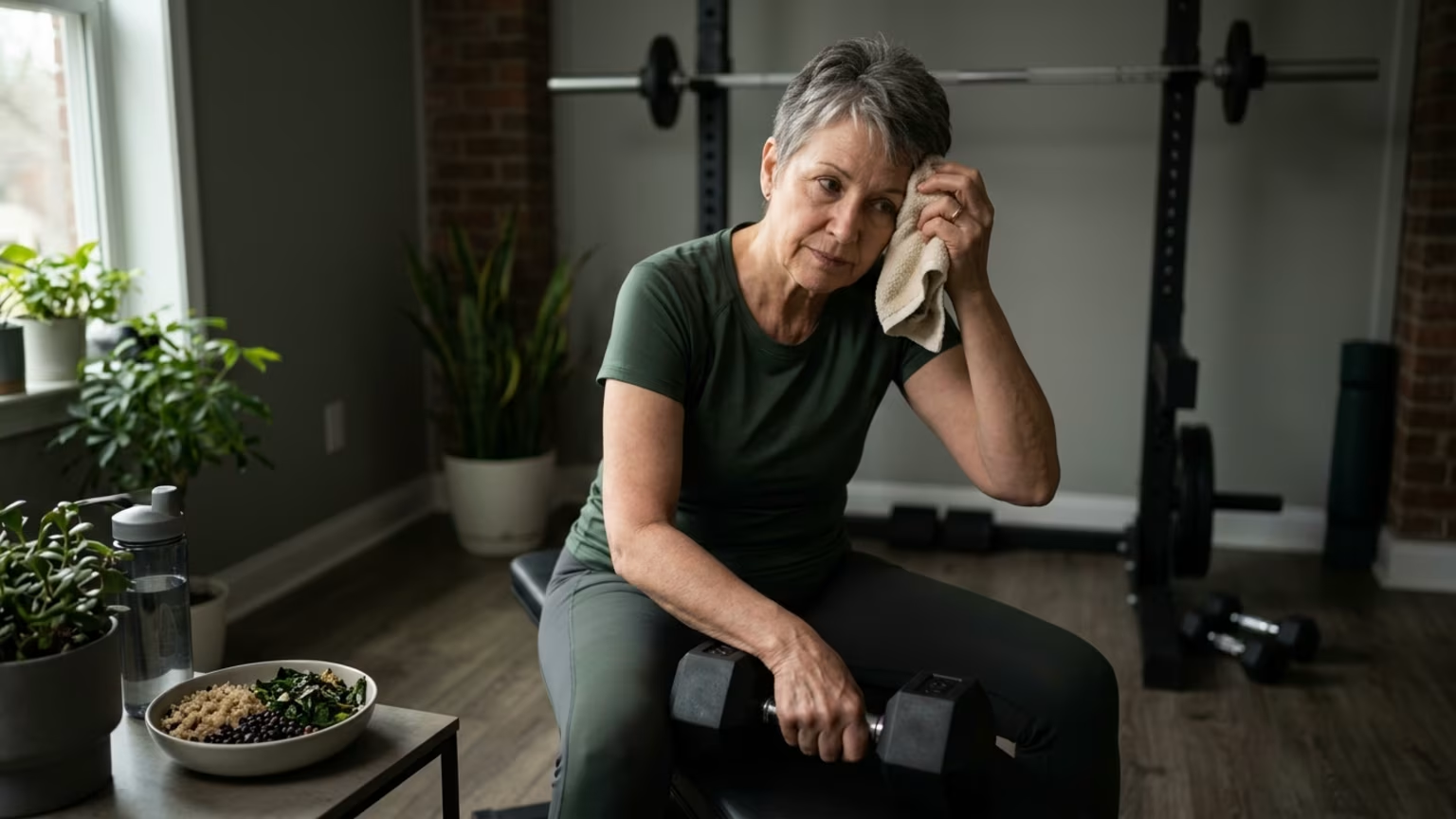

A 2026 trial shows a self-selected vegan diet reduces muscle mass in older adults, while resistance training and deliberate protein planning help preserve it.





In a recent 12-week trial published in 2026, researchers enrolled 72 healthy adults aged 65 and older to evaluate how specific diets affect skeletal muscle. The randomized controlled trial assigned participants to one of three parallel groups. These groups included a self-selected vegan diet, a habitual omnivorous diet, or a self-selected vegan diet combined with resistance exercise. The study found that the self-selected vegan diet reduced protein intake, while adding resistance exercise mitigated the negative effect on muscle mass.
Maintaining physical capability is a primary focus for long-term veteran health. The U.S. Military Health System’s Warfighter Performance Optimization resources explicitly include nutrition, fitness, strength, and recovery from bone, joint, and muscle injuries among relevant areas. As service members transition out of active duty, they frequently adjust their dietary habits. This research demonstrates that these dietary changes carry material impacts for physical performance and muscle retention.
A self-selected shift to plant-based foods often results in lower protein intake if it is not deliberately managed. Veterans who adopt a vegan diet without tracking their macronutrients risk losing the muscle mass necessary for daily mobility. Military Health also identifies a “Military Nutrition Environment” encompassing foods, drinks, and supplements available in military settings. This framework indicates that dietary choices are treated as part of the broader performance-support system, rather than an isolated personal preference.
Understanding these material impacts allows veterans to make capable decisions about their dietary habits. When older adults lose skeletal muscle, they face greater challenges in maintaining their physical independence. The findings from this 12-week trial highlight the exact consequences of reduced protein consumption. Active personnel and veterans can use this information to prioritize their physical capability with evidence-led military health guidance.
The 12-week intervention revealed precise physical changes across the three parallel groups. Researchers utilized magnetic resonance imaging to assess thigh-muscle volume during the trial. They used dual-energy X-ray absorptiometry to measure appendicular lean mass, and Biodex testing to evaluate muscle strength. Furthermore, average muscle-protein-synthesis rates were measured using a deuterium-oxide tracer protocol.
Participants in the vegan-only group significantly reduced their total daily protein consumption. They reduced protein intake by 27.7 grams per day during week 1, compared with baseline. This reduction persisted throughout the trial, showing a drop of 22.0 grams per day during week 6, and 19.3 grams per day during week 12. Protein intake did not change in the omnivorous control group, while the vegan-plus-resistance-exercise group experienced a protein reduction similar to the vegan-only group.
The researchers documented specific changes in muscle volume and overall lean tissue. Thigh-muscle volume declined by an estimated 0.61 liters in the vegan-only group. In comparison, the omnivorous group saw a decline of 0.01 liters. The vegan-plus-exercise group recorded a decline of 0.35 liters.
Appendicular lean mass also showed distinct variations among the participants across the testing period. This metric declined by 1.15 kilograms in the vegan-only group. Conversely, there was a small 0.05-kilogram increase in the omnivorous group. The vegan-plus-resistance-exercise group experienced a 0.62-kilogram decline.
These measured between-group differences were statistically significant. The comparisons between vegan and omnivorous diets for both thigh-muscle volume and appendicular lean mass had P values below 0.0001. The vegan-only versus vegan-plus-exercise comparisons had P values of 0.0038 and 0.0033, respectively.
These synthesis rates were 1.09% per day in the vegan-only group. The omnivorous group showed 1.27% per day. The vegan-plus-resistance-exercise group demonstrated rates of 1.24% per day, placing them closer to the omnivorous baseline. The study reported lower muscle-protein synthesis in the vegan-only group than in both the omnivorous group and the vegan-plus-exercise group.
These findings change how veterans should approach the implementation of a plant-based diet. The primary study supports a qualified interpretation regarding plant-based nutrition, rather than broad assumptions. It does not support the claim that all vegan diets inevitably cause muscle loss. The tested intervention was specifically a self-selected vegan diet, and the comparison was conducted in healthy adults aged 65 and older over 12 weeks.
The results distinguish between a vegan diet’s composition and implementation, and vegan eating as a category. The trial did not test a protein-matched vegan diet, a professionally planned vegan diet, or a longer-term intervention. Veterans can still pursue plant-based eating if they secure appropriate nutritional planning. A separate search result summarizing the PROT-AGE position paper reports that healthy adults older than 65 are commonly advised to consume approximately 1.0 to 1.2 grams of protein per kilogram of body weight per day.
For those with higher physical demands, the required protein intake targets naturally increase. The PROT-AGE summary notes that at least 1.2 grams per kilogram is suggested for physically active older adults. The study’s design provides important caveats for how veterans should apply these dietary lessons. The sample consisted of healthy adults aged 65 and older, so the findings should not automatically be generalized to younger active-duty personnel or deployed service members.
Furthermore, the results should not be universally applied to people with diagnosed sarcopenia or Veterans with substantial illness or disability. The study does not prove that animal protein is inherently necessary for preserving muscle. Instead, it shows that this particular self-selected vegan pattern was associated with lower protein intake and greater muscle loss. The 12-week study duration limits conclusions about long-term strength, injury risk, and cardiometabolic health.
However, the immediate drop in muscle mass highlights the need for precise macronutrient management. Veterans choosing a vegan diet must calculate their meals to meet specific daily requirements safely. The research confirms that concurrent physical training is essential for mitigating age-related strength decline. While adding resistance exercise helped preserve muscle in the trial, it did not completely eliminate the physical decline.
Appendicular lean mass still declined by an estimated 0.62 kilograms in the vegan-plus-exercise group. This data demonstrates that resistance training must be viewed as a mandatory component of a vegan nutrition strategy. Military and veteran healthcare programs are increasingly aligning with these comprehensive fitness principles. The VA’s Gerofit to Home program includes whole-body strength training and aerobic exercise, alongside balance work and customized flexibility routines.
Veterans should integrate their nutritional planning with these established strength and fitness protocols. Treating a dietary shift as a performance plan requires deliberate attention to both food and daily exercise. Service members cannot rely on automated habits when removing major protein sources from their routine meals. They must incorporate progressive resistance training to protect their strength and functional capacity, while using clinical guidance to manage their physical recovery.
The integration of structured fitness and nutritional planning continues to evolve within military and veteran healthcare. The Department of Veterans Affairs is recruiting 126 Veterans aged 60 or older for a telehealth physical-therapy study. This program is evaluating whether rehabilitation, coaching, and social support can improve and sustain physical function. How will future veteran health programs scale individualized nutrition and strength coaching to prevent muscle loss across a diverse and aging population?
Follow BattleVet for practical guidance on military and veteran health, strength, recovery, testosterone, sleep and healthy aging. Stay connected for new articles, research backed insights and clear information to help you stay capable for the years ahead.


VA research raises questions about suicide-screening answer accuracy and supports clearer conversations, trust, and broader clinical assessment.

JAMA estimates low testosterone readings in active-duty Army men. See the threshold data, study limits, and implications for clinical follow-up.
The Army’s HVAC task force targets hot barracks. Here is what its project figures mean and how to assess future housing and sleep-related claims.
Build better habits around strength, recovery, sleep, hormones and healthy aging with practical guidance for active military personnel and veterans.
Explore BattleVet