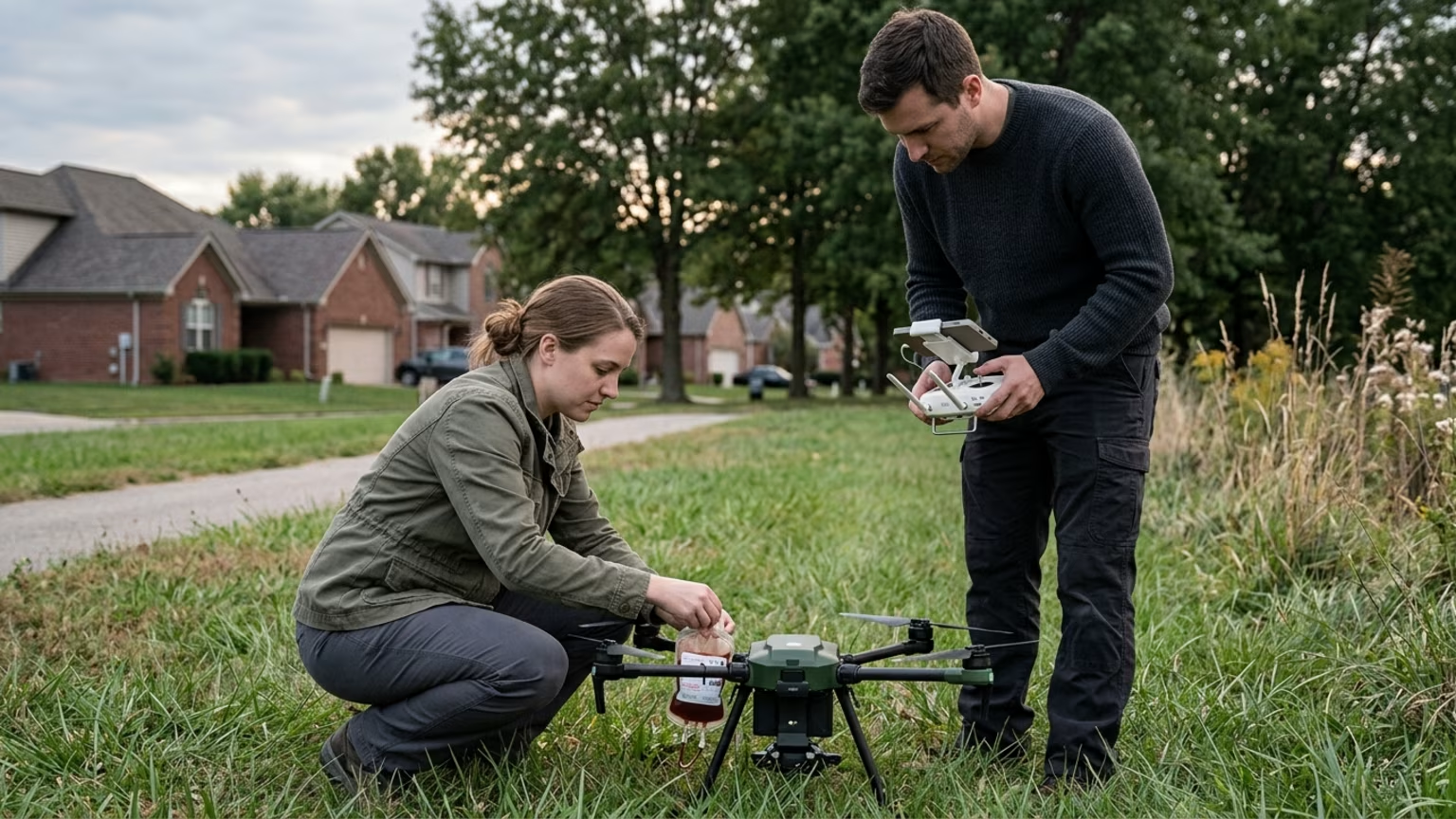

Researchers delivered freeze-dried plasma via drone to 26 wounded Ukrainian personnel. Learn how this shelf-stable logistics model impacts military health.





Between March 15 and June 13 of 2026, researchers tracked the drone delivery of freeze-dried plasma to 26 wounded Ukrainian military personnel. The operation aimed to supply severely injured patients with vital blood products when conventional medical evacuation was delayed or impossible to access. The initiative, named PLASMA-RESCUE, is led through the University of Colorado Anschutz ATLAS Research Program. It is conducted in partnership with the CU Anschutz Combat Medicine Research Center, Octapharma, and Ukrainian military personnel.
Aspen Medical reported working with Octapharma and Ukrainian partners on this complex medical logistics effort. The company detailed an approximately US$1.2 million donation of freeze-dried plasma for the project. This initiative also required extensive coordination on product transport, storage protocols, field reconstitution, and training for contested environments. Aspen Medical stated that the field experience was recently presented at the 2026 Military Health System Research Symposium.
The mechanics of the delivery system were designed specifically for harsh and unpredictable field environments. Unmanned aircraft transported the donated octaplasLG plasma several miles in a foam-packed, protective container attached beneath the drone. If a secure landing area was unavailable, operators could safely drop the packages from heights of up to 65 feet. The study team confirmed that all drone-carried plasma used in these reported cases arrived intact and undamaged.
Timely access to blood products remains a major hurdle for active personnel in modern combat zones. Corey Bills, the lead researcher for PLASMA-RESCUE, noted that evacuation from the front line in Ukraine can face severe delays. He stated that transport to a definitive care facility may take two, four, or even seven days in some circumstances. This logistical bottleneck makes point-of-injury access to blood products critical for patient survival during the initial hours of trauma.
Standard fresh-frozen plasma requires continuous freezing and thawing before administration. This requirement makes standard blood products incredibly difficult to transport and store during active military operations. Freeze-dried plasma resolves this issue by removing water from the product, allowing for easier room-temperature storage. According to the CU Anschutz report, the octaplasLG used in this project can remain at room temperature for up to two years before being reconstituted with sterile water.
This drone delivery test reflects a broader shift toward portable, shelf-stable blood products across the military health field. The Defense Health Agency recently highlighted this evolving landscape in a September 2026 report. The agency announced that the FDA had approved Teleflex’s EZPLAZ Freeze-Dried Plasma specifically for far-forward military care. The DHA described EZPLAZ as the first freeze-dried plasma product to receive full FDA licensure rather than an emergency-use authorization.
These shelf-stable products are intended for front-line medical providers when traditional blood supply chains are unavailable. The study’s delivery model was designed specifically for very forward settings known in military terminology as Role 0 facilities. These extreme front-line locations might consist of only a lone soldier or a few medics. Delivering medical resources directly to these isolated points reduces reliance on highly vulnerable centralized supply systems.
The preliminary analysis documented 26 patients injured during the three-month observation window. Almost all of the wounded service members had sustained severe blast-related injuries. Medical teams confirmed that every patient in the group had substantial hemorrhage upon initial evaluation. Providers determined the severity of this blood loss through a calculated shock index, which divides heart rate by systolic blood pressure.
Every patient in the observed group received the drone-delivered octaplasLG, which was rapidly reconstituted with sterile water. Following the infusion, the research team reported a significant improvement in vital signs and shock-index readings across the group. All 26 patients successfully survived the first 24 hours after receiving the freeze-dried plasma. This resulted in a reported 24-hour survival rate of exactly 100 percent for this specific observational series.
However, the researchers clearly emphasize the preliminary and strictly observational nature of these findings. The CU Anschutz account describes the evidence as case reports involving only 26 patients, without any reported control group. A few patients in the study also received additional blood products alongside the drone-delivered plasma. Because of this co-administration, the reported physiological changes cannot be attributed exclusively to the freeze-dried octaplasLG.
The available data does not provide individual shock-index values, exact plasma doses, or specific complication rates. Furthermore, shock-index improvement is a physiological signal rather than concrete proof of long-term survival or full recovery. The highly specific combat environment also means the results may not generalize perfectly to noncombat settings or other injury types. These early case reports do not firmly establish that the freeze-dried plasma independently caused the observed physical improvements.
The immediate takeaway from this project is primarily logistical rather than strictly therapeutic. A shelf-stable blood product can help bridge the critical window between a severe injury and definitive surgical care. Adit Ginde, a PLASMA-RESCUE investigator, noted that rapidly providing blood products helps maintain blood flow to vital organs. Securing this blood flow buys wounded personnel crucial time while a traditional medical evacuation is coordinated.
This approach reinforces the absolute necessity of layered battlefield medicine. Proper trauma care requires point-of-injury intervention, forward resuscitation, efficient transport, and comprehensive surgical treatment to all function together. Service members should never interpret this logistical success as a substitute for basic combat medical training. Even with rapid drone delivery, field personnel must still rely on proper tourniquets, wound packing, and basic airway management.
Bills characterized the drone-delivered plasma as a tool for temporarily stabilizing patients with hemorrhagic shock. It is not a replacement for definitive hemorrhage control or immediate surgical intervention. The unmanned delivery model is most relevant when a medical team can be reached by air, but conventional ground transport is dangerously exposed. However, the available sources do not confirm that these drone flights are feasible across all weather, terrain, or air-defense conditions.
For military health planners, integrating this technology will require clear operational guidelines and comprehensive medical protocols. Leadership must determine exactly who is authorized to administer the reconstituted plasma in chaotic field environments. They also need robust systems to track the delivered units and assess any potential adverse events. Vik Bebarta, founder of the CU Anschutz Combat Medicine Research Center, suggested that solving these battlefield challenges could eventually improve civilian emergency response and support broader veteran life operations on remote mountain roads.
Aspen Medical confirmed that it is currently supporting a follow-on study of frontline freeze-dried plasma use with the University of Colorado. The core research team plans to continue collecting detailed medical data from these active combat operations. Their stated goal is to eventually study more than 100 patients to build a highly reliable clinical dataset for expanded military and veteran health resources. This future research phase will help determine exactly which injury profiles and patient groups are most likely to benefit.
Future evidence will need to include clearer patient-level outcomes, rigorous adverse-event reporting, and direct comparisons with other modern resuscitation approaches. As shelf-stable blood products gain broader regulatory approval, unmanned delivery systems could fundamentally alter severe trauma response. If technology can reliably bypass shattered infrastructure to deliver critical medical supplies, how will these airborne supply chains reshape the future of emergency veteran and military healthcare?
Follow BattleVet for practical guidance on military and veteran health, strength, recovery, testosterone, sleep and healthy aging. Stay connected for new articles, research backed insights and clear information to help you stay capable for the years ahead.


A 2026 PLOS ONE trial found that higher-intensity walking improved frailty measures more often than casual walking. Learn what this means for older veterans.


The VA awarded $4.3 million to nine New York organizations to expand suicide prevention services for veterans outside the federal healthcare system.

A 2026 Pentagon watchdog report warns that Navy special warfare crews may return to duty with undiagnosed head injuries due to medical screening gaps.
Build better habits around strength, recovery, sleep, hormones and healthy aging with practical guidance for active military personnel and veterans.
Explore BattleVet