

A 2026 Pentagon watchdog report warns that Navy special warfare crews may return to duty with undiagnosed head injuries due to medical screening gaps.





In the week of September 30, 2026, a Department of Defense Inspector General report issued a major warning regarding traumatic brain injuries in the military. The report stated that Navy special warfare boat crews may regularly return to duty with undiagnosed head injuries. The investigation focused specifically on Special Warfare Combatant-craft Crewmen who operate in demanding maritime environments.
The watchdog found that Naval Special Warfare Command did not consistently implement its own policies for identifying and evaluating possible concussions. The command also failed to consistently follow up with sailors presenting possible TBI symptoms. This oversight report highlights a significant gap between reported head impacts and required medical care.
For active personnel and veterans, this report highlights the profound difficulty of tracking non-blast head injuries during active operations. Special warfare boat crews experience repeated wave impacts during standard maritime and riverine missions. Over time, these frequent physical impacts can cause concussions that compromise long-term capability. However, the resulting head injury symptoms often perfectly mirror the standard physical toll of a challenging mission.
The Inspector General warned that actual concussion symptoms are frequently masked as routine fatigue. Corpsmen and operators must try to distinguish a potential brain injury from standard exhaustion in the field. Symptoms like seasickness, dehydration, and sleep deprivation look incredibly similar to a mild traumatic brain injury. This overlap makes subjective medical evaluations highly difficult for medical personnel to execute correctly.
Without objective screening tools, corpsmen must rely on personal judgment to decide if a sailor requires a formal concussion protocol. When a brain injury goes unrecognized, the consequences for operational readiness and physical health are significant. Sending personnel back to high-risk maritime or riverine environments with an undiagnosed mild TBI could degrade operational decision-making.
The failure to identify and treat these injuries often stems directly from demanding schedules. Operators frequently experience heavy workloads that leave little room for medical delays or proper recovery windows. The investigation noted that crew members expressed serious concerns about taking necessary recovery time. Many sailors worried that stepping back for an evaluation would simply leave more work for their teammates.
This environment creates a system where fatigue and operational stress discourage personnel from reporting possible symptoms. The watchdog identified these demanding schedules as a key factor in the reporting and follow-up gaps. Medical oversight becomes significantly weaker when operational tempo takes priority over standard military health protocols.
It is critical to note that these are watchdog findings regarding documentation and care gaps. The report does not act as a clinical determination that any specific crew member has an undiagnosed injury. Instead, the data identifies severe vulnerabilities in how the military processes and tracks potential head trauma.
The Inspector General review, as summarized by Military Times, analyzed specific documentation gaps within Navy special warfare units. Between January 1 and April 1, 2026, Special Boat Teams 12 and 20 reported 193 underways. During that three-month window, 24 sailors completed TBI exposure forms. Those exposure forms covered just 21 of the 193 reported missions.
The investigators also looked at a much wider block of time to evaluate long-term reporting compliance. From 2020 through 2026, 144 service members completed a total of 634 TBI exposure forms after reporting symptoms. The findings from this six-year period revealed a complete breakdown in the medical follow-up process. The reviewed records for those 634 forms showed zero documented MACE-2 concussion evaluations.
Furthermore, the Navy plan requires a follow-up appointment within a two-week window for potential concussions. Out of the 634 symptom exposure forms filed over those six years, none documented a completed follow-up appointment within that required timeframe.
The report also described vulnerabilities in how operators interact with standard military concussion tests. According to the investigation, some crew members admitted they could memorize parts of the MACE-2 evaluation. Memorizing the assessment allowed sailors to potentially mask their symptoms during an examination by a corpsman.
Investigators suggested that altering the test questions could make the MACE-2 less predictable for operators. However, the report noted that altering the questions was not a required practice. Corpsmen did not regularly change the evaluation prompts to prevent memorization in the field. This practice further degraded the accuracy of subjective field testing for special operations units.
These findings carry direct implications for how operators should handle physical recovery and medical reporting moving forward. For service members, the reporting firmly supports taking possible concussion symptoms seriously. Even when symptoms perfectly resemble normal fatigue or sleep loss, personnel should not assume they are just exhausted. If symptoms arise after a heavy wave impact, sailors must report them to medical personnel immediately.
The watchdog report explicitly does not support self-diagnosing a TBI from these common symptoms alone. Instead, it underscores the critical importance of seeking an appropriate medical assessment. Because demanding schedules can prevent follow-up care, service members must proactively advocate for their own injury evaluation and physical restoration.
To address these specific medical gaps, the Inspector General recommended the creation of an objective, standardized TBI checklist. The military expects this new diagnostic checklist to reach a completion date of December 2027. Additionally, the watchdog recommended new measures to reinforce required follow-up care and establish a clear escalation process. The Navy expects to fully implement these accountability measures by March 2027.
According to Business Insider, Naval Special Warfare Command concurred with the watchdog recommendations regarding operator health. The command stated it is currently revising its entire approach to concussion management. This revision includes the development of a standardized screening tool designed specifically for wave-impact and other non-blast concussive events.
As Naval Special Warfare Command develops new screening tools for non-blast injuries, will these planned policy changes successfully provide medical teams with the objective data they need to protect operator health?
Follow BattleVet for practical guidance on military and veteran health, strength, recovery, testosterone, sleep and healthy aging. Stay connected for new articles, research backed insights and clear information to help you stay capable for the years ahead.


U.S. Army Japan reopened Camp Zama’s fitness center with 24-hour access as the military implements new, separated physical and body composition standards.


The ACC reported on the STAREE trial statin data and new ESC cardiac rehabilitation guidelines. Learn what this means for long-term veteran health outcomes.
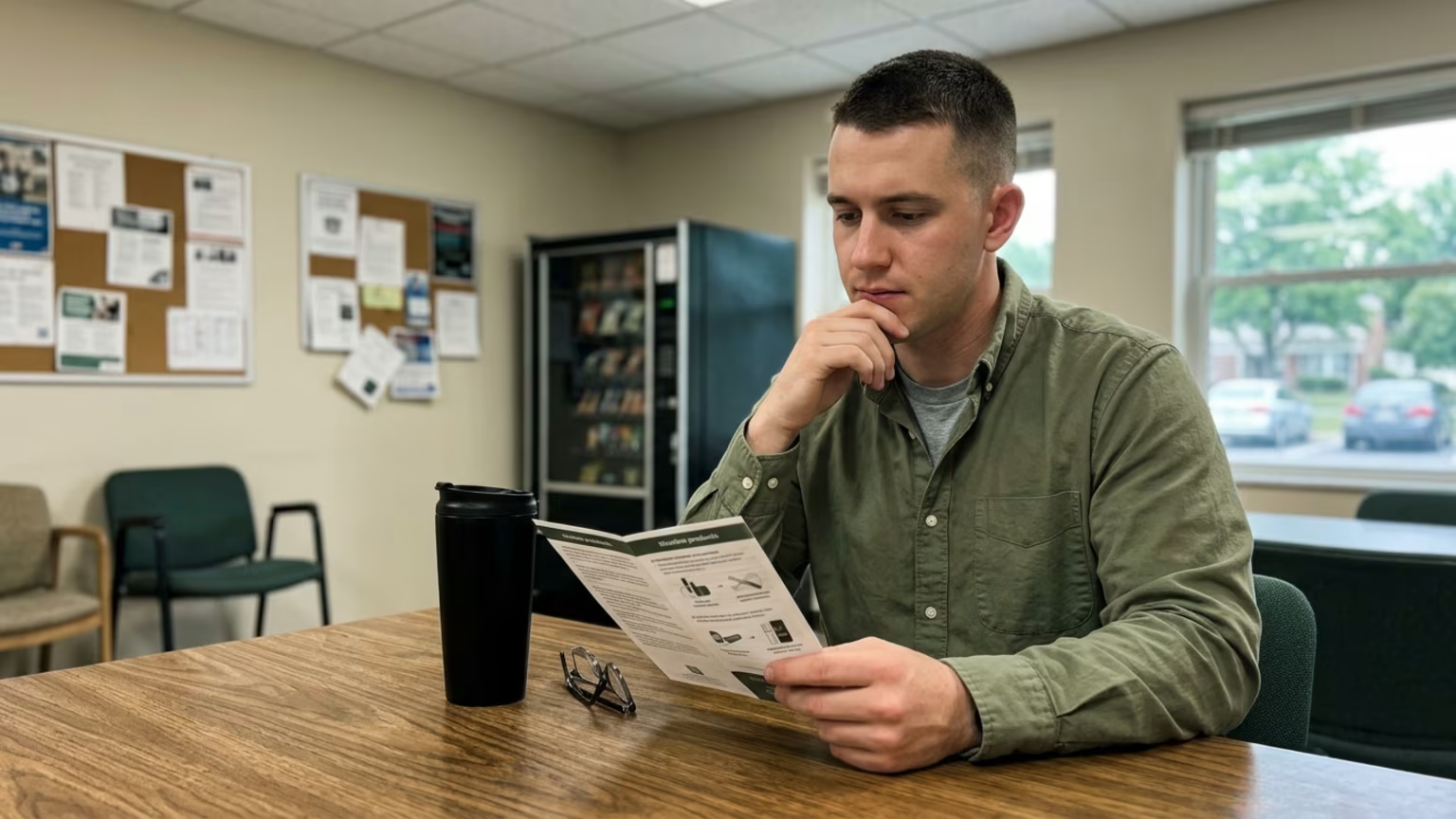
In 2026, the VA and DoD updated their joint tobacco-treatment clinical guidance. The 32 recommendations address patients not ready to quit, vaping, and relapse.
Build better habits around strength, recovery, sleep, hormones and healthy aging with practical guidance for active military personnel and veterans.
Explore BattleVet