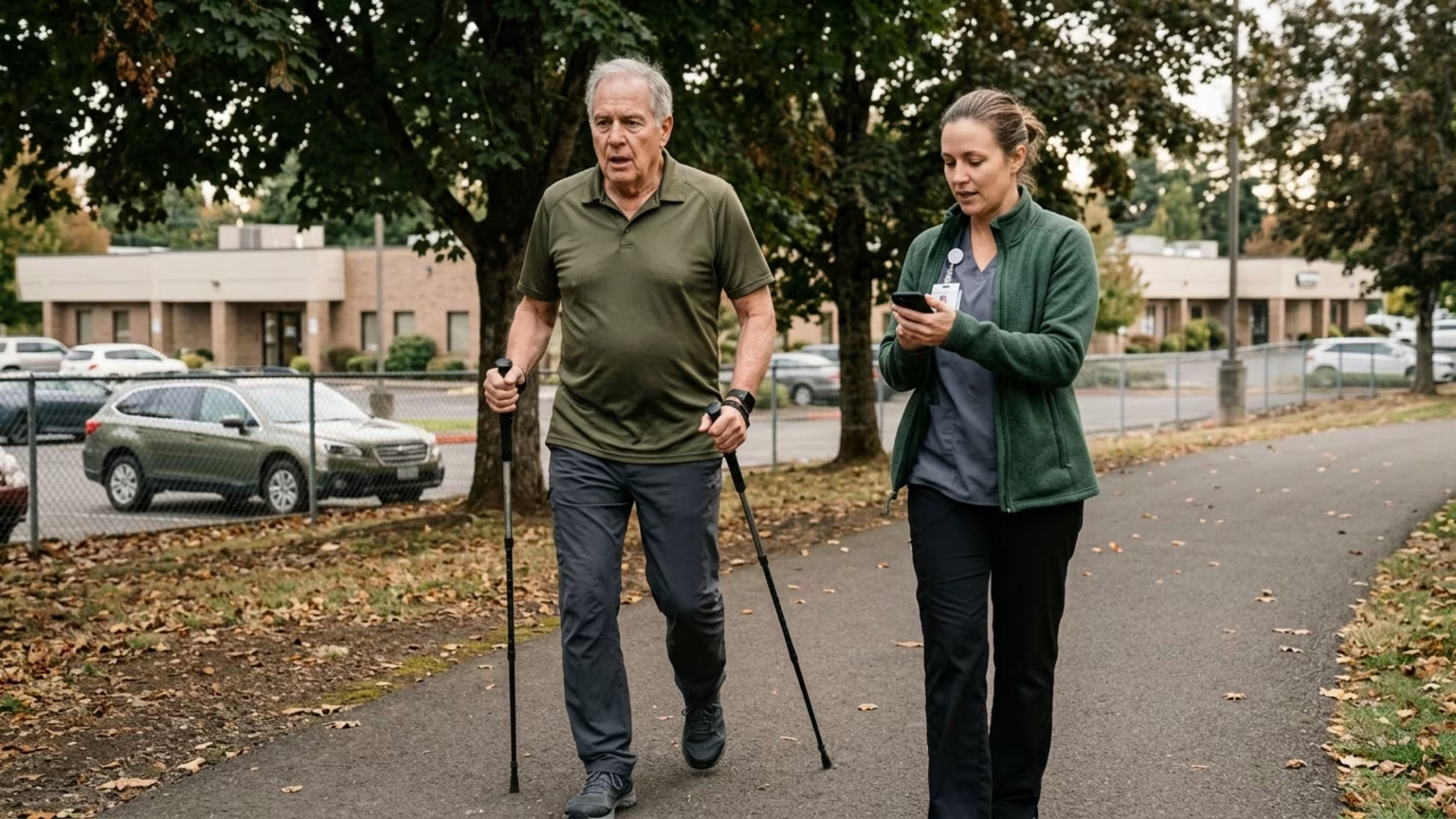

A 2026 PLOS ONE trial found that higher-intensity walking improved frailty measures more often than casual walking. Learn what this means for older veterans.





On September 30, 2026, researchers published a peer-reviewed, cluster-randomized controlled trial in PLOS ONE analyzing walking intensity in retirement communities. The study compared high-intensity walking with casual-speed walking to measure changes in physical frailty. Fourteen retirement communities were initially randomized for the study, though one withdrew before recruiting participants. While the trial was not specific to veterans, it evaluated older adults in independent living to see if moving faster improved health outcomes more than moving comfortably.
For veterans and older adults, maintaining mobility is a fundamental part of healthy aging. The ability to move efficiently directly impacts independence and long-term capability in daily life. We often focus on lifting weights or complex training routines, but basic walking remains a primary tool for physical restoration. This PLOS ONE trial adds necessary context to how intensity changes the physical return on basic movement. It provides data for those building a comprehensive strategy for physical preservation.
The research shows that both casual and vigorous walking provide verifiable benefits for older adults. Both approaches support joint health and basic cardiovascular function. However, the trial suggests that pushing the pace might yield different outcomes for specific physical measures when properly supervised. Many service members transition from rigorous active duty training to less structured civilian routines over time. That shift can eventually lead to decreased physical capacity or early signs of physical decline.
Understanding how to calibrate daily movement is critical for managing healthy aging. The results of this trial matter because they provide a framework for veterans looking to adapt their physical activity safely. Rather than assuming all walking yields identical results, individuals can view walking intensity as an adjustable variable. Adjusting this variable helps veterans make informed decisions about their daily routines and their long-term physical maintenance. It removes the guesswork from scaling up activity levels.
The trial established a structured, controlled environment to measure these physical changes accurately. The 16-week program scheduled three 45-minute walking sessions each week for its participants. These sessions were supervised one-on-one by the research team. This high level of supervision ensured that the two groups performed similar walking tasks at their respective target intensities. It also provided immediate oversight for individuals pushing their physical limits.
Researchers initially enrolled 165 people into the walking program. The main analytic cohort ultimately included 105 participants with an average age of 79.2 years. During the supervised sessions, participants in the higher-intensity group averaged 71 percent of their maximum heart rate. Those assigned to the casual-speed group averaged 59 percent of their maximum heart rate. Both groups achieved measurable physical exertion, consistent with the report that leisurely walking also produced health benefits.
The participants in the study were already capable of basic movement before the trial began. The study design required that participants had to be able to walk more than 10 feet with moderate assistance or less. This baseline capability allowed the researchers to safely test the differences in pacing. The goal was not to rehabilitate individuals from complete immobility. Instead, the focus was on optimizing the physical returns for older adults who could already manage basic movement tasks.
The researchers tracked several specific metrics to gauge the impact of the different walking paces. On the trial's primary measure, 69.6 percent of the high-intensity group improved by at least one category on the SHARE-FI frailty scale. In comparison, 46.4 percent of the casual-speed group saw similar category improvement. The reported odds ratio for this specific finding was 2.91. This indicates a noticeable advantage for the higher-intensity group in this specific category metric.
The research team also measured secondary outcomes related to general mobility and daily movement outside the supervised sessions. They reported differences favoring the higher-intensity group in usual gait speed by 0.08 meters per second. They noted an increase in the six-minute walk distance by 48.99 meters. Additionally, the higher-intensity group showed an increase in daily steps by 985 steps per day compared to the casual-speed group.
While the category improvements are notable, the statistical strength of the primary finding requires careful reading. The between-group difference in continuous SHARE-FI scores was not statistically significant. The study authors also reported that sensitivity analyses using imputed data did not preserve the statistically significant treatment effect. These details are important when evaluating the overall strength of the physical intervention.
TIME quoted Kenneth Rockwood, who was not involved in the study, regarding the study's structural limitations. He cautioned that more people dropped out of the high-intensity group. He noted that this differential dropout makes it difficult to generalize the results to typical older people. Retention is an important caveat when looking at clinical trials involving sustained physical exertion over several months.
The drop from 165 enrolled individuals to an analytic cohort of 105 participants illustrates the challenge of maintaining rigorous activity levels. These secondary outcomes and statistical limitations show that physical interventions require nuanced interpretation. Moving faster provides clear benefits, but the data does not universally establish it as an overwhelmingly superior strategy in every measured category. It simply offers another tool for physical development.
These findings reinforce the importance of matching exercise intensity to individual capability. The trial specifically excluded people whose uncontrolled cardiovascular, metabolic, renal, or respiratory disease limited exercise participation. Therefore, these results do not directly represent every person living with frailty or serious illness. They represent a specific subset of older adults capable of handling structured exertion.
For veterans adjusting their training protocols, the study supports discussing a gradual, supervised increase in walking effort with a healthcare provider. It does not support prescribing a specific vigorous target to everyone without checking individual physical readiness. Finding the right balance of exertion and safety is essential for managing veteran lifestyle and healthcare. The goal is to build long-term capability without risking unnecessary injury or physical setbacks.
Structured walking programs can safely fit into clinical care models for older populations. This aligns with BattleVet's focus on evidence-backed methods for physical restoration. While independent exercise is valuable, this trial demonstrates that supervision and structure are vital components of safe physical advancement when pushing intensity. Structured oversight helps mitigate the risks associated with increased physical demands.
Safety remains a central consideration when increasing physical effort, particularly for those managing age-related changes or past injuries. The PLOS ONE paper recorded one definitely intervention-related, non-injurious fall in the high-intensity group. It also recorded other adverse events during the 16-week program, including pain or cramping. These observations highlight that increased intensity comes with increased physical demands on the joints and muscles.
TIME quoted geriatrician Sara Espinoza on the safety profile of the walking intervention. She said the results were interesting for suggesting high-intensity exercise could be safe in this population. However, this is an expert interpretation of a controlled trial, not absolute proof of safety for all people or settings. Individual capability must always dictate the pace of any physical program.
The study authors themselves identified further limitations within their research that require attention. These included the highly supervised nature of the sessions and a lack of longer-term follow-up after the 16 weeks concluded. They noted the specific need to investigate whether these results generalize to more diverse populations and unsupervised or group settings. Until that data exists, cautious progression remains the smartest approach.
As researchers continue to evaluate how exercise intensity affects frailty and physical independence, questions remain about scaling these interventions effectively. Will future clinical studies test these supervised, high-intensity walking models directly within veteran healthcare settings to determine how they impact long-term mobility and operational independence?
Follow BattleVet for practical guidance on military and veteran health, strength, recovery, testosterone, sleep and healthy aging. Stay connected for new articles, research backed insights and clear information to help you stay capable for the years ahead.


The VA awarded $4.3 million to nine New York organizations to expand suicide prevention services for veterans outside the federal healthcare system.


A 2026 Pentagon watchdog report warns that Navy special warfare crews may return to duty with undiagnosed head injuries due to medical screening gaps.

U.S. Army Japan reopened Camp Zama’s fitness center with 24-hour access as the military implements new, separated physical and body composition standards.
Build better habits around strength, recovery, sleep, hormones and healthy aging with practical guidance for active military personnel and veterans.
Explore BattleVet