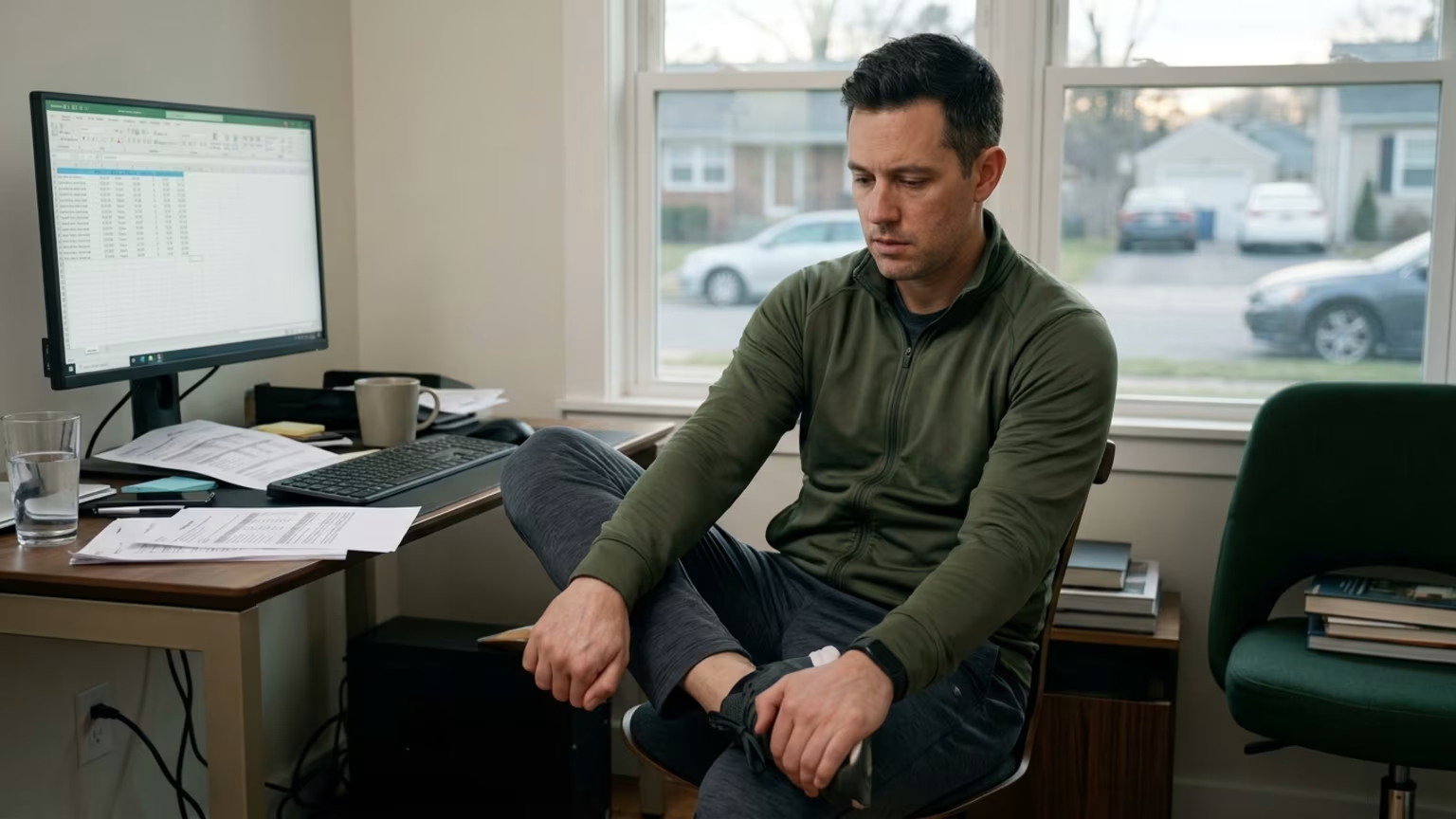

A new study reveals that 12 weeks of HIIT does not prevent the vascular harms of prolonged sitting. Learn why veterans must prioritize regular movement breaks.





The desk officer stared at the screen as the clock crossed hour four of the operational planning phase. His legs felt stiff despite the intense conditioning session he finished at sunrise. We often assume that pushing through a punishing morning workout buys us a free pass to sit motionless for the rest of the day. Structured exercise alone cannot fully protect you from the physical demands of uninterrupted sitting.
Many service members operate under a deeply ingrained transactional model of physical readiness. The common belief is that a highly demanding workout completely balances out a desk job or long hours driving. This mindset assumes that total daily exertion is the only metric that matters for overall wellness. We prioritize pushing our physical limits in the gym and expect our bodies to simply handle any extended downtime.
During active duty, service members often transition from highly kinetic field operations to completely stationary desk assignments. We might spend months moving constantly on deployment, only to return to a role that requires staring at a computer screen for ten hours straight. This sharp shift in daily habits confuses our physical expectations and recovery protocols. We assume that because we are still lifting weights or running on base, our bodies are fully protected from the long hours spent in a chair.
This transactional view of health creates a false sense of security regarding our cardiovascular system. We begin to view our mandatory conditioning sessions as a medical shield that absorbs all poor lifestyle choices made later in the day. Unfortunately, our localized blood vessels do not care about the three miles we ran at dawn. They only respond to the immediate mechanical reality of being compressed and motionless throughout the afternoon.
However, our physiology does not operate like a simple ledger or a bank account. A challenging 12-week training cycle will undoubtedly improve your aerobic capacity, but it cannot override the biological reality of staying still. Relying entirely on structured workouts creates a significant blind spot regarding continuous daily movement. This narrow approach leaves critical systems vulnerable to long periods of inactivity.
The traditional military fitness culture often emphasizes maximum effort over consistent mobility. If a service member passes their physical readiness test, they might ignore the stiffness that develops during administrative shifts. We celebrate the grueling run but ignore the consecutive hours spent sitting in a chair. This imbalance sets a poor foundation for long term capability as we transition into civilian careers.
We need to recognize that fitness and sedentarism are completely independent variables in our biological health. Pushing harder during a morning run will not stop the localized physical effects of sitting motionless at a desk. Treating exercise as a cure for inactivity ignores how specific body parts react to sustained pressure and lack of movement. Understanding this reality is the first step toward building a more intelligent daily routine.
Recent research clarifies exactly how our blood vessels react to physical stagnation. A study published in the European Journal of Applied Physiology examined whether 12 weeks of high-intensity interval training could make the leg’s blood vessels more resistant to the effects of two hours of uninterrupted sitting. Researchers focused on the popliteal artery, which is the major artery located behind the knee that supplies the lower leg. Using ultrasound-based vascular assessment, they examined the artery’s ability to relax and widen before and after a two-hour period of uninterrupted sitting.
The popliteal artery serves as a critical pathway for delivering oxygen and nutrients to the lower leg muscles. Its ability to relax and widen is a key indicator of overall vascular responsiveness and local circulatory health. When we remain seated without interruption, we remove the natural muscular contractions that help pump blood efficiently through this vital channel. Researchers wanted to see if building a massive aerobic base could artificially maintain this responsiveness even when the leg muscles were totally inactive.
The results provide a clear look at the limits of intense exercise. Participants completed a 12-week HIIT program designed to improve aerobic fitness. The training successfully increased participants’ aerobic fitness, but it did not prevent the vascular response associated with prolonged sitting. After the training period, two hours of sitting still impaired the popliteal artery’s ability to relax and dilate to approximately the same degree as before training.
The study isolated this sitting-related impairment carefully to ensure accuracy. A control group that did not undertake the additional fitness program showed a similar sitting-related impairment. The research was conducted by scientists at Dalhousie University. One report identified the sample as 21 healthy young people, confirming the testing involved healthy young adults rather than older veterans.
The paper was titled “The impact of a 12-week high-intensity interval training program on popliteal vascular responses to prolonged sitting.” It was authored by Haoxuan Liu and several colleagues. The findings confirm that increased aerobic capacity did not eliminate the acute vascular effect of remaining motionless. According to coverage from SciTechDaily, fitness training and reducing uninterrupted sitting should be approached as entirely separate strategies.
These findings carry specific limitations that require careful interpretation for older adults. The reported outcome concerned the popliteal artery’s ability to relax and widen, not a diagnosis of permanent arterial injury or cardiovascular disease. The study tested two hours of uninterrupted sitting, so it does not establish a precise maximum sitting time for daily life. It simply confirms that gains in cardiorespiratory fitness did not fully protect the artery from this specific two-hour challenge.
Active personnel and veterans must stop viewing cardiovascular conditioning and daily movement as the same thing. Coverage of the researchers’ interpretation emphasizes that fitness training and reducing uninterrupted sitting should be approached as separate strategies. You can maintain strong cardio fitness while still needing to interrupt long periods of administrative work. A durable plan combines rigorous cardiovascular training with regular lower body movement throughout the entire day.
For our team, the shift in mindset was personal. I remember waking up after a poor night of sleep and realizing that my training recovery was taking much longer than it used to. I realized that readiness is more than just pushing through the fatigue. It requires a dedicated approach to sleep and hormonal health, which completely shifted how I view long term capability.
This same perspective shift applies directly to how we manage our cardiovascular health and joint function. Instead of just focusing on the gym, we need to focus on what happens during long meetings or remote work. Simple actions like standing, walking or basic ankle movements can interrupt prolonged immobility and support vascular responsiveness in a veteran lifestyle and healthcare context. Because the study assessed the popliteal artery behind the knee, prioritizing lower-body movement breaks is a highly practical strategy.
Implementing these movement breaks does not require a complete disruption of your professional responsibilities. You do not need to drop and perform rigorous exercises in the middle of an administrative office space. The goal is simply to reintroduce basic mechanical movement to the lower extremities to restore localized blood flow. Taking a brief walk down the hallway or performing a few standing calf raises is often enough to break the cycle of continuous immobility.
Integrating consistent training and performance habits means acknowledging the limits of any single workout. The Department of Veterans Affairs promotes regular movement and programs focused on physical strength, mobility and healthy aging. For veterans managing injuries, telehealth options continue to expand, with the VA actively recruiting for telehealth physical therapy studies. Ultimately, maintaining healthy aging and longevity requires us to manage our stationary time just as carefully as our intense workouts.
Stand up and walk for two minutes today to break up your longest block of continuous sitting.
Follow BattleVet for practical guidance on military and veteran health, strength, recovery, testosterone, sleep and healthy aging. Stay connected for new articles, research backed insights and clear information to help you stay capable for the years ahead.


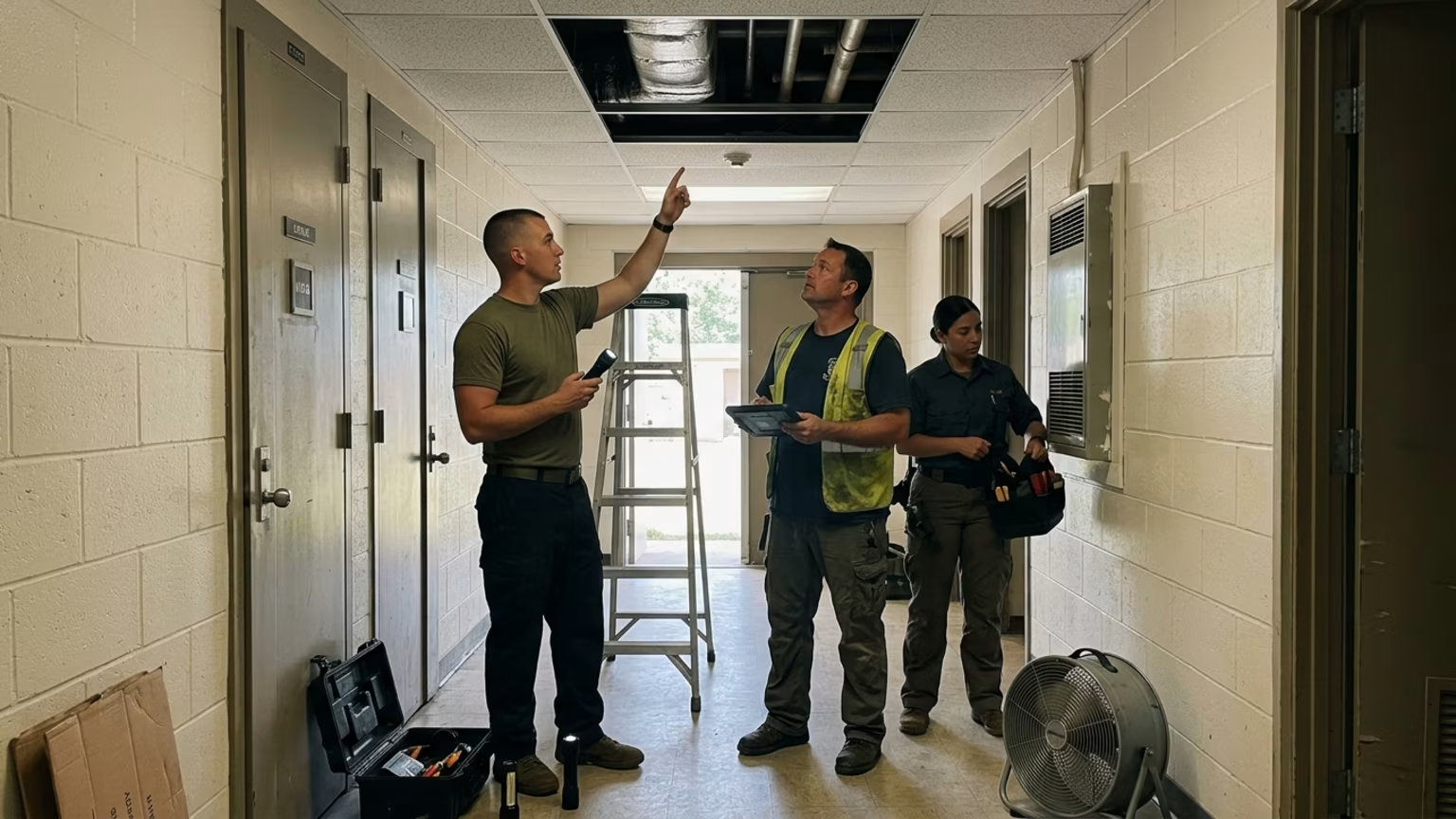
The Army’s HVAC task force targets hot barracks. Here is what its project figures mean and how to assess future housing and sleep-related claims.


The BRIDGE Act proposes a whole-family military transition pilot. Read who it would serve, what support it includes, and what remains unresolved.

Combat Stress’s workplace guidance emphasizes listening over diagnosis. Recent U.S. veteran insomnia research adds context for sleep and recovery concerns.
Build better habits around strength, recovery, sleep, hormones and healthy aging with practical guidance for active military personnel and veterans.
Explore BattleVet