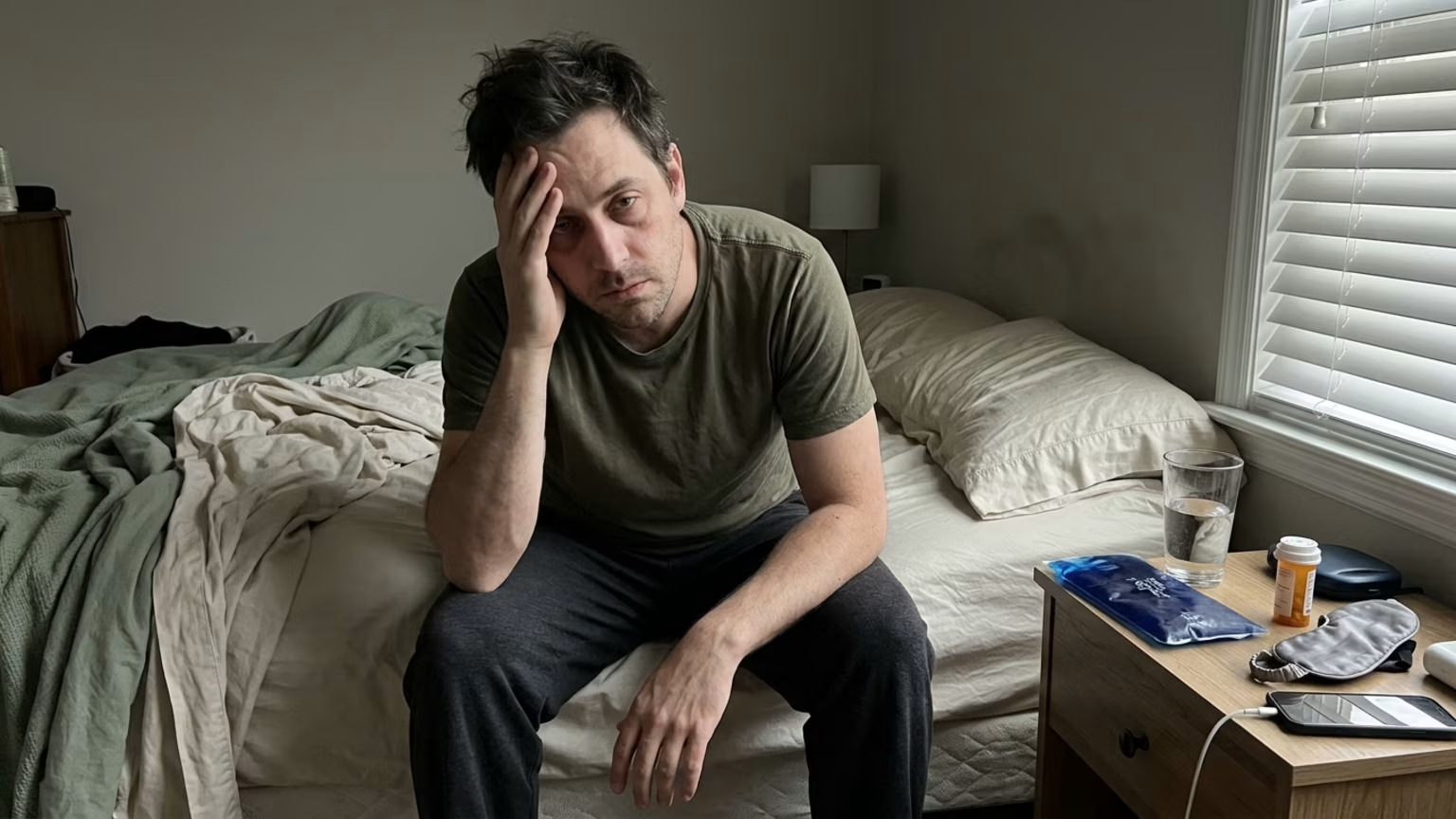

A 2026 Curtin University report associates preexisting sleep disorders with persistent concussion symptoms. Learn how baseline rest impacts veteran head injury recovery.





On October 7, 2026, a Curtin University report detailed findings linking preexisting sleep disorders to prolonged concussion recovery. The report covered results from the Concussion Recovery Study, which examined an Australian community cohort of 232 adults. The study found that nearly half of the participants still reported concussion symptoms a full year after their injury. It also highlighted that individuals with existing sleep problems faced a much higher likelihood of persistent symptoms.
Head trauma and concussion recovery are central concerns in military and veteran health. Many service members experience severe sleep disruptions during active duty. Understanding how poor sleep might complicate a subsequent head injury offers valuable context for recovery decisions. This new report clarifies that early warning signs may not always be the ones we traditionally expect.
The study looked at an Australian community cohort rather than a specific military population, but the findings reinforce the importance of addressing sleep health. Active personnel and veterans often push through fatigue to complete a mission or maintain physical fitness. This research suggests that treating physical restoration seriously before an injury occurs could be highly protective. A focus on rest supports overall capability and resilience.
You can learn more about how physical restoration supports your long term health by reading our military health articles. The data points toward a reality that many veterans already understand from personal experience. Your baseline health heavily influences how well you bounce back from an acute physical injury. For service members, sleep is often compromised by shift work, operational stress, and challenging environmental factors.
If compromised sleep leaves the brain with fewer reserves, treating sleep issues early becomes a critical piece of overall health maintenance. BattleVet provides clear guidance on how strength, recovery, and sleep connect to long term capability. Sleep is the primary mechanism the body uses for physical restoration. When that mechanism is already compromised, a sudden neurological stressor hits a system that is already struggling.
Separating credible evidence from early research trends is a core part of navigating healthcare information. The findings from the Concussion Recovery Study provide a very specific piece of the medical puzzle. They do not claim that sleep disorders directly cause concussion symptoms to linger indefinitely. Instead, they show a strong association that warrants serious clinical attention.
The Concussion Recovery Study examined adults aged 18 to 65 to track their progress over time. The researchers found that 45.6 percent of these participants reported concussion symptoms 12 months after their injury. These persistent symptoms included a wide range of physical and cognitive challenges. Participants described ongoing fatigue, difficulty concentrating, headaches, and memory problems.
Other reported issues involved sensitivity to light and noise, balance problems, and general irritability. According to the Curtin University report, preexisting sleep disorders were strongly associated with a prolonged recovery timeline. Participants with preexisting sleep disorders were reported to be 5.1 times more likely to have symptoms at 12 months. Mental health history also played a measurable role in the outcomes.
A history of mental health conditions made participants 2.6 times more likely to report symptoms a year later. Furthermore, injuries that did not happen during sports were associated with a 2.5 times higher likelihood of lasting symptoms. The severity of symptoms immediately following the concussion also mattered significantly. The report noted that participants with severe symptoms in the days after injury were almost three times more likely to still have symptoms at one year.
Interestingly, researchers found no evidence that traditional clinical markers predicted these 12 month outcomes. Loss of consciousness, post traumatic amnesia, or receiving a CT scan did not predict persistent symptoms in this specific cohort. A crucial distinction emerged between resuming daily tasks and actual physical recovery. The report stated that 97 percent of participants had returned to work within a single year.
However, Curtin researcher Dr. Jemma Keeves cautioned that this did not mean their symptoms had resolved. Many individuals continued to work while still managing fatigue, concentration difficulties, or other lingering symptoms. Curtin study author Dr. Jacinta Thorne noted that feeling slow, mentally foggy, or nervous soon after the injury could be a reliable warning sign. These early subjective experiences might indicate a need for closer monitoring and support during the recovery window.
Thorne suggested a possible interpretation for the findings rather than a confirmed mechanism. She noted that people already dealing with sleep difficulties or mental health challenges might simply have fewer reserves to draw on during recovery. The wide variety of symptoms reported by this group shows that concussions do not have a single presentation. Two people might both have persistent symptoms, but one might struggle with balance while the other fights constant headaches.
These findings emphasize a practical shift in how individuals should approach concussion recovery and clinical conversations. The most defensible takeaway for any veteran is to communicate clearly with a clinician about prior sleep problems. If you have a history of sleep disorders, mentioning this during a concussion assessment is a highly practical step. It gives healthcare providers better context for your baseline health and your likely recovery timeline.
The study itself did not test a specific sleep treatment or establish a definitive military risk estimate. It serves as a strong reminder to discuss existing risk factors rather than assuming a personal prognosis. You can find more context on managing the physiological factors of rest in our sleep, stress and resilience resources. Relying solely on a clear CT scan may not provide the full picture of a concussion.
The research clearly supports monitoring early subjective symptoms like mental fog or feeling unusually slow. Dr. Keeves pointed out that early identification of risk factors could give clinicians an opportunity to provide more targeted follow up care. Returning to duty or a civilian job is not the same as achieving full physical recovery. Recognizing that fatigue and concentration issues can persist even on the job is vital for long term health.
Readers should view persistent or worsening symptoms as a clear reason to seek continued clinical support. Pushing through the brain fog might be a common habit, but it does not accelerate actual physiological healing. When speaking to a clinician, a patient should bring up their complete health history. Do not isolate the head injury from your typical daily sleep habits.
If you have struggled with chronic insomnia before the injury, that information is critical. It allows the medical provider to look at the whole picture rather than just the acute trauma. The military health system is also maintaining a close focus on this intersection of head trauma and sleep. The Defense Health Agency recently listed a training event through its Traumatic Brain Injury Center of Excellence.
This specific training is scheduled for December 2, 2026. It will cover the management of sleep disturbances following a concussion. The stated objectives for this upcoming military health training include explaining functional changes that affect sleep after a mild traumatic brain injury. The training will also cover identifying assessment methods for common sleep disturbances and contributing factors.
This institutional focus aligns with the broader push to improve recovery protocols for active personnel and veterans. More information on managing physical restoration periods is available in our recovery and sleep articles. Educating providers on functional changes that affect sleep after a head injury is a necessary step. It ensures that the people treating our service members have the most current, evidence led frameworks available.
As medical institutions refine their understanding of head injuries, the link between our baseline health and our recovery capacity becomes much clearer. The evidence points to the reality that we cannot treat a concussion in isolation from the patient's existing physical state. Will future clinical protocols automatically include sleep disorder screening as a standard first step in all military concussion care?
Follow BattleVet for practical guidance on military and veteran health, strength, recovery, testosterone, sleep and healthy aging. Stay connected for new articles, research backed insights and clear information to help you stay capable for the years ahead.


A pilot study evaluated a 12-week high-intensity interval training program for veterans with deployment-related respiratory disease. Review the early findings.

A planned October DEERS outage temporarily limits TRICARE eligibility verification. Learn how this cloud migration affects pharmacies and Open Season updates.
A Stanford study tracked special forces veterans following ibogaine therapy, observing sustained remission in some while emphasizing the need for more research.
Build better habits around strength, recovery, sleep, hormones and healthy aging with practical guidance for active military personnel and veterans.
Explore BattleVet