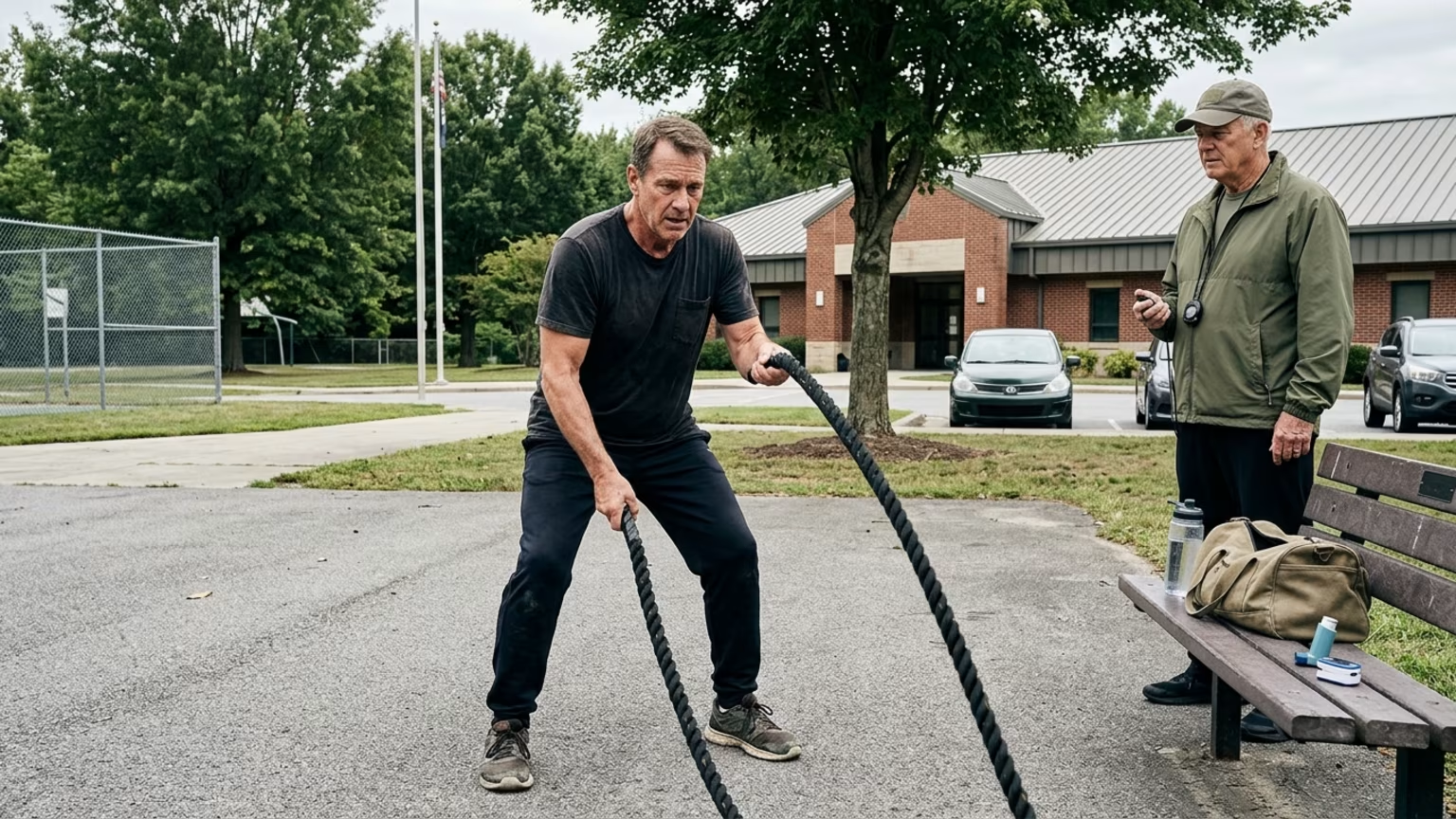

A pilot study evaluated a 12-week high-intensity interval training program for veterans with deployment-related respiratory disease. Review the early findings.





On October 8, 2026, a new clinical article detailed a pilot study. Researchers tracked a 12-week high-intensity interval training program designed for a specific patient population. The intervention targeted 11 veterans experiencing symptoms of deployment-related respiratory disease. Following the program, the participants demonstrated improved exercise capacity and fewer markers associated with pulmonary vascular disease.
Many veterans face long-term health challenges stemming directly from their service environments. The published research contextualizes this work within broader concerns about respiratory illness. This concern specifically centers on veterans who served in Southwest Asia or Afghanistan. Deployment exposures often included severe sandstorms, diesel fumes, and heavy smoke from open-air burn pits.
These environmental hazards can severely impact pulmonary function and cardiovascular health over time. When respiratory limitations arise, veterans often reduce their daily physical activity to manage symptoms. Decreased activity can negatively affect overall military and veteran health. Finding safe and accessible ways to maintain conditioning is a major focus for clinical researchers.
Lindsay Forbes, MD, served as the senior author of this pilot study. She suggested that structured exercise might offer a viable option for affected patients. This approach is particularly relevant for veterans who prefer not to add another medication to their routine. The study points toward targeted physical conditioning as a supportive tool for preserving respiratory function.
The research team designed a specific, progressive conditioning regimen for the trial. The 11 participants were all men between the ages of 37 and 58. They all had documented service histories involving deployments in Southwest Asia or Afghanistan. Furthermore, the clinical report notes that many participants managed additional chronic health conditions.
These concurrent conditions included high blood pressure, diabetes, or obstructive sleep apnea. Such physiological factors complicate physical training and require careful protocol design. The researchers utilized an upright stationary bicycle as the primary modality for the intervention. Participants completed their prescribed training sessions three times per week over the 12-week period.
The actual workouts focused on intense, four-minute cycling intervals. Each interval required veterans to target 90% to 95% of their maximum heart rate. The program utilized a methodical progression over the first four weeks to build tolerance. During week one, the veterans completed just a single four-minute interval per session.
The physical workload increased steadily as the participants adapted to the cardiovascular demand. By week four, the participants had progressed to completing four intervals per session. They maintained this challenging four-interval structure for the remainder of the 12-week program. This clear structure provided a measurable framework for applying physical stress and tracking adaptation.
Justin Cillay, MD, led the study alongside Forbes. The research team assessed the participants both before and after the 12-week program. They utilized cardiopulmonary exercise testing and transthoracic echocardiography for these clinical evaluations. Following the intervention, the testing revealed a significantly increased VO₂ max among the veterans.
The researchers also observed fewer markers associated with pulmonary vascular disease. One key physiological improvement was a decreased VE/VCO₂ slope across the testing group. The VE/VCO₂ slope reflects how efficiently a person clears carbon dioxide through breathing. The researchers interpreted this specific decrease as a strong indication of improved lung efficiency.
Despite the positive direction of these findings, the current reporting has distinct limitations. The published article provides no numerical pre-program and post-program values for the public to review. It also entirely omits exact effect sizes, statistical confidence intervals or p-values. Furthermore, the available article does not identify a specific journal, DOI or scientific-paper citation.
Separately, researchers tracked a different physical activity program for respiratory health. They recently reported on a web-based physical-activity program designed for another patient group. This specific intervention targeted veterans managing chronic obstructive pulmonary disease. The program utilized individualized step-count goals and provided participants with pedometers. It also featured consistent feedback alongside structured education and an online forum.
The results of this separate intervention demonstrated the value of sustained daily movement. Over 12 weeks, participants increased their average daily steps by 1,410 more than the control group. This separate initiative highlights the broader utility of structured physical activity for damaged lungs. BattleVet focuses heavily on training and performance strategies backed by credible evidence.
While the step-count program and the stationary cycling pilot differ, both emphasize progressive physical effort. Consistent movement remains a critical component of maintaining strength, fitness and body composition. Veterans managing respiratory issues need clear data to understand how hard they can safely push themselves. Clear medical frameworks help individuals measure adaptation without risking further injury.
The high-intensity interval pilot received notable institutional support from federal veteran health programs. The VA Airborne Hazards and Burn Pits Center of Excellence Pilot Research Project Program backed the work. This direct support highlights the clinical interest in aggressive exercise for deployment-related respiratory disease. However, veterans should approach these early findings with appropriate caution and clinical guidance.
This was a small pilot based strictly on before-and-after observations of 11 individuals. The clinical article does not state whether there was a control group involved in the research. It also does not mention randomization or blinding within the overall study design. Consequently, it is not possible to establish that the interval training definitively caused the physiological changes.
The safety protocols of the pilot study remain completely unclear from the available coverage. The article does not report adverse events or describe any medical-clearance process for the participants. It also fails to state whether the intense exercise sessions were supervised by medical staff. These critical omissions mean the report cannot establish safety for unscreened individuals attempting the program.
The published findings apply exclusively to a very specific demographic of military veterans. The participants were entirely men aged 37 to 58 with specific combat deployment histories. These results should not be automatically generalized to women, younger veterans or older retirees. They also may not directly apply to veterans struggling with significantly different medical conditions.
Veterans experiencing respiratory symptoms must not adopt this exact protocol without securing medical consultation first. Readers must discuss strenuous interval training with an appropriate clinician before starting. Assuming the regimen is universally safe based on this single pilot report is unwise. Proper medical clearance is mandatory before beginning any high-intensity cardiovascular work.
The researchers themselves acknowledged the highly preliminary nature of their published work. Forbes stated the researchers were surprised to see signs associated with early pulmonary vascular disease improve. Cillay also characterized the findings as unexpected in this specific medical context. He noted that high-intensity interval training has established cardio-pulmonary benefits in other settings.
However, the researchers simply did not know whether it would work for this specific group. The article explicitly states it is too soon to know exactly how exercise produced the changes. The underlying biological mechanism connecting the physical effort to the vascular improvements remains unresolved. It is also too early to know if larger studies will replicate or confirm these exact results.
The clinical team fully intends to expand their research efforts into physical conditioning. They plan to conduct a larger study testing a similar regimen in a greater number of veterans. The current article does not provide a specific timeline or a planned sample size for this next phase. A larger trial will be absolutely necessary to validate the initial observations and establish safety standards.
As researchers continue to investigate healthy aging and respiratory function, clinical guidance will inevitably evolve. The early data presents a compelling case for supervised, progressive physical conditioning following lung injury. Will future clinical trials definitively establish high-intensity interval training as a safe, frontline conditioning protocol for veterans managing deployment-related respiratory disease?
Follow BattleVet for practical guidance on military and veteran health, strength, recovery, testosterone, sleep and healthy aging. Stay connected for new articles, research backed insights and clear information to help you stay capable for the years ahead.


A planned October DEERS outage temporarily limits TRICARE eligibility verification. Learn how this cloud migration affects pharmacies and Open Season updates.


A Stanford study tracked special forces veterans following ibogaine therapy, observing sustained remission in some while emphasizing the need for more research.
A 90-day randomized trial reported that AshwaSR improved strength and endurance in active adults. Learn what this specific evidence means for veteran health.
Build better habits around strength, recovery, sleep, hormones and healthy aging with practical guidance for active military personnel and veterans.
Explore BattleVet