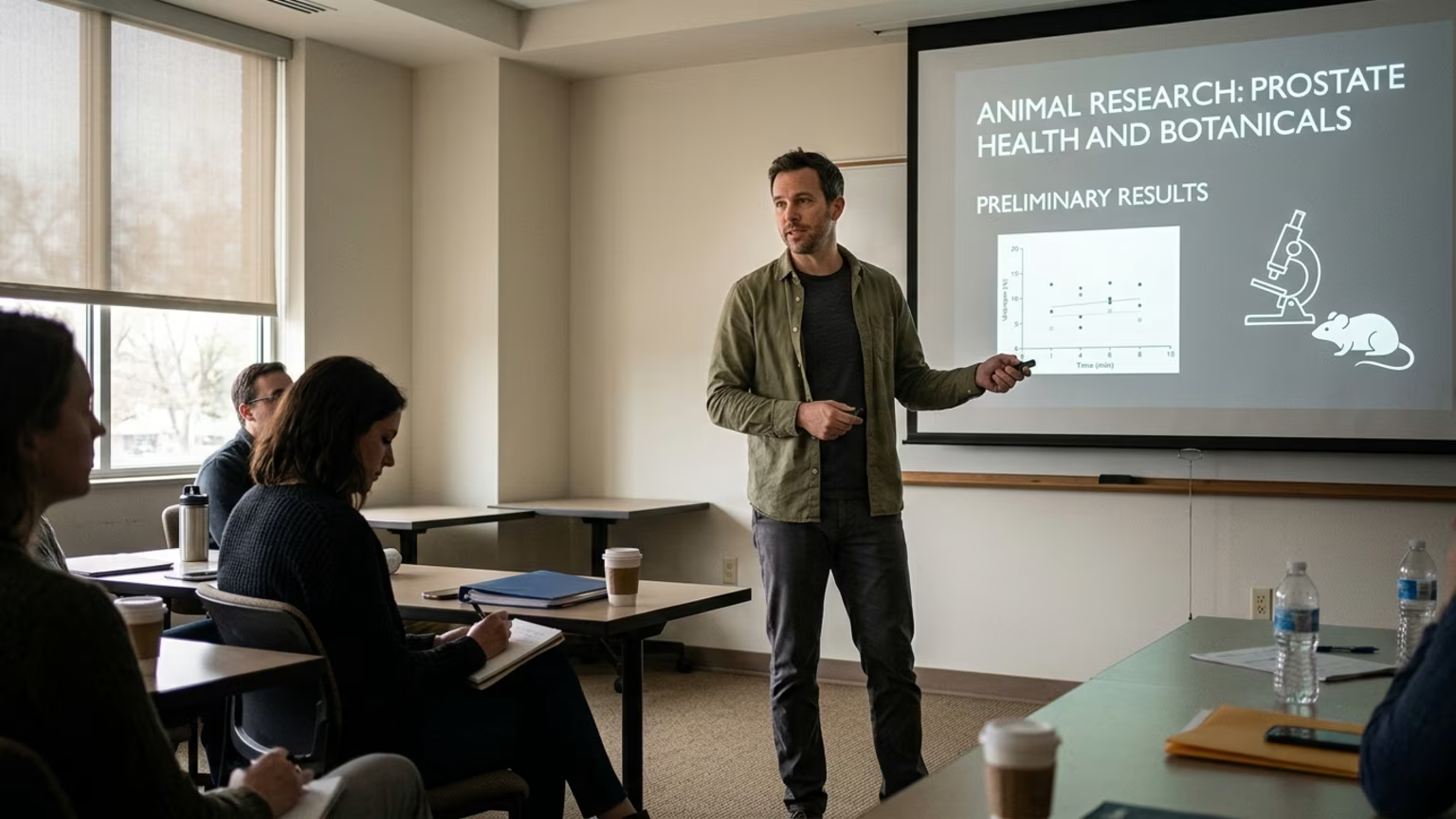

Recent preclinical posters examined stinging nettle and soybean seed extracts in rodent prostate models. Learn what this early research means for veterans on TRT.





The 74th International Congress and Annual Meeting of the Society for Medicinal Plant and Natural Product Research took place recently. The organization held the event jointly with the Association Francophone pour l’Enseignement et la Recherche en Pharmacognosie in Reims, France. The conference ran from August 30 to September 2, 2026. A scheduled session highlighted early preclinical work regarding plant extracts and prostate health.
Two posters by A. Berroukche appeared under a session covering the pharmacology and safety of herbal medicines. The session took place in the “Le Millésime” area on Monday, August 31, 2026. The posters examined botanical extracts in rodent models of benign prostate hypertrophy. These models combined testosterone exposure with a high calorie diet to induce prostate enlargement.
Poster P-142 focused on stinging nettle, which is formally known as Urtica dioica. This presentation evaluated a hydroalcoholic root extract in a mouse model. Poster P-143 examined the preventive effects of an aqueous soybean seed extract. The second study utilized a rat model rather than a mouse model.
The available conference program serves as a poster listing rather than a full study publication. It does not provide quantitative results, sample sizes, extract doses, or detailed methods for either experiment.
Hormone therapy is a complex medical intervention requiring consistent oversight. It is not a casual addition to a physical training routine. Many veterans seek testosterone and hormones information to maintain their physical capabilities as they age. Early animal research regarding prostate health often attracts attention from patients using these therapies.
However, mice and rats process hormonal changes differently than human patients do. The combination of testosterone exposure and a high calorie diet attempts to mimic interacting metabolic and hormonal factors. Aging service members frequently manage overlapping metabolic issues during their transition to civilian life. The poster listing does not explain how closely these rodent models reproduce age related human prostate conditions.
The medical community requires robust clinical screening before prescribing hormone treatments to men. The American Association of Clinical Endocrinology does not support routine population screening for testosterone deficiency in asymptomatic men. The organization instead recommends a symptom directed and risk directed approach to diagnosis. Physicians must confirm low hormone levels through careful testing rather than broad screening protocols.
A 2026 report from Endocrine News detailed the current reality of pre treatment screening. The analysis found that 62% of men received a PSA measurement during the year before their initial testosterone prescription. It also noted that 77% of men had a complete blood count prior to starting treatment. These diagnostic steps help physicians establish a safe baseline before altering a patient's endocrine system.
The same report identified several preexisting health conditions among men evaluated for hormone therapy. The data showed that 55% of the men had obstructive sleep apnea before receiving a prescription. Another 4% had prostate cancer, and 1.5% had PSA levels above 4 ng/mL. These statistics highlight the critical importance of professional medical assessment for military health management.
Many former service members seek information about hormone restoration to improve their daily energy and recovery. The transition out of active service often brings new physical challenges and metabolic changes. A thoughtful approach to endocrine health requires separating established medical facts from early scientific theories. The French conference posters represent early theories rather than established clinical facts.
The recent poster presentations do not change standard medical protocols for testosterone therapy. The word "preventive" in the soybean poster title describes the purpose of the study. It does not represent a confirmed therapeutic outcome in human patients. Veterans should not interpret these early posters as evidence that plant extracts can replace prescription medications.
Current medical guidelines dictate strict monitoring for any man receiving hormone therapy. Clinical summaries of Endocrine Society guidance require regular prostate and PSA monitoring for appropriate patients. Physicians typically schedule this follow up care during the first year of active therapy. A patient must undergo a full urological evaluation if their PSA levels rise significantly.
Specific triggers require immediate specialist review during ongoing hormone treatment. A confirmed PSA increase greater than 1.4 ng/mL within 12 months mandates a urological evaluation. Doctors also require an evaluation for a confirmed PSA above 4.0 ng/mL or an abnormal prostate examination. Over the counter botanical supplements cannot substitute for these vital diagnostic checks.
Recent Endocrine Society commentary emphasizes a moderate approach to hormone restoration. Experts recommend restoring total testosterone to the middle of the normal range. This clinical target sits at approximately 350 to 550 ng/dL for adult men. Physicians no longer focus on deliberately pushing hormone levels toward the absolute high end of the scale.
The Endocrine Society commentary also identifies hematocrit as a principal dose limiting safety measure. High hematocrit levels thicken the blood and can complicate cardiovascular function over time. Clinicians must pay close attention to cardiovascular and metabolic risk factors during therapy. These risks include obesity, sleep apnea, hypertension, and excessive alcohol use.
U.S. Department of Veterans Affairs research reporting has examined hormone therapy safety across large populations. One major study reviewed data from more than 200,000 male veterans with low testosterone levels. Researchers found no increased cardiovascular events associated with testosterone treatment among patients without cardiovascular disease. This large scale data provides valuable perspective on cardiovascular safety for men starting treatment.
However, the VA findings specifically address cardiovascular outcomes rather than benign prostate hypertrophy or urinary tract symptoms. The data does not suggest that hormone therapy is universally safe for men with preexisting prostate conditions. It also does not validate the use of stinging nettle or soybean seed extracts as protective agents. Veterans must discuss all urinary symptoms with their doctor instead of trying to self treat.
Translating botanical findings into clinical use involves complex safety and reproducibility challenges. The session at the conference specifically focused on the pharmacology and safety of herbal medicines. Supplement quality can vary wildly between different manufacturers and product batches. Animal models cannot predict how a human body will process a specific commercial supplement.
Patients risk unforeseen drug interactions when they mix unverified botanical extracts with prescribed therapies. Prostate enlargement often causes frustrating daily symptoms that impact a man's quality of life. Frequent nighttime urination can disrupt sleep cycles and hinder physical recovery. Men dealing with these issues need reliable, evidence based treatments that provide measurable relief.
Medical providers can prescribe alpha blockers or other proven medications to manage these exact symptoms. Patients should prioritize these verified treatments over experimental plant extracts. Worsening urinary retention or pelvic pain requires direct clinical attention. Men experiencing blood in their urine must contact their medical provider immediately.
Relying on early animal research to manage real world urinary issues presents a significant health risk. Consistent medical supervision is central to managing healthy aging and preserving physical capability. The botanical extracts examined in France require extensive clinical testing before they can enter standard medical practice. The different species and extraction methods mean that the results cannot be automatically combined.
The differences between the two rodent models highlight the preliminary nature of this scientific work. The stinging nettle study utilized a mouse model to test a hydroalcoholic root extract. Conversely, the soybean seed study utilized a rat model to test an aqueous extract. Scientists cannot assume that an effect observed in a mouse will translate to a rat.
They certainly cannot assume that either extract will produce reliable health benefits in an adult human male. A comprehensive prostate evaluation involves far more than a simple blood test. Doctors often conduct physical examinations alongside laboratory work to form a complete diagnostic picture. Monitoring a patient's prostate specific antigen over time reveals important trends about cellular growth.
Clinicians look at the rate of change just as closely as the absolute numerical value. This detailed surveillance helps doctors separate benign age related growth from more serious medical conditions. The rodent models used in these studies deliberately incorporated a high calorie diet. Researchers often use this method because poor diet can accelerate metabolic dysfunction and cellular changes.
For veteran life management, maintaining a balanced diet remains a foundational strategy for overall health. Proper nutrition supports healthy body weight and reduces unnecessary stress on the cardiovascular system. A structured diet strategy offers more proven health benefits than experimental herbal supplements. Researchers must establish safe human dosing, absorption rates, and long term toxicity profiles in future trials.
Men already using testosterone should maintain the exact monitoring plan agreed upon with their clinician. Adding unverified botanical products could complicate blood work results or interact with prescribed medications. The most defensible takeaway is that these posters identify interesting research questions for the future. They do not provide a ready to use intervention for active duty personnel or retired service members.
The Reims conference highlights a continuing scientific interest in plant derived interventions for hormone sensitive conditions. Early animal research is a necessary first step in developing new supportive therapies. Will future clinical trials establish effective, non pharmacologic strategies to manage testosterone related prostate risks for aging men?
Follow BattleVet for practical guidance on military and veteran health, strength, recovery, testosterone, sleep and healthy aging. Stay connected for new articles, research backed insights and clear information to help you stay capable for the years ahead.


VA research raises questions about suicide-screening answer accuracy and supports clearer conversations, trust, and broader clinical assessment.

JAMA estimates low testosterone readings in active-duty Army men. See the threshold data, study limits, and implications for clinical follow-up.
The Army’s HVAC task force targets hot barracks. Here is what its project figures mean and how to assess future housing and sleep-related claims.
Build better habits around strength, recovery, sleep, hormones and healthy aging with practical guidance for active military personnel and veterans.
Explore BattleVet