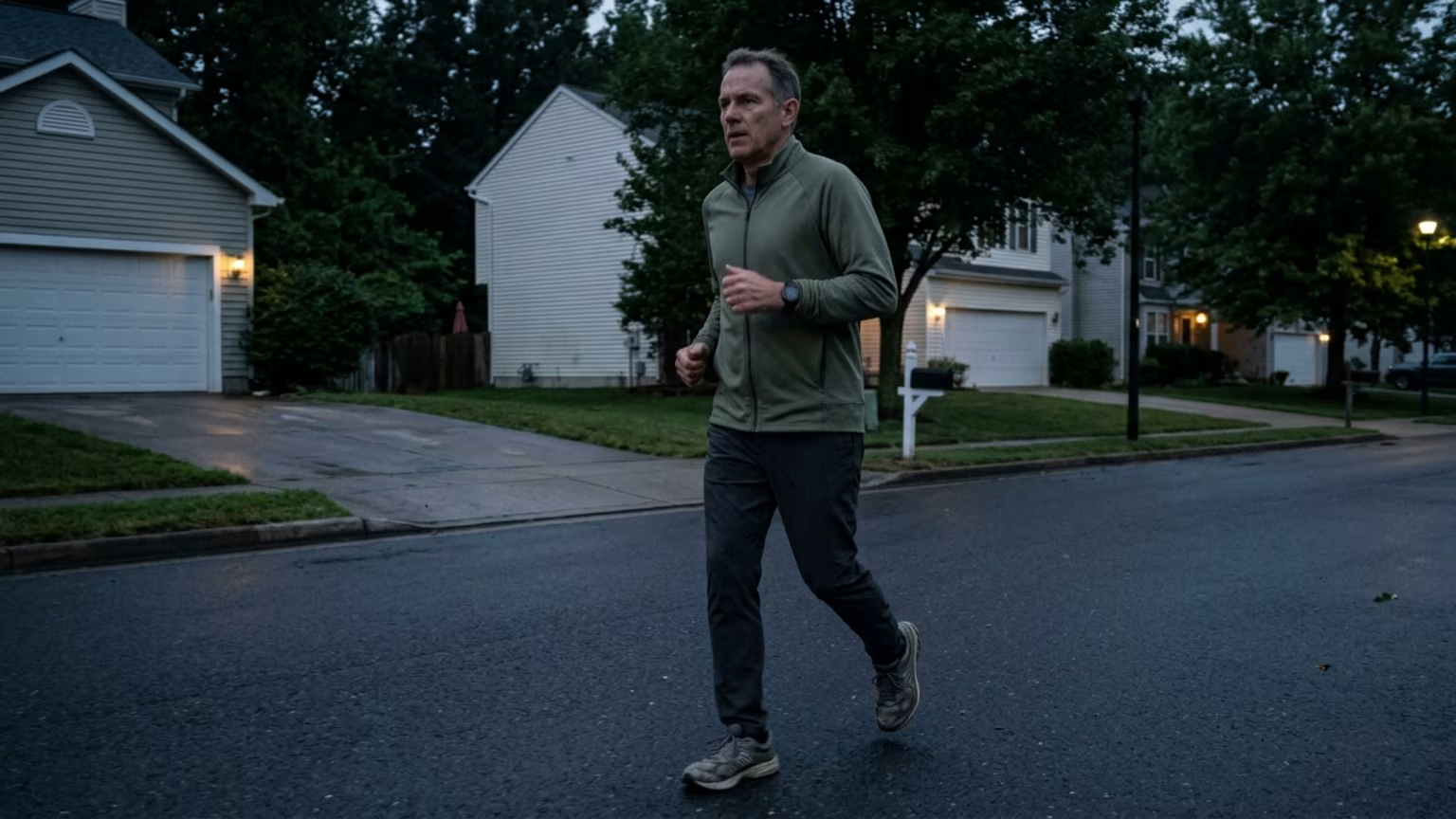

A 2026 meta-analysis links physical activity to improved cellular aging markers. Read how these findings influence long term veteran physical capability.





On September 15, 2026, the journal BMC Medicine published a meta-analysis detailing how physical activity influences biological indicators of aging. The research aggregated 32 separate studies and 49 randomized controlled trials. These trials analyzed data from a total of 5,189 participants. The published findings provide measurable evidence that consistent physical activity directly impacts the cellular processes associated with human aging.
For active military personnel and veterans, maintaining physical capability often matters just as much as general longevity. The findings from this publication matter because they connect routine physical activity directly to cellular maintenance and structural preservation. The research indicates that appropriate physical work actively signals human cells to preserve lean muscle tissue and protect genetic material. Service members frequently experience high physical demands during their careers, making the preservation of joint and tissue integrity a significant priority.
At BattleVet, our editorial focus centers on providing research backed guidance on military and veteran health. We cover topics like strength, recovery, hormones, fitness and healthy aging. We track these cellular metrics closely because they inform the health decisions that support long term physical capability. These new findings reinforce the concept that structured physical training serves as a primary tool for biological preservation.
Rather than viewing physical aging as an inevitable and rapid collapse of function, this data suggests that active interventions modify the timeline. For veterans transitioning into civilian life, the loss of structured unit physical training can lead to rapid deconditioning. Establishing a sustainable exercise routine becomes a practical strategy for maintaining independence and strength in the decades following service. Understanding these mechanisms helps veterans make informed choices about their training and performance protocols.
Service members are routinely trained to push past physical limitations to achieve mission objectives. While this mindset is necessary for military operations, it can lead to chronic injuries and long term physical degradation. Shifting the objective from immediate tactical performance to long term structural preservation requires a deliberate change in perspective. This recent study provides the quantitative evidence needed to justify a more measured, sustainable approach to lifelong physical training.
The pooled statistical analysis from the BMC Medicine study identified significant changes across several key physiological markers of aging. Researchers observed an increase in leukocyte telomere length among active participants. This specific metric showed a standardized mean difference of 0.18. Telomeres act as protective caps at the ends of chromosomes, and their preservation is closely tied to overall cellular health.
Telomerase activity also showed an increase with a standardized mean difference of 0.46. The study also measured structural components, finding that appendicular lean mass improved by a margin of 0.29. This specific metric is vital because appendicular lean mass represents the muscle tissue in the arms and legs. Additionally, the participants demonstrated a reduced frailty index, recorded at a standardized mean difference of negative 0.13.
The investigators examined five markers in total. These included telomere length, telomerase activity, global DNA methylation, appendicular lean mass and the frailty index. The researchers reported that their Mendelian randomization analyses supported causal effects of moderate-to-vigorous physical activity. These effects were observed on several of these aging-related indicators.
To understand the volume of exercise required to trigger these cellular responses, the researchers modeled a non-linear dose-response relationship. Using restricted cubic splines, they estimated that the maximal effects on telomere length and appendicular lean mass occur at approximately 11.5 marginal MET-hours per week. The abstract reports respective estimates of 10.9 for telomere length and 12.1 for lean mass. The study authors specify that this 11.5 figure is a modeled estimate from the available data, rather than a definitive clinical prescription.
The study also utilized multi-omics mediation analysis. This analysis identified ELANE and NEU1 as examples of genetically inferred mediators. Additionally, the researchers conducted an organ-age analysis, linking genetically predicted physical activity with the mitigation of the pulmonary biological-age gap. The presence of these mediators suggests a complex biological pathway where exercise influences gene expression.
For military personnel, understanding these cellular mechanisms provides a tangible reason to prioritize consistent physical training. Active duty service frequently requires carrying heavy loads, repetitive stress on joints and operating in physically demanding environments. Over time, these operational requirements can accelerate structural wear and tear on the body. By tracking appendicular lean mass, researchers can measure the exact type of muscle tissue needed to maintain independent movement and physical capability.
Appendicular lean mass specifically refers to the functional muscle in the arms and legs. When veterans transition out of active service, the sudden loss of mandated physical training often leads to a rapid decline in this specific muscle tissue. This loss directly contributes to a higher frailty index as individuals age. The meta-analysis findings demonstrate that moderate-to-vigorous physical activity acts as a biological countermeasure to this decline.
Maintaining structural muscle mass does more than just support physical strength. It actively signals the body to protect cellular health at a microscopic level, as evidenced by the measured increase in telomerase activity. For veterans looking to stay active, this means that every training session contributes to a compounding protective effect on their cells. The physical effort required to lift weights or maintain cardiovascular fitness literally builds a more resilient biological foundation.
This new research provides structured data to guide health decisions, but it requires accurate interpretation to be useful. The estimated peak of roughly 11.5 marginal MET-hours per week should be viewed as a study-level dose-response estimate, not an individual training mandate. Medical professionals and the study authors have not converted this estimate into a universal weekly prescription of minutes. Active personnel and veterans must still build training routines based on their unique injury histories, current physical limitations and specific capability goals.
Readers with chronic conditions or joint injuries should seek individualized rehabilitation guidance rather than trying to match a pooled biomarker estimate. Statistical changes in telomeres, lean mass or the frailty index do not guarantee increased lifespan or absolute disease prevention. The current findings track specific biological biomarkers and physical function, which support structural integrity. They do not represent a guaranteed reversal of the aging process.
Instead of adopting a uniform approach, veterans should focus on individualized training that prioritizes both aerobic capacity and structural strength. While one specific exercise program is not proven best for everyone, maintaining lower-body strength directly correlates with functional independence in later life. This data provides a strong argument for maintaining strength, fitness and body composition at every stage of life. Developing a personalized plan ensures that physical activity continues to provide benefits without causing unnecessary harm.
These findings also influence how veterans should think about recovery and load management. Service members often push their bodies to extremes during active duty, which can result in chronic pain or joint degradation. Shifting the focus to sustainable activity can aid in ongoing physical restoration without accelerating structural wear and tear. Learning how to balance exertion with adequate rest is a critical component of healthy aging.
Engaging in consistent, appropriately scaled physical activity remains one of the most reliable methods to preserve capability over time. This aligns with broader principles of physical fitness, where training adaptations differ significantly based on the individual. A veteran with a long history of heavy pack marches will require a different approach to joint loading than someone with a primarily sedentary service history. Focusing on individual capabilities rather than rigid targets is central to effective military health management.
As the medical community continues to measure how physical activity influences the cellular foundations of human aging, expectations for military and veteran care are shifting. New data clearly connects consistent physical activity with measurable improvements in both microscopic biological markers and practical physical function. As researchers continue to clarify the dose-response relationship between physical activity and cellular health, how will military and veteran health systems adapt their physical training models to prioritize long term functional preservation over immediate performance alone?
Follow BattleVet for practical guidance on military and veteran health, strength, recovery, testosterone, sleep and healthy aging. Stay connected for new articles, research backed insights and clear information to help you stay capable for the years ahead.


A recent investigation highlights severe gaps in battlefield medical evacuation and emphasizes the critical need for continuous traumatic brain injury tracking for troops.


New research published in Frontiers in Neuroergonomics shows mental workload and sleepiness are distinct states. Learn why feeling alert does not mean recovered.

A 14-year observational study links two hours of weekly resistance training to lower cardiovascular disease and heart attack risks in women aged 48 to 66.
Build better habits around strength, recovery, sleep, hormones and healthy aging with practical guidance for active military personnel and veterans.
Explore BattleVet