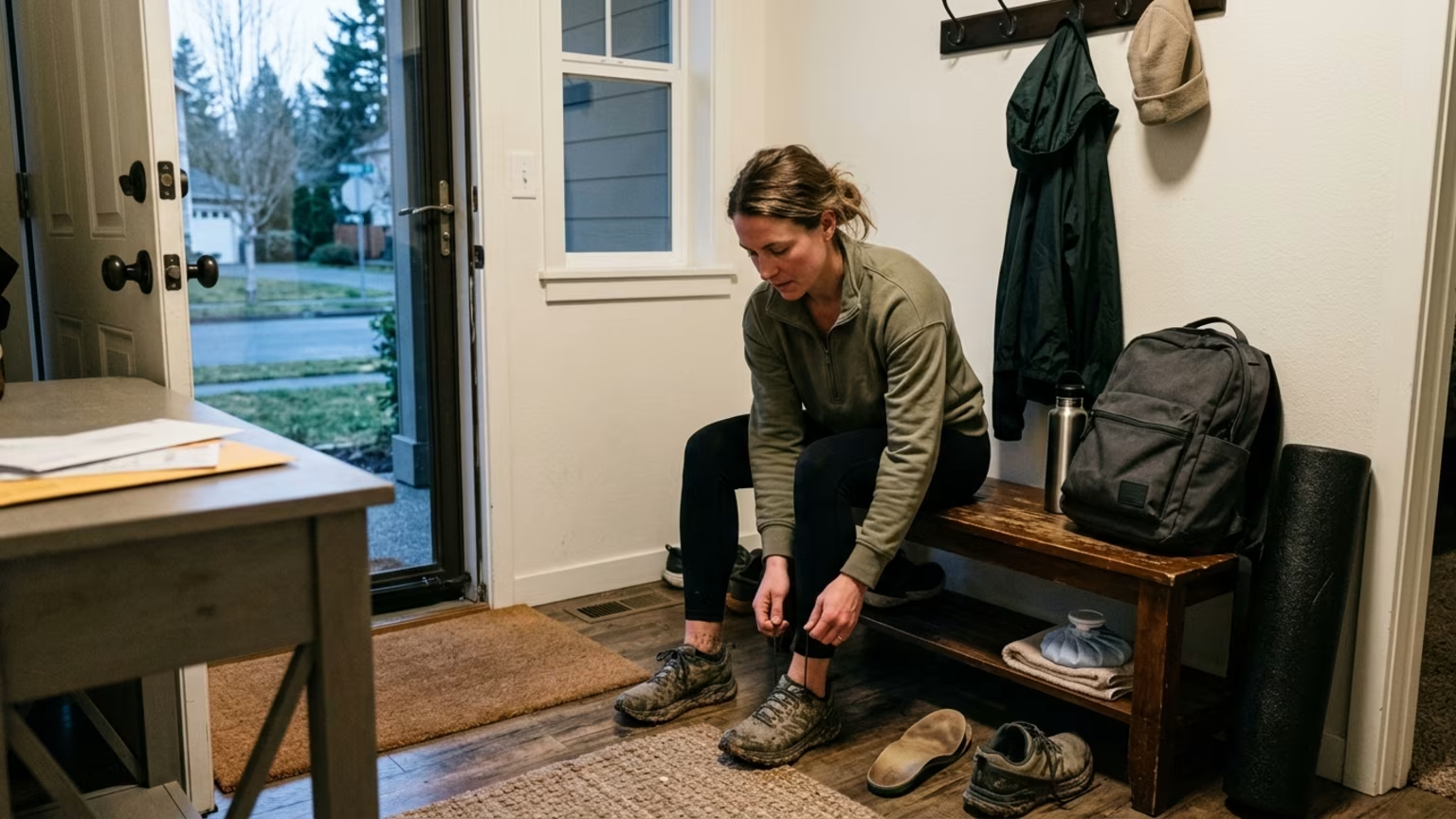

Prepare for physical performance assessments with a systematic training protocol covering movement demands, pacing, hydration, and recovery.





Physical preparation requires the body to adapt to exact physiological demands. General fitness provides a strong foundation. However, a specialized assessment requires your body to manage multiple energy systems in rapid succession. Your muscles, nervous system, and metabolic pathways adapt specifically to the stress you place on them. If you only train steady-state running, your body will struggle to clear metabolic waste after a heavy loaded carry.
A complex performance assessment forces the body to shift rapidly between aerobic and anaerobic states. Aerobic work utilizes oxygen for sustained efforts like distance running. Anaerobic work fuels short, intense bursts like sprinting or lifting heavy objects. Shifting between these states creates massive fatigue if you have not rehearsed the transitions. A strong aerobic base allows you to recover between the high-intensity anaerobic bursts.
I remember waking up after a poor night of sleep and realizing that my training recovery was taking much longer than it used to. I realized that readiness is more than just pushing through the fatigue. It requires a dedicated approach to sleep and hormonal health, which completely shifted how I view long term capability. Proper adaptation happens during rest. Sleep and adequate fueling are biological requirements for rebuilding tissue.
The Army Holistic Health and Fitness framework organizes readiness around physical, nutritional, mental, sleep, and spiritual domains. Military Health identifies nutrition, sleep, medical readiness, injury recovery, supplement safety, and heat-illness prevention as vital warfighter-performance resources. Building physical capability requires consistent attention to all of these biological recovery systems.
Before starting a new program, you must confirm exactly what your assessment requires. The Army’s new Combat Fitness Test (CFT) provides an excellent example of specific performance demands. The CFT is a seven-event, pass/fail assessment conducted in uniform and boots. It uses one age- and sex-neutral standard and a 30-minute completion limit. Diagnostic testing began in April 2026, and the test is scheduled to count for record beginning in April 2027.
The CFT does not replace the Army Fitness Test (AFT). According to Army reporting, the 21 close-combat specialties covered by the combat AFT standard must pass both tests annually. The AFT uses a sex-neutral, age-normed scoring table, with a stated requirement of 350 total points and at least 60 points in each event. You cannot rely on a high total score to compensate for failing a single event.
The reported CFT format requires very specific capabilities. It begins with a one-mile run. Next, athletes must complete 30 dead-stop push-ups and a 100-meter sprint. They then perform 16 repetitions lifting a 40-pound sandbag onto a 65-inch platform. The test continues with a 50-meter carry of two 40-pound water cans. Finally, athletes complete a 50-meter high-crawl-and-rush drill followed by a second one-mile run.
These requirements dictate the training plan. A strong distance runner still needs to practice dead-stop push-ups and sandbag lifts to the correct height. The sequence also matters immensely. The second mile occurs after push-ups, sprinting, repeated heavy lifts, and ground work. You should occasionally preserve the official event order in your training to adapt to the cumulative fatigue.
Your first test should be diagnostic. Record your time for the first mile, your strict push-up repetitions, and your sandbag lift mechanics. Track your carry completion time and whether you can maintain the load without setting it down. You must also note where your technique deteriorates, where your pacing fails, and any pain experienced.
Once you establish a baseline, divide your preparation into overlapping qualities. Build your foundation with regular aerobic running to improve your ability to recover between hard efforts. Practice the exact dead-stop push-up standard using submaximal sets several times weekly. Train hip hinging and efficient platform placement for the sandbag lifts. Improve your strength, fitness and body composition through controlled exposure to the specific event movements.
As the event approaches, increase the specificity of your training. Use the actual loads, distances, and movement standards more frequently. Combine two or three events in sequence without conducting a maximal test every single week. Perform several realistic rehearsals using the official order on a measured course. The CFT is explicitly conducted in uniform and boots, which drastically affects heat retention, grip, and running mechanics.
You must also practice pacing and work-rest demands. The CFT’s 30-minute limit applies to the complete seven-event assessment, not to each individual event. Practice a controlled first mile and efficient push-up sets rather than an explosive opening. Your final-mile pace must account for the actual fatigue you accumulate during the sprints and carries.
Realistic environmental conditions demand a deliberate hydration strategy. An Army performance-dietitian briefing recommended pre-hydrating with approximately 16 to 20 ounces of water before activity. During exercise, athletes should drink approximately 4 to 8 ounces every 15 to 20 minutes. After exercise, the briefing recommended replacing approximately 24 ounces for each pound of fluid lost.
These figures provide strong baseline guidance, though individual needs will vary based on climate and body size. The same briefing noted that unusually dark urine, confusion, fainting, chest pain, or severe weakness should prompt immediate medical evaluation. You must monitor these environmental stressors closely to support your overall training and performance safely.
Many service members fail physical assessments because they test their fitness instead of training it. Turning every workout into a timed rehearsal prevents the body from building baseline capacity. Constant testing leads directly to overtraining and degraded technique. You must build strength and aerobic endurance through deliberate, submaximal training phases.
Another frequent error involves ignoring recovery cues and cramming volume in the final weeks. Tapering is critical for shedding fatigue while retaining familiarity with the movements. During your final week, you should lower your total running and strength volume. Keep a few short, crisp efforts at event pace while avoiding new exercises, new footwear, or maximal lifting. Prioritize normal meals, deliberate hydration, and adequate sleep.
Athletes also frequently overlook the impact of sleep on physical readiness. The Army’s performance leadership emphasizes that physical fitness cannot be separated from psychological well-being, medical readiness, and proper rest. Prioritizing recovery and sleep allows your nervous system to clear fatigue and consolidate motor learning. Skipping sleep to fit in an extra workout often guarantees worse performance on test day.
Finally, individuals often neglect post-event recovery. Immediately after the test, you should walk until your breathing settles rather than stopping abruptly. Replace fluids gradually and eat a normal meal containing carbohydrates and protein. You should delay hard intervals, maximal lifting, and further testing until your soreness and coordination have fully returned.
Passing a demanding physical assessment requires a systematic approach to specific capabilities. You must identify the exact movements, loads, sequence, and time constraints of your test. Establish an honest baseline, train your weakest events, and practice your pacing under realistic conditions. Preparation improves only when it is built around the actual task rather than generic fitness routines. Success ultimately requires a consistent, long-term commitment to physical training, strategic nutrition, and deliberate recovery.
Follow BattleVet for practical guidance on military and veteran health, strength, recovery, testosterone, sleep and healthy aging. Stay connected for new articles, research backed insights and clear information to help you stay capable for the years ahead.


VA research raises questions about suicide-screening answer accuracy and supports clearer conversations, trust, and broader clinical assessment.

JAMA estimates low testosterone readings in active-duty Army men. See the threshold data, study limits, and implications for clinical follow-up.
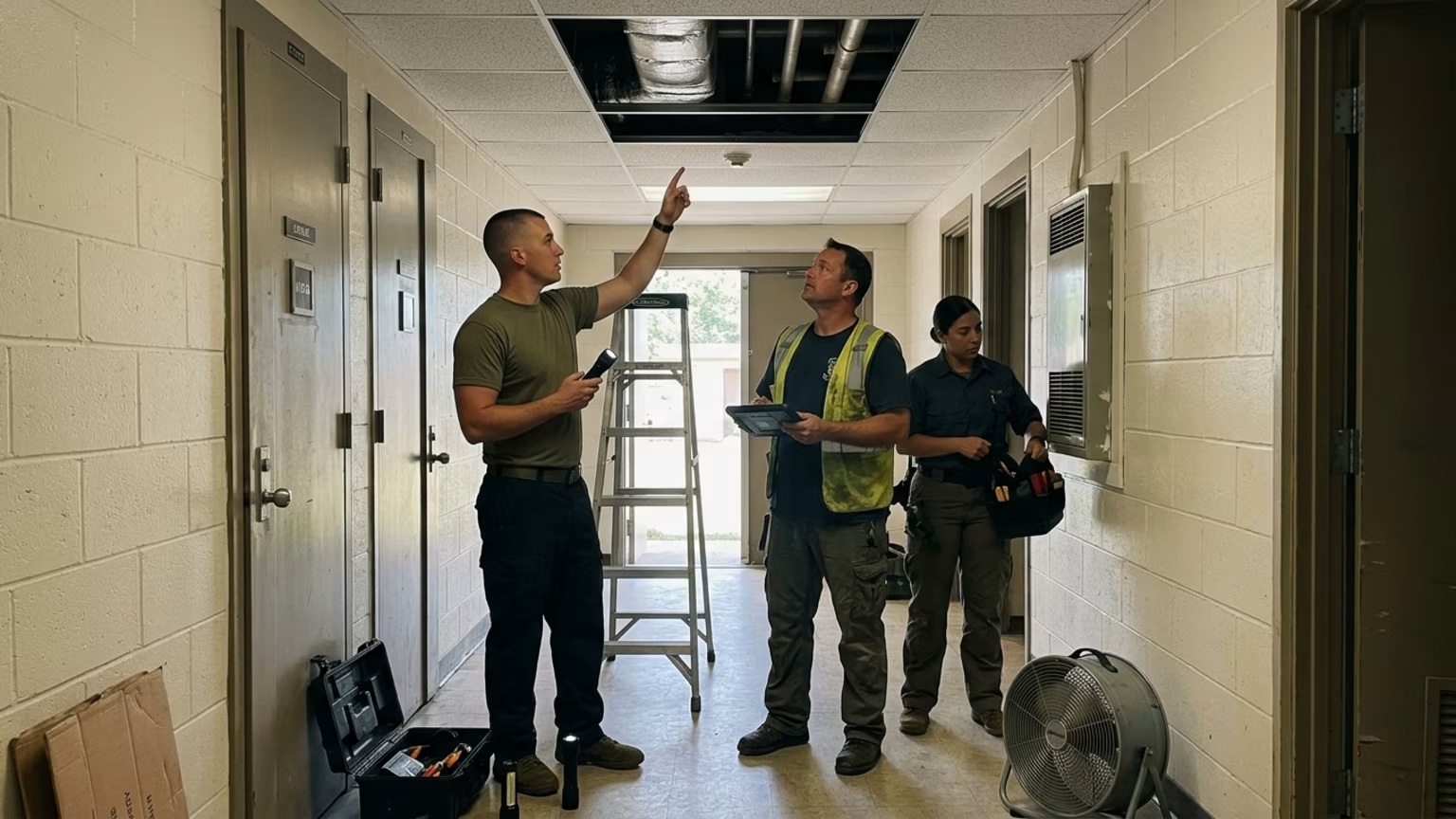
The Army’s HVAC task force targets hot barracks. Here is what its project figures mean and how to assess future housing and sleep-related claims.
Build better habits around strength, recovery, sleep, hormones and healthy aging with practical guidance for active military personnel and veterans.
Explore BattleVet