

Explore how veterans navigate sleep care, VA treatments, and remote tracking research while building purpose and stability after military service.





If you or someone you know is in immediate danger or experiencing suicidal thoughts, contact emergency services at 911. You can also call the Veterans Crisis Line at 988 and press 1, or text 838255.
Staring at the ceiling at 0300 hours brings a very specific kind of frustration. The alarm is set for three hours from now, but your nervous system simply refuses to power down.
"I remember waking up after a poor night of sleep and realizing that my training recovery was taking much longer than it used to. I realized that readiness is more than just pushing through the fatigue. It requires a dedicated approach to sleep and hormonal health, which completely shifted how I view long term capability."
The transition back to civilian life magnifies these physical and mental stressors. Mission Roll Call published "Operation Recap: August 2026" on August 31, 2026, under the monthly theme "Purpose After Service." Their coverage highlights that more than 200,000 service members leave the military each year. A Mission Roll Call survey found that half of veterans and family members reported feeling insufficiently prepared for life after service.
Sleep disruption impacts everything from cognitive focus to muscular repair. Veterans cannot maintain physical performance if their bodies never enter deep recovery phases. Managing this process requires deliberate action.
Managing chronic fatigue requires more than just trying to stay in bed longer. The U.S. Department of Veterans Affairs provides specific clinical routes for veterans dealing with exhaustion. In August 2026, the VA released chronic-pain-and-sleep outreach materials outlining these exact services. Clinicians can evaluate veterans for conditions including sleep apnea, insomnia, night terrors, and disrupted sleep patterns.
Behavioral interventions often provide the strongest foundation for lasting rest. The VA describes cognitive behavioral therapy for insomnia as one of the most effective treatments for chronic insomnia. This treatment is available across the VA system, including through telehealth appointments. It focuses on changing the specific behaviors and thought patterns that prevent restful sleep.
The outreach materials also list relaxation techniques, stimulus-control therapy, education, and lifestyle coaching among available services. Changing behavior requires consistency over time. The VA system provides resources to help veterans maintain these new habits long after their initial appointments.
Some sleep problems require mechanical assistance or pharmaceutical adjustments to resolve. For veterans diagnosed with sleep apnea, the VA provides equipment such as CPAP machines. They also supply necessary replacement parts and follow-up support to ensure the intervention works. Beyond physical equipment, the VA outreach materials stress the importance of professional medication reviews.
Certain pain prescriptions or mental-health medications can severely alter a veteran's sleep architecture. Clinicians can review a veteran's current medication list and consider safer alternatives.
While clinical appointments require proactive scheduling, researchers are currently testing passive health tracking. Sleep patterns often shift before a person actively reports a major psychological problem. A separate VA research brief from March 12, 2026, outlined a promising trial regarding remote tracking. Researchers at VA Palo Alto and their colleagues tested whether remote sleep monitoring could help predict suicidal thoughts.
They focused specifically on veterans dealing with PTSD.
The study involved 75 veterans with PTSD who received specialized tracking hardware. Participants utilized mattress-based sensors to measure sleep habits, physical movements, and biometric information. This passive tracking allowed researchers to gather data without requiring uncomfortable wearable devices. Wearables can sometimes disrupt the very sleep they are trying to measure.
The study tracked these veterans over an average of 55 days to establish individual rest baselines. The VA identifies the publication as appearing in the Journal of Affective Disorders on January 16, 2026.
The results showed a clear link between rest patterns and psychological distress levels. Veterans identified as being at high suicide risk went to bed an average of 63 minutes earlier than lower-risk participants. Furthermore, shorter sleep periods were associated with increased suicidal ideation during the study. The VA describes these findings as demonstrating the potential of remote sleep monitoring.
However, the agency does not claim this system is a validated clinical predictor just yet. It remains an early research development rather than a standard tool.
Knowing what treatments exist is only useful if you can successfully access the system. Mission Roll Call emphasizes that VA enrollment is not an automatic process after discharge. The organization reports that approximately 200,000 veterans enrolled in VA healthcare during a 2026 push. Despite this effort, roughly 5 million other eligible veterans had not enrolled in the system.
Misconceptions about eligibility rules often prevent veterans from getting the care they need.
Veterans who are already enrolled should bring their sleep concerns directly to their care team. Those seeking enrollment information have several direct contact methods available to them. The VA directs people to its online healthcare application or local VA medical facilities. Telephone assistance is available through 1-800-MyVA411, Option 2.
The August 2026 outreach materials also reference 877-222-8387 for applying to VA healthcare programs.
Geographic distance remains a major barrier for veterans living outside major urban centers. The VA says veterans who do not live near a medical facility may use community-based care. The Community Care Network includes local doctors, specialists, and therapists who partner with the agency. Understanding these alternative options is a critical part of maintaining long term military health and wellness.
This option often involves little or no cost for approved medical visits. However, veterans must consult with VA staff to confirm their specific eligibility for outside care.
Addressing sleep apnea or chronic insomnia is just one piece of the post-service puzzle. Mission Roll Call frames the transition out of the military as an ongoing search for identity. The organization states that purpose after service is not something veterans should have to find alone. Purpose, housing, employment and healthcare all interact to create daily stability.
A lack of structure in one area often causes stress in another.
One featured story in the August recap perfectly illustrates this interconnected reality. It describes Army veteran Carlos Bezares contacting the VA Homeless Program because he needed to determine where he would sleep. Resolving that fundamental need allowed him to move forward with his civilian transition. He later used a VA home loan to buy a three-flat and become a business owner.
Finding structure is a major theme across many aspects of veteran life and transition.
Mission Roll Call reports that the group Vets to Drones has more than 3,000 members. This organization provides training, certification preparation, employment connections, and a vital veteran community. On the policy side, advocacy groups continue pushing for broader systemic improvements. The recap notes the Take Care of America’s Veterans Act contains more than 60 veterans-related proposals.
These include the Major Richard Star Act, caregiver and survivor support, suicide-prevention initiatives, and community-care provisions.
The transition timeline requires continuous effort and honest assessments of personal health. The Mission Roll Call article looks ahead to September 2026. It identifies this month as the 25th anniversary of September 11, 2001, and Suicide Prevention Month. Mission Roll Call says its planned coverage will examine the heavy burdens veterans carry.
They also plan to highlight the role of connection, resilience, and purpose in building a future after service.
Veterans experiencing persistent exhaustion or disrupted breathing need a professional medical evaluation. While emerging technology like mattress sensors shows promise, standard clinical care remains the most reliable path. Treatments like cognitive behavioral therapy for insomnia offer proven benefits for those struggling to rest. You can read more about building better habits in our recovery and sleep science section.
Remote tracking might eventually change how we monitor stress, but it cannot fix a physical airway obstruction today. Focus on controlling the variables you can actually change.
Take action this week by scheduling a basic health evaluation to discuss your current sleep habits.
Follow BattleVet for practical guidance on military and veteran health, strength, recovery, testosterone, sleep and healthy aging. Stay connected for new articles, research backed insights and clear information to help you stay capable for the years ahead.


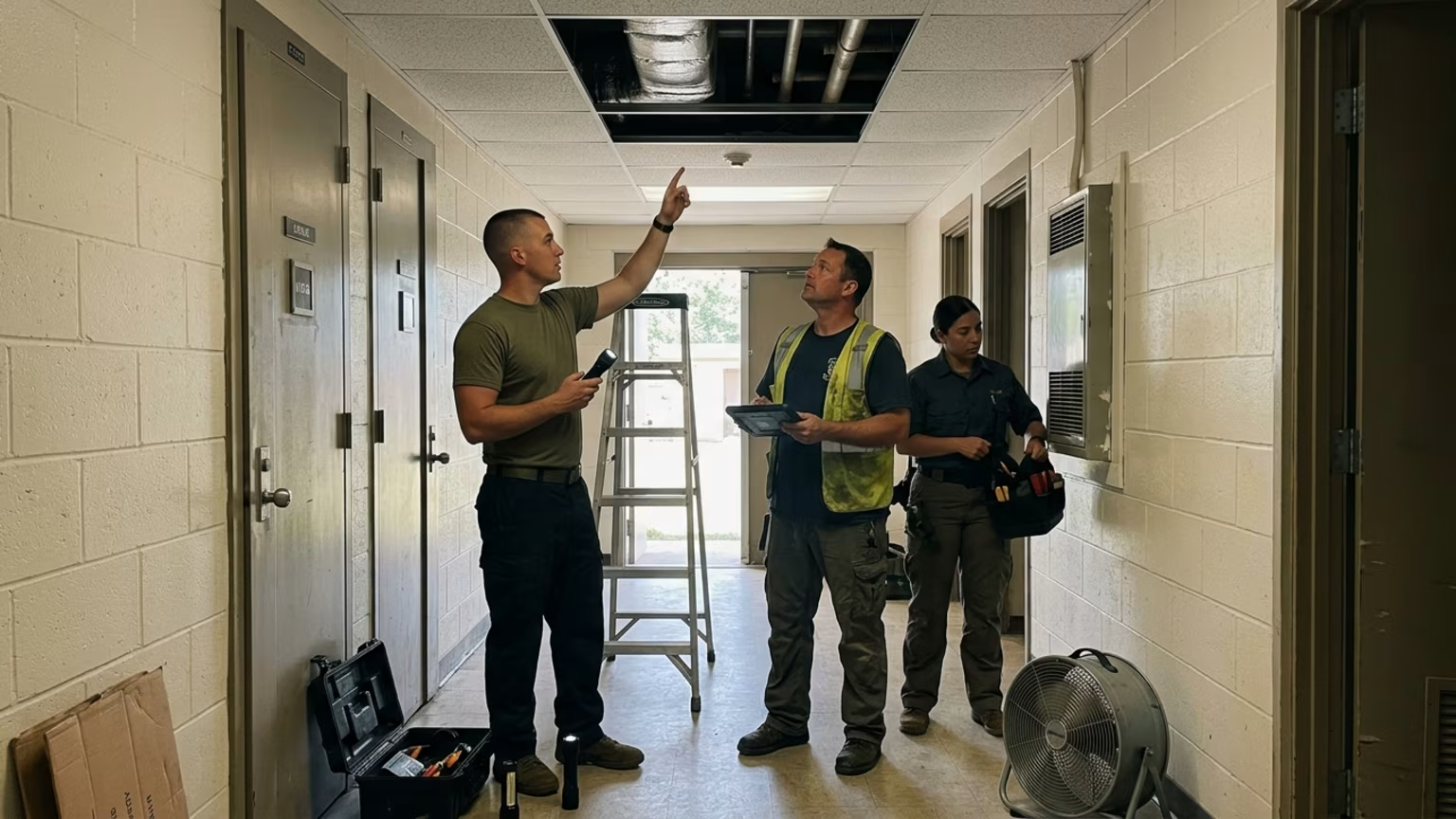
The Army’s HVAC task force targets hot barracks. Here is what its project figures mean and how to assess future housing and sleep-related claims.


The BRIDGE Act proposes a whole-family military transition pilot. Read who it would serve, what support it includes, and what remains unresolved.

Combat Stress’s workplace guidance emphasizes listening over diagnosis. Recent U.S. veteran insomnia research adds context for sleep and recovery concerns.
Build better habits around strength, recovery, sleep, hormones and healthy aging with practical guidance for active military personnel and veterans.
Explore BattleVet