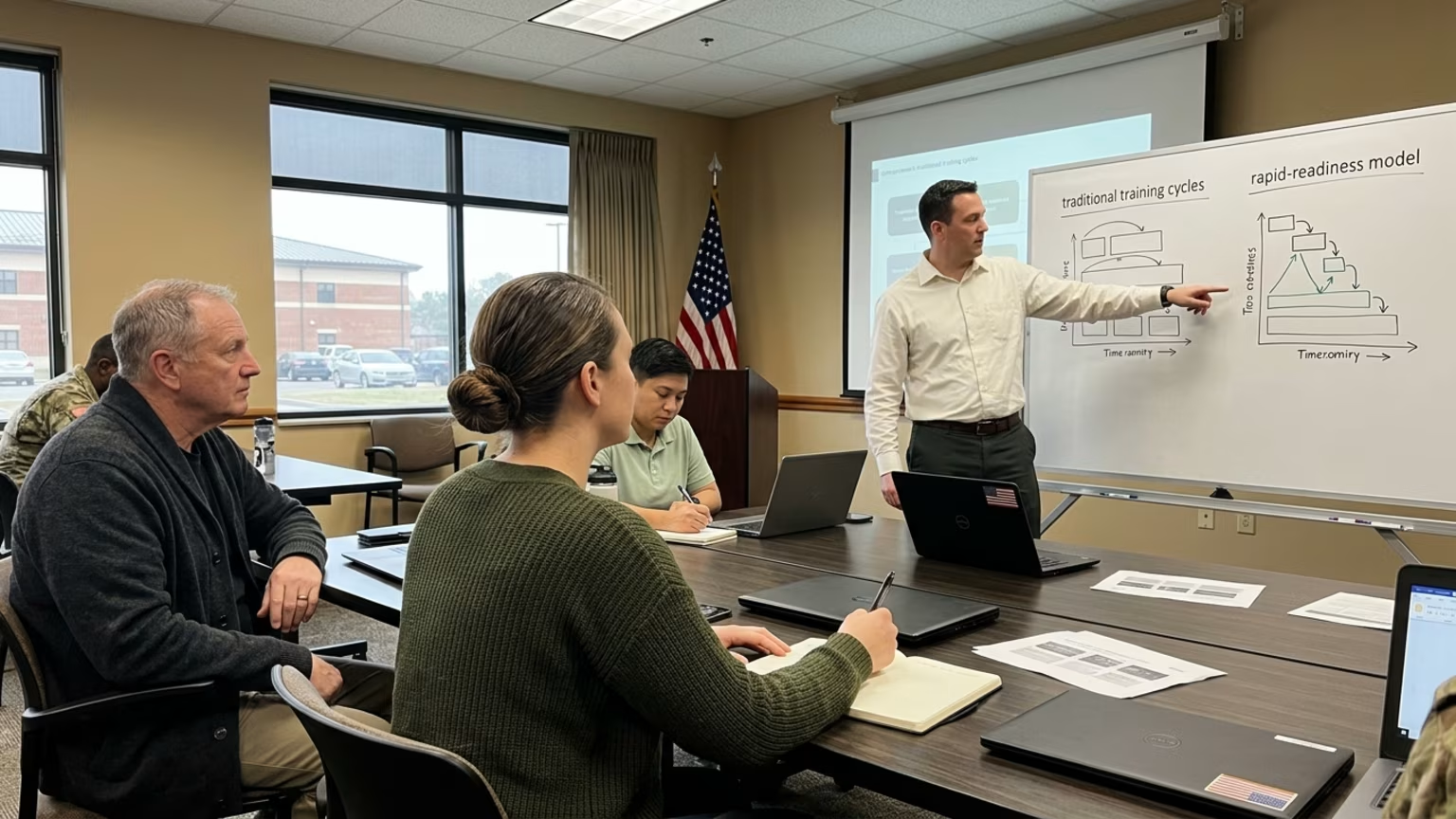

NATO instructors report that static training manuals are too slow for modern battlefields, highlighting the need for rapidly adaptable readiness programs.





In September 2026, Business Insider reported that NATO instructors are pushing for faster updates to military training doctrine. Brigadier Atle Molde is the commander of Task Force Legio. He stated that annual or periodically revised Western training manuals cannot keep pace with rapidly changing battlefield tactics. Norway is currently leading this multinational training effort for Ukrainian troops at Camp Jomsborg, a purpose-built facility in eastern Poland.
“You cannot do that based on bureaucratic training manuals issued once a year,” Molde told Business Insider. “It’s just too slow.”
The training model at Operation Legio combines established Western doctrine with immediate Ukrainian combat experience. NATO Supreme Allied Commander Transformation Adm. Pierre Vandier stated in May 2026 that adaptation may be the most important lesson from Ukraine. The curriculum is not treated as a fixed document by the instructors. Trainers actively work to reproduce relevant terrain, technology, and tactical scenarios.
Experienced Ukrainian soldiers and instructors provide continuous feedback that can directly change the course content. If Ukrainian personnel report that their forces no longer use a particular method, the training changes.
This shift in military instruction holds significant implications for active personnel and veterans alike. Tactical relevance requires physical and operational capabilities that match current field realities. If training systems take a full year to adapt, soldiers face unnecessary risks during deployments. Molde warned that irrelevant training could directly contribute to more casualties.
The speed of curriculum revision is now a matter of strict operational consequence rather than administrative preference.
A rigid approach to preparation also fails on an individual physical level. I remember waking up after a poor night of sleep and realizing that my training recovery was taking much longer than it used to. I realized that readiness is more than just pushing through the fatigue. It requires a dedicated approach to sleep and hormonal health, which completely shifted how I view long term capability.
Whether you are managing unit readiness or personal fitness, static plans eventually break down. This concept is vital when we look at military health and long term veteran capability. Veterans returning to civilian life often try to maintain the exact physical routines they used during active duty. However, changing environments and biological shifts require a much more flexible approach to wellness.
A reliable feedback loop is far more effective than forcing your body through a fixed protocol. Health protocols must evolve as our bodies and circumstances change.
The pace of change on the ground is entirely unprecedented. NATO stated in July 2026 that the current conflict has compressed innovation cycles from years into months. NATO officials noted that battlefield innovation is moving faster than ever before. Ukrainian soldiers reportedly told instructors that some tactics change every week.
They also warned that some battlefield technologies can become obsolete within a few weeks. Business Insider reported specific figures from the defense industry that highlight this massive acceleration. Ukrainian manufacturer Frontline Robotics makes up to 20 product changes per month. Another company called Ark Robotics receives continuing requests for updates directly from soldiers in the field.
While these are company specific figures, they demonstrate a broader shift in how rapidly equipment must evolve. Training systems must mirror this speed to remain effective. A Ukrainian account of a recent wargame further illustrates the value of rapid feedback. The Vistula Vanguard 26 exercise used current Ukrainian battlefield experience to test established NATO procedures.
ArmyInform reported that Ukrainian service members contributed vital experience involving unmanned aerial vehicles. They also provided critical input on electronic warfare, reconnaissance, and combat engineering. The exercise refined scenarios against contemporary threats based on this direct input.
The emphasis on rapid knowledge transfer is central to the overall strategy. A related Business Insider report noted that Operation Legio focuses primarily on training leaders and specialists. These individuals can then disseminate vital lessons more broadly across the larger force. The capacity at Camp Jomsborg is limited, according to Molde.
This limitation makes the train the trainer model essential for widespread adaptation.
The demand for rapid adaptation is profoundly changing how militaries approach physical preparation. This modern movement integrates operational lessons directly with foundational human performance programs. The U.S. Army has formalized this strategy through its Holistic Health and Fitness doctrine. Known as H2F, this doctrine establishes common training standards across the entire force.
It requires commanders to integrate H2F performance teams into units to support comprehensive readiness. The Army describes H2F as covering physical, nutritional, mental, sleep, and spiritual domains. This is a significant shift from treating tactical instruction and training and performance as entirely separate systems. One Army report highlighted the potential benefits of this integrated approach.
The report noted that one promising practices series was associated with a 61 percent reduction in the odds of musculoskeletal injury referral. It also showed a 79 percent reduction in the odds of substance abuse profile referral. Army guidance on combat effective movement has also evolved to meet these modern demands. The guidance recommends training mechanics that conserve energy and significantly reduce avoidable injury risks.
Examples include sandbag deadlifts, high platform placements, kettlebell swings, and farmer's carries. The program also uses short sprint or shuttle intervals combined with sandbag work. This specific combination helps reproduce the physical fatigue troops experience during complex transitions.
Adaptation requires adequate physical restoration to be genuinely effective. The Army now treats structured recovery as an institutional requirement rather than an individual choice. The Wolf Recovery Program requires Soldiers who have spent more than two weeks forward to complete a specific protocol. This rule applies to personnel returning from field exercises, deployments, or standard rotations.
They must complete a standardized 90 minute return session. This mandated session includes physical recovery programming and targeted cognitive performance support. It also incorporates mental skills work and professional injury evaluations for returning personnel. The program coordinates with chaplains and family support personnel to ensure holistic care.
Treating recovery with the same discipline as tactical training prevents accumulating severe physical deficits. Sleep is also recognized as a primary driver of operational adaptation and learning. Army sleep readiness guidance frames rest as a critical, non negotiable performance tool. It recommends maintaining consistent sleep and wake timing to optimize physiological repair.
The guidance also advises using short strategic naps when long rest periods are simply unavailable. Furthermore, applying controlled box breathing before rest can help lower nervous system arousal levels. Protecting sleep directly impacts how effectively service members learn and adapt to new tactical information. For veterans focusing on sleep, stress and resilience, these military protocols offer a clear, actionable framework.
Managing baseline stress and prioritizing structured rest is absolutely essential for maintaining physical capability over time.
The fundamental need for a continuous feedback loop is clear across both tactical and physical training. Jørgen, a Norwegian Army instructor on the platoon leader course, detailed their daily review process. He noted that instructors evaluate the program day by day to ensure absolute relevance. They retain the flexibility to change training the very next morning or even that same night.
This feedback centered model relies heavily on the experiences of the trainees themselves. Ukrainian personnel actively help shape the curriculum by identifying exactly what they need to focus on. If a physical drill or tactical movement is no longer effective in combat, it gets removed. This proactive approach prevents units from wasting valuable energy on outdated, ineffective practices.
However, faster adaptation does not mean discarding the proven fundamentals of fitness. Strength, movement quality, aerobic capacity, and proper load carriage remain critical requirements for survival. The strongest training models combine stable foundational fitness with highly adaptable tactical scenarios. Instructors must evaluate whether drills still reflect current threat conditions and observed physical fatigue patterns.
Veterans returning to demanding fitness regimens should apply this exact same logic. You must adapt gradually and account for any specific service related limitations. Former service members should use progressive loading to rebuild their strength safely and effectively. Monitoring movement quality, recovery status, and load tolerance provides the objective feedback needed to adjust the plan.
The integration of real time battlefield feedback into training manuals marks a fundamental shift in military readiness. As innovation cycles continue to compress, human performance programs will need to maintain a very careful balance. They must support rapid tactical adaptation while preserving the foundational physical strength required to survive. How will future veteran healthcare systems adapt to treat the complex physical and cognitive demands generated by these highly accelerated combat training models?
Follow BattleVet for practical guidance on military and veteran health, strength, recovery, testosterone, sleep and healthy aging. Stay connected for new articles, research backed insights and clear information to help you stay capable for the years ahead.


Recent updates in cardiovascular guidance highlight ApoB testing and coronary artery calcium scoring for veterans seeking proactive health and longevity.


Track proposed TRICARE access reporting and military healthcare oversight changes in the FY 2027 NDAA. Understand how these policies impact veteran care paths.
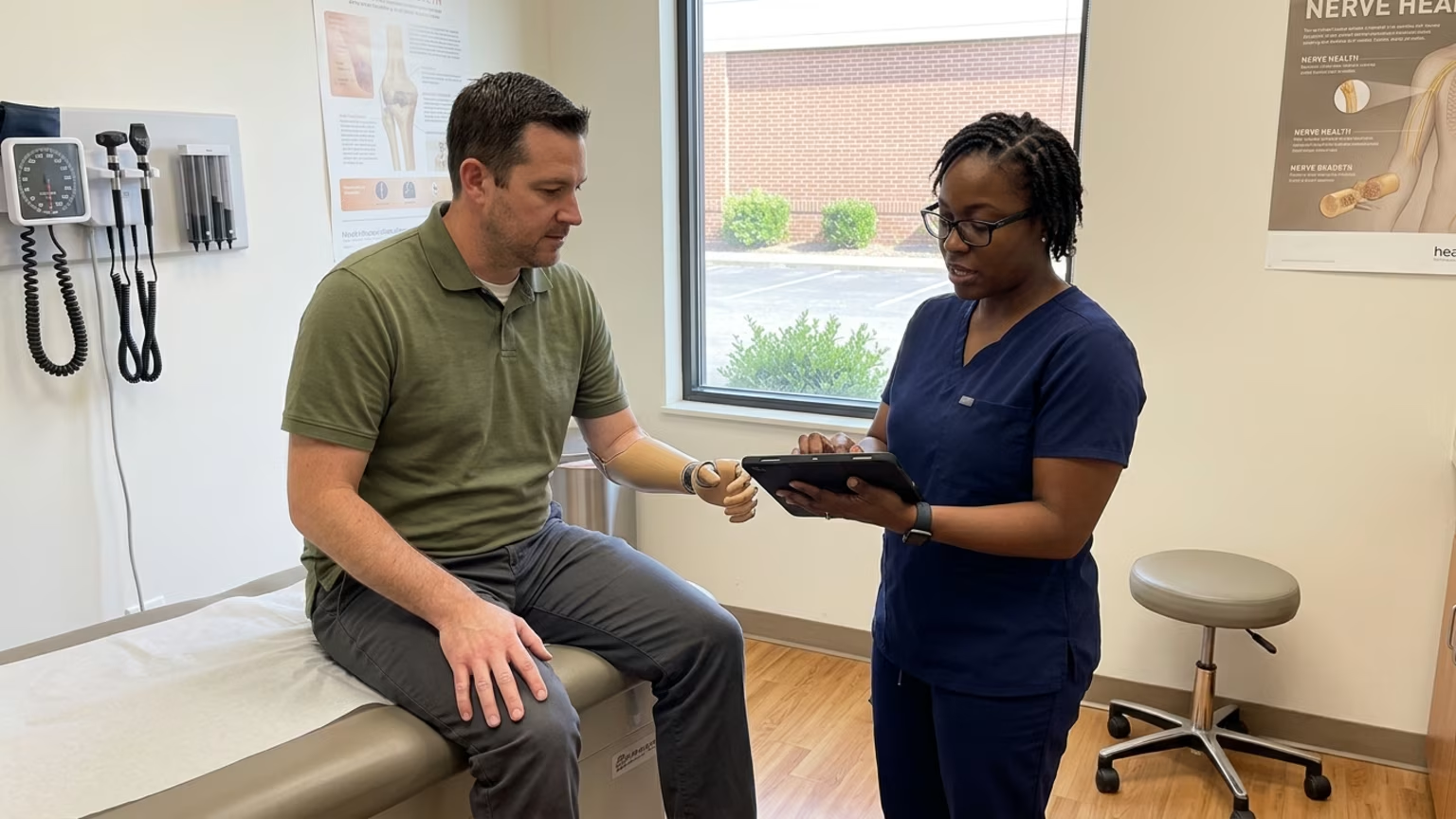
A September 2026 report outlines how drone warfare creates new injury patterns. Learn how overhead blasts and sound-triggered stress impact VA claims.
Build better habits around strength, recovery, sleep, hormones and healthy aging with practical guidance for active military personnel and veterans.
Explore BattleVet