
A September 2026 report outlines how drone warfare creates new injury patterns. Learn how overhead blasts and sound-triggered stress impact VA claims.





On September 24, 2026, War on the Rocks published commentary outlining how unmanned aerial systems are altering the injuries service members bring home. The article, authored by Robert Chisholm, Zachary Stolz, and Brad Hennings, suggests that drone warfare is creating new signature wounds. These changing injury patterns present clear clinical and administrative challenges for military personnel. The commentary highlights the growing difficulty of documenting service-connected conditions when dealing with cumulative blast exposure.
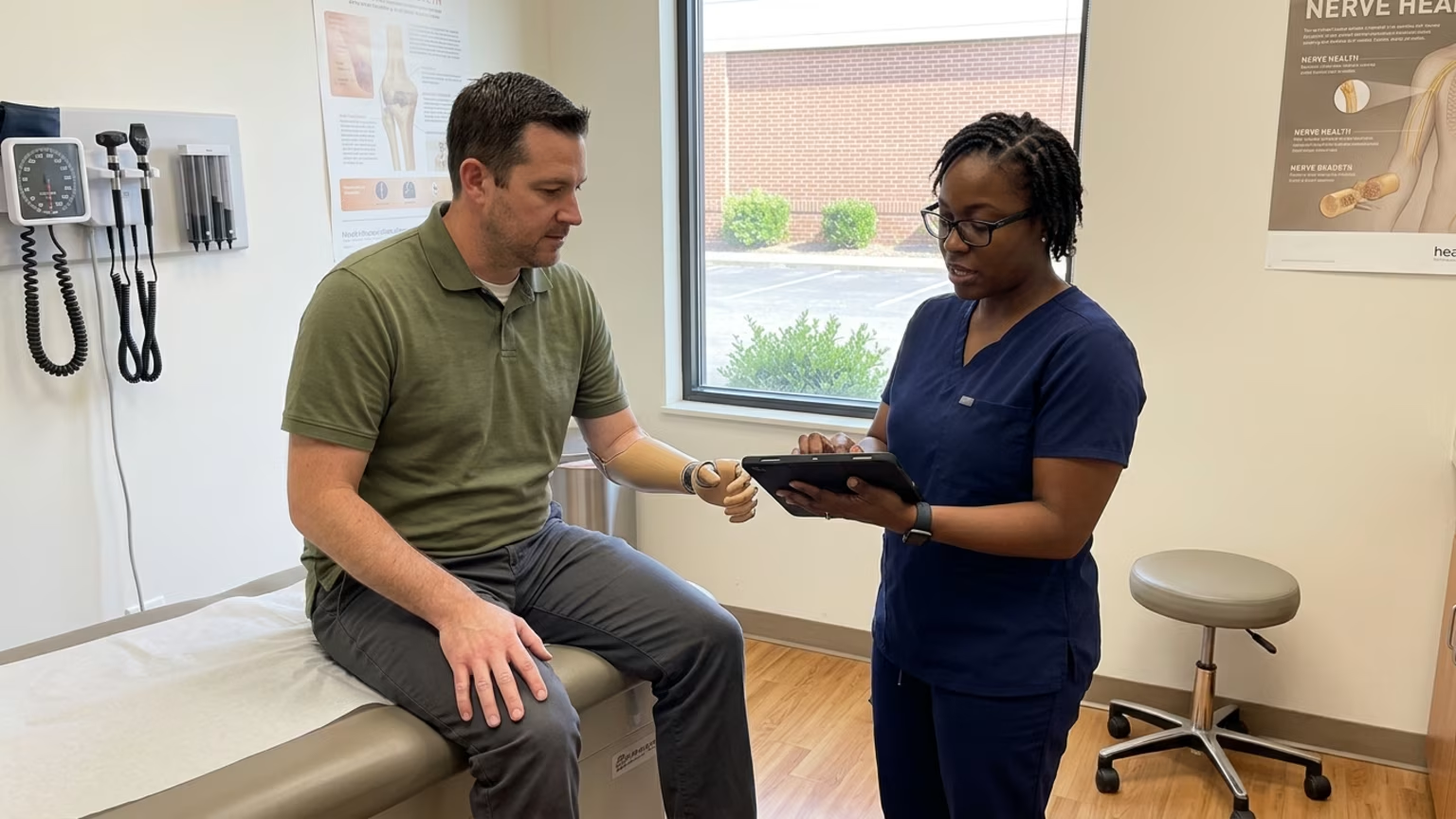
Understanding these emerging injury patterns is critical for active duty personnel and veterans preparing for transition. Unlike traditional improvised explosive devices that often detonated from below, drone munitions frequently arrive from overhead. This mechanism of attack can detonate close to the head and upper body. The resulting blast events are linked to neck trauma, upper-body injuries, severe burns, and limb amputations.
Beyond immediate physical trauma, the psychological and cognitive impacts are highly complex. Service members may experience a combination of traumatic brain injuries and post-traumatic stress disorder. The War on the Rocks commentary identifies overlapping symptoms like sleep disruption, memory loss, chronic headaches, and hypervigilance. Distinguishing between the symptoms of a brain injury and the effects of psychological trauma requires clinical tools that are still evolving.
This overlap makes medical documentation increasingly important for veteran lifestyle and healthcare planning. The authors contend that examiner training is not yet calibrated for this emerging injury profile. They report anecdotal accounts of service members with traumatic brain injury symptoms going weeks without a documented diagnosis. This occurred even after patients reached advanced medical facilities in Germany and the United States.
Without immediate documentation, veterans face significant hurdles when seeking specialized treatment later in life. A lack of clear initial records can complicate the entire recovery process. For active personnel, the threat environment is no longer limited to forward combat positions. One-way attack drones have struck American personnel at bases in Kuwait, Saudi Arabia, and Bahrain.
The authors note that the Shahed-136 drone can fly more than 1,200 miles using satellite navigation. This extensive reach means support staff and logistics hubs face threats previously concentrated on the front lines. The constant anticipation of attacks is changing how military health systems view occupational stress. The administrative implications for veterans pursuing VA disability compensation are significant.
A standard claim requires a current condition, an in-service event, and evidence connecting the two. Drone era injuries often involve cumulative exposure to multiple lower-level blasts without one clearly recorded incident. This delayed diagnosis pattern can complicate the process of securing benefits and accessing specialized care. Proper documentation from the earliest stages of symptom onset is vital for a successful claim.
Recent military reports provide a clear picture of how rapidly drone technology is influencing casualty patterns. By the third year of the war in Ukraine, Western and Ukrainian military officials estimated that drones accounted for 70 to 80 percent of all casualties. During the early weeks of the reported United States and Iranian conflict, approximately 200 service members were wounded by March 2026. About 140 of those individuals experienced traumatic brain injuries.
By August 2026, the total number of wounded service members had risen to nearly 700. The psychological toll is also being documented with greater specificity. A November 2025 case report from Massachusetts General Hospital's Home Base program and Ukrainian clinicians identified a distinct psychological pattern. The report described hypervigilance, hyperarousal, and avoidance organized specifically around the sound of an approaching drone.
Some clinicians reportedly use the term dronophobia for this sustained condition of anticipatory dread. The authors describe this as a dread of a strike that has not yet occurred. Broader institutional assessments support these early clinical observations. A December 2024 United States Army Operational Environment Enterprise assessment linked elevated fear and anxiety to distinctive drone sounds.
The assessment also noted that the circulation of strike footage on social media contributed to these psychological effects. The case material included patients diagnosed with post-traumatic stress disorder, panic reactions, and anxiety disorders. The reported symptoms fit existing diagnostic criteria while showing an unusual emphasis on sound-triggered hypervigilance. On the administrative side, the fiscal and logistical scope of expanding benefits is substantial.
The commentary authors use the PACT Act to illustrate the potential financial stakes of new presumptive eligibility. The Congressional Budget Office estimated the PACT Act could increase deficits by approximately $797 billion over the 2022 to 2032 period. Meanwhile, the VA is processing claims faster than in recent years. The VA average time to decision was 78.6 days at the end of May 2026, down from 141.5 days in January 2025.
The total number of delayed claims has also shown improvement. The backlog of VA claims pending more than 125 days fell below 100,000 in February 2026. This was reportedly the first time the backlog dropped below that threshold since 2020. However, the authors note that these processing improvements do not resolve the underlying evidentiary challenges for complex injury profiles.
Cumulative exposure and delayed symptoms still require thorough and specific medical records. These emerging injury patterns are already driving changes in military training and health policies. The Department of Defense issued a memorandum on August 8, 2024, focused on managing brain-health risks from blast overpressure. This policy requires cognitive assessments at accession and at specific intervals for personnel considered at high risk.
The memorandum also calls for tracking blast overpressure exposure across a service member's career. Military Health System reporting indicates that researchers suspect cumulative blasts may cause long-term cognitive effects. Despite these suspicions, current reporting emphasizes that repeated low-level blast exposure remains scientifically difficult to evaluate. There are not yet validated thresholds for medical decisions or return to duty timelines.
However, the military is investing in new systems to monitor long term health. The authors cite the Individual Longitudinal Exposure Record as a joint system intended to compile occupational and environmental exposures. This system aims to track risks across training events, deployments, and duty assignments. Training programs are also adapting to prepare units for the modern operational environment.
The Army is developing new counter-drone training protocols for active duty personnel. This includes a Virtual Drone Collective Trainer designed to prepare units for drone swarm threats. By addressing the tactical reality of unmanned systems, these training programs aim to mitigate both physical risks and anticipatory anxiety. This represents a proactive shift in how the military approaches military health and readiness.
Veterans and their representatives are adjusting how they approach disability documentation. The War on the Rocks authors recommend expanding exposure documentation to include loitering munition engagements. When individual dosimetry is unavailable, they suggest relying on unit-level records to establish exposure history. Federal regulations currently provide pathways for establishing service connection.
For instance, 38 C.F.R. Section 3.304(f)(3) relaxes stressor corroboration requirements for fear of hostile military or terrorist activity. This relaxation applies when a VA affiliated psychologist confirms the stressor supports a post-traumatic stress disorder diagnosis. The current examples in the regulation include incoming artillery, rockets, mortars, and small arms fire. The authors argue these examples should explicitly include unmanned aircraft and loitering munition attacks.
Additionally, federal rules under 38 C.F.R. Section 3.310 state that a disability resulting from a service-connected condition may itself be service-connected. This is crucial for veterans experiencing a progression of recovery and sleep complications. The VA is also evaluating how it rates mental health conditions. In February 2022, the VA proposed a new mental disorder rating model.
This model evaluates cognition, interpersonal interactions, and task completion. It also scores a veteran's ability to navigate environments and manage self-care. While the article notes this proposal had not been finalized, it reflects an ongoing effort to capture functional impairment more accurately. For individuals preparing a claim, the most defensible personal record requires four specific elements.
Veterans must document what happened or what exposure occurred during their service. They must establish exactly when and where the exposure took place using deployment orders or unit histories. They must maintain a timeline showing what symptoms followed the exposure. Finally, they must explain exactly how those symptoms affect their daily functioning, work, and relationships.
Service members should seek medical evaluation for headaches, sleep disruption, dizziness, or persistent startle after any blast exposure. The absence of an immediately documented injury does not mean the symptoms are unrelated to service. It is important to tell clinicians about repeated or cumulative exposures rather than focusing only on the most dramatic event. Keeping copies of medical evaluations, line of duty documentation, and private treatment records is essential.
Readers can find more guidance on managing health records on our military and veteran health blog.
As unmanned systems continue to change the geometry of battlefield trauma, will the systems designed to track, diagnose, and compensate these invisible injuries adapt fast enough to support the next generation of veterans?
Follow BattleVet for practical guidance on military and veteran health, strength, recovery, testosterone, sleep and healthy aging. Stay connected for new articles, research backed insights and clear information to help you stay capable for the years ahead.



A recent study found Navy sailors face a 2.3-hour nightly sleep debt underway. Learn how planned napping impacts burnout, stress and physical recovery.


A September 2026 review outlines practical midlife habits for healthy aging. Learn how veterans can use strength training, nutrition and sleep to stay capable.

A review of how the PACT Act expanded VA healthcare and toxic exposure benefits for veterans, detailing covered deployment locations and medical conditions.
Build better habits around strength, recovery, sleep, hormones and healthy aging with practical guidance for active military personnel and veterans.
Explore BattleVet