

VA reports more than 250,000 new veterans enrolled in health care during 2026. Learn how to verify your eligibility and schedule preventive medical care.





If you are in immediate danger, call 911. For 24/7 support, call or text 988 and press 1 for the Veterans Crisis Line, or text 838255.
The U.S. Department of Veterans Affairs reported that more than 250,000 new veterans enrolled in VA health care during 2026 as of September 2. This massive surge in enrollment demonstrates a major shift in how former service members approach their routine medical care. Connecting with these resources early provides a necessary foundation for tracking preventive health and maintaining physical readiness over time.
The newly enrolled veterans have already generated more than 1.4 million completed or scheduled medical appointments according to VA data. This staggering volume includes more than 300,000 mental health appointments and more than 12,000 emergency care visits. These figures reflect total scheduled encounters rather than individual patients. However, the data clearly indicates a high demand for consistent medical oversight.
This level of engagement shows that newly enrolled members are actively utilizing their benefits rather than just holding a card. The 1.4 million completed or scheduled medical appointments demonstrate a strong commitment to clinical follow up. While these figures represent scheduled encounters and not unique patients, the volume is undeniable. It highlights how quickly veterans integrate into the system once their initial enrollment clears.
To handle this demand, the department reported that it had opened 41 new health care clinics since January 2025. VA also stated it had offered more than 3.1 million appointments outside normal hours since January 20, 2025. These early morning, evening, and weekend slots aim to accommodate veterans with demanding work schedules. The department also plans to spend nearly $5 billion in fiscal year 2026 on modernizing and repairing health care facilities.
This infrastructure investment follows a period of heavy utilization across the entire system. The September enrollment announcement reported that VA completed a record 82,083,918 direct care appointments in fiscal year 2025. That figure represents a 4.1 percent increase from fiscal year 2024. Furthermore, the system handled 59,989,662 community care appointments in fiscal year 2025, which reflects a 12 percent jump from the previous year.
VA officials suggest these enrollment increases stem from faster claims processing and better outreach. The department said its average disability claims processing time had fallen 46 percent since January 20, 2025. Over that same period, the backlog of veterans waiting for benefits reportedly fell more than 70 percent. These administrative improvements lower the barrier to entry for veterans seeking to establish their care.
Earlier in 2026, a related VA update noted that the department had enrolled more than 215,000 new veterans. The total rose by roughly 35,000 between that prior update and the September announcement. Independent scrutiny suggests that access improvements may still be uneven across different regions. Not every veteran will experience immediate scheduling for specialized medical needs.
Military Times reported on VA Office of Inspector General findings regarding community care mental health appointments. Roughly 80 percent of those appointments were scheduled within the 30 day wait time standard. However, the average wait was 56 days for appointments that missed the applicable requirement. Navigating these administrative changes is a core part of veteran life after leaving active duty.
Basic eligibility for VA health care generally requires qualifying military service and a discharge that was not dishonorable. The exact requirements vary greatly depending on when a veteran served. For many people who enlisted after September 7, 1980, the usual requirement is 24 continuous months of service. This same rule also applies to those who entered active duty after October 16, 1981.
Exceptions to these service duration rules do exist for specific circumstances. Reserve and National Guard eligibility often depends on whether the member was called to active duty under a federal order. These members must have completed the period for which they were called to qualify. Active duty for training service alone generally does not meet the basic eligibility requirement for health care.
Recent legislative changes also play a massive role in expanding access for older veterans. The PACT Act expanded VA health care eligibility for veterans exposed to hazards such as burn pits and airborne hazards. It also covers veterans exposed to Agent Orange, radiation, and contaminated water during their service. VA outreach materials actively encourage veterans affected by toxic exposures to review their enrollment options.
Understanding these varying service eras is a key component of navigating military health systems effectively. Your specific enlistment dates and deployment locations directly influence the benefits you can claim. Veterans should never assume they are ineligible without formally verifying their status with the department. Taking the time to check these details ensures you do not miss out on earned medical coverage.
The data shows that hundreds of thousands of veterans are taking deliberate steps to manage their medical needs. Translating this population level data into individual action requires a highly proactive mindset. In our experience, I remember waking up after a poor night of sleep and realizing that my training recovery was taking much longer than it used to. I realized that readiness is more than just pushing through the fatigue.
It requires a dedicated approach to sleep and hormonal health, which completely shifted how I view long term capability. You cannot optimize your physical condition if you ignore your baseline medical care. Prioritizing Recovery and sleep requires a comprehensive medical foundation to be effective. Booking overdue primary care or routine bloodwork is a variable you can actively control right now.
You do not have to wait for a major injury to utilize your medical benefits. Establishing care early allows your clinical team to monitor your blood pressure, joint health, and metabolic markers. These routine checkups provide the data necessary to adjust your training and nutrition plans. Managing these modifiable risk factors directly supports healthy aging and sustained physical performance.
If you are among the veterans who remain unenrolled, you can verify your status through multiple official channels. VA maintains a 24/7 information line at 800-698-2411 to answer questions about health care and benefits. You can also apply online, by phone, or in person at a local facility. The Health Enrollment Center can be reached directly at 877-222-8387 to start the application process.
Bringing a DD-214 and recent income information can help streamline the application if you apply in person. Missing paperwork should not automatically discourage you from contacting VA to ask what alternatives they accept. Once enrolled, you should immediately request a primary care appointment to establish a clinical baseline. Ask your local facility if they offer early morning or weekend slots if your schedule is tight.
The sheer volume of appointments offered outside normal operating hours shows a shifting approach to patient convenience. VA offered more than 3.1 million appointments outside normal hours since January 20, 2025. This flexibility is vital for veterans who are balancing civilian careers, college classes, or family caregiving responsibilities. Asking for these extended hours can drastically reduce the friction of scheduling routine visits.
Sometimes a local facility cannot meet your scheduling needs in a timely manner. By law, VA must refer veterans to community care when the wait for a primary or mental health appointment exceeds 20 days. Referrals are also required when driving time to a facility exceeds 30 minutes. Community care appointments are generally required to occur within 30 days under these specific standards.
It is critical to note that emergency mental health support operates under entirely different rules. If you are in immediate danger, call 911 or call 988 and press 1 for the Veterans Crisis Line. You can also text 838255 to get immediate help from trained responders. Securing any firearms or medications in the home should be arranged alongside a trusted friend or clinician during a crisis.
The COMPACT Act allows certain eligible individuals to receive emergency suicide care regardless of their current VA enrollment status. This means you do not need to wait for a formal application to process if you are in a crisis. You should use emergency services rather than waiting for routine enrollment paperwork to clear. Knowing these safety nets exist is a crucial part of your overall health strategy.
Securing Healthy aging and longevity requires utilizing every tool available to monitor and preserve your body. The recent investments in facility repairs and expanded hours make it easier to plug into these resources. Taking action now prevents minor health issues from becoming major obstacles later in life. Make the call, submit the paperwork, and get your baseline established.
The addition of more than 250,000 new veterans into the health care system is not just a massive administrative milestone. It represents a powerful collective shift toward proactive medical maintenance and physical preservation across the veteran community. Joining this growing group allows you to secure the consistent medical oversight needed to sustain your health trajectory for decades. Taking advantage of these expanded services ensures your long term capability never gets left to chance.
Follow BattleVet for practical guidance on military and veteran health, strength, recovery, testosterone, sleep and healthy aging. Stay connected for new articles, research backed insights and clear information to help you stay capable for the years ahead.


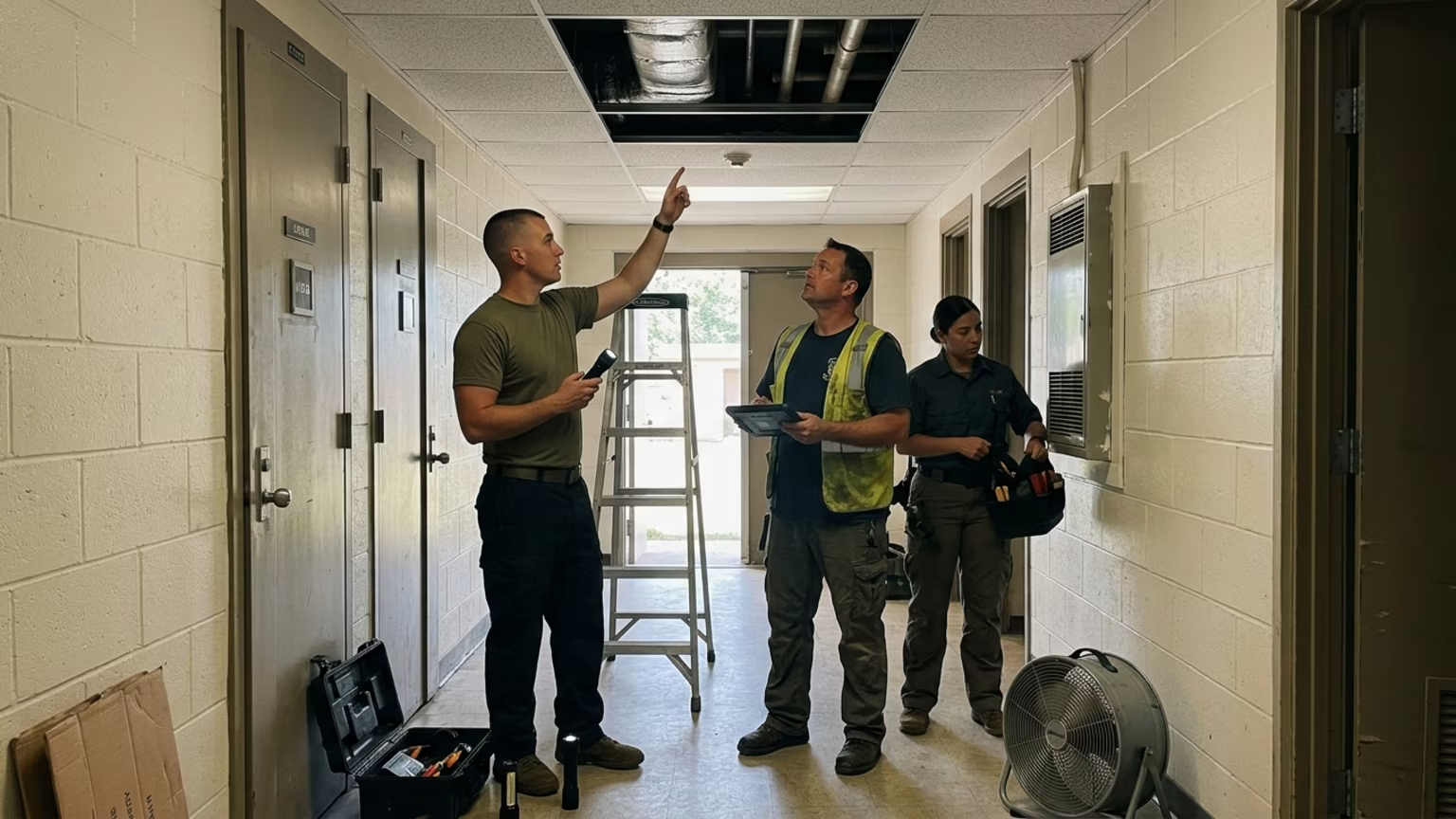
The Army’s HVAC task force targets hot barracks. Here is what its project figures mean and how to assess future housing and sleep-related claims.


The BRIDGE Act proposes a whole-family military transition pilot. Read who it would serve, what support it includes, and what remains unresolved.

Combat Stress’s workplace guidance emphasizes listening over diagnosis. Recent U.S. veteran insomnia research adds context for sleep and recovery concerns.
Build better habits around strength, recovery, sleep, hormones and healthy aging with practical guidance for active military personnel and veterans.
Explore BattleVet