

The Military Spouse Commission reviewed new directives for DoD-to-VA records transfers, childcare pilot programs, and healthcare access during transition.





On September 21, 2026, the inaugural Military Spouse Commission meeting took place at the White House. The panel addressed military spouse employment, healthcare access and housing. They also discussed childcare capacity and the transition from military to civilian life. President Donald Trump established the commission in August 2026 to advise the president on policies affecting military families.
The commission is scheduled to end two years after its creation unless extended. It is required to submit annual reports during its existence, alongside a final report before termination. The discussions highlighted ongoing efforts to modernize military healthcare access and streamline records transfers.
Navigating the shift from active duty to civilian life involves complex administrative steps. These challenges often impact the entire household rather than just the individual service member. Understanding how military systems manage medical records is critical for active personnel preparing to separate. This transition period heavily influences long-term access to disability benefits, physical rehabilitation and mental health resources.
Preparing for these shifts early helps families maintain medical continuity during stressful relocations. Building a solid foundation requires recognizing how employment, housing and medical access overlap. The commission noted that military spouses frequently serve as primary caregivers and advocates for injured veterans.
One spouse described taking on the roles of primary caregiver and transportation provider. She also served as an advocate, scheduler and emotional support system. This occurred after her husband returned from deployment with a traumatic brain injury and mental health challenges. Caregivers represent a vital part of the practical health network surrounding a former service member.
Supporting veterans ultimately requires supporting the family members who coordinate their daily medical care. Career disruption and frequent relocation also complicate medical continuity for active military families. Military spouses regularly face career interruptions following permanent changes of station. Leaving jobs and losing professional networks are common realities when restarting searches at new duty stations.
Licensed professionals may also face new applications, state fees and delays when they move across state lines. Moving creates significant difficulty in finding new doctors, therapists, specialists and healthcare providers. Establishing a long-term care plan requires navigating these logistical hurdles efficiently. For those preparing to leave the service, understanding managing health priorities during the shift to civilian life is an essential step.
During the inaugural meeting, the commission shared specific feedback figures from military families. The panel received hundreds of messages detailing daily operational and administrative hurdles. Education and childcare submissions represented nearly 40 percent of the feedback received. This specific category generated 709 messages from spouses seeking immediate support.
Employment concerns accounted for nearly 500 messages submitted to the commission. Roughly 350 messages focused directly on healthcare access and medical treatment barriers. These figures highlight the volume of incoming messages reported by the commission rather than nationally representative survey results. Still, they provide a clear indicator of the primary obstacles facing military households.
Waitlists and administrative hurdles were prominent themes in the healthcare messages submitted to the panel. Families raised concerns involving mental healthcare, specialty care, fertility treatment and children with complex medical needs. Childcare shortages, expensive off-base care and long military center waitlists further complicate family schedules. These long waitlists often fail to accommodate nontraditional military working hours.
The Navy did report that unmet childcare needs had declined by more than 27 percent since the beginning of fiscal year 2025. This targeted reduction moved the Navy waitlist from approximately 2,200 spaces down to 1,800 spaces.
Several new policies were discussed to address these administrative burdens and improve healthcare continuity. These updates aim to streamline medical scheduling and modernize records management. Service members and their families should understand how these policy changes impact their current health decisions. Planning for separation requires staying informed about evolving federal transition assistance programs.
A recent Defense Health Agency policy change directly impacts how families navigate medical visits. DHA Memorandum 26-056 requires military treatment facilities to accommodate a patient’s request for a spouse or other attendant to attend a medical appointment. This accommodation remains subject to patient preferences, privacy requirements and clinical operations. Having an advocate present can improve communication regarding complex diagnoses, physical therapy protocols and mental health treatment plans. Families should confirm local implementation with their specific military treatment facility before scheduling major consultations.
The commission’s civilian transition discussion coincided with Executive Order 14426, signed on September 8, 2026. This order is titled “Accelerating Access to Veterans’ Benefits and Employment Opportunities.” It directs federal departments to improve the continuing exchange of Official Military Personnel Files and Service Treatment Records. The order requires current service members’ personnel files, health records and Service Treatment Records to be shared with VA immediately upon discharge or release.
This specific requirement takes effect within 30 days of the order and continues thereafter. While these directives mandate faster transfers, active personnel should still maintain personal copies of their medical history. Service members should keep organized copies of treatment documentation, personnel records and separation paperwork. Holding physical copies provides a safeguard while agencies update their information technology systems.
The departments have 180 days to establish updated information technology systems and policy guidance for ongoing records sharing. Preparing these documents early ensures smoother integration into military health and veteran wellness programs. Executive Order 14426 also sets strict deadlines for developing modern resources. The departments have 180 days to create digital tools using artificial intelligence and other emerging capabilities.
These tools are intended to streamline access to benefits, job training and employment opportunities. The order also directs the departments to update the Transition Assistance Program and other workforce programs within 180 days. The stated objective is connecting separating service members with specific open jobs related to their skills or qualifying education programs.
The mandate also calls for connecting separating service members with federal, state or local veterans’ representatives. These representatives can help with applications for healthcare, disability, home loan, job placement and education benefits. Service members should utilize the Transition Assistance Program early to identify medical and employment needs well before their separation date. Proactive planning helps secure necessary disability ratings and long-term rehabilitation support.
To address childcare capacity, the Department of Defense announced a new five-location pilot program. This initiative allows certain faith-based and license-exempt providers to use existing fee assistance funds. The approved locations are Arlington, Norfolk, Virginia Beach, Naval Base Kitsap and Naval Base Point Loma. Families stationed at these specific installations should verify provider eligibility through their local base leadership.
Addressing childcare needs allows active personnel to maintain focus on their training and performance requirements. While these long-term policy changes develop, military families can utilize established support networks. Military OneSource provides assistance related to relocation, spouse employment, deployment, confidential counseling and family readiness. Personnel can reach their telephone support line at 800-342-9647.
Utilizing these resources can provide essential stability during periods of high operational stress or administrative transition.
As federal agencies work to meet their 180-day deadlines for updating transition programs, how will these new artificial intelligence tools practically improve the daily healthcare experience for separating service members?
Follow BattleVet for practical guidance on military and veteran health, strength, recovery, testosterone, sleep and healthy aging. Stay connected for new articles, research backed insights and clear information to help you stay capable for the years ahead.


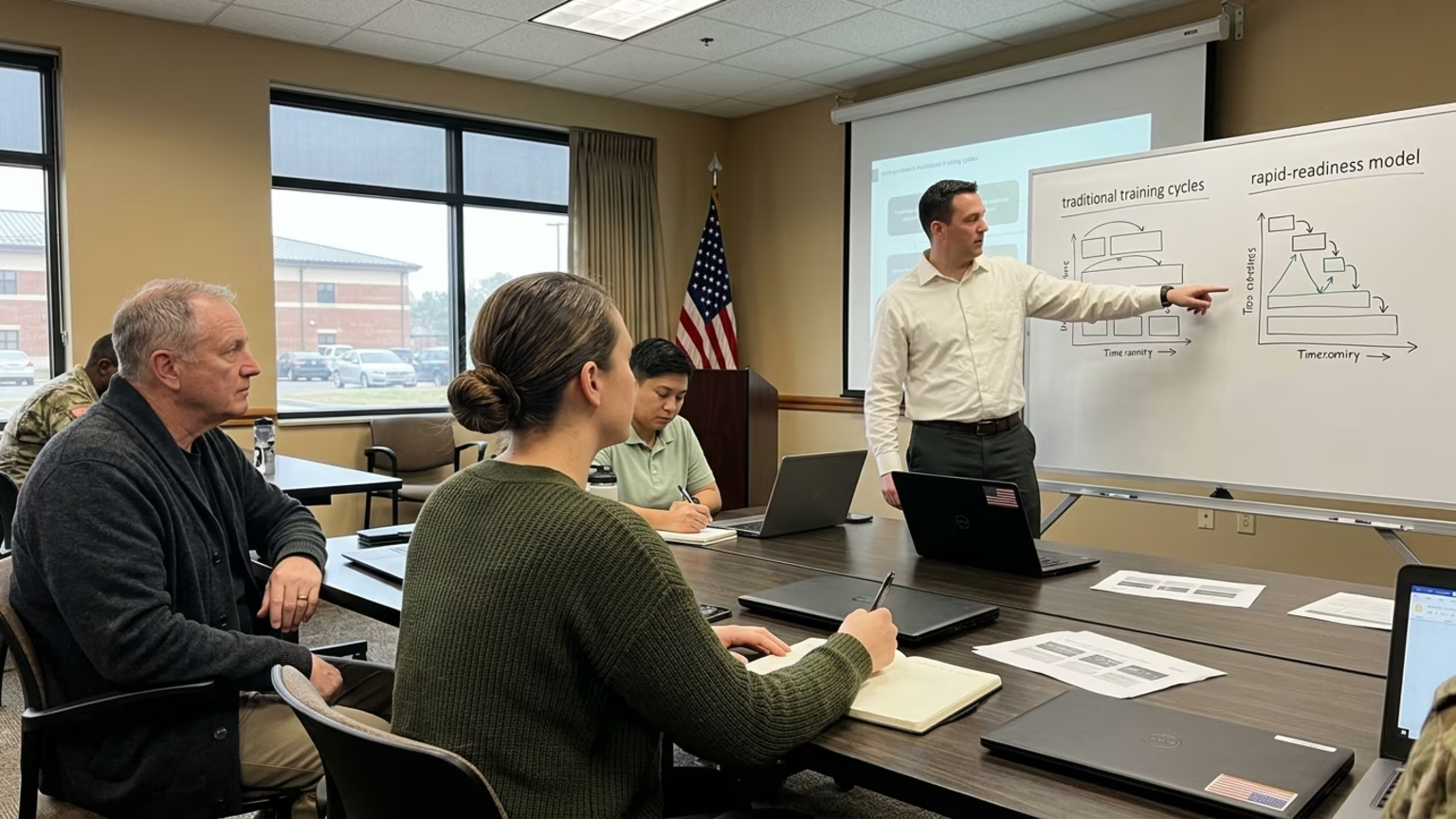
NATO instructors report that static training manuals are too slow for modern battlefields, highlighting the need for rapidly adaptable readiness programs.


Recent updates in cardiovascular guidance highlight ApoB testing and coronary artery calcium scoring for veterans seeking proactive health and longevity.

Track proposed TRICARE access reporting and military healthcare oversight changes in the FY 2027 NDAA. Understand how these policies impact veteran care paths.
Build better habits around strength, recovery, sleep, hormones and healthy aging with practical guidance for active military personnel and veterans.
Explore BattleVet