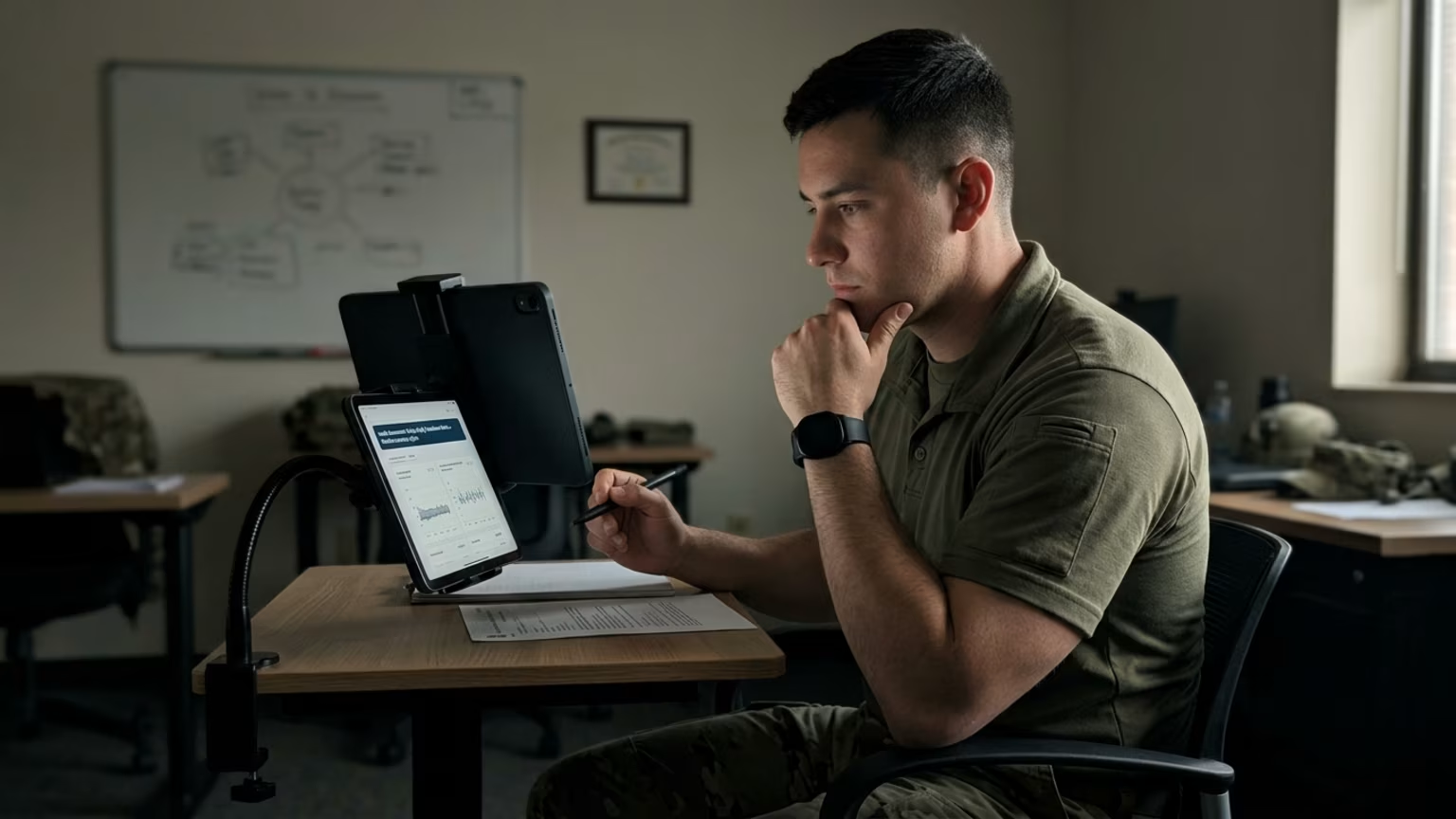

Uniformed Services University research highlights how machine learning risk models and sleep readiness protocols shape military health and suicide prevention.





If you or someone you know is in immediate danger, call 911. For urgent crisis support, call 988 and press 1 for the Veterans Crisis Line. You can also text 838255 for confidential support. Service members and veterans should work with a clinician, trusted friend, or family member to arrange safe storage for firearms and medications during periods of distress.
On January 6, 2025, the Uniformed Services University of the Health Sciences reported significant findings regarding service member health screenings. Research published that day found that machine learning models could identify Soldiers at elevated risk for suicide attempts. This identification occurs specifically after a routine periodic health assessment. The earlier modeling work developed into controlled Soldier trials in January 2026.
The military operates these trials under the name Suicide Avoidance Focused Enhanced Group Using Algorithm Risk Detection. The program is more commonly known by the acronym SAFEGUARD. The initiative connects warfighters to skills and support based on machine learning risk models. This targeted approach allows medical staff to intervene before a crisis occurs.
This initiative fundamentally shifts how military organizations approach active duty mental health. Standard periodic health assessments rely heavily on honest disclosure from service members. However, self report data may be incomplete in a high stakes environment. Soldiers may be less willing to disclose symptoms or suicidal thoughts when they believe the Army can see their responses.
This understandable hesitation creates blind spots in standard medical evaluations. SAFEGUARD is designed to identify Soldiers with high predicted risk and target prevention programs toward them. The program helps providers select interventions suited to individual needs. This removes the burden of relying entirely on a Soldier volunteering their distress.
At BattleVet, we recognize that operational capability requires a comprehensive view of recovery. Physical exhaustion and mental strain are deeply connected. I remember waking up after a poor night of sleep and realizing that my training recovery was taking much longer than it used to. I realized that readiness is more than just pushing through the fatigue.
It requires a dedicated approach to sleep and hormonal health, which completely shifted how I view long term capability. These exact operational tensions explain why modern military health strategies emphasize a wider net of support. Effective protection integrates physical recovery metrics with advanced mental health screening.
The models powering SAFEGUARD were originally developed through the Army Study to Assess Risk and Resilience in Servicemembers. Known as STARRS, this project integrated more than 50 administrative data systems from the U.S. Army and the Department of War. The resulting database holds records for all Soldiers on active duty from 2004 through 2019. The models produce an individual risk score representing the predicted likelihood of future suicidal behavior.
This vast historical context allows the system to recognize complex warning signs. Moving forward, SAFEGUARD plans to update the historical models with real time medical and personnel data.
The research driving SAFEGUARD reveals a stark reality about routine screening protocols. The SAFEGUARD article reports that 99.8 percent of Soldiers denied suicidal thoughts on their periodic health assessment. Despite this overwhelming denial rate, 95 percent of suicide attempts occurring during the following six months involved Soldiers who had denied such thoughts. This data illustrates the immense difficulty of relying solely on standard questionnaires to protect warfighters.
Machine learning offers a way to concentrate clinical resources where they matter most. It identifies hidden patterns in administrative data that a standard questionnaire might miss. According to clinical psychologist and university psychiatry professor James Naifeh, the preferred model provided a distinct advantage. It classified the highest risk 25 percent of Soldiers as accounting for about 70 percent of suicide attempts during the six months after the assessment.
Naifeh noted that this figure describes a concentration of risk rather than absolute certainty. He emphasized that suicide is rare and difficult to predict perfectly.
SAFEGUARD examines intervention opportunities at three distinct military career or care touchpoints. The program looks at a Soldier's first duty station, the annual health assessment, and discharge from psychiatric hospitalization. To address these distinct phases, the initiative operates three named components. These components are Level Up, Operation Life Force, and Pathfinding.
Fort Hood, Texas, was enrolling participants for controlled trials of Level Up and Operation Life Force in January 2026. Pathfinding was recruiting Soldiers nationwide during this same period.
Each component targets a specific phase of service. The first duty station represents a major transition period for young service members. Level Up uses a group orientation session to teach cognitive and behavioral tools. These tools help with managing stress, regulating emotions, thinking tactically, and building healthy relationships.
Operation Life Force operates as a virtual program for Soldiers with a high predicted risk of suicide related behaviors. The virtual format provides accessible support regardless of physical location. It delivers five group interventions that combine skills training and suicide safety planning. This specific program uses a mental toughness framework intended to reduce stigma.
Pathfinding addresses the critical window following intensive medical care. The program recruits Soldiers nationwide after inpatient psychiatric care at military hospitals. It compares usual treatment with usual treatment plus intensive case management delivered through a six month telehealth program. Regarding Pathfinding, Naifeh said the team hopes that additional support will reduce suicidal behavior in the affected group.
The published article does not report completed trial outcomes or establish that SAFEGUARD has permanently reduced suicidal behavior yet.
The introduction of machine learning into military healthcare requires careful implementation. Leaders and clinicians must avoid treating a machine generated risk score as a definitive diagnosis. The program is intended to support provider decisions rather than replace a confidential assessment. Naifeh described SAFEGUARD’s intended approach as precision or personalized medicine.
In this model, decision support tools can help providers determine which intervention is most likely to help a particular Soldier.
While the SAFEGUARD modeling focuses on broad administrative data, adjacent military initiatives highlight sleep as a vital protective factor. The Army has recently emphasized sleep readiness as an operational health issue. A separate Army article presents sleep as a core component of readiness. The Army recommends using available sleep opportunities and keeping sleep and wake times steady.
It also advises using short strategic naps and practicing box breathing before sleep. The 2026 Military Health System Research Symposium listed a presentation on the differential sex specific effects of sleep deprivation on implicit biases toward death and suicide.
Units should avoid implying that sleep hygiene alone prevents severe mental health crises. However, the military clearly recognizes recovery as a crucial pillar of human performance. The Army Holistic Health and Fitness framework formally includes sleep among five distinct readiness domains. This framework places sleep alongside physical, nutritional, mental, and spiritual readiness.
Treating sleep as equal to physical conditioning validates recovery as an operational necessity. Building healthy routines aligns perfectly with comprehensive Sleep, stress and resilience Resources for active duty personnel.
The strongest actionable message for service members is to combine recovery habits with established support networks. The Army has separately promoted suicide prevention measures that encourage service members to seek help and reduce mental health stigma. These initiatives also aim to increase awareness of resources and practice lethal means safety. Soldiers should rely on trusted unit support, clinical care, and proper safety planning.
Proper training and performance protocols must work alongside these vital safety measures. Naifeh stated that any readiness benefit from these new models remains conditional. If SAFEGUARD succeeds in preventing suicidal behavior, it could reduce the family, unit, and organizational disruption associated with suicide.
The ultimate goal is to reach Soldiers with needed skills and support at key points in military service.
How will the integration of machine learning and targeted recovery protocols reshape the future of veteran and active duty healthcare?
Follow BattleVet for practical guidance on military and veteran health, strength, recovery, testosterone, sleep and healthy aging. Stay connected for new articles, research backed insights and clear information to help you stay capable for the years ahead.


Hims expanded its testosterone program. Here are the product-status, monitoring and fertility questions relevant to veterans comparing care.


An Air Force veteran’s Apple Watch alert prompted medical evaluation. Learn what the reported case means for sleep testing and clinical care.

The Fort McClellan veterans health study is planning its analysis. Learn who is covered, how the research will work, and what it means for care.
Build better habits around strength, recovery, sleep, hormones and healthy aging with practical guidance for active military personnel and veterans.
Explore BattleVet