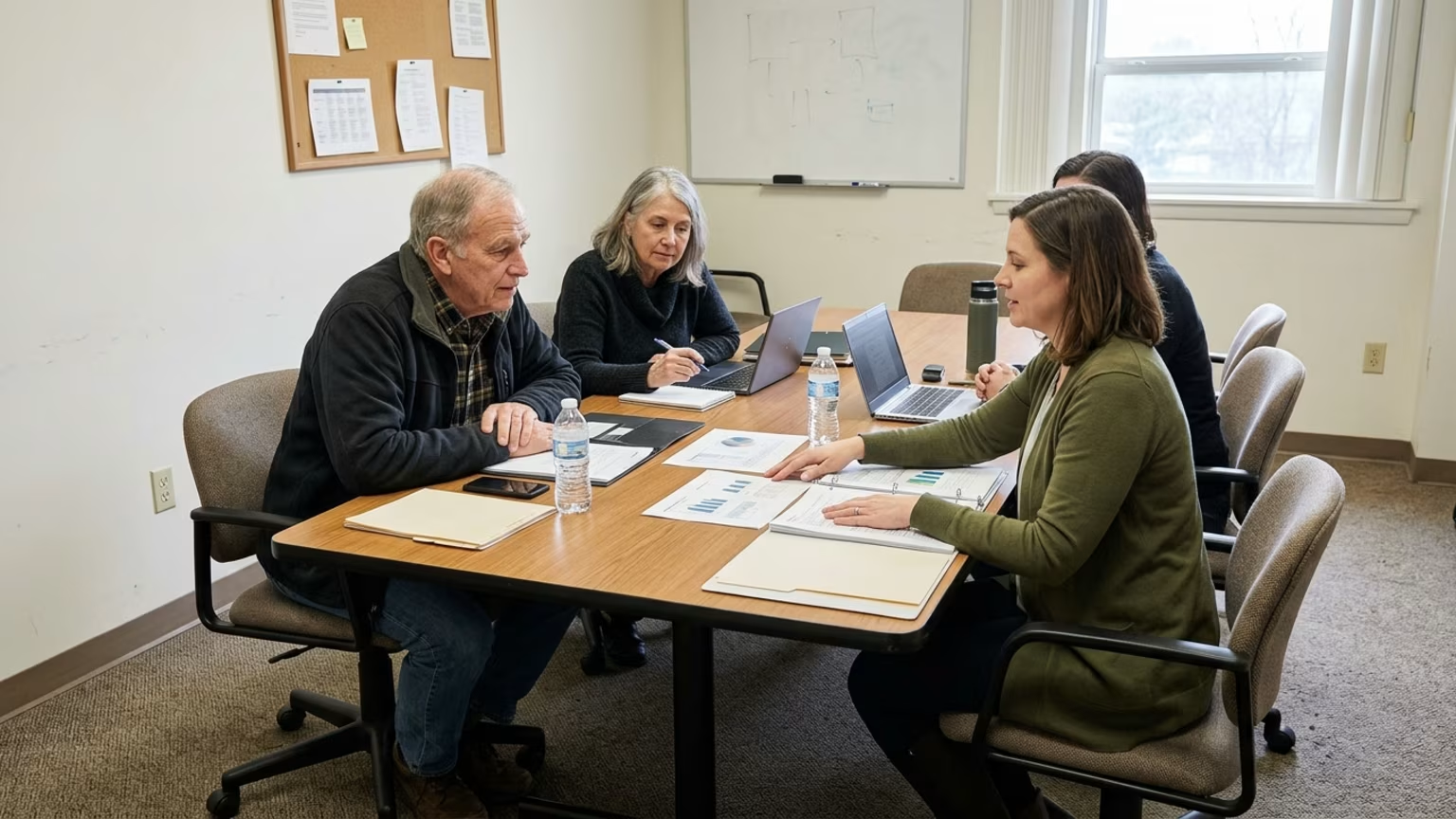

The Fort McClellan veterans health study is planning its analysis. Learn who is covered, how the research will work, and what it means for care.





The National Academies of Sciences, Engineering, and Medicine posted an update on its Fort McClellan veterans health study on October 19, 2026. The update described an October 14 working-group meeting about the veterans’ roster and analysis plan. The meeting was listed as closed.
Sponsored by the Department of Veterans Affairs (VA), the ongoing study covers veterans who served or trained at Fort McClellan in Alabama from 1979 through 1999. Its planned work combines a health-status survey with an analysis of deaths among veterans in the study population.
For veterans who served at Fort McClellan, the project creates a structured effort to examine health outcomes alongside information about potential military environmental exposures. It brings questions about service history and later health into a defined research process.
According to the National Academies, the study was requested under section 801 of the PACT Act, Public Law 117-168. VA asked the organization to undertake the work as part of its advice to the department on military environmental exposures. That mandate explains why the project is being conducted and why its eventual findings will be relevant to VA.
The distinction between research and care matters here. A separate Military Medicine paper, “How Veterans Describe Military Environmental Exposure-Informed Care: A Quality Improvement Study,” focuses on veterans’ descriptions of care. The Fort McClellan project instead examines health and mortality across a defined service population.
These are related but different questions. A population study can address patterns across a group. An individual veteran still needs care that considers their own symptoms and circumstances within the wider picture of health after service.
The National Academies study covers veterans who served or trained at the installation from 1979 through 1999. That period is narrower than the population described in the law.
The law describes service from January 1, 1935, to May 20, 1999. The National Academies attributes the study’s later starting point to an initial feasibility assessment. It found that comprehensive digitized personnel or health records were lacking for many veterans who may have served before 1979.
That is a research feasibility boundary. It should not be read as a finding about the health of veterans who served earlier. For readers comparing the law with the current project, the important distinction is between the population Congress described and the population this study can examine using available records.
The project also does not include:
Those boundaries define the study population rather than everyone with a connection to the installation. Veterans outside the stated service period should not assume they fall within the planned survey population.
The National Academies describes two main parts: a survey of health status and a retrospective analysis of mortality records. The committee will identify comparison groups for both parts. Possible comparators include other veteran populations or members of the public.
The planned questionnaire will collect health outcomes and information about potential exposures associated with occupational or training-program assignments at Fort McClellan. It will also collect other relevant factors.
According to the National Academies, the design calls for a web-based questionnaire using a VA-provided roster. The questionnaire is expected to take about 30 minutes. Other collection methods may be considered to improve response rates.
The focus on assignments is important to understanding the design. The project plans to examine potential exposure information in relation to what veterans did at the installation. That is more specific than treating every person’s service there as an identical experience.
Separately, the committee plans to examine causes of death among deceased veterans in the study population. This will be a records-based analysis looking backward through the last complete year available.
The analysis will use VA death information. It may also draw on other sources, including the National Death Index. The National Academies describes that additional source as a possibility rather than a settled primary database.
Together, the survey and mortality work address different parts of the health picture. One gathers information on health status and relevant experiences. The other examines recorded deaths and their causes within the defined population.
The comparison groups will be important when interpreting the eventual findings. Readers will need to understand who was compared with whom and how the committee accounted for the strengths and limitations of its design.
For current health decisions, this remains a research update rather than a change in clinical guidance. The project has not reported survey results or mortality findings. Its public description does not identify specific hazardous substances or establish that a particular exposure caused illness.
The practical implication is straightforward: this update does not provide evidence for selecting a specific exposure test or changing a physical performance protocol. Those personal decisions belong with qualified healthcare professionals who can assess the individual concern.
Veterans with current health concerns should not put care on hold while waiting for the study. A concern such as fatigue or reduced physical function belongs in an appropriate clinical discussion. The research project is not an individual clinical service.
It also helps to keep several questions separate:
These questions operate at different levels. A current health problem needs individual evaluation. The study’s role is to assess patterns within its defined population and interpret what those patterns mean.
For active personnel and veterans who did not serve at Fort McClellan, the same distinction is useful when reading exposure research. The existence of a study is a reason to follow its methods and findings carefully. It is not a reason to apply an exposure conclusion to a different service history.
The National Academies invites written input at FortMcClellanStudy@nas.edu. Public comments and other input will help inform the committee’s work.
That route has a clear privacy boundary. Submissions will be shared with the committee and placed in the study’s public access file. The project explicitly instructs contributors not to submit medical records or personally identifiable information.
Public input is also different from survey participation. The project page describes a planned questionnaire but does not establish that it is currently open. It does not specify an invitation date or say whether every veteran within the study population will be surveyed.
For veterans following participation opportunities, the relevant information is the National Academies’ project updates and any future survey instructions. The public-comment email should not be treated as a medical-record submission channel or a substitute for a survey invitation.
The committee’s membership also deserves a clear explanation. Members serve as individual experts rather than representatives of organizations or interest groups. Their expertise includes epidemiology and survey methodology alongside occupational health and veterans’ health.
The committee itself will not include veterans who served at Fort McClellan. The National Academies says this is intended to avoid the perception of bias or conflicts of interest. Veterans may contribute through public comments and invited presentations, with potential opportunities for report review.
The National Academies anticipates a final report in fall 2028, following external peer review. The report is expected to describe the study’s design and methods. It will assess strengths and limitations and report findings on illness and mortality, including interpretation of possible causes.
The committee is not tasked with making recommendations. The National Academies also states that VA and other agencies are not obligated to use or respond to its findings. Although its reports often inform VA policy, this project does not promise a policy change or an individual benefits determination.
Its future value will depend on what the completed work establishes and how clearly it explains the evidence. The report’s methods and comparison groups will matter alongside the findings themselves. So will its account of which questions remain unresolved.
Will this defined group of Fort McClellan veterans provide evidence that helps shape future veteran healthcare while clarifying where further research is still needed?
Follow BattleVet for practical guidance on military and veteran health, strength, recovery, testosterone, sleep and healthy aging. Stay connected for new articles, research backed insights and clear information to help you stay capable for the years ahead.


A Cureus review links preoperative TRT with selected knee replacement complications. Learn what the findings mean for veterans' surgical discussions.


VA research raises questions about suicide-screening answer accuracy and supports clearer conversations, trust, and broader clinical assessment.
JAMA estimates low testosterone readings in active-duty Army men. See the threshold data, study limits, and implications for clinical follow-up.
Build better habits around strength, recovery, sleep, hormones and healthy aging with practical guidance for active military personnel and veterans.
Explore BattleVet