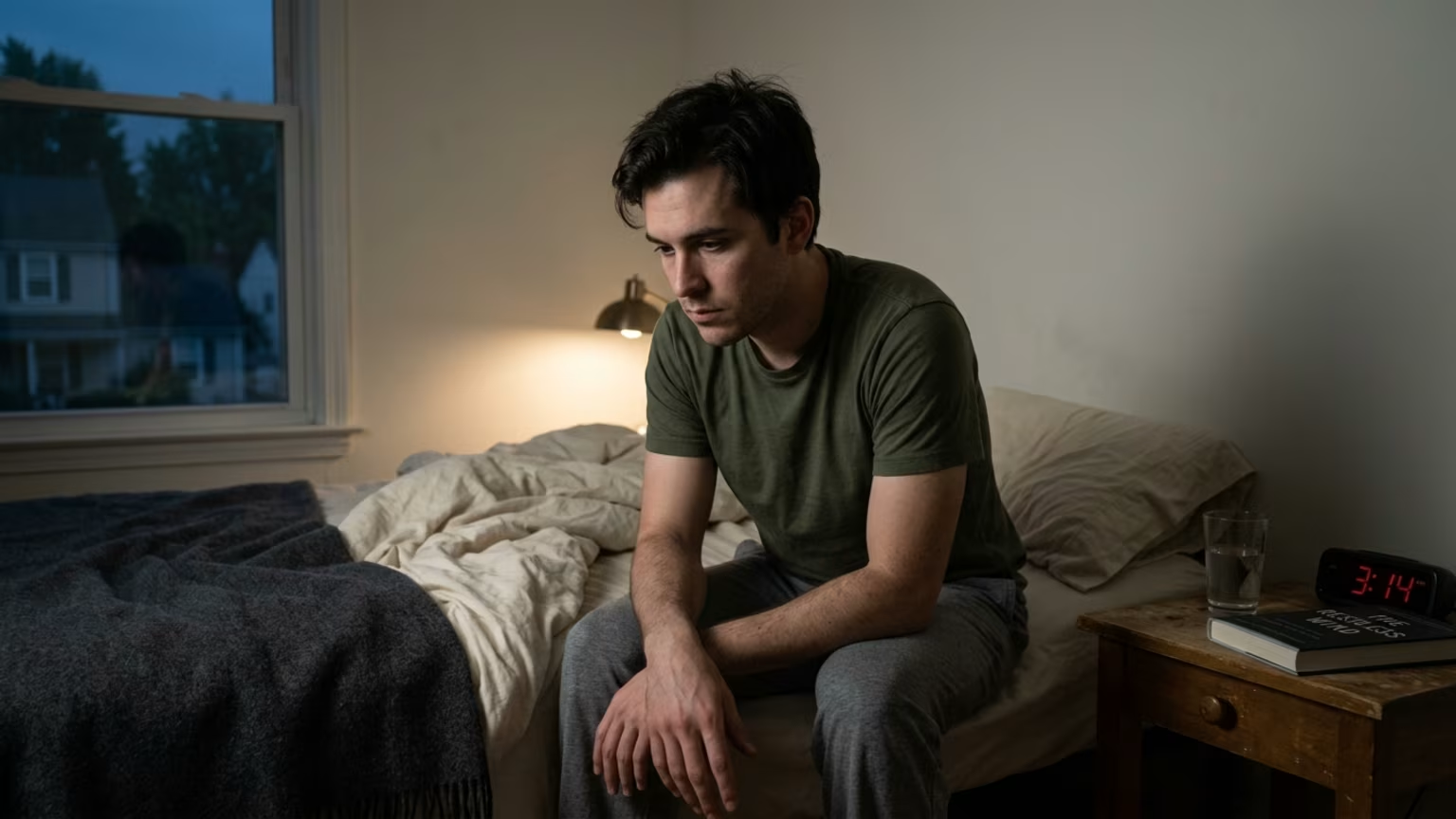

A 2026 study shows daily stress links to disrupted sleep through racing thoughts, offering new insights for veteran recovery and CBT-I sleep care.





In a 2026 article published in the Journal of Sleep Research, researchers examined how daily stress translates into disrupted sleep. The paper is identified in volume 35 of the journal with article number e70220 and DOI 10.1111/jsr.70220. The study found that days with higher than usual stress were associated with more racing thoughts and other forms of pre-sleep cognitive arousal. Greater cognitive arousal predicted less total sleep and a longer time to fall asleep.
Service members and veterans frequently navigate complex operational demands and daily stress. I remember waking up after a poor night of sleep and realizing that my training recovery was taking much longer than it used to. I realized that readiness is more than just pushing through the fatigue. It requires a dedicated approach to sleep and hormonal health, which completely shifted how I view long term capability.
The Defense Health Agency’s Total Force Fitness framework identifies sleep alongside nutrition and mental health as part of warfighter performance optimization. This framework supports treating sleep as a readiness and health issue rather than merely a comfort issue. Understanding the exact mechanism of sleep disruption helps clarify how to build better recovery and sleep routines. Treating a tired body while ignoring a racing mind often leads to fragmented rest.
When intrusive thoughts or rumination keep someone awake, focusing only on relaxing the body can leave the mind active. The recent research helps frame why a wind-down routine that only relaxes the body may be insufficient. Mental alertness requires specific attention to maintain physical readiness and overall health. Addressing cognitive arousal directly provides a more complete approach to physical restoration.
The research team initially assessed sleep reactivity in 264 eligible participants. From this initial group, they selected 30 people with the highest vulnerability to stress-related sleep loss. They also selected 30 individuals with the lowest vulnerability to create a clear comparison point. This final monitoring sample consisted of 60 university students who were tracked for two weeks during a normal academic semester.
The study generated approximately 800 matched nights of survey and wearable tracker data. Participants reported daily stress and recalled their previous night’s cognitive and physical arousal. Wrist actigraphy measured sleep timing, total sleep, and wakefulness during the night. A smart ring recorded heart rate during the 20 minutes before bedtime as an objective indicator of physical arousal.
In this sample, neither self-reported physical symptoms nor objective pre-bedtime heart rate data mediated the relationship between daily stress and sleep disruption. The study points to cognitive arousal as the primary pathway observed in these participants. It did not find a measurable pre-sleep heart rate increase to be the mediating factor. Physical relaxation remains important, but it did not fully explain the sleep disruption in this specific study.
Participants classified as highly sleep-reactive reported higher average stress and cognitive arousal. These highly reactive individuals experienced more nighttime wakefulness associated with heightened mental activity. The day-to-day association between higher stress and poorer sleep appeared in both high and low sleep reactivity groups. Sleep reactivity functioned as a vulnerability measure that helped distinguish participants’ average stress and nighttime wakefulness.
The study participants were mainly young female Chinese university students in Singapore. These participants did not have existing sleep disorders or psychiatric conditions. These results cannot be assumed to apply directly to active duty personnel or combat veterans. The findings require replication in people with post-traumatic stress disorder or diagnosed insomnia.
The pre-sleep arousal reports were collected the following morning rather than in real time. That approach avoided adding bedtime screen exposure or artificial stress. However, it also means that participants’ reports could have been influenced by how well they believed they slept. Morning recall introduces potential bias into the assessment of pre-sleep cognitive arousal.
The finding that heart rate did not mediate the pathway should not be interpreted to mean physical arousal does not affect sleep. The researchers suggested that relatively ordinary daily stressors may produce prominent mental activity without causing a strong physiological response. More severe trauma populations could show a completely different pattern. The stressors measured in this study differ substantially from deployment, combat exposure, chronic pain, or shift work.
The practical message is not to abandon physical relaxation or basic health habits. Rather, the evidence suggests that cognitive strategies deserve attention when the problem is repetitive thinking or mental alertness at bedtime. Writing down unresolved tasks or scheduling problem-solving for earlier in the evening are potential cognitive downshifts. Addressing the mental side of sleep preparation can improve the overall effectiveness of a wind-down routine.
The authors proposed investigating whether specific therapies could retrain responses to stress by targeting racing thoughts and rumination. The U.S. Department of Veterans Affairs identifies Cognitive Behavioral Therapy for Insomnia, or CBT-I, as a first-line treatment for insomnia. VA materials describe CBT-I as a structured program that treats insomnia by changing sleep-related behaviors and thoughts. This therapeutic approach specifically targets the cognitive arousal patterns identified in the research.
Service members and veterans should treat the recent study result as a useful hypothesis rather than a personalized diagnosis. Seeking professional assessment is a practical step when insomnia is persistent or affecting duty performance. The study did not test a specific wind-down routine, CBT-I protocol, mindfulness program, or stress management intervention. Clinical treatment often focuses on changing established mental patterns that disrupt sleep.
Proper medical frameworks are a crucial part of military health management. VA research notes that CBT-I is considered acceptable for women veterans with insomnia and PTSD. The VA states that insomnia and PTSD are highly comorbid in women veterans. Improving insomnia may also improve some PTSD-related symptoms and treatment engagement.
The VA describes insomnia as a potential early intervention point. Sleep problems are directly associated with PTSD development and severity. Furthermore, healthy sleep is associated with mood, daytime functioning, learning, and emotion regulation. These factors are essential for long term capability and psychological resilience.
For service members moving between military and civilian care, proper support systems are available. Connecting to reliable care is a critical component of veteran lifestyle and healthcare planning. The Health.mil inTransition program provides confidential one-on-one support. It helps participants create a care plan and connects them with mental health providers or other resources.
This current research tested university students rather than service members facing unique operational demands. The study measured objective heart rate only during the 20 minutes before bedtime. It used a population whose stressors differ substantially from the realities of military service. These constraints highlight the need for targeted research within the active duty and veteran communities.
Will upcoming clinical trials confirm that targeting cognitive arousal through structured CBT-I interventions provides better sleep outcomes for veterans managing chronic operational stress?
Follow BattleVet for practical guidance on military and veteran health, strength, recovery, testosterone, sleep and healthy aging. Stay connected for new articles, research backed insights and clear information to help you stay capable for the years ahead.


Learn about the 2026 VA Survivors Pension with Aid and Attendance. We explain maximum rates, service requirements, and income limits for surviving spouses.

SOAA recently detailed the Phoenix Program, a transition initiative combining corrective exercise and functional medicine for special operations veterans.

A 50-year study of 2,700 men associates favorable midlife cardiovascular risk factors with higher longevity and lower late-life frailty.
Build better habits around strength, recovery, sleep, hormones and healthy aging with practical guidance for active military personnel and veterans.
Explore BattleVet