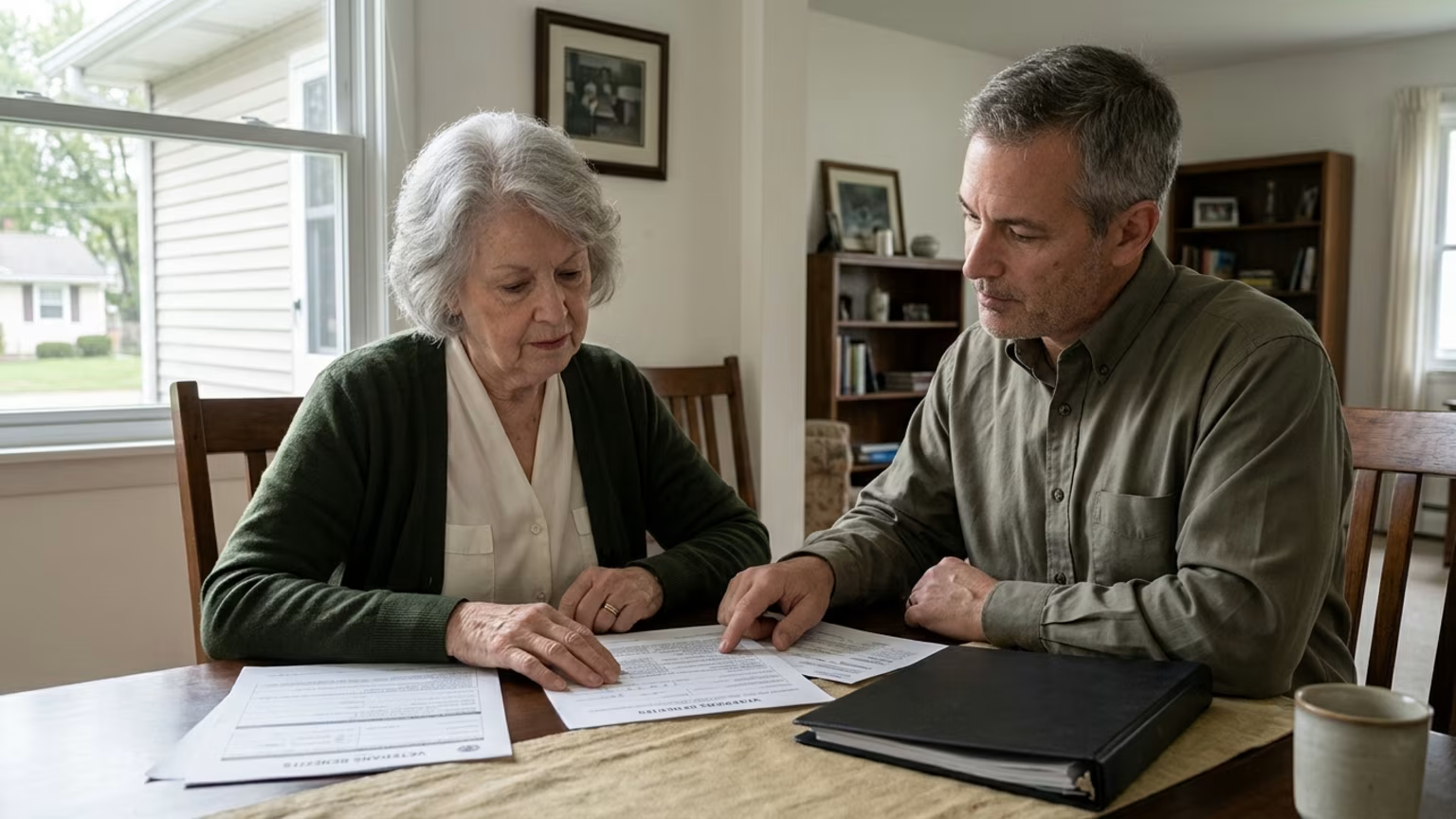

Learn about the 2026 VA Survivors Pension with Aid and Attendance. We explain maximum rates, service requirements, and income limits for surviving spouses.





On September 8, 2026, a 24/7 Wall St. article highlighted the VA Survivors Pension with Aid and Attendance. This program is a needs-based benefit designed to help eligible surviving spouses pay for necessary care at home. The published article describes a 2026 maximum payout of approximately $18,697 per year for a surviving spouse with no dependents. This total translates to roughly $1,558 per month to offset the financial burden of daily care requirements.
This reporting brings necessary attention to a benefit that many wartime veteran families overlook. Navigating healthcare costs requires clear information about available support systems. The VA Survivors Pension provides targeted financial assistance for spouses who require help with daily activities. However, the reported maximum rate is a rigid ceiling rather than an automatic guaranteed payment.
Families must understand that actual payments depend heavily on countable income and specific medical circumstances. Reviewing these guidelines helps veterans ensure their families have practical options for veteran lifestyle and healthcare decisions down the road. The program demands strict adherence to service criteria and precise financial thresholds. Thorough preparation prevents unexpected denials when home-based care is urgently needed.
Understanding these benefits remains crucial for service members planning for long-term family security. Spouses often take on significant physical and financial burdens when managing home healthcare. The Aid and Attendance addition specifically addresses the escalating costs associated with mobility limitations and severe health conditions. Preparing documentation well in advance allows families to access this support without unnecessary administrative delays.
The process requires careful coordination and an accurate understanding of federal guidelines. Relying on headline numbers without recognizing the underlying calculations can lead to poor financial planning. Families frequently overestimate the expected payment by assuming they will automatically receive the maximum annual pension rate. Accurate expectations allow veterans to build realistic frameworks for healthy aging and consistent in-home support.
The 2026 data presents specific financial thresholds for program eligibility. The $18,697 amount cited by 24/7 Wall St. represents the Maximum Annual Pension Rate for an eligible surviving spouse. The actual payment is generally calculated by subtracting a survivor's countable income from this applicable ceiling. For example, the publication notes that a survivor with $12,000 in countable annual income would not ordinarily receive the full $18,697 maximum.
This calculation method requires families to accurately track all relevant financial inputs. Unreimbursed medical expenses play a major role in determining the final countable income. These specific medical expenses can reduce countable income after they exceed 5 percent of the applicable maximum annual pension rate. This mechanism allows a survivor who initially appears over the income limit to qualify after eligible medical costs are applied.
The 24/7 Wall St. report identifies several examples of deductible unreimbursed medical expenses. In-home aides and assisted-living fees can significantly reduce the countable income figure. Out-of-pocket costs for prescriptions also factor into this critical financial calculation. Furthermore, routine Medicare premiums and long-term-care insurance premiums may qualify as deductible expenses.
Veterans must also meet strict service history requirements to qualify their surviving spouses for this benefit. For veterans who began active duty before September 8, 1980, the standard is very specific. The VA generally requires at least 90 days of active service for this older cohort. This required service period must include at least one day during a recognized wartime period.
The distinction between pre-1980 and post-1980 service requirements is a critical factor for families reviewing old military records. Families of older veterans only need to verify three months of service and a single day of wartime duty. This relatively short service requirement makes the benefit highly relevant to families of World War II, Korean conflict, and Vietnam War era veterans.
The VA specifies exact dates for these recognized wartime periods. The official VA page notes that the Korean conflict ran from June 27, 1950, through January 31, 1955. Another prominent recognized period is the Gulf War, which began on August 2, 1990. This Gulf War period continues until a future date set by law or presidential proclamation.
For enlisted veterans who began active duty after September 7, 1980, the minimum service timeline expands significantly. These service members typically need 24 months of active service or the full period for which they were ordered to active duty. This later service requirement also mandates at least one day during a wartime period, subject to certain exceptions. The 24/7 Wall St. article emphasizes that combat service and overseas deployments are not required for this specific eligibility test.
The Aid and Attendance increase is strictly based on documented care needs. The VA explains that the Survivors Pension program can be increased when a qualifying survivor needs help with daily activities. The 24/7 Wall St. article details several qualifying circumstances for this elevated rate. These include needing help with activities of daily living, being bedridden, or having severe vision impairment.
Survivors living in a nursing home because of physical or mental limitations may also qualify for the Aid and Attendance rate. A survivor who is substantially confined to the home but does not meet these demanding criteria is not entirely excluded. They may instead be considered for the slightly lower Housebound rate. Accurate physician documentation remains critical for establishing these specific physical limitations.
Financial limits are strict, and sources currently report conflicting net-worth figures for the 2026 calendar year. The 24/7 Wall St. publication cites a combined net-worth ceiling of approximately $159,240. However, other search results cited a different 2026 figure of $163,699. Because these available sources are inconsistent, families should verify the current limit directly with the VA before making financial decisions.
The VA defines net worth using specific inclusion and exclusion rules. The agency states that net worth generally includes personal property minus outstanding debt. It also includes the spouse’s personal net worth in the calculation. However, the VA notably excludes the primary home, the primary car, and most standard household furnishings from this total.
Managing personal assets requires extreme caution under the current federal guidelines. The 24/7 Wall St. article warns that the VA applies a strict 36-month lookback period to certain asset transfers. Gifts or below-market transfers could result in a severe penalty period lasting up to five years. This lookback policy is a significant reason not to transfer assets to children solely to qualify for the pension.
The potential five-year penalty period can leave a surviving spouse without critical financial support when their health is failing. When families sell assets or change ownership arrangements in a panic, they often inadvertently trigger this penalty period. This massive risk underscores the danger of paying unaccredited firms to rapidly restructure personal assets. Free assistance from accredited organizations protects the family from these risky financial practices.
These detailed thresholds reinforce the necessity of early and accurate administrative planning. Families who believe they may qualify should consider submitting an Intent to File promptly. The VA says that submitting an Intent to File can establish a potential earlier effective date for benefits. After notifying the VA of the intent, the claimant generally has one year to complete and file the formal claim.
This one-year window provides crucial time to gather complex supporting documentation. The Intent to File process can be used for various pension benefits, including the Survivors Pension. The agency provides VA Form 21-0966 for people who prefer filing by mail. If the VA approves the claim, retroactive payments may cover the period between the initial intent and the final claim approval.
An Intent to File is not an approval, and it does not guarantee immediate financial support. It does not eliminate the need to strictly prove service records, family relationships, medical needs, and income limits. Families must carefully gather a marriage certificate and the veteran’s death certificate to establish basic eligibility. They also need the DD-214 or similar service records to verify the dates and conditions of military service.
Families must avoid purchasing complex financial products just to meet the net-worth thresholds without professional guidance. The VA says applicants may apply online, by mail, in person, or with help from a trained professional. The published article recommends considering free assistance from VA-accredited attorneys or VA-accredited claims agents. Veterans Service Organizations such as the VFW, American Legion, and Disabled American Veterans also offer accredited application assistance.
It is equally important to distinguish this specific pension from Dependency and Indemnity Compensation. The 24/7 Wall St. publication describes the Survivors Pension as a strictly needs-based program. In contrast, Dependency and Indemnity Compensation is generally associated with a direct service-connected death. This separate compensation program is not subject to the exact same income and asset tests as the pension.
The VA separately identifies Survivors Pension for surviving spouses or unmarried dependent children of veterans with wartime service. A family should ask the VA or an accredited representative to accurately screen for both programs. Integrating this verification step into broader veteran life planning prevents administrative confusion. Assuming that one generic application answers every possible benefit question often leads to missed opportunities.
Applicants should diligently retain all receipts, medical invoices, and insurance statements. Assuming that all care-related spending will automatically qualify as a deductible expense is a common administrative mistake. The precise tracking of in-home assistance and prescription costs provides the best chance of accurately adjusting the countable income. Clear financial tracking remains the most reliable method for navigating these rigid benefit calculations.
As healthcare costs for aging populations continue to rise, how will federal guidelines evolve to ensure these vital medical expense deductions keep pace with the actual financial burdens faced by surviving spouses?
Follow BattleVet for practical guidance on military and veteran health, strength, recovery, testosterone, sleep and healthy aging. Stay connected for new articles, research backed insights and clear information to help you stay capable for the years ahead.


CDP highlighted an MDMA therapy review and Army suicide-risk prediction research. Here is how to interpret the findings and their implications for care.


Hims expanded its testosterone program. Here are the product-status, monitoring and fertility questions relevant to veterans comparing care.

An Air Force veteran’s Apple Watch alert prompted medical evaluation. Learn what the reported case means for sleep testing and clinical care.
Build better habits around strength, recovery, sleep, hormones and healthy aging with practical guidance for active military personnel and veterans.
Explore BattleVet