
Online T-maxxing treats normal fatigue as a testosterone crisis. Learn why true military readiness requires careful diagnosis, not untested hormone hype.





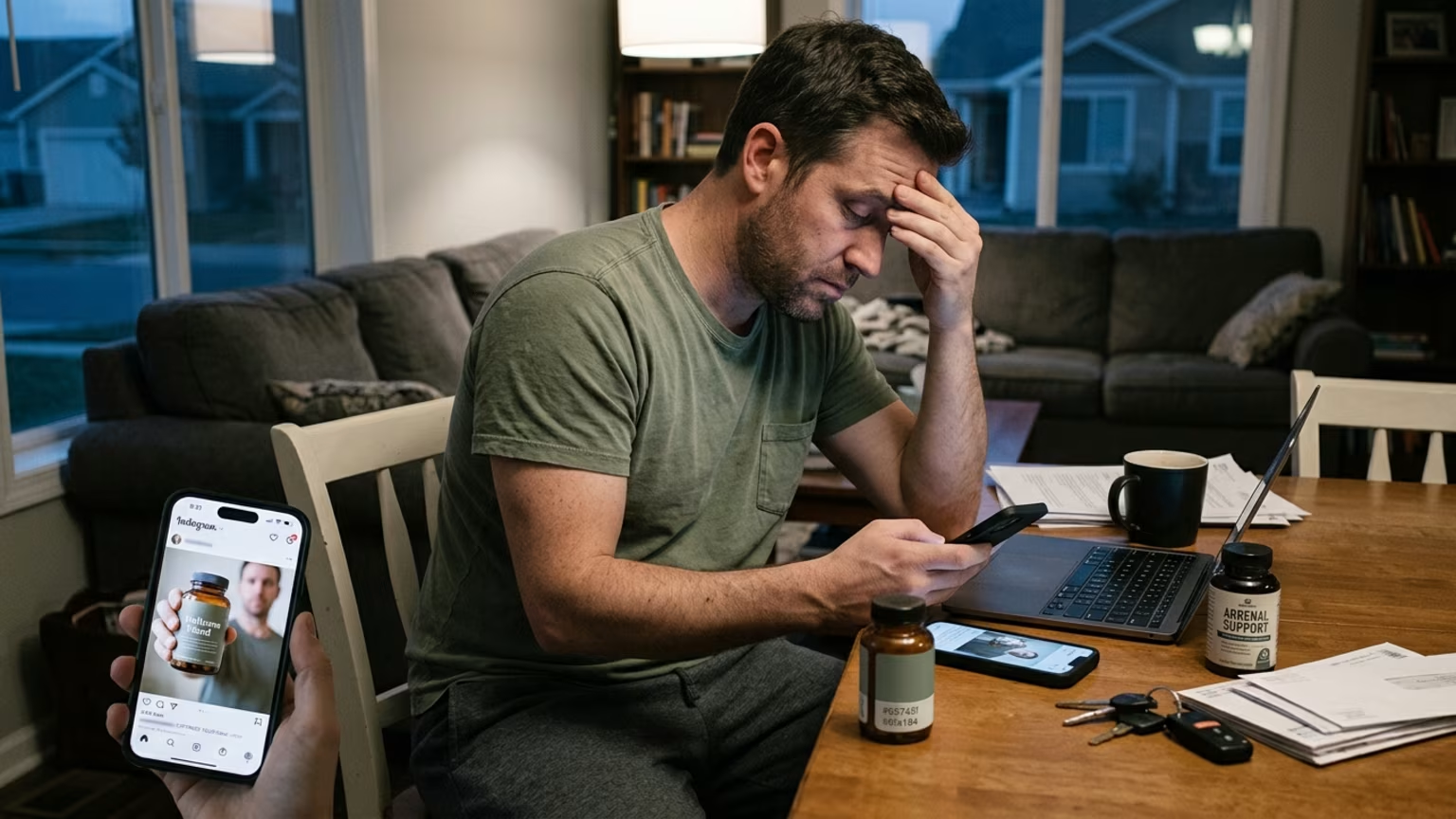
The internet wants you to believe that every sign of fatigue or lost motivation is a testosterone deficiency waiting for a chemical fix. A former service member scrolls through his feed after a restless night. He watches a video where an influencer insists that natural aging is a medical failure. The post promises that optimizing hormones will instantly restore his energy and focus. The viewer clicks the link and wonders if a simple injection is the exact answer he needs.
Online culture heavily promotes the idea that appearance, confidence, and physical performance are direct measures of testosterone status. A recent commentary in the Guardian by Donna Lu describes this trend as "T-maxxing." The movement frames ordinary concerns about masculinity and aging as a critical hormone problem. It pushes men toward lifestyle changes, supplements, or medically unnecessary hormone therapies.
The problem is that this trend thrives on anxiety rather than medical reality. The Guardian article reports that global search interest in "low testosterone" has risen 60 percent year over year. However, this massive increase reflects public worry rather than a genuine medical need. Fatigue, poor concentration, and low motivation can sometimes occur with true clinical low testosterone.
These are nonspecific symptoms that frequently stem from stress, poor sleep, or obesity. The narrative is heavily driven by prominent public figures who amplify the focus on hormones. The Guardian links this online trend to commentators like Joe Rogan, Andrew Huberman, and Robert F. Kennedy Jr. It also highlights U.S. Defense Secretary Pete Hegseth, who reportedly announced annual testosterone testing for soldiers aged 30 and older.
The focus on military personnel makes this issue especially relevant to service members and veterans. When leaders announce broad testing initiatives, the public often misinterprets the policy as proof that normal fatigue is always a hormone issue. Routine testing can easily create a false impression that reduced motivation or changes in body composition are purely chemical failures. This mindset ignores the brutal physical toll of deployments, irregular sleep schedules, and heavy training loads.
Financial motives often drive this aggressive online messaging. The Guardian reports on a January study by researchers including Dr. Brooke Nickel. Her team analyzed 46 popular testosterone-related social media posts from accounts with a combined 6.8 million followers and 659,000 likes. Nearly three-quarters of those accounts had financial interests in testosterone tests or therapies.
Furthermore, none of the posts presented valid evidence supporting their bold medical claims. Dr. Nickel characterized this influencer messaging as a form of fearmongering. She noted that these accounts use common daily experiences to imply that men are medically abnormal. The marketing presents testosterone as a universal solution for modern physical struggles. This strategy effectively turns normal human exhaustion into a profitable market for testing and unproven supplements.
The biological reality of hormone health is far less dramatic than the internet suggests. Professor Ada Cheung of the University of Melbourne told the Guardian that clinically significant male hypogonadism is actually pretty uncommon. She estimates that it affects fewer than 2 percent of men. True testosterone levels also fluctuate heavily based on the time of day, illness, sleep, and physical stress.
Levels are generally highest in the morning and naturally taper lower later in the afternoon. The American Association of Clinical Endocrinology provides crucial guidance that counters the online hype. The AACE states that current evidence does not support routine population screening for testosterone deficiency in asymptomatic men. Exogenous testosterone carries genuine risks that require careful medical oversight.
The AACE warns that treatment stimulates red-blood-cell production, which can have serious cardiovascular effects. Inadequate monitoring can increase blood viscosity and contribute to hypertension, deep-vein thrombosis, and heart attacks. The AACE specifically warns against treating testosterone as a general performance or masculinity intervention. Supraphysiological androgen exposure can adversely affect cholesterol levels and produce serious vascular or cardiac changes.
The AACE also identifies a wide range of other potential concerns associated with testosterone therapy. These include infertility, testicular atrophy, gynecomastia, and atrial fibrillation. The need for long-term laboratory monitoring is a non-negotiable requirement for anyone undergoing real medical treatment. This level of clinical vigilance stands in sharp contrast to the casual attitude of online hormone clinics.
Despite these known risks, medical guidelines are frequently ignored in standard practice. A report in Endocrine News found that only 12 percent of men receiving an initial testosterone prescription met the required clinical criteria. That criteria included two low morning testosterone results, appropriate hormone testing, and an absence of contraindications. The remaining men received prescriptions without meeting this basic standard of biochemical confirmation.
The same Endocrine News report revealed concerning health overlaps among patients receiving testosterone. In the studied sample, 55 percent of the men had obstructive sleep apnea before receiving their prescription. Furthermore, 4 percent had prostate cancer and 1.5 percent had a PSA above 4 ng/mL. A 2026 study of patients referred for low testosterone found obesity in 65 percent of patients. Obstructive sleep apnea reached 48 percent among those classified as having functional low testosterone.
The safety profile of testosterone therapy depends heavily on strict patient monitoring. The Endocrine Society's 2026 news summary identifies hematocrit as a principal dose-limiting safety measure. The summary recommends aiming for restoration toward the middle of the normal testosterone range, which is approximately 350 to 550 ng/dL. It advises against deliberately pushing levels toward the high end, though it notes this range has not yet been prospectively tested.
The organization also recommends paying close attention to blood pressure, renal function, and hepatic function during treatment. Turning to unregulated sources introduces severe toxic hazards for vulnerable men. Some attempt to bypass the medical system entirely by purchasing performance products online or overseas. The Guardian reports that underground anabolic-steroid products tested in Australia contained lead, arsenic, and cadmium. These illicit products were also sometimes entirely mislabeled, leaving users blind to what they were injecting.
Men who feel exhausted or physically weak should evaluate their entire health picture before jumping to a hormone diagnosis. A low mood or poor physical performance often signals a metabolic or lifestyle issue rather than a failing endocrine system. Veterans should ask a clinician to investigate sleep quality, weight, thyroid function, and iron status. Resolving severe stress or treating sleep apnea can often restore energy without the need for lifelong hormone therapy.
You can find more information about foundational hormone wellness by looking at how the endocrine system actually functions. If a doctor does recommend testing, ensure the clinical process follows established medical standards. A single blood test taken in the afternoon is not enough to accurately diagnose a deficiency. You need proper morning tests, and you must factor in recent illnesses or periods of heavy physical stress.
Professor Cheung emphasizes that an age-related decline in testosterone does not automatically mean an older man needs treatment. The decline may be associated with accumulated conditions such as obesity, diabetes, high cholesterol, and high blood pressure. Service members and veterans must discuss fertility plans before starting any exogenous testosterone therapy. Exogenous testosterone can severely suppress the body's natural testosterone and sperm production.
The Guardian reports that fertility recovery can take months or years and is never fully guaranteed. This makes hormone therapy a massive decision for younger men who may want to build a family later. Veterans already receiving treatment need to maintain rigorous health monitoring with their primary physician. Anyone prescribed testosterone should ask their provider what long-term lab work is planned.
You need regular checks on your hematocrit levels, blood pressure, and overall cardiovascular health. It is also crucial to monitor for signs of worsening sleep apnea or aggressive mood changes. If you have questions about maintaining strength safely, review safe approaches to building physical capability that do not rely on untested supplements. Treat online promises about instant confidence and motivation as targeted marketing campaigns rather than sound medical advice.
Health influencers deliberately use relatable human experiences to imply that you are medically abnormal. They want you to believe that a specific number on a lab result defines your physical worth and capability. True readiness requires addressing the actual root causes of your fatigue through careful clinical diagnosis and supervised professional care. Read more about maintaining wellness as you get older to understand how your body naturally evolves.
True capability comes from treating the whole person, not chasing an arbitrary hormone number sold by a screen.
Stay strong, stay informed, and trust evidence over influence.
Follow BattleVet for practical guidance on military and veteran health, strength, recovery, testosterone, sleep and healthy aging. Stay connected for new articles, research backed insights and clear information to help you stay capable for the years ahead.


The BRIDGE Act proposes a whole-family military transition pilot. Read who it would serve, what support it includes, and what remains unresolved.


Combat Stress’s workplace guidance emphasizes listening over diagnosis. Recent U.S. veteran insomnia research adds context for sleep and recovery concerns.

ErythroMer's reported storage design could matter for military care. An academic review still lists it as preclinical, with human evidence ahead.
Build better habits around strength, recovery, sleep, hormones and healthy aging with practical guidance for active military personnel and veterans.
Explore BattleVet