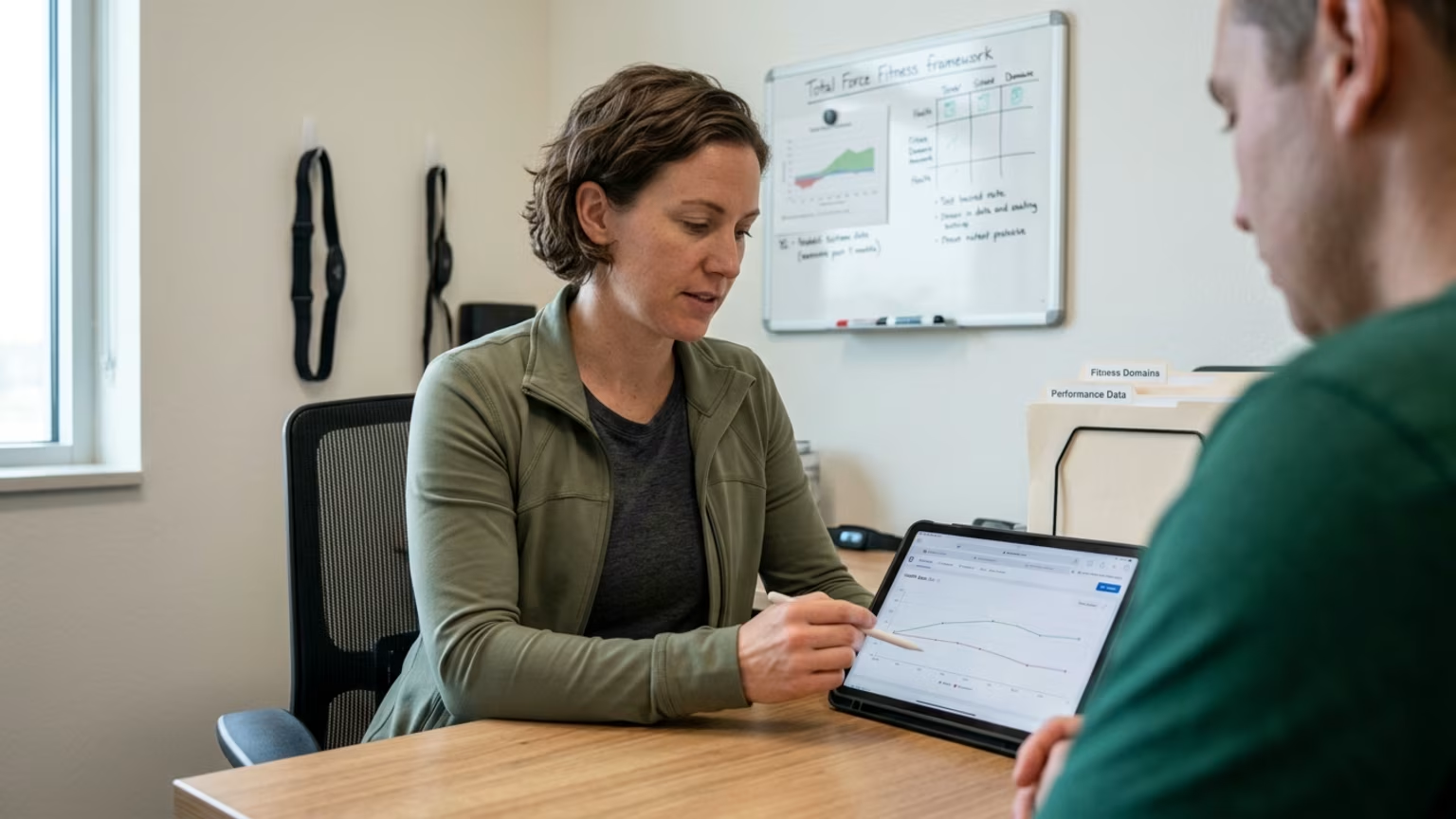

The DoD Warfighter Performance Optimization office is modernizing Total Force Fitness by integrating physical, cognitive, and psychological readiness programs.





In September 2026, Federal News Network reported that the Department of Defense is working to connect performance programs across military branches. The Warfighter Performance Optimization office is leading this department-wide initiative to modernize human performance. Acting Director Theresa Jackson Santo stated the office intends to promote existing service-level programs and consolidate them into a cohesive capability. The new policy covers active-duty, Reserve, and National Guard personnel.
The office was established after September 2025. At that time, the Defense Department reportedly had no single organization responsible for unifying its varied warfighter performance efforts. Federal News Network noted that the current effort does not extend to civilian DoD employees. Instead, the initiative focuses entirely on operational forces.
The modernization effort is organized around four primary lines of effort. These are reinforced by a memorandum from Secretary Pete Hegseth. The initiatives include commander responsibility, technological innovation, cognitive performance, and investment in lethality. The office is also tasked with producing a formal baseline report and an action plan to guide future policy.
For years, military fitness was often treated as a standalone physical requirement measured by periodic testing. Now, leaders argue that military organizations should manage human performance with the exact same discipline used for advanced weapons systems. Managing personnel with the same rigor applied to aircraft and submarines represents a significant cultural shift. Jackson Santo explained that the interacting domains of Total Force Fitness should be optimized together rather than treated as isolated capabilities.
The absence of a diagnosed physical or mental deficit is no longer considered equivalent to optimal performance. Jackson Santo linked this distinction to the specific demands placed on personnel operating in complex environments. These high-stress operational environments include submarines, helicopters, and remotely operated systems. Therefore, sleep, fatigue management, and cognitive performance are recognized as critical readiness issues rather than optional wellness concerns.
This shift reflects what many service members eventually learn through hard experience. I remember waking up after a poor night of sleep and realizing that my training recovery was taking much longer than it used to. I realized that readiness is more than just pushing through the fatigue. It requires a dedicated approach to sleep and hormonal health, which completely shifted how I view long term capability.
The push to unify these efforts reflects a growing consensus that physical training alone cannot sustain operational effectiveness. When personnel operate complex systems under heavy fatigue, cognitive and psychological resilience become just as critical as physical strength. By addressing multiple interacting domains, the military aims to build a more durable operational force. This interconnected approach ensures that healthy aging and longevity are supported by foundational habits built during active service.
The overarching modernization effort is built around the existing Total Force Fitness framework. The DoD framework organizes Total Force Fitness around five interacting areas. These domains are cognitive, physical, and psychological fitness. Social and spiritual fitness make up the final two domains in the framework.
While the central office develops policy, individual branches are already providing practical models of this integration. The Army’s Holistic Health and Fitness system provides a clear example of how these connected domains operate in practice. The Army uses interdisciplinary teams rather than relying solely on traditional physical training instructors.
These H2F performance teams integrate a wide range of specialized professionals. Teams may include physical therapists, strength coaches, and cognitive-performance specialists. They also utilize occupational therapists, registered dietitians, and athletic trainers. This diverse staffing model ensures that nutritional and cognitive support are delivered alongside physical conditioning.
Recent Army reports demonstrate a massive structural commitment to this multidisciplinary approach. The Army reported that 49 H2F Performance Teams and one Area Support Team were fielded during fiscal years 2021 through 2024. For the combined fiscal years 2025 through 2026, 41 additional H2F Performance Teams and one additional Area Support Team were being fielded. According to the Army update, that amounts to 90 H2F Performance Teams and two Area Support Teams either fielded or in process.
The distribution of these teams highlights a move away from centralized clinic models. The Army reported that all 11 of its divisions had received personnel and equipment to begin fielding the H2F system within their formations. This model embeds performance personnel directly within brigades. The embedded strategy allows specialists to train alongside the specific warfighters they support.
The Army has also developed a specific distributed model for Reserve components. Under this approach, mobile teams serve geographically dispersed units and train unit-level integration teams. They provide targeted interventions during battle assemblies and throughout the rest of the month. This ensures that personnel outside major installations still receive comprehensive performance support.
This department-wide modernization changes how active personnel approach daily preparation and diagnostic monitoring. The new focus treats foundational health behaviors as essential mission requirements. Training plans will increasingly integrate strength and conditioning with cognitive skills and stress regulation.
Army H2F doctrine describes a deliberate move from a reactive healthcare model toward proactive human performance support. The stated objective is to connect health and wellness directly with readiness, survivability, and tactical effectiveness. Commanders must integrate specialized performance teams directly into units to support both physical and mental readiness before injuries occur.
An Army discussion on mental readiness recommends programming that combines physical fitness with cognitive skills. This guidance highlights sensory processing, energy regulation, and communication. It also emphasizes psychological safety, social intelligence, and physiological regulation as critical performance areas. The same Army material recommends embedding these requirements directly into exercise planning. Scenarios such as drone surveillance and communications blackouts are introduced to develop resilience under operational stress.
The transition away from isolated physical training represents a broader understanding of human physiology. When sleep and nutritional foundations are compromised, muscular strength alone cannot overcome the resulting performance degradation. The DoD effort to standardize this understanding ensures that commanders view rest and recovery as operational necessities. Treating the human body with the same rigorous maintenance schedule as a high-value asset fundamentally changes military readiness.
For the individual service member, a practical approach involves tracking multiple health inputs rather than relying exclusively on fitness test scores. Personnel can monitor sleep, training load, concentration, mood, and daily nutrition. Tracking these metrics builds a much more accurate picture of overall physical capability and deployment readiness.
Technology will play a role in this monitoring, but the DoD is proceeding carefully. The Warfighter Performance Optimization office intends to evaluate new technology through testing, small-scale implementation, and rigorous assessment. Jackson Santo summarized this approach as prioritizing evidence over enthusiasm. The office wants to ensure tools are adopted for proven utility rather than simple novelty.
This integrated approach also extends to educational resources available after active service. The official Military Health System connects the Total Force Fitness initiative with resources covering nutrition, sleep, mental health, and medical readiness. It provides access to specialized information regarding brain health, physical fitness, and human-performance research.
The DoD directs service members and families toward several established support programs. These include the Consortium for Health and Military Performance, the Center for Advanced Research for Military Optimization, and Human Performance Resources by CHAMP. It also highlights Operation Supplement Safety and various injury-recovery tools. Accessing these resources available to veteran life helps maintain physical capability well beyond active duty.
While these five domains provide a comprehensive framework, they do not prescribe a universal curriculum for every individual. The inclusion of the spiritual domain identifies spiritual fitness as a relevant area and references Unit Ministry Teams in the Army model. However, the available sources do not establish a universal spiritual training curriculum or mandate a particular belief system.
Similarly, this framework should not be interpreted as a rigid workout plan that applies identically across all branches. The Warfighter Performance Optimization office is a policy initiative designed to align programs rather than automatically make them identical. The Army, Marine Corps, Navy, and Air Force maintain their own specific readiness programs.
As the Department of Defense works to finalize its formal policy for human performance optimization, how will these embedded interdisciplinary teams reshape long-term injury rates and the standard of care for future veterans?
Follow BattleVet for practical guidance on military and veteran health, strength, recovery, testosterone, sleep and healthy aging. Stay connected for new articles, research backed insights and clear information to help you stay capable for the years ahead.


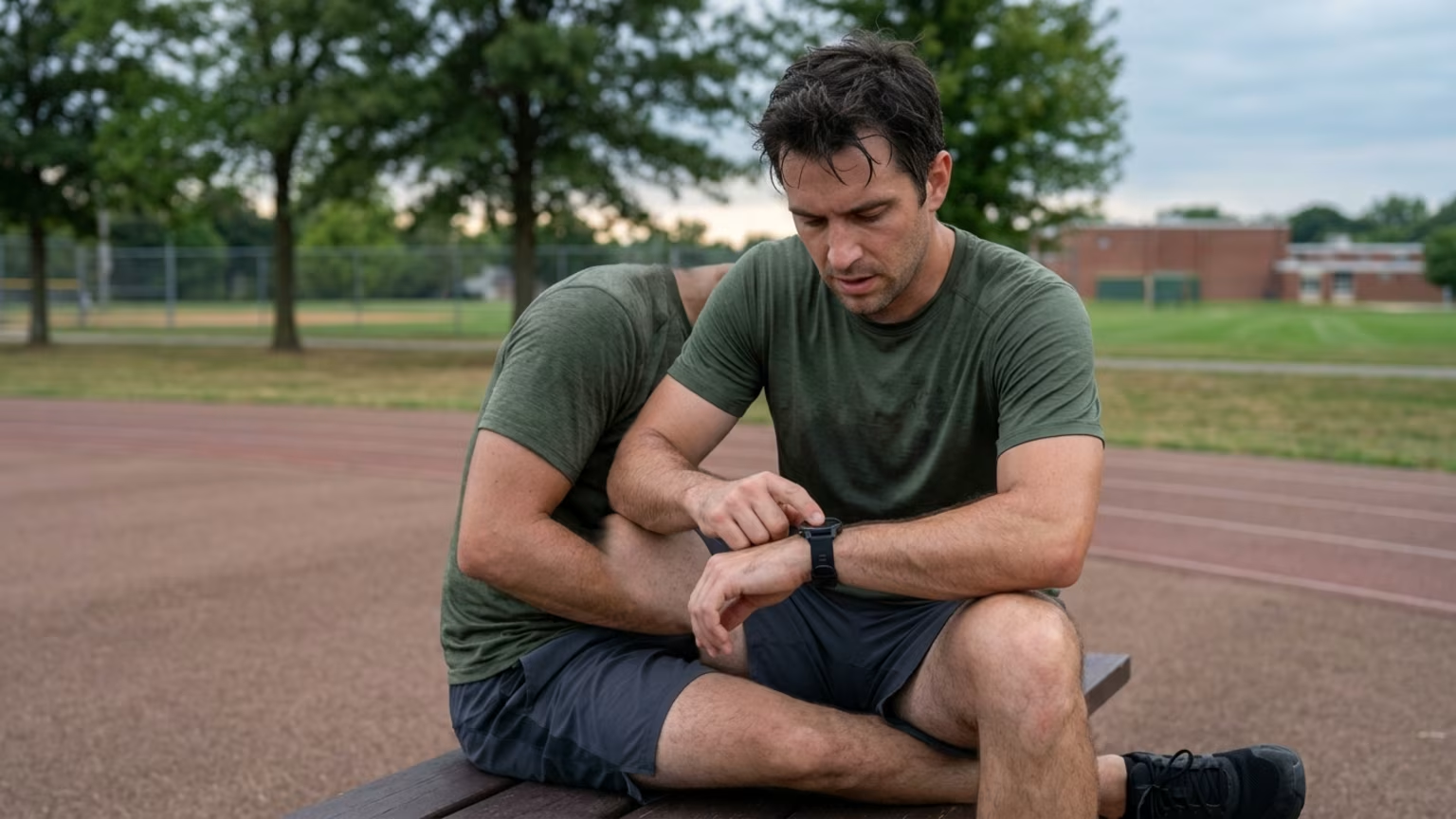
Acıbadem Health Point recently published guidance on tracking one-minute heart rate recovery. Learn how veterans can use these metrics and VA telehealth data.

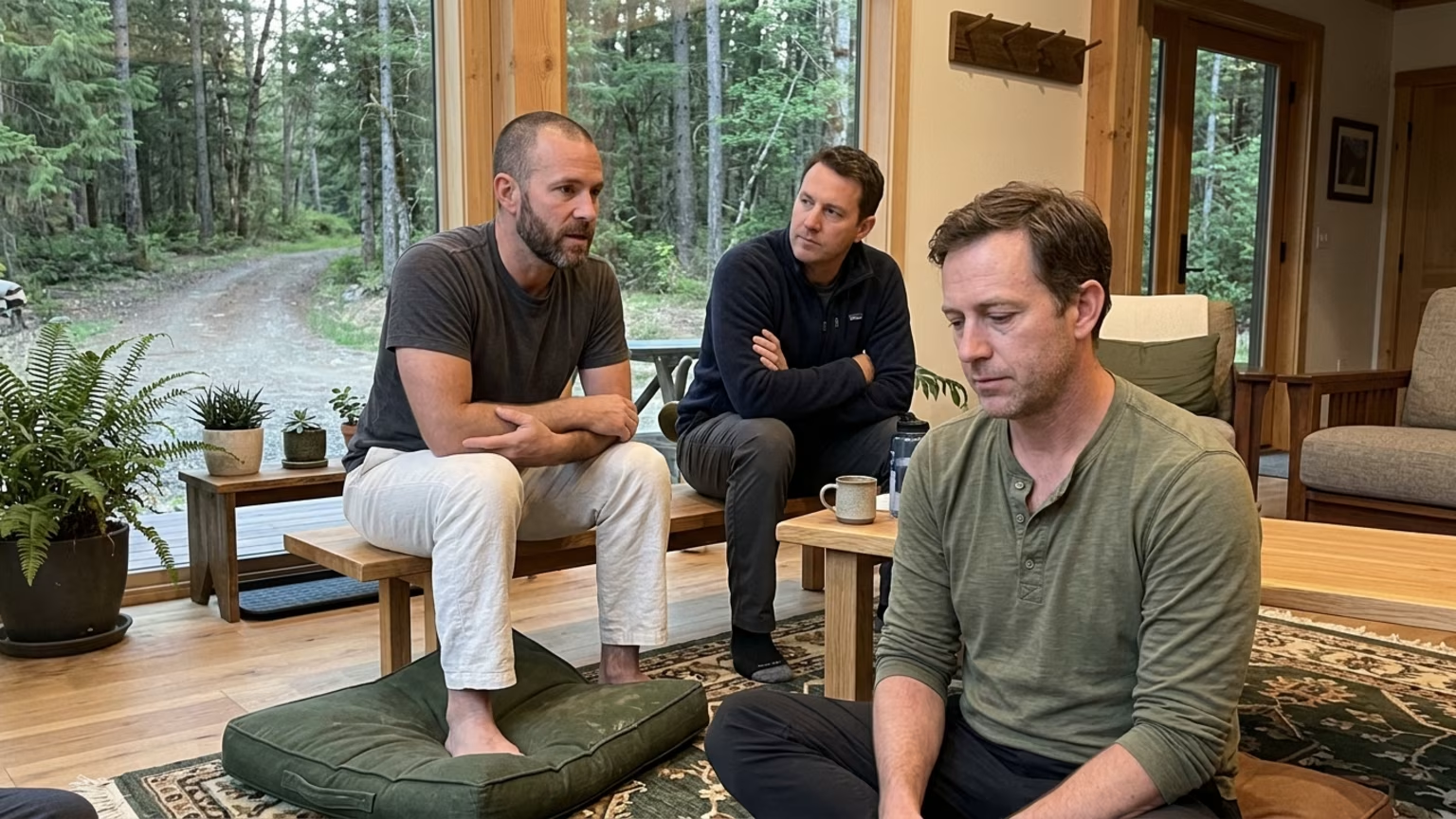
A private ayahuasca retreat for 47 veterans highlights demand for alternative PTSD care, but clinical evidence and safety protocols remain unverified.

A new UK Biobank study links higher estimated REM and deep sleep to lower risk for 83 diseases. We explain what this means for veteran health and recovery.
Build better habits around strength, recovery, sleep, hormones and healthy aging with practical guidance for active military personnel and veterans.
Explore BattleVet