
Understand the normal recovery timelines for a concussion. Learn how to track symptoms, prioritize sleep, and safely return to activity after a brain injury.





If you are in immediate danger, call 911. If you need crisis support, call 988 and press 1 for the Veterans Crisis Line, or text 838255. Safe storage of medications and firearms during a crisis is a critical step to arrange with a clinician or trusted family member.
A service member sustains a jolt to the head during training, shakes off the dizziness, and finishes the drill. Days later, persistent exhaustion makes standard tasks feel impossible.
A concussion is a mild traumatic brain injury caused by a blow or jolt to the head or body that disrupts normal brain function. The medical community uses the term "mild" to describe the initial severity classification. This classification does not minimize the impact on a person’s daily life, cognitive function, or military readiness. The Defense Health Agency describes traumatic brain injury as potentially life-altering when symptoms are not recognized.
These post-concussion symptoms present across physical, cognitive, emotional, and sleep-related domains. Physical problems include headache, dizziness, nausea, and sensitivity to light or sound. Service members frequently report cognitive difficulties like slowed thinking, memory gaps, and poor concentration following a head impact. Emotional shifts, sudden mood changes, and sleeping more or less than usual are also standard indicators of a brain injury.
A normal initial appearance does not rule out later complications. Post-concussion symptoms can evolve over time, meaning a person might feel fine immediately after an incident but struggle days later. Ignoring a head injury or attempting to push through the pain often prolongs recovery and decreases operational readiness. Professional military health protocols prioritize immediate reporting for blast exposures, falls, vehicle incidents, and training accidents.
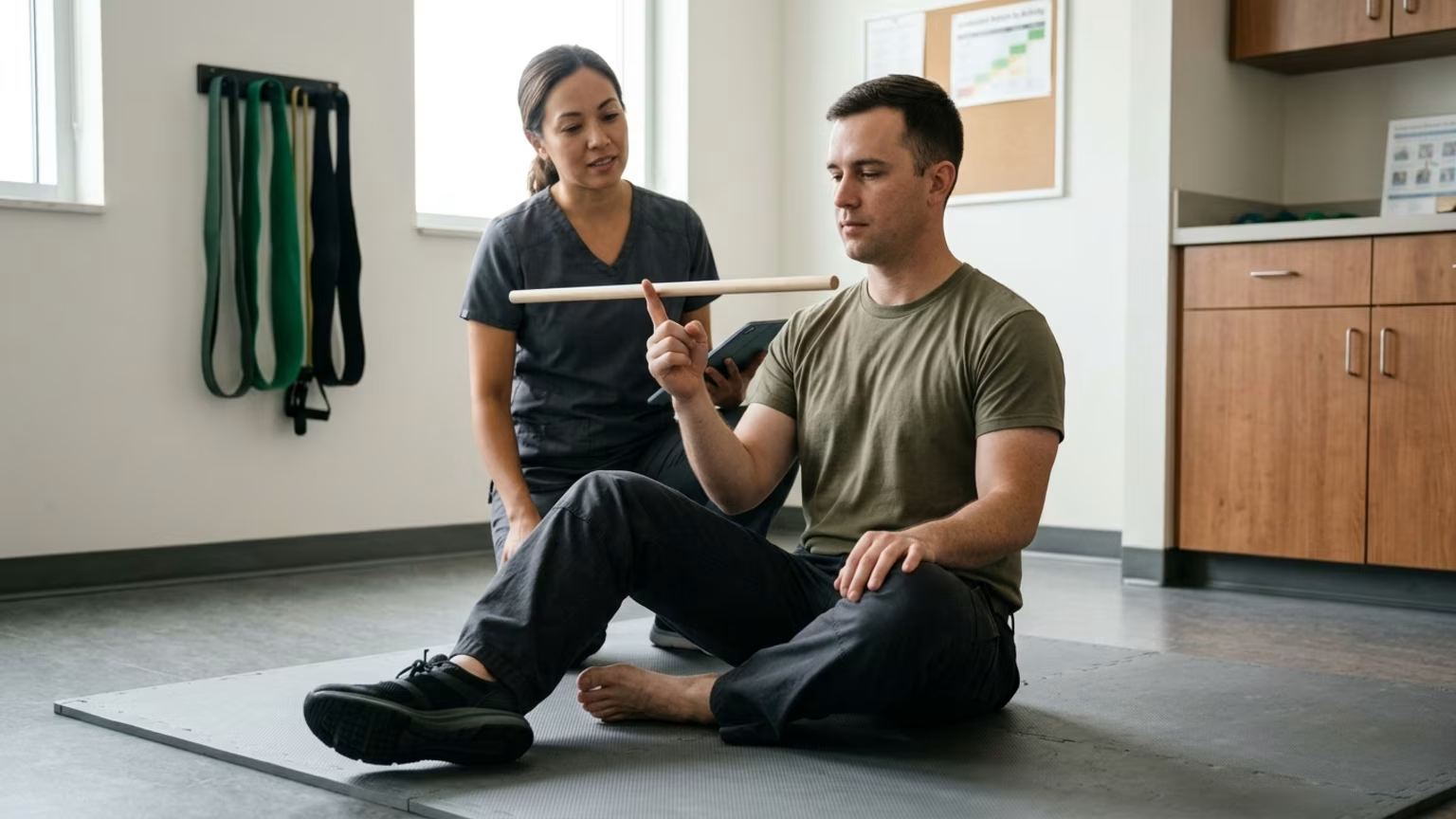
Military brain health programs have shifted away from recommending a fixed number of rest days. The Department of Defense and Defense Health Agency Progressive Return to Activity pathway is designed to help providers return service members with mild TBI to duty safely. The central principle of this approach is a gradual, symptom-guided return. Service members must navigate increasingly demanding activities while closely monitoring their physical response.
The pathway requires stopping the activity immediately after a suspected concussion. You should never continue training, driving, weapons handling, climbing, or operating heavy machinery while symptomatic. The next step is obtaining a prompt medical evaluation. A clinician can properly document the injury, screen for more serious neurological conditions, and establish specific duty restrictions.
Once evaluated, the recovery process begins with relative rest rather than prolonged total isolation. You should reduce activities that clearly aggravate symptoms while maintaining basic daily routines as tolerated. The medical team will then progressively reintroduce light cognitive and physical activity. You advance to job-specific or training-specific demands only when symptoms remain stable.
If your symptoms substantially worsen during an activity, you must return to the previous tolerable level. Unrestricted duty is reserved strictly for the final stage of the pathway. Readiness must reflect the actual physical demands of the assignment rather than the simple ability to sit quietly without symptoms. A service member might feel capable of ordinary household tasks but remain unprepared for night operations, live-fire training, or aviation duties.
Provider education significantly improves patient outcomes within this framework. TBICoE researchers found an overall reduction in symptoms at one week, one month, and three months when providers completed a two-hour training on the Progressive Return to Activity approach. This data highlights why structured training and performance recovery requires professional medical oversight. Veterans can access comprehensive evaluation, rehabilitation, therapies, and longer-term support through the VA Polytrauma System of Care.
Tracking your symptoms daily accelerates the recovery process. A simple log can record headache intensity, dizziness, light sensitivity, and sleep duration. Documenting medication use, alcohol consumption, and specific symptom triggers provides a clear clinical picture. Relying on memory alone often leads to inaccurate reporting and stalled rehabilitation.
Most people with mild TBI recover with little or no intervention. However, some patients continue to experience symptoms beyond the first three months. When a symptom appears later, persists, or worsens, it should not automatically be dismissed as ordinary fatigue or stress. Persistent symptoms warrant a thorough clinical assessment to identify treatable contributors.
Post-concussion symptoms frequently overlap with conditions common among service members. Stress, pain, depression, and insomnia can coexist with a brain injury. Military research materials describe pain symptoms as interacting with sleep disturbance and other TBI symptoms in ways that affect quality of life and recovery. TBI and PTSD can both severely impact concentration, memory, work performance, and daily relationships.
Sleep disruption remains a primary roadblock for recovering service members. A VA study of nearly 200,000 Veterans found that those with a history of TBI were 41% more likely to develop a sleep disorder than Veterans without a TBI history. The researchers observed that the association was strongest for mild TBI. In another VA study involving nearly 9,000 Veterans with mild TBI, 87% reported sleep problems.
These sleep issues were associated with greater restrictions in social and community participation. I remember waking up after a poor night of sleep and realizing that my training recovery was taking much longer than it used to. I realized that readiness is more than just pushing through the fatigue. It requires a dedicated approach to sleep and hormonal health, which completely shifted how I view long term capability.
Proper recovery and sleep are non-negotiable for repairing a traumatized brain. Establishing a consistent nighttime routine helps stabilize your circadian rhythm during the healing process. Sleep problems should be addressed directly rather than treated as secondary complaints. VA research links TBI with severe insomnia, excessive daytime sleepiness, sleep apnea, and sleep-related movement disorders.
Untreated symptoms can have long-lasting effects on a Veteran's health. VA research has reported that mild TBI was associated with headaches, sleep disturbance, and difficulty making decisions an average of 10 years after injury. Maintaining healthy habits through structured veteran lifestyle and healthcare resources is essential. Targeted rehabilitation therapies accelerate baseline functional recovery.
VA research reports that early physical therapy focused on balance, cervical-spine exercises, cardiovascular health, and a home program produced faster balance improvement in a randomized study of 203 people with mild TBI. Headache, vision, and neck symptoms often require dedicated management beyond basic rest. Physical activity remains a vital component of long-term healing when introduced at a tolerable level. Structured movement improves blood flow to the brain, which supports long-term recovery.
VA researchers analyzing Million Veteran Program data from more than 7,000 Veterans screened for TBI found that higher physical activity levels were associated with better health outcomes. The data indicated that even small amounts of activity were associated with meaningful improvements. Integrating mental health support alongside physical rehabilitation clarifies which problems are injury-related and which are independently treatable.
This article provides educational information and does not replace professional medical advice. Always consult a qualified physician or VA provider before self-diagnosing, altering medications, or starting any physical rehabilitation plan. A clinical professional can accurately separate concussion symptoms from overlapping conditions like sleep apnea or PTSD.
Certain warning signs indicate a potentially severe brain injury rather than an uncomplicated concussion. Call emergency services or go to an emergency department immediately if you experience a worsening headache that does not go away. Repeated vomiting, seizures, new weakness, or numbness require urgent intervention. Slurred speech, increasing confusion, or highly unusual behavior are also critical danger signals.
Physical signs like one pupil being larger than the other require immediate medical attention. Unusual drowsiness or an absolute inability to awaken are extreme emergencies. A loss of consciousness at any point during or after the injury mandates professional evaluation. You must seek emergency care for these symptoms even if you initially appeared well or believed the injury was minor.
Urgent assessment is also necessary when symptoms rapidly worsen or when there is uncertainty about what occurred during the injury. Do not drive yourself to an emergency facility if you are confused, unusually sleepy, visually impaired, or dizzy. Have a trusted person monitor you, drive you to the clinic, and bring a detailed list of your current medications.
Recovering from a mild traumatic brain injury requires a symptom-guided approach that treats sleep, mental health, and physical rehabilitation as equal priorities. Start tracking your daily symptoms, sleep quality, and physical triggers today to provide your clinician with an accurate map of your recovery needs.
Follow BattleVet for practical guidance on military and veteran health, strength, recovery, testosterone, sleep and healthy aging. Stay connected for new articles, research backed insights and clear information to help you stay capable for the years ahead.


The BRIDGE Act proposes a whole-family military transition pilot. Read who it would serve, what support it includes, and what remains unresolved.


Combat Stress’s workplace guidance emphasizes listening over diagnosis. Recent U.S. veteran insomnia research adds context for sleep and recovery concerns.

ErythroMer's reported storage design could matter for military care. An academic review still lists it as preclinical, with human evidence ahead.
Build better habits around strength, recovery, sleep, hormones and healthy aging with practical guidance for active military personnel and veterans.
Explore BattleVet