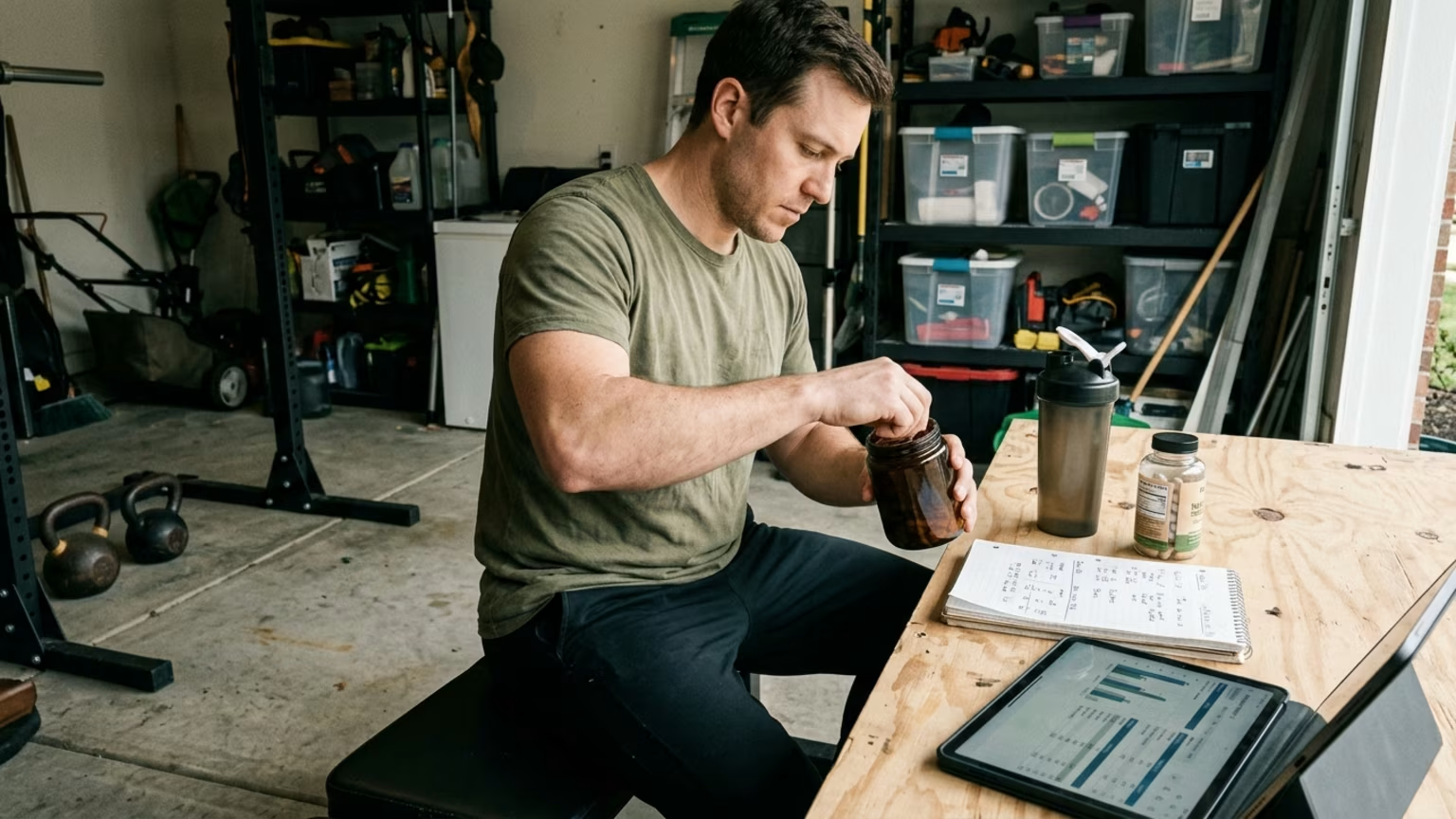

A 90-day randomized trial reported that AshwaSR improved strength and endurance in active adults. Learn what this specific evidence means for veteran health.





In September 2026, researchers published a randomized clinical trial reporting that a specific sustained-release ashwagandha root extract improved physical performance. The study examined AshwaSR. Nutriventia markets this precise extract as Ashwanova and as Prolanza in select markets. Researchers published the detailed findings in Frontiers in Nutrition to document its potential benefits. They investigated whether 300 milligrams per day of this extract could affect strength, cardiorespiratory endurance, recovery markers, and quality of life over 90 days.
The clinical trial utilized a double-blind, placebo-controlled methodology to evaluate the botanical extract. This specific study adds to a growing volume of research focusing on targeted supplement formulations. Industry publications like NutraIngredients have actively covered these developments. The trial aimed to see if continuous supplementation could yield measurable physical adaptations in an active population.
Active military personnel and veterans consistently seek evidence-backed methods to maintain their physical capabilities. The commercial supplement market often relies on broad claims about generic botanical ingredients. This new trial is particularly relevant because it tests a highly specific formulation rather than a random root powder. Recognizing the difference between precise clinical data and general marketing is critical for making informed healthcare decisions.
Many service members use nutritional products to support strength, fitness and body composition. However, different ashwagandha extracts vary heavily in their active compounds, extraction methods, and internal release profiles. You cannot assume that purchasing an off-the-shelf generic product will produce the exact results documented in a controlled study. The NutraIngredients report highlighted that branded extracts are increasingly studied at exact doses to prove their distinct value.
The broader healthy aging context is also a vital consideration for readers. Current supplement studies typically measure functional outcomes such as muscle strength, mobility, and quality-of-life metrics. They do not measure human longevity or hard clinical endpoints. An improvement in a strength test or a subjective questionnaire is an interesting data point. It is not proof that a botanical extract prevents disability or replaces comprehensive medical care.
BattleVet provides clear guidance on healthy aging to help veterans separate credible evidence from industry noise. Focusing on specific study conditions prevents active personnel from developing unrealistic performance expectations. The findings from this trial offer helpful insights for active individuals. However, those insights must be applied carefully within a broader lifestyle context.
The Nutriventia trial enrolled 84 healthy, recreationally active adults between the ages of 25 and 50. Researchers assigned 42 individuals to the AshwaSR group and 42 to a placebo group. Participants were gym-going men and non-pregnant women with a body-mass index between 25.0 and below 29.9 kg/m². Ultimately, 83 participants successfully completed the full 90-day protocol.
The researchers utilized bench-press one-repetition maximum tests and estimated VO₂max calculations to evaluate physical performance. Improvements in the intervention group began at day 30 and persisted through the end of the study. By day 91, the reported bench-press changes were 15.31 kilograms for the ashwagandha group versus 7.33 kilograms for placebo. The estimated VO₂max changes were 30.56 mL/kg/min for the ashwagandha group versus 18.14 mL/kg/min for the placebo group.
The NutraIngredients report provided helpful context by summarizing these findings as fold changes. They noted a 2.1-fold improvement in bench-press strength compared with placebo. They also reported a 1.5-fold improvement in cardiorespiratory endurance for the intervention group. Rajat Mittal Shah is the co-founder and executive director of Nutriventia. He stated that adults taking Ashwanova showed a clear, statistically significant separation from placebo in these physical metrics.
Researchers also evaluated subjective quality of life using the validated SF-12 questionnaire. At day 91, the reported mental-component score change was 7.72 for the supplement group versus a decrease of 4.66 points for the placebo group. The physical-component score change was 5.23 versus a decrease of 1.91 points. The study additionally reported a 2.6-fold greater improvement in emotional well-being and calmness for the intervention group.
The study design also explored physical recovery by tracking specific blood biomarkers linked to muscle damage. Researchers measured creatine kinase and lactate dehydrogenase at 30 minutes, 24 hours, and 48 hours after exercise. These specific enzymes typically elevate following intense physical exertion. They serve as standard clinical indicators of muscle tissue breakdown and recovery status.
The AshwaSR group showed more favorable changes in these markers than the placebo group over the testing period. However, the reported differences in these recovery markers did not reach statistical significance. Readers should therefore view the recovery claims as preliminary findings. It is too early to claim that this trial proved the supplement speeds actual muscle recovery or prevents exercise-induced damage.
Researchers closely monitored safety and tolerability over the entire 90 days. Sixteen participants reported adverse events during the trial period. This included six individuals in the AshwaSR group and 10 individuals in the placebo group. The documented events were minor, transient, and assessed as unrelated to the intervention.
For broader safety context, a separate NutraIngredients report detailed an eight-week safety study of a different branded extract called KSM-66. That randomized, double-blind, placebo-controlled trial involved 1,002 adults taking 600 milligrams per day. Both trials reinforce that safety profiles belong to specific branded formulations and specific dosage parameters.
The researchers openly acknowledged several limitations in their study design. The trial featured a modest sample size and utilized a single-center design. The participant profile was restricted strictly to healthy, recreationally active adults. The authors recommended future research involving inflammation, oxidative stress, cortisol regulation, and body-composition imaging.
The commercial funding of the trial is an important factor in reviewing the data. Nutriventia funded the research, and the company was involved in study design, article writing, and manuscript submission. Several authors were Nutriventia employees. One author also held ownership interests in the company.
The data from this trial should shape how service members view botanical performance supplements. Readers must treat the results as highly specific evidence rather than a blanket endorsement for the entire ashwagandha category. The demonstrated effects belong solely to a 300-milligram daily dose of AshwaSR over a 90-day window. Assuming that another generic product will duplicate these strength and endurance outcomes is a mistake.
Service members must recognize that supplementation never replaces fundamental physical training. The participants in this trial were already recreationally active adults who frequented the gym. The trial does not suggest that taking a capsule will build strength without consistent progressive resistance training. Readers should view the extract as a potential addition to a solid program rather than a training substitute.
Nutrition, sleep, and medical care remain the most reliable pillars of recovery and physical restoration. Relying on an isolated supplement without addressing systemic fatigue or poor dietary habits will limit overall readiness. Veterans should evaluate their foundational habits before investing in specialized botanical extracts. This approach ensures that performance gains are sustainable over the long term.
The company characterized the trial's testosterone findings as an adaptogenic response that supports physical stress management. Nutriventia suggested this response occurs without pushing hormones outside a normal, healthy range. However, this is a mechanistic interpretation from the sponsor. It is not a demonstrated clinical conclusion that the supplement inherently improves hormonal resilience or operational readiness.
Readers navigating testosterone and hormones should approach adaptogenic claims cautiously. Independent replication of these specific hormonal and physical findings is highly important. Because the study was company-funded, the current conclusions represent the sponsor's initial findings rather than an established medical consensus.
Furthermore, the trial's duration was strictly limited to 90 days. While the company described the persistence of the reported effect as reassuring, three months of data does not establish long-term safety. Veterans looking for permanent lifestyle interventions must weigh short-term study results against their decades-long health spans. Long-term performance improvements require strategies that can be safely maintained year after year.
Personal safety and open communication with healthcare providers must always take priority. Veterans should discuss new supplements with a clinician if they have liver conditions or thyroid conditions. This dialogue is especially critical if you currently take prescription medications or manage complex service-related health problems. If you develop concerning symptoms after starting any supplement, stop taking it and seek medical advice immediately.
The current data provides a clear look at physical performance improvements for standard gym-going adults. Yet active duty personnel and veterans experience physical and psychological demands that far exceed recreational exercise. Typical botanical trials rarely account for intense operational tempos, irregular sleep cycles, or systemic service-related injuries. Will future independent trials evaluate these specific sustained-release extracts in actual military populations to determine their true impact on long-term physical readiness?
Follow BattleVet for practical guidance on military and veteran health, strength, recovery, testosterone, sleep and healthy aging. Stay connected for new articles, research backed insights and clear information to help you stay capable for the years ahead.


A 2026 NUS Medicine study analyzed wearable data to show how replacing 30 minutes of daily sitting with light activity can improve cardiometabolic markers.

The 2026 NeuroFit trial found that three months of combined aerobic and resistance training significantly improved mood in midlife adults, without short-term cognitive gains.
A recent study associates 9 to 10 hours of weekly exercise with lower cardiovascular risk. Experts advise veterans to use 150 minutes as a practical baseline.
Build better habits around strength, recovery, sleep, hormones and healthy aging with practical guidance for active military personnel and veterans.
Explore BattleVet